

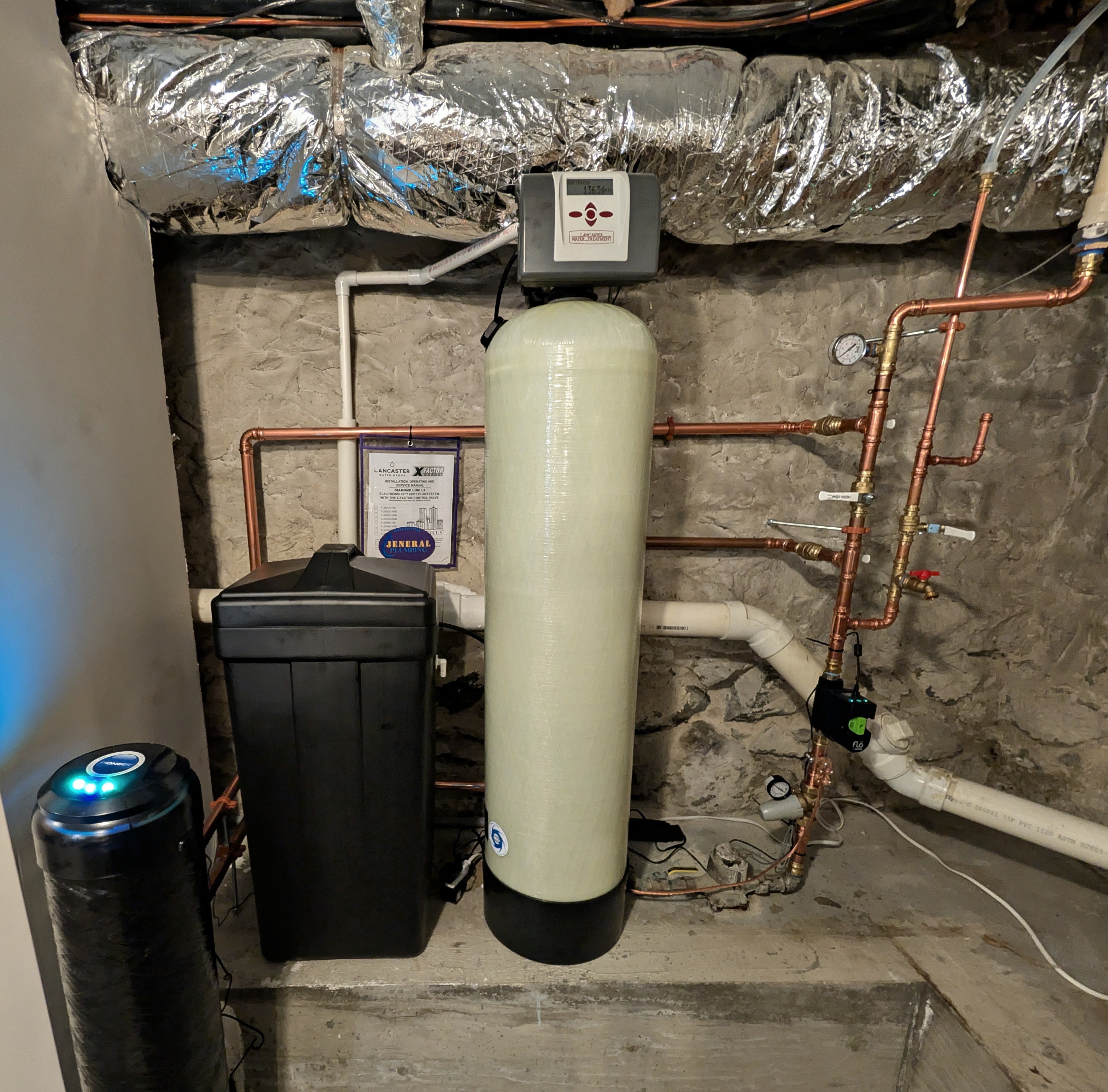
Hard water is a fact of life for many Stow homeowners. Whether you're on municipal water or a private well, dissolved minerals can cause problems throughout your home. A properly sized and installed water softener eliminates these issues, protecting your plumbing and improving daily life.
Signs You Have Hard Water
Hard water makes itself known in many ways:
In the Bathroom
- White spots on glass shower doors
- Scale buildup on showerheads
- Soap that won't lather well
- Dry, itchy skin after bathing
- Dull, difficult-to-manage hair
In the Kitchen
- Cloudy spots on dishes and glassware
- Scale on faucets and fixtures
- White residue in coffee makers
- Reduced appliance efficiency
In the Laundry
- Dingy, stiff clothing
- Faded colors
- Increased detergent needs
- Reduced fabric lifespan
Throughout Your Home
- Scale buildup inside pipes
- Reduced water heater efficiency
- Shortened appliance life
- Higher energy bills
How Water Softeners Work
Water softeners use ion exchange to remove hardness minerals:
- Hard water enters the softener tank
- Resin beads attract and hold calcium and magnesium
- Softened water flows to your home
- Regeneration periodically flushes captured minerals to drain
The process is automatic once the system is installed and programmed.
Choosing the Right Water Softener
Size Matters
Proper sizing depends on:
- Your water's hardness level
- Daily water usage
- Number of people in household
- Peak demand periods
An undersized softener won't keep up; oversized wastes salt and water.
Salt Types
Different softeners work with:
- Solar salt: Economical, widely available
- Evaporated salt: Higher purity, less residue
- Potassium chloride: Alternative for salt-restricted diets
Feature Options
Modern softeners offer:
- Demand-based regeneration (saves salt)
- Digital controls with usage data
- Wi-Fi connectivity for monitoring
- High-efficiency designs
Benefits of Professional Installation
With 100% of homes on private wells, Stow residents commonly face water quality issues including high dissolved iron, particulate iron, hardness.
While some attempt DIY installation, professional installation ensures:
Proper Placement
- Accessible location for salt addition and service
- Adequate drain for regeneration
- Electrical outlet nearby
- Before water heater for full protection
Correct Connections
- Proper bypass valve installation
- Appropriate fittings for your piping
- Leak-free connections
- Code-compliant installation
Optimal Programming
- Accurate hardness setting
- Regeneration schedule matched to usage
- Salt efficiency optimization
- Time clock synchronization
Water Softener Maintenance
Maintaining your softener is straightforward:
Regular Tasks
- Check salt level monthly
- Clean brine tank annually
- Verify settings periodically
Periodic Service
- Resin bed cleaning as needed
- Component inspection
- Efficiency verification
Common Questions
Will softened water taste salty?
No. The sodium added is minimal—less than in a slice of bread per glass.
Can I water plants with softened water?
An outdoor hose bib typically bypasses the softener. We can ensure this during installation.
How often will I add salt?
This varies by usage and water hardness, but typically every 4-8 weeks.
The Investment Value
Water softeners typically pay for themselves through:
- Reduced soap and detergent costs (up to 50% less)
- Extended appliance life (water heaters, dishwashers, washing machines)
- Lower energy bills (no scale in water heater)
- Less cleaning time and products
Ready to solve your hard water problems? Contact Jeneral Plumbing for water testing and softener installation in Stow. We'll recommend the right system for your home and install it professionally.
Need Help? Contact Jeneral Plumbing at (978) 392-7789 or visit jeneralplumbing.com