
When your home’s heating and plumbing systems start acting up, it’s easy to panic. But understanding what’s really happening behind the scenes can save you time, money, and countless headaches. Recently, our team at Jeneral Plumbing encountered a perfect storm of common home comfort issues during a service call that highlights exactly what homeowners need to watch for.
From pressure problems to installation shortcuts, this single visit revealed five critical issues that could be lurking in your own home right now. Let’s dive into these essential problems and arm you with the knowledge to spot them before they become expensive emergencies.
1. Boiler Pressure Problems That Demand Immediate Attention
Water pressure in your boiler system isn’t just a number – it’s the difference between safe operation and potential disaster. During this service call, our team found a Navien NCB combi boiler running at concerning pressure levels that required immediate attention.
The working pressure was hovering around 20 PSI, which sits right at the edge of the safe zone. While 20 PSI might seem acceptable, here’s what many homeowners don’t realize: water expands when heated. That “safe” 20 PSI can quickly climb into dangerous territory once your system fires up and starts heating water throughout your home.
Our technician recommended setting the pressure to exactly 20 PSI as a safety measure, but this situation highlights a bigger issue. Boiler pressure problems don’t happen in isolation – they’re usually symptoms of other system issues. An expansion tank that’s not functioning properly, a pressure relief valve that’s failing, or even a small leak somewhere in the system can all contribute to pressure fluctuations.
Regular pressure monitoring isn’t just good maintenance; it’s essential safety. Boiler explosions are rare but catastrophic when they occur. Most modern systems have multiple safety features, but pressure management remains your first line of defense.
2. The Hidden Problem with Condensate Neutralizer Installations
Here’s something that’ll make you shake your head: condensate neutralizers come with unions for a very good reason, but many installers skip them entirely. During our recent service call, we discovered a condensate neutralizer that had been glued directly into the pipe system with no way to service it.
“There’s no way to unscrew this,” our technician Kris explained to the homeowner. “When you buy these condensate neutralizers, they come with unions, but the installers didn’t use them. So they’re just glued pipe straight in. So we have to cut that out just to redo the neutralizer inside.”
Think of unions like removable joints in your plumbing – they’re designed to make future maintenance possible without destroying your system. When installers skip this step, they’re essentially creating a time bomb. Every time that neutralizer needs service (and it will), someone has to cut pipes and rebuild sections of your system. This isn’t just inconvenient; it’s expensive and completely unnecessary.
The proper neutralizers have a canister design with two ends that screw on and off. This simple feature transforms a major repair job into routine maintenance. If you have a high-efficiency heating system, check your condensate neutralizer installation. Can you see threaded connections, or does everything look permanently glued together?
3. Expansion Tank Mysteries That Affect Your Entire System
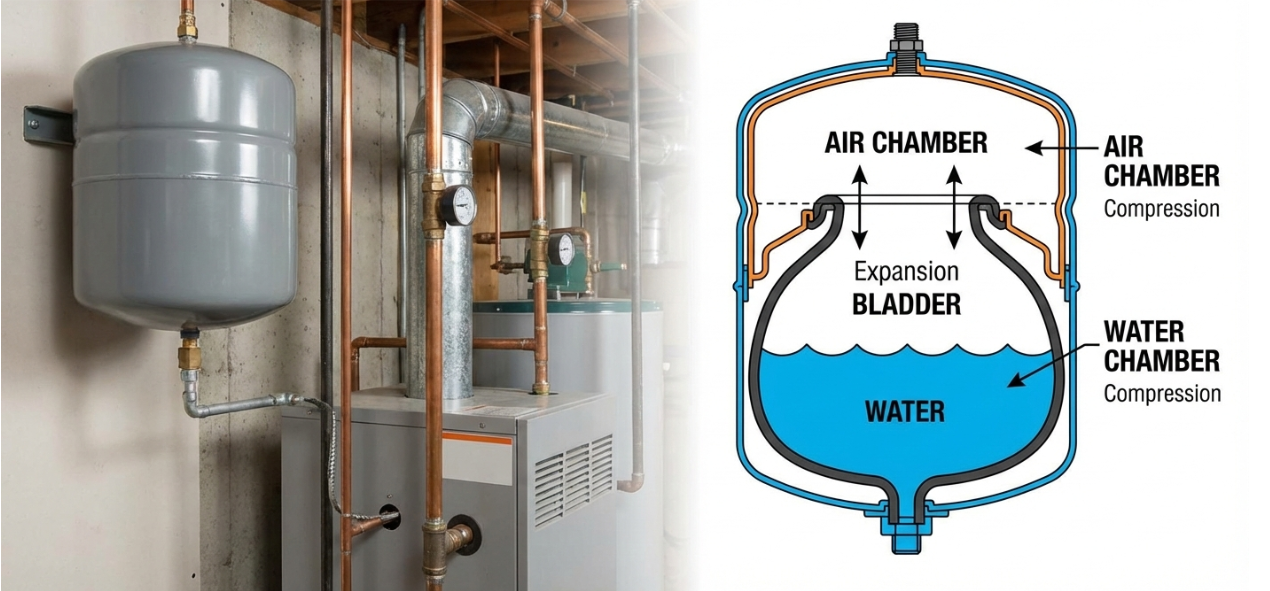
Expansion tanks are the unsung heroes of your heating system, quietly managing pressure changes as water heats and cools. But when they malfunction, the symptoms can be confusing and seemingly unrelated to the actual problem.
During our service call, the expansion tank readings told a complex story. Initial readings showed 14.5 PSI jumping to 24.7 PSI – a swing that indicates the tank isn’t properly managing thermal expansion. This kind of pressure variation puts stress on every component in your system, from pipes and joints to the boiler itself.
Most homeowners have never even seen their expansion tank, let alone checked its pressure. These cylindrical tanks, usually mounted near your boiler, contain a rubber bladder that compresses and expands to accommodate water volume changes. When that bladder fails or the pre-charge pressure is wrong, your entire system suffers.
Here’s a simple test you can do: locate your expansion tank and tap it with a wrench. A properly functioning tank should sound hollow on top (air side) and solid on the bottom (water side). If it sounds solid all the way up or hollow throughout, you’ve got problems that need professional attention.
The fix isn’t always replacement – sometimes it’s as simple as adjusting the pre-charge pressure. But diagnosis requires specialized gauges and knowledge of your specific system requirements.
4. Water Heater Temperature and Pressure Complications
Water heaters seem straightforward until they’re not. During this service call, we encountered an external water heater with readings that would puzzle most homeowners: an initial pressure of 138 PSI that dropped to 28.5 PSI, and a temperature setting of 130°F when it should have been running at 140°F or 160°F.
These aren’t random numbers – they tell a story about system performance and safety. That dramatic pressure drop from 138 to 28.5 PSI suggests a pressure relief issue that could indicate anything from a faulty valve to internal tank problems. Meanwhile, the low temperature setting creates two problems: inadequate hot water supply and potential bacteria growth.
Water heater temperature isn’t just about comfort. The CDC recommends storing hot water at 140°F minimum to prevent Legionella bacteria growth. Many homeowners turn down their water heaters to save energy or prevent scalding, but this creates health risks they don’t anticipate.
Our technician’s solution involved “cracking the draw rock to lower PSI on the heating side” – technical language for adjusting the system’s pressure management. This kind of diagnostic work requires understanding how water heaters interact with your home’s plumbing system, not just the unit itself.
If your water heater is showing unusual pressure readings or isn’t maintaining proper temperature, don’t ignore it. These symptoms often indicate problems that will worsen over time and potentially damage other components in your plumbing system.
5. The Domino Effect of Deferred Commercial System Maintenance
Large buildings and commercial properties present unique challenges that residential systems don’t face. During this service call, our team was also coordinating a 65-gallon commercial water heater installation in Beverly, highlighting how commercial systems require different approaches and more intensive maintenance schedules.
Commercial water heaters work harder, heat more water, and face constant demand that residential units never experience. When they fail, the consequences affect multiple tenants, businesses, or facility operations. The coordination required – including unlocking doors for water heaters on the fifth floor – demonstrates the complexity these systems add to routine maintenance.
What many property managers don’t realize is how commercial system failures create cascading problems. A single water heater failure can affect pressure throughout the building, force other units to work overtime, and create emergency situations that could have been prevented with proper maintenance scheduling.
The lesson for residential customers? Your home’s systems face similar interconnection challenges, just on a smaller scale. When one component struggles, others compensate until the entire system becomes unstable. Regular professional maintenance catches these developing problems before they create emergencies.
Don’t Wait for System Failures to Become Emergencies
Home comfort systems are more interconnected than most homeowners realize. Pressure problems affect multiple components, installation shortcuts create future headaches, and small issues compound into major repairs when ignored. The service call we’ve discussed here demonstrates how professional diagnosis reveals problems that aren’t obvious to untrained eyes.
At Jeneral Plumbing, we’ve seen how proactive maintenance prevents the kind of emergency situations that disrupt your life and strain your budget. Our family-owned company has been serving Middlesex and Essex counties with the kind of thorough, professional plumbing service that catches problems early and solves them right the first time.
Ready to ensure your home comfort systems are operating safely and efficiently? Contact Jeneral Plumbing today for a comprehensive system evaluation. Our experienced technicians will identify potential issues before they become expensive emergencies, and we’ll explain everything in plain English so you can make informed decisions about your home’s plumbing and heating systems.
Need Help? Contact Jeneral Plumbing at (978) 882-8699