
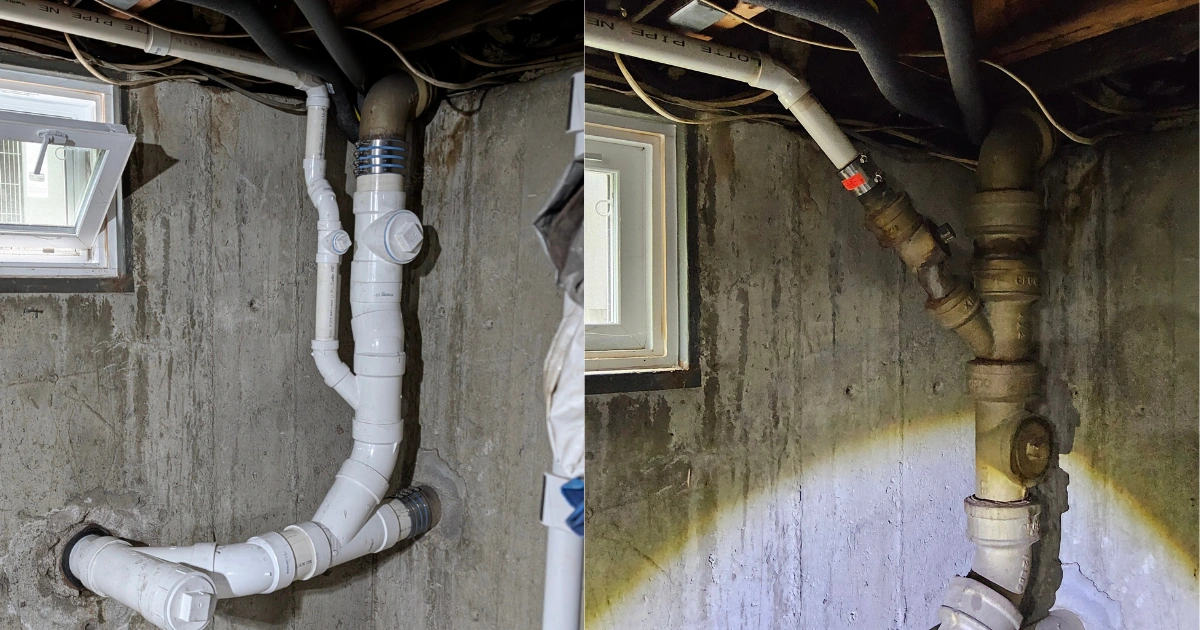
When cracked pipe issues keep causing recurring clogs in your basement drain system, it's time to consider a comprehensive solution. Recently, our Jeneral Plumbing technicians visited a home in Wayland where the homeowner was dealing with a frustrating pattern: their main drain line had clogged three times in just two years, despite multiple attempts at temporary fixes.
This situation is all too common in homes throughout Wayland, Sudbury, and Concord, where aging cast iron drain systems are reaching the end of their useful life. Here's what every homeowner should know about transitioning from problematic cast iron to reliable PVC piping.
Why Cast Iron Pipes Fail Over Time
Cast iron was the standard for drain systems for decades, but it has significant limitations. In the Wayland home we visited, the homeowner pointed out visible cracks in their cast iron main line that had been developing over time. These cracks weren't just cosmetic—they were allowing debris to catch and accumulate, leading to repeated blockages.
The homeowner described their frustrating cycle: "Every time the middle bathroom gets blocked, I put Drano in it, and it feels like it comes here somewhere and clogs again." This is a classic sign of a compromised cast iron system where partial blockages in one area create backup issues throughout the connected drain network.
The Dangers of Improper Hydro Jetting on Cast Iron
One critical lesson from this consultation involves the risks of hydro jetting compromised cast iron pipes. The homeowner shared that a previous contractor had hydro jetted their system from inside the basement, which caused water to spray everywhere and potentially damaged the already-weakened pipes.
When our Jeneral Plumbing technician explained the proper approach, it became clear why this method was problematic: "When you hydro jet and there's a backup, it can come out this way." For older cast iron systems, hydro jetting should only be performed from an exterior cleanout to prevent interior flooding and further pipe damage.
Planning Your Cast Iron to PVC Conversion
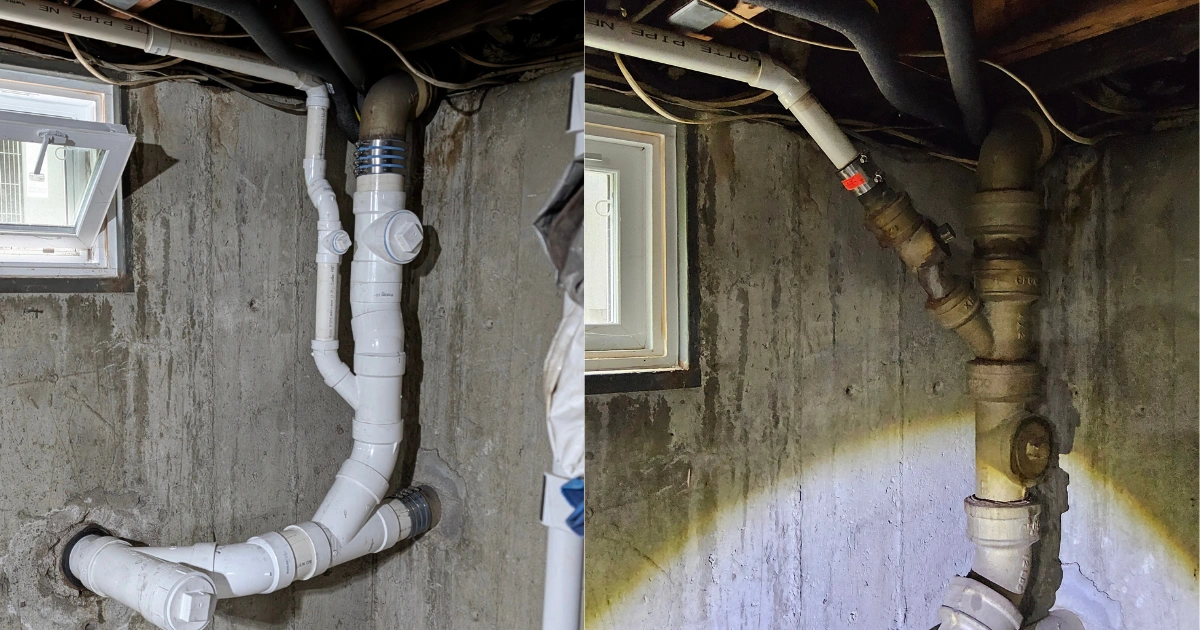
The conversion process requires careful planning and technical expertise. Our technician several key factors that homeowners need to understand:
Code the Jeneral Plumbing technicians: Plumbing code allows licensed plumbers to work up to ten feet from the foundation. Beyond that distance, you'll need a separate contractor bonded with the town for any excavation work.
Transition Points: The key to a successful conversion lies in identifying proper transition points. In this case, our technician bell joints in the existing cast iron system that would allow for clean transitions to PVC without extensive demolition.
Structural Support: This is perhaps the most critical aspect many homeowners don't consider. As our technician : "This has to be hung before I remove anything. I've got to put a hanger somewhere up here to take that weight." Failure to properly support remaining cast iron sections can cause settling that compromises roof seals and creates expensive secondary problems.
The Installation Timeline and Disruption
Homeowners need to prepare for a full day without water service during the conversion. Our technician upfront about this reality: "This would be close to a full day. That means no running water for the day because it all ends up here."
The process involves:
Installing temporary support systems for remaining cast iron
Carefully removing damaged sections
Installing new PVC pipe and fittings
Connecting to existing bell joints in walls
Testing the entire system for proper flow
Planning the work for a school day when children aren't home can minimize family disruption.
Cost Considerations: PVC vs. Cast Iron
The material cost difference alone makes PVC the logical choice for residential applications. As our technician : "Ten feet of four-inch cast iron is like three hundred dollars for pipe." PVC provides the same functionality at a fraction of the cost, with superior longevity and easier maintenance access.
For commercial applications, cast iron may still be required by code, but residential installations benefit significantly from PVC's affordability and performance.
Long-term Benefits of Professional Installation
A properly executed cast iron to PVC conversion eliminates the recurring drain cleaning service calls that can cost hundreds of dollars annually. The homeowner in our consultation had been spending money "every other week" on temporary solutions—costs that quickly add up to more than a permanent fix.
Modern PVC systems also provide better access for future maintenance. Clean-outs can be strategically placed for easy access, and the smooth interior surface of PVC resists the buildup that commonly occurs in aging cast iron.
When to Call for Emergency Service
While planning a systematic replacement is ideal, some situations require immediate emergency plumbing intervention. If you're experiencing:
Sewage backup into living spaces
Visible water damage from pipe leaks
Complete drain blockage affecting multiple fixtures
Strong sewer odors indicating pipe failure
Don't wait for business hours. Our 24 hour plumber near me service ensures that critical plumbing emergencies get immediate attention, preventing water damage and health hazards.
Key Takeaways
Recurring drain clogs often indicate underlying pipe deterioration that temporary fixes cannot address
Cast iron to PVC conversion requires proper structural support planning to prevent secondary damage
Professional hydro jetting should only be performed from exterior access points on compromised systems
Code compliance limits plumber scope to ten feet from foundation—longer runs require additional contractors
PVC offers superior cost-effectiveness and longevity compared to cast iron for residential applications
Proper planning minimizes household disruption during the full-day installation process
Frequently Asked Questions
Q: Can I replace just the damaged section of cast iron pipe?
A: While partial replacement is possible, it's often more cost-effective to replace the entire basement run. Mixing old and new materials can create transition points that become future failure points.
Q: How long does PVC drain pipe typically last?
A: Our technician installed PVC drain systems can last 50-100 years, significantly longer than cast iron's typical 25-50 year lifespan, especially in areas with acidic soil conditions.
Q: Will my homeowner's insurance cover cast iron pipe replacement?
A: Insurance typically doesn't cover maintenance issues or normal wear and tear. However, if the pipe failure causes water damage, that damage may be covered. Check with your insurance provider for specific coverage details.
Q: Can I use my plumbing during the conversion process?
A: No, the entire house water system will be shut down during the replacement day. Plan accordingly for bathroom needs, cooking, and drinking water.
Q: How do I know if my septic system connection is compatible with new PVC?
A: A professional inspection during the conversion will reveal the existing connection type. Most modern septic systems are designed to work with PVC connections, but older systems may require additional transition fittings.
If you're dealing with recurring drain problems in Wayland or the surrounding Middlesex County area, don't let temporary fixes drain your budget. Contact Jeneral Plumbing at (978) 392-7789 for a comprehensive consultation. Our experienced technicians will assess your specific situation and provide honest, practical solutions that address the root cause of your plumbing issues.