
Understanding Your Home's Gas System Infrastructure
When it comes to complete home system design, understanding your gas infrastructure is crucial for both safety and efficiency. During a recent consultation at a home in Westford, our Jeneral Plumbing technicians encountered a comprehensive gas system evaluation that perfectly illustrates the complexity of modern home gas installations.
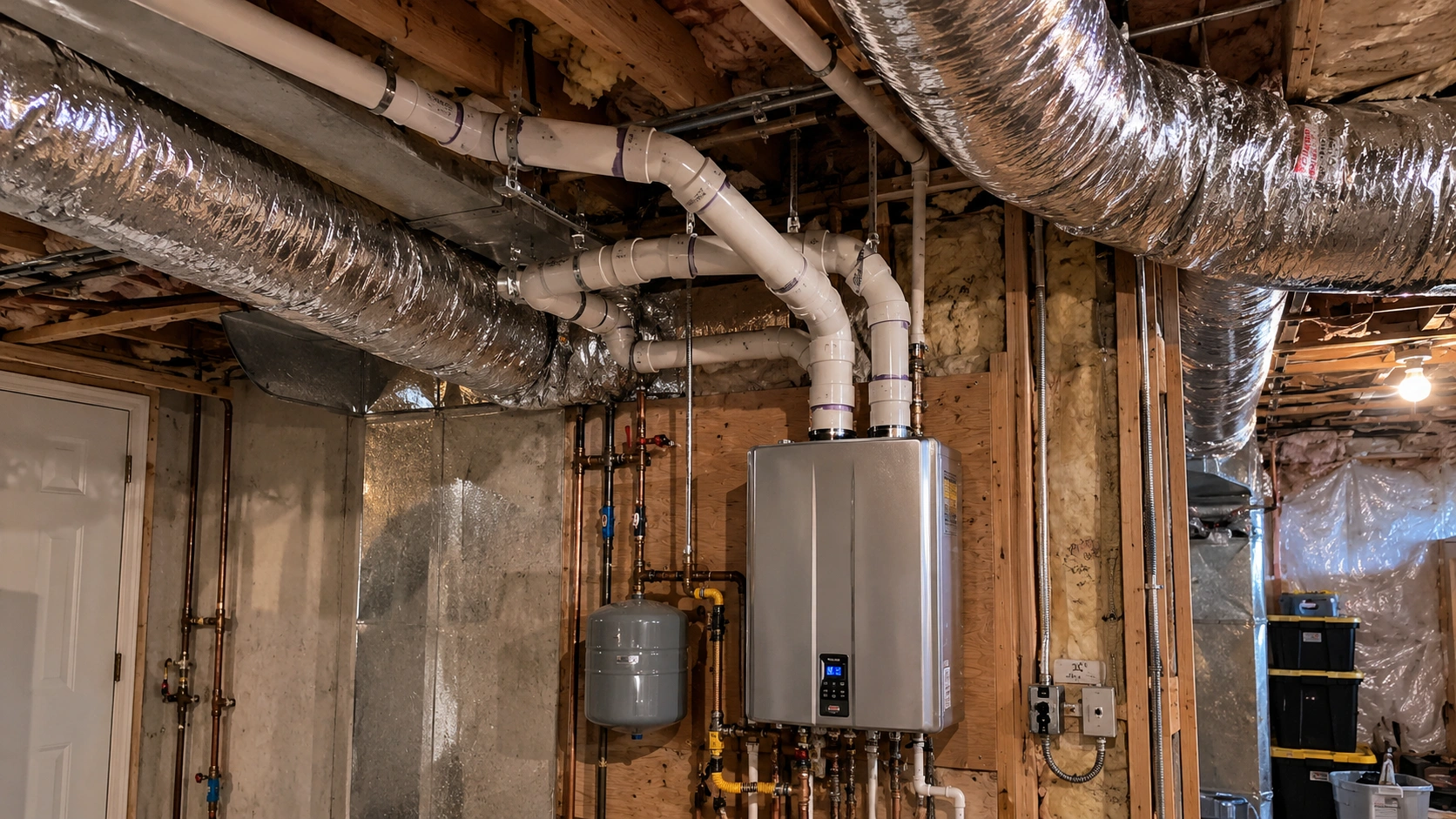
The homeowner had several gas appliances including a furnace, range, and a high-end Infinity tankless water heater, plus they wanted to add a fireplace insert. This type of multi-appliance setup is common in homes throughout Chelmsford, Billerica, and surrounding areas, and requires careful planning to ensure adequate gas supply.
Gas Line Sizing: The Foundation of Safe Installation
One of the most critical aspects of any gas installation is proper line sizing. The process begins at the gas meter and extends to the farthest fixture in your home. During our evaluation, we measured the distance from the meter to each gas appliance:
35 feet to the kitchen range
26 feet to the proposed fireplace location
Additional runs to the furnace and tankless water heater
The sizing calculation is straightforward but essential: you need the total BTU load and the distance to the farthest appliance. In this case, we calculated:
Furnace: 60,000 BTUs
Tankless water heater: 199,000 BTUs
Range: approximately 60,000 BTUs
Proposed fireplace: BTU rating to be determined
This home featured a ¾-inch service line from the gas company, stepping up to 1-inch inside the house - an unusual but effective configuration that provides adequate capacity for multiple high-demand appliances.
Tankless Water Heater Diagnostics and Maintenance
The homeowner's Infinity tankless water heater represents one of the premium units available, but even high-end equipment requires regular attention. During our inspection, we discovered an "AD" error code indicating "flue blockage detected during startup due to insufficient combustion air."
This diagnostic process revealed several important maintenance points:
Air Intake Cleaning: The air intake had accumulated dirt and debris, restricting proper combustion air flow. This is a common issue that can be prevented with regular cleaning.
Expansion Tank Assessment: We tested the expansion tank by tapping it to check for proper air charge. The tank showed signs of water logging, indicating the rubber diaphragm may need replacement. This 200,000 BTU unit heats only about 1.5 gallons of water at a time, creating significant thermal expansion that must be properly managed.
Pressure Matching: Expansion tanks come pre-charged to 40 PSI from the factory, but must be adjusted to match your home's water pressure. Failure to do this properly can lead to premature tank failure.
System Integration and Efficiency Considerations
Modern homes in Groton, Littleton, and Pepperell often feature complex mechanical systems that must work together efficiently. This particular home showcased several integration points:
The existing gas line routing showed some inefficiencies - the line to the range took an unnecessarily circuitous path that could have been simplified during the kitchen renovation. While functional, this type of routing uses more pipe and can slightly reduce efficiency.
The licensed master plumber evaluation also identified a humidifier connected to the HVAC system that was experiencing solenoid valve issues, attempting to fill but not successfully completing the cycle.
Professional Installation vs. DIY: Why Expertise Matters
Gas work requires precise calculations and adherence to strict safety codes. The line sizing charts we use aren't just suggestions - they're based on engineering principles that ensure safe operation under all conditions. Improper sizing can lead to:
Inadequate gas supply to appliances
Pressure drops that affect performance
Safety hazards from undersized lines
Code violations that can affect insurance and resale value
Our plumbing & heating contractors team uses professional-grade tools and follows manufacturer specifications exactly. For example, when we install expansion tanks, we always verify and adjust the pre-charge pressure to match the home's water pressure - a step that's often missed in DIY installations.
Preventive Maintenance: Protecting Your Investment
High-end appliances like the Infinity tankless water heater represent significant investments that deserve proper care. We recommend annual service that includes:
Cleaning air intake screens
Testing expansion tank operation
Checking all gas connections
Verifying proper venting
Descaling heat exchangers as needed
Many homeowners don't realize that water testing can help determine descaling frequency. Hard water areas may need more frequent service to prevent mineral buildup that reduces efficiency and can damage heat exchangers.
Planning Your Gas System Upgrade
Whether you're adding a fireplace insert, upgrading to a tankless water heater, or planning a whole-house renovation, proper planning prevents problems. Key considerations include:
Load Calculation: Total all existing and planned gas appliances to determine if your service line is adequate.
Routing Efficiency: Plan gas line routes to minimize pipe runs and maximize efficiency.
Future Expansion: Consider potential future additions when sizing your main gas line.
Code Compliance: All work must meet local codes and manufacturer requirements.
Key Takeaways
Gas line sizing requires precise BTU calculations and distance measurements to ensure safe, adequate supply
Premium tankless water heaters need annual maintenance including air intake cleaning and expansion tank testing
Error codes like "AD" on tankless units often indicate simple maintenance issues rather than major problems
Professional installation ensures proper pressure matching and code compliance
System integration planning prevents efficiency losses and future problems
Frequently Asked Questions
Q: How do I know if my gas line is sized properly for additional appliances?
A: A professional evaluation involves calculating total BTU load and measuring distances to determine if your existing service line can handle additional demand. Our technicians -standard sizing charts to make this determination.
Q: Why is my tankless water heater showing an error code?
A: Error codes like "AD" often indicate maintenance issues such as blocked air intakes or venting problems. Many codes can be resolved with simple cleaning or minor adjustments rather than major repairs.
Q: How often should expansion tanks be replaced on tankless water heaters?
A: Expansion tank life varies based on water quality and proper installation. Signs of failure include a solid sound when tapped (should sound hollow) or visible water leakage. Most tanks last 5-10 years with proper installation and maintenance.
Q: Can I add a gas fireplace to my existing system?
A: It depends on your current gas load and line capacity. A professional assessment will determine if your existing infrastructure can support the additional BTU demand or if upgrades are needed.
Q: What's the difference between regular maintenance and emergency plumbing service?
A: Regular maintenance prevents problems through cleaning, testing, and adjustments. Emergency plumbing addresses urgent issues like gas leaks or complete system failures that require immediate attention.
If you're in Westford or the surrounding Middlesex County area and need professional gas system evaluation, installation, or maintenance, contact Jeneral Plumbing at (978) 392-7789. Our experienced team provides comprehensive service from initial planning through ongoing maintenance, ensuring your gas systems operate safely and efficiently for years to come.
Written by Jeneral Plumbing.
This article was drafted with AI writing tools from Jeneral Plumbing job notes and source materials, then edited before publication. AI tools did not inspect the job or validate technical conclusions.
Last updated .