
An annual plumbing inspection can help you spot developing trouble while there is still time to plan. It cannot promise a specific dollar savings, prevent every failure, or reveal every condition behind a finished wall. During a documented visit from my Westford, MA base to a Lowell home, accessible corrosion, water staining, loose fixtures, and heating-system follow-up items gave the homeowner a practical list of next steps. That is the real value of a careful review — better evidence for maintenance and repair decisions, not a guarantee that nothing will go wrong.
Jeneral Plumbing was founded in 2023 and is based in Westford, MA. The company is owner-operated by a Licensed Master Plumber (MA #9628831-PL-M), and I bring 20+ years in the trade, including seven with a gas utility. When I perform an inspection, I look at accessible plumbing, hot-water, boiler, and hydronic-heating conditions within my licensed scope. This article is an educational resource, not a remote diagnosis, municipal inspection, or whole-property certification.
What an Annual Plumbing Inspection Can and Cannot Tell You
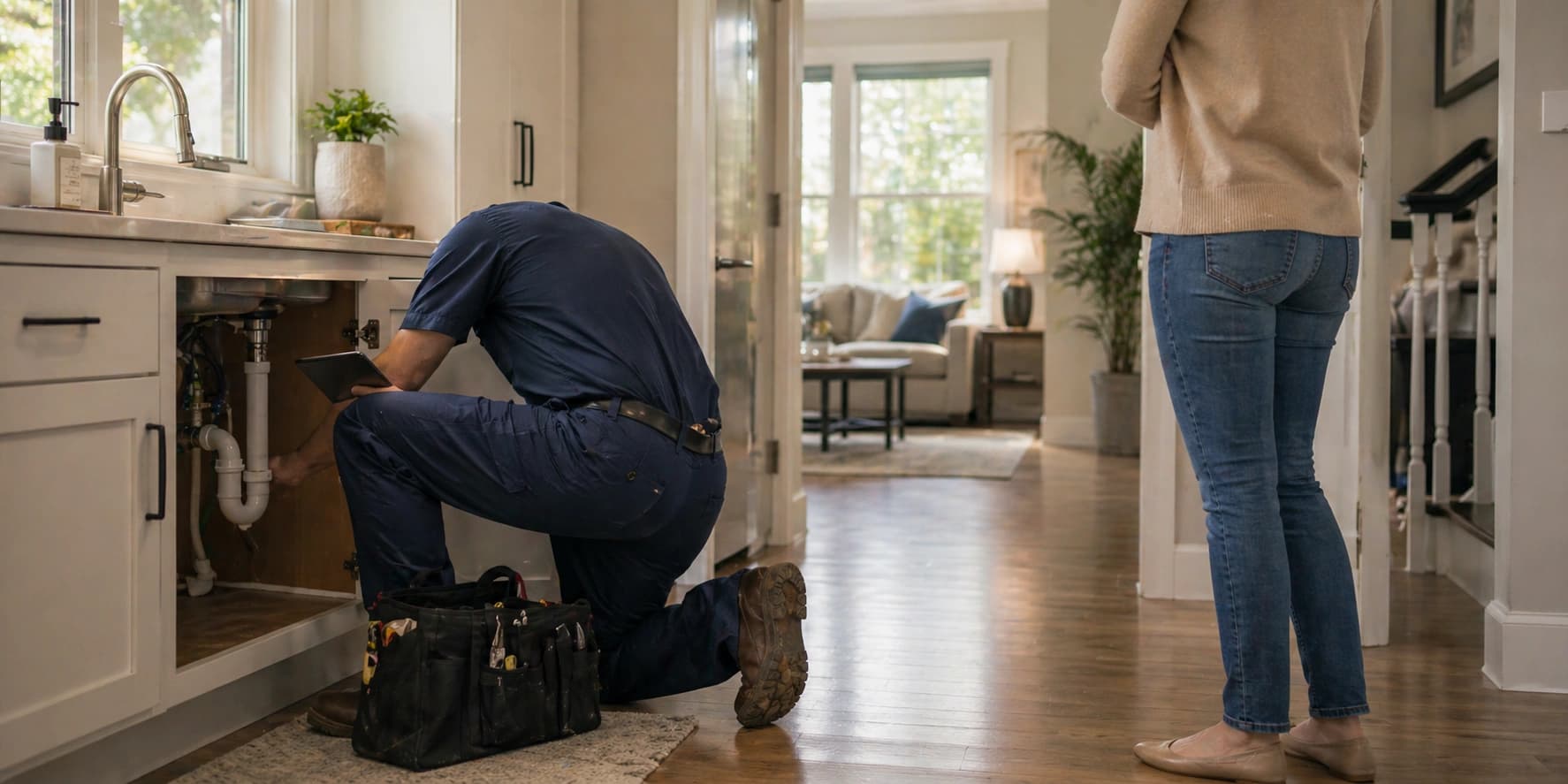
The inspection is a condition assessment of accessible components on the day of the visit. I can document visible piping, shutoffs, fixtures, drains, equipment, pressure, and signs of leakage or corrosion. I can also compare those observations with prior records when they exist. That snapshot helps separate an active problem from an item that can be maintained, monitored, or planned for later.
The visit is not a municipal code inspection. I may identify a condition that merits repair, permit research, or review by the local plumbing inspector, but I do not act as the inspector or issue an official code ruling. For covered work I perform, I can pull the applicable plumbing permit and coordinate the required inspection. The local authority decides whether permitted work meets the applicable requirements.
Access also sets a firm boundary. An inspection does not expose concealed pipe, open finished surfaces, guarantee the remaining life of a component, or prove that every part of a home is defect-free. If a symptom points beyond accessible plumbing, I explain what additional trade, specialist, testing, or access may be needed. The report should make uncertainty visible instead of hiding it behind a pass-or-fail label.
Why a Written Inspection Report Matters
A useful report gives you a baseline you can revisit. One green spot on copper, one rust mark on cast iron, or one water stain may not show when the condition started or how quickly it is changing. Measurements, locations, and written notes can help the next visit compare like with like. A worsening seam, a changing pressure reading, or fresh staining then becomes evidence rather than a guess.
A useful report can focus on decisions a homeowner can understand:
Condition observed: what I could see, measure, or operate safely during the visit.
Location and access: where the component is and whether the relevant piping is exposed or concealed.
Recommended next step: monitor, maintain, diagnose, repair, replace, test, or involve another licensed trade.
Timing: immediate safety action, prompt follow-up, planned work, or a future comparison point.
Scope boundary: what the visit did not establish and who has authority over any permit or code decision.
This record is more useful than a vague statement that the plumbing “looks fine.” It also helps keep every observation from being treated as an urgent sale. A good report should explain why an item matters, what evidence supports the recommendation, and what can reasonably wait. If conditions remain stable at the next visit, that is useful information too.
What I Check During the Inspection
The exact scope depends on the property, equipment, access, and agreed visit. I start with the homeowner's known concerns and then work through connected systems in a consistent order. A typical visit may include:
Water service and distribution: accessible supply piping, visible joints, the main shutoff, branch shutoffs, signs of corrosion, and a pressure measurement where appropriate.
Fixtures and connections: faucets, toilets, tubs, showers, exposed supplies, traps, and signs of looseness, leakage, staining, or poor operation.
Accessible drainage: visible drain and vent piping, supports, joints, traps, and evidence that calls for closer diagnosis.
Water heating: accessible tank, tankless, or connected piping conditions, service history, shutoffs, relief discharge arrangement, and maintenance needs appropriate to the equipment.
Boilers and hydronic heat: serviceable components, visible leakage or corrosion, operating symptoms, pressure and temperature information, and maintenance history within the agreed scope.
Water observations: property-specific concerns and whether current testing, including certified-laboratory testing for health-related contaminants, should guide the next step.
Accessible drain-piping repair is within my scope, and the accessible drain repair guide explains that boundary. Drain cleaning, sewer service, camera inspection, root work, hydro jetting, and trenchless work are referral topics. If the inspection points toward one of those services, I say so plainly rather than presenting it as work Jeneral Plumbing performs.
Electrical work has a separate boundary. Jeneral Plumbing holds a Massachusetts Master Plumber license covering plumbing and gas fitting; it is not an electrical license. I do not perform, assess, alter, or certify electrical work. When plumbing equipment or a renovation also needs electrical work, a licensed electrician handles that scope and I coordinate the plumbing around it.
What the Lowell Findings Actually Showed
The Lowell visit is useful because it showed several kinds of decisions, not because every home will have the same conditions. I recorded visible deterioration on an accessible cast-iron drain stack, including marks at a seam that warranted follow-up. That finding did not establish the condition of a sewer lateral or predict an exact failure date. It supported planning an accessible repair alongside a future bathroom project, when access and finish work could be coordinated through a residential plumbing system design.
The inspection also documented water staining near a clawfoot tub and evidence that water had reached the area below. The practical next step was to stop the repeated wetting, identify the accessible plumbing or fixture path, and define who would handle wall, ceiling, waterproofing, and other finish work. Loose or worn fixtures and shutoffs were listed separately so the homeowner could review the fixture repair scope without confusing every item with the larger renovation.
If you smell gas or a carbon monoxide alarm sounds, leave the building immediately and call 911 from outside. Do not wait for an inspection appointment or try to locate the source. Once emergency responders say it is safe to proceed, I can address plumbing or gas-fitting work within my license and coordinate other required trades.
The visit also separated boiler follow-up from potable-water questions. A heating loop is a closed system with equipment-specific water requirements; its readings should not be interpreted as a drinking-water result. The boiler diagnosis and maintenance scope follows the equipment, service history, observed condition, and manufacturer instructions. Drinking-water recommendations follow appropriate testing, which is why I use the water testing and result-interpretation process when a homeowner has a specific water-quality concern.
None of those observations proves that another Lowell property needs the same repairs. The inspection has value because it is property-specific. The report ties each recommendation to an accessible finding and leaves out generic replacements that the evidence does not support.
How Inspection Findings Become a Repair Plan
I sort findings by consequence and evidence. An active leak, unsafe discharge, or loss of a necessary plumbing function is different from surface corrosion that has not changed. A maintenance item is different from a permitted alteration. The report should make those distinctions clear enough that you can decide what to authorize and what to watch.
Safety first: conditions involving gas odor, a carbon monoxide alarm, uncontrolled hot water, or immediate danger require the appropriate emergency action before routine plumbing service.
Stop active damage: an accessible leak or failed connection may need prompt isolation and a defined pipe and leak repair.
Restore function: a failed shutoff, loose toilet, dripping fixture, or boiler symptom gets a diagnosis tied to the affected component.
Plan connected work: pipe replacement during a renovation may reduce repeated access and finish disruption, but only after the scope and responsibilities are written down.
Monitor documented change: a stable condition may remain on the report for comparison rather than becoming an immediate repair.
This is where the original “save you thousands” premise needs context. Finding a small leak before it damages finished materials may avoid some secondary repair, and combining compatible plumbing work with an already planned renovation may reduce duplicate access. Yet an inspection has a cost, some failures occur without a visible warning, and no plumber can promise a particular savings. The defensible benefit is earlier information and a better chance to plan.
How to Prepare for the Visit
You do not need to diagnose the house before I arrive. A short list of symptoms, prior repairs, equipment ages if known, and changes since the last visit helps me focus the visit. Share records from boiler service, water-heater work, leak repairs, renovations, and water testing when they are available. If you do not know an answer, “unknown” is more useful than an estimate presented as fact.
Clear safe access to the main shutoff, water heater, boiler, exposed piping, and fixtures you want reviewed.
Point out stains, odors, sounds, pressure changes, temperature changes, or recurring moisture without recreating a hazardous symptom.
Identify finished areas you do not authorize me to open; the report can record that access limitation.
Provide renovation plans and fixture selections if future work may affect drains, vents, supply sizing, or equipment location.
Keep pets and stored materials away from the work area so accessible components can be reviewed safely.
Do not create a leak, cycle a failing valve, relight equipment, or adjust unfamiliar controls for the appointment. The inspection should begin with the home in its normal, safe condition. For an active hazard, follow the appropriate emergency direction instead of waiting for a routine visit.
How Often Should Home Plumbing Be Inspected?
Annual review creates a consistent comparison point, especially when a home has older accessible piping, several pieces of plumbing and heating equipment, a renovation plan, or a history of recurring leaks. That does not mean every component needs yearly replacement or service. The interval for equipment maintenance still follows its manufacturer instructions, condition, water chemistry, use, and service history. An annual plumbing inspection brings those separate records into one planning conversation.
Home Essentials includes an annual inspection, water heater flush, waived dispatch fee, 10% member discount, and priority scheduling. Homeowners who prefer a recurring arrangement can compare the written terms on the plumbing service plans page. A plan benefit does not turn the visit into municipal approval, guarantee that every concealed condition will be found, or replace symptom-specific diagnosis.
Do not wait for the next scheduled inspection when you have an active leak, no heat, no hot water, sewer gas, uncontrolled temperature, or another current failure. Routine tracking and problem diagnosis are different appointments. Call with the actual symptom so I can confirm fit, safe next steps, and scheduling.
Owner-Operated Plumbing Review From Westford
From Westford, I serve Chelmsford, Acton, Littleton, Groton, Lowell, and other core communities across Middlesex & Worcester County and southern New Hampshire. I use the same evidence-first approach in each town: document accessible conditions, explain uncertainty, separate plumbing from other trades, and leave official approval to the local inspector. Your inspection should result in a useful plan, not a dramatic promise.
For regular-hours appointments, Jeneral Plumbing charges an $80 dispatch fee — the cost of the visit, waived when you hire us for the work. Approved repair and installation work is priced at a flat rate, with the total price and any applicable fees disclosed for approval before work begins. Call (978) 392-7789 to describe the property, current concerns, equipment, and available records.
Frequently Asked Questions
What does an annual plumbing inspection include?
It generally covers the accessible plumbing, fixtures, shutoffs, visible drain and vent piping, water pressure, water-heating equipment, and agreed boiler or hydronic-heating observations. The exact scope depends on the property, equipment, access, and concerns discussed before the visit. The report should state what was checked, what was not accessible, and what needs maintenance, diagnosis, repair, testing, or monitoring. Concealed conditions and specialist services are not implied.
Is a plumber's home inspection the same as a municipal inspection?
No. My inspection is a private condition assessment, not a municipal code inspection or certification of the property. I can identify a concern, propose work within my license, pull an applicable permit, and coordinate required inspection for work I perform. The local plumbing inspector determines whether permitted plumbing work meets the applicable requirements.
Can an annual plumbing inspection really save thousands of dollars?
It may help you avoid some secondary damage or duplicate access when a developing issue is visible and repaired before it worsens. It may also help you budget by separating prompt work from items that can be monitored. No inspection can guarantee a specific savings or prevent failures that show no accessible warning. The evidence-based benefit is earlier information and more control over planning.
How often should I schedule a whole-home plumbing checkup?
A yearly interval creates a useful comparison point for many homes, but the right schedule depends on system age, equipment, prior leaks, renovation plans, water conditions, and manufacturer instructions. A yearly review does not mean every appliance or component needs the same maintenance interval. If a current symptom develops, schedule diagnosis rather than waiting for the next routine review. Gas odor or a carbon monoxide alarm requires leaving the building and calling 911 from outside first.
Does the inspection include drain cleaning or sewer inspection?
No. I can review visible drain and vent piping and repair accessible drain piping when the confirmed scope fits. Drain cleaning, sewer service, camera inspection, root work, hydro jetting, and trenchless work are referral topics. An inspection may document symptoms and accessible evidence, but it does not convert those specialist services into Jeneral Plumbing offerings.
How is an annual plumbing inspection priced?
For a regular-hours visit, Jeneral Plumbing charges an $80 dispatch fee — the cost of the visit, waived when you hire us for the work. The agreed inspection scope depends on the property, equipment, access, and requested documentation. Any approved repair or installation is priced at a flat rate, with the total and applicable fees disclosed before work begins. A recurring service plan has separate written membership terms and benefits.
Written by Jeneral Plumbing.
This article was drafted with AI writing tools and edited before publication. AI tools did not inspect any job or validate technical conclusions.
Last updated .