

If you smell gas or a carbon monoxide alarm sounds, leave the building and call 911 from outside before you call a plumber. A sewer smell and a fuel-gas smell can be hard to tell apart, and the odor alone can't rule out a gas leak.
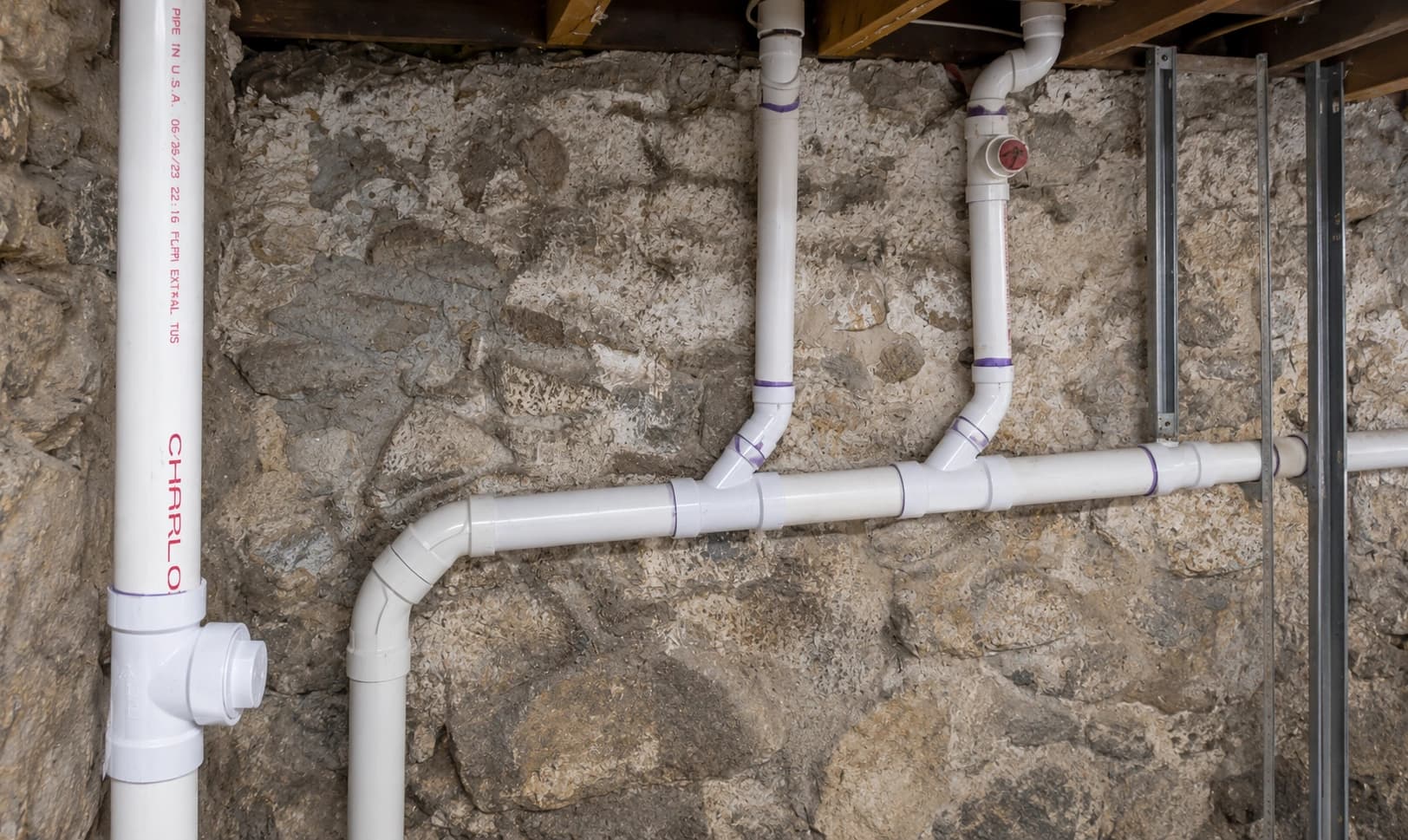
Once fuel gas is ruled out, a sewer smell during a renovation is a plumbing question worth tracing. On a Saturday consultation at a Lowell, MA home in the middle of a renovation, the homeowner wanted to move the kitchen sink across the room to a window wall and had been noticing an odor, on and off, in the downstairs bathroom. Parts of the walls were open, which made some of the answers visible.
What a sewer gas smell can mean
A sewer smell means air from the drainage system may be reaching a room, but it doesn't say where. Common paths include a fixture that hasn't been used and has a dry trap, a failed toilet seal, a drain branch left open, a loose joint, or a venting problem that pulls water out of a trap. More than one can exist at once, and air moving through the house can carry the smell away from its source. If the odor is strong or anyone feels ill, go outside.
What we found in the basement
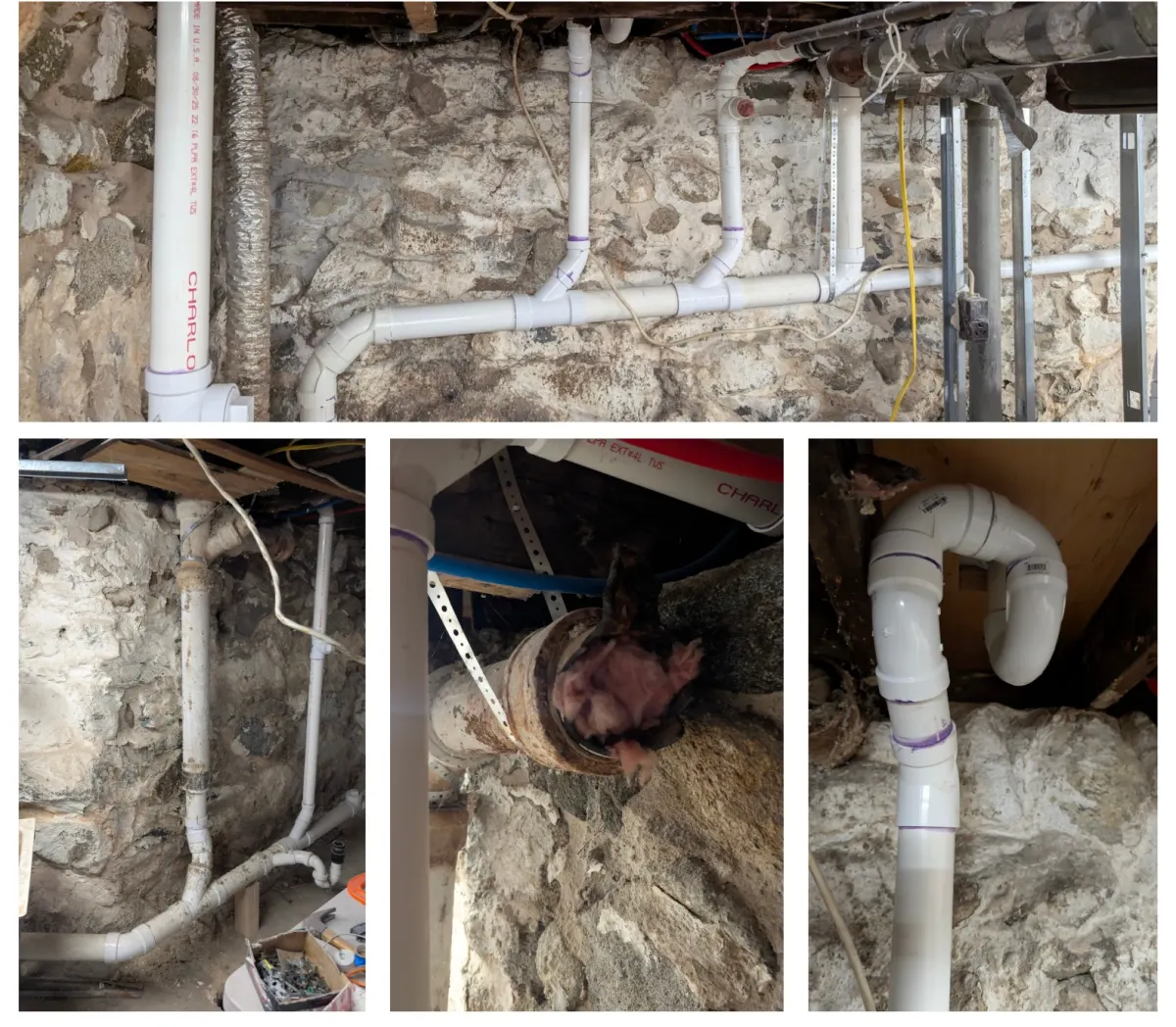
The strongest evidence was in the basement: a drain connection with an open end, stuffed with fiberglass insulation. An uncapped drain gives sewer air a direct path into the house, which made it a credible source of the smell. Insulation pushed into a pipe isn't a seal.
The bathroom branch and shower connection raised more questions. One drain joint had been marked as not glued, part of the piping lacked proper support and showed wear where it rubbed, and the cleanout arrangement needed review against the new layout. We didn't declare the whole house right or wrong. We documented what we could see so the repair plan, and the inspector, could address it. Open walls show a lot, but not every concealed joint.
Moving a kitchen sink changes the venting
Moving a sink isn't a matter of extending a pipe to the new cabinet. The new spot needs a drain that's sized and sloped correctly, a trap, a workable vent, accessible connections and a water supply. Here, the window limited a straight vent route up from the sink, and the framing and existing stack limited routes below it. Those constraints need answers before cabinets and counters lock the layout in.
A vent lets air into the drainage system so traps keep the water seal that blocks sewer air. That doesn't mean every fixture needs its own pipe through the roof; depending on the layout and the code, vents can be connected in an approved arrangement. A relocated kitchen sink making gurgling noise usually points to the venting that came with the move, though a partial restriction or a loose connection can make the same sound. Our guide to a gurgling kitchen drain explains that sound in more detail.
For this project, the plan used the area already opened for the sink move to coordinate the kitchen and downstairs bathroom work. That was a planning concept, not a code approval. Pipe sizes, connection points and the vent route still had to be confirmed for the permit, and the sink, faucet and cabinet mattered too, since their rough-in dimensions can change the plumbing.
When the work wasn't permitted
An inspector had already flagged work at the house and required it to go through the permit process. The homeowner told us no fine was issued, but that's one outcome, not a promise for anyone else. When covered plumbing is already done or partly hidden at a house like this one, the Lowell plumbing inspector decides what must be exposed, corrected and inspected. A typical path looks like this:
- Pause the affected work, and don't close walls over plumbing that still needs review.
- Expose only what the licensed plumber and inspector need to see.
- Document the accessible drain, vent, supply and fixture connections.
- Define a permitted scope, with other trades keeping their own parts.
- Leave the work open for the required inspections.
- Close walls and finish only after approval.
In Massachusetts, the licensed plumber applies for the plumbing permit before covered work begins. We can pull the permit for work we perform and coordinate its inspections, but approval rests with the inspector, and no one can promise a retroactive permit will pass without changes.
The plan we proposed
The preliminary plan was to close the open drain connection properly, correct the downstairs bathroom's drainage and venting, add support, review the cleanouts and route the relocated sink into an approved drain and vent arrangement. Existing cast iron on the upper floors could stay only where its condition and connections supported it. None of it was finished at the time of the visit. The open basement connection was confirmed; the shared vent route, cleanout locations, stack connection and bathroom branch details still depended on field conditions, the permit documents and the inspector's review.
Costs and next steps
Cost depends on the confirmed source, access, pipe materials, the vent route, how many fixtures are affected, the permit and the finish work. Closing one open branch and redesigning drains and vents across two rooms aren't the same job. Open walls may save some access work, but nobody can promise savings before the scope is clear.
We repair confirmed defects in accessible drain and vent piping, and our drain repair and complete system design services cover renovation work like this. Drain cleaning, sewer service, camera inspection, root work, jetting and trenchless repair are referrals.
Jeneral Plumbing is based in Westford, MA, and is owner-operated by a Licensed Master Plumber (MA #9628831-PL-M). We take on Lowell plumbing work like this renovation, and we serve homes within 20 miles across Middlesex & Worcester County; we confirm your address and the work when you call. During regular hours, a visit carries an $80 dispatch fee — the cost of the visit, waived when you hire us for the work. Approved work is priced at a flat rate before it begins. Call (978) 392-7789 to describe the odor, the rooms affected and any open pipe you can see.
Written by Jeneral Plumbing.
This article was drafted with AI writing tools and edited before publication. AI tools did not inspect any job or validate technical conclusions.
Last updated .