

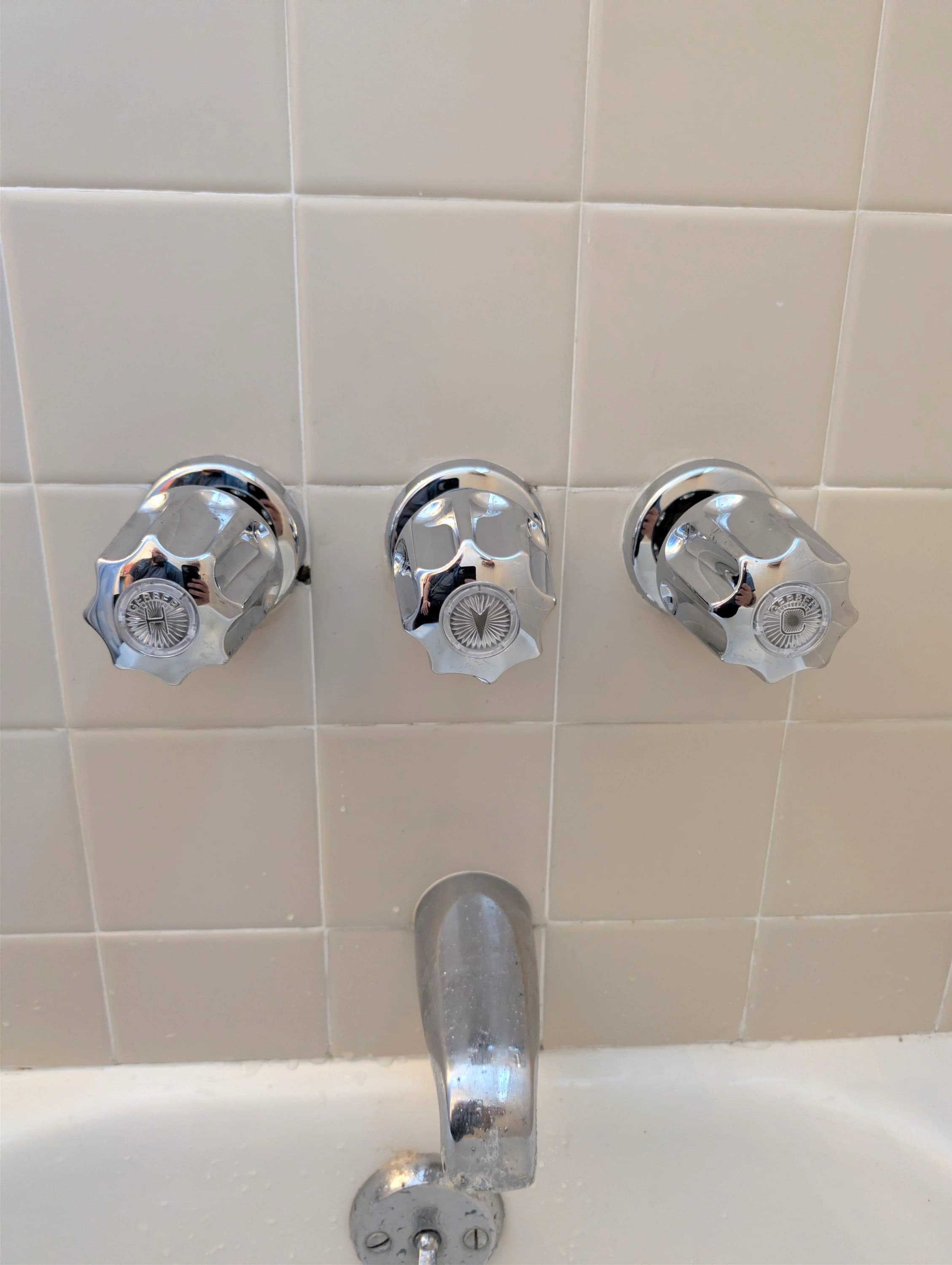
A stuck shower valve does not automatically mean the entire concealed valve has failed. From my Westford base, I recently evaluated one in Boxborough, MA, where the handle would not operate normally, the internal cartridge was seized, and the trim would not release. What looked like a small parts repair had become a choice between a careful service attempt and a larger valve-body replacement requiring wall access.
The existing equipment was a Delta Monitor shower valve installed about 15 years earlier. That product name identified what was present; it did not establish the exact cartridge, guarantee that a compatible part remained available, or prove that the valve body was sound. I inspected the accessible components and stopped before force could turn a controlled decision into a broken concealed fitting or active leak.
This is the useful lesson from that call: a stuck valve needs a condition-based plan. Age, finish, and brand are context. Identification, part compatibility, corrosion, access, shutoff condition, and the integrity of the valve body determine whether a cartridge repair is reasonable or a full replacement deserves consideration.
Why a Stuck Shower Valve Is Not a Remote Diagnosis
A handle that will not turn can point to several different components. The handle or adapter may be damaged, a fastener may be corroded, the trim may be binding, the cartridge may be seized, or the concealed valve body may have a condition that changes the scope. Deposits can contribute, but appearance alone cannot tell me which part has stopped moving.
The symptom also matters. The valve may feel stiff through part of its travel, refuse to rotate at all, fail to control temperature normally, drip after shutoff, or remain partly open. Those patterns are useful when you call, but none identifies a cartridge by itself. I need to operate the fixture when it is safe, inspect accessible trim and controls, identify the valve as reliably as possible, and check for signs of leakage.
If a shower will not shut off and water is running where it should not, do not keep forcing the handle. Use an accessible fixture shutoff or the home’s main water shutoff if you can do so safely, then call for help. For an active, uncontrolled Boxborough leak, the Boxborough emergency plumbing page explains the first information to have ready.
What I Found at the Boxborough Shower
The homeowner reported a control that no longer operated properly. Once I removed what could be accessed without damage, I found that the cartridge would not release and the chrome trim also would not budge. This was not a situation where I could responsibly promise a quick cartridge swap before identifying a verified part and determining whether the assembly could come apart without damaging the concealed body.
I explained two possible paths. The first was a component-service attempt only if the valve could be identified, a compatible cartridge could be confirmed, and the existing parts could be removed with an acceptable level of risk. The second was replacement of the concealed valve assembly, with access through the wall behind the shower rather than opening the shower surround if the field conditions allowed that route.
The homeowner chose not to authorize the larger scope during that visit. That is a valid use of an assessment: understand the condition, the access, and the price, then decide when the project fits. I did not force the seized parts, claim that replacement was the only possible answer, or leave the homeowner believing a 15-year age alone settled the decision.
Why Forcing the Handle Can Broaden the Repair
Force transfers somewhere. A tool applied to a seized handle, trim screw, retaining part, or cartridge can damage the component being removed, distort the valve body, or stress piping and connections behind the wall. That does not mean every service attempt will cause a leak. It means the condition and access have to justify the attempt before pressure is applied.
A homeowner can see the trim but not the full valve body or its supports. If the valve breaks while the water is on, isolation becomes the immediate priority. If it breaks with the water off, the project may still expand because the shower cannot return to service until the concealed condition is resolved.
The practical stop point is simple: if normal operation has become stiff, do not use extra force, locking pliers, or improvised extensions to make the handle move. Note whether the problem affects rotation, push-pull movement, temperature, flow, or shutoff. Those details help me distinguish a serviceable exterior part from a cartridge or concealed-body question.
Cartridge Service Versus Complete Replacement
A cartridge repair remains a reasonable path when I can identify the valve, verify a compatible part, isolate the water, remove the trim and retaining components without unacceptable damage, and confirm that the valve body can receive the part. The exterior finish does not identify the cartridge reliably because product families can change over time and similar trim can fit different internal generations.
Complete replacement becomes a stronger option when the valve body is damaged, the cartridge cannot be removed without likely body damage, a dependable compatible part cannot be verified, or access is already required to correct a concealed leak or connection. The valve can also sit within a larger bathroom renovation where opening and finish responsibilities change the practical comparison.
I separate those paths before pricing:
- Component repair: identified valve, verified compatible part, sound body, workable trim and retaining parts, and safe water isolation.
- Valve-body replacement: confirmed body damage, unserviceable seizure, unavailable or unverified parts, concealed leakage, or another condition that requires access behind the finish.
- Further planning: uncertain identification, finish access that has not been authorized, shutoff problems, or connected piping that needs a separate scope.
This keeps the repair-or-replace choice tied to confirmed work rather than a preference for replacement. The written scope can then state which component is being serviced, what access is required, and what conditions would stop the approved path.
The fixture repair service covers a serviceable cartridge, stem, seal, diverter, handle, or related accessible component. When evidence supports replacing the concealed valve and installing compatible trim, the project moves to the fixture installation path. The diagnosis determines which page owns the work; the homeowner does not have to guess from the symptom.
Does a 15-Year-Old Valve Need Replacement?
No. Fifteen years provides useful history, but it is not an expiration date. An older valve can remain a repair candidate when the body is sound, the exact component is identifiable, a verified part is available, and the assembly can be serviced without unreasonable damage. A newer valve can still require replacement if its body or connections are damaged.
Parts availability is model-specific. A product listed online may be mislabeled, used, incomplete, or intended for a different generation, so its existence does not prove fit. I do not install a guessed cartridge or promise availability before the existing valve has been identified as far as access and reliable records allow.
Prior service history also matters. Tool marks, altered retaining parts, mixed trim, or evidence of a past leak can change how I approach disassembly. Those facts do not make the previous homeowner or contractor a target for blame; they simply become part of the current repair decision.
What Wall Access Really Means
A concealed shower valve sits behind a finished surface, but the best access route is property-specific. An adjacent closet or drywall partition may allow rear access. Another layout may require an opening through the shower-side finish, and some bathrooms already have a service panel in a useful location. I inspect both sides before promising that tile or a surround can remain untouched.
In the Boxborough case, rear-wall access was the proposed replacement route. That plan would have allowed the old valve body and connected piping to be reached without beginning at the shower face, subject to the actual wall contents and dimensions. No replacement was performed during that visit, so this was a proposed scope, not a completed outcome.
For a valve replacement, the written proposal should identify who opens the wall, the expected opening, which plumbing work is included, and who restores drywall, tile, waterproofing, paint, or other finishes. Wall and finish restoration remain separate unless the proposal expressly includes them. I do not describe a plumbing access opening as a finished renovation by default.
If electrical systems are present in the work area, their assessment and any electrical work belong to a licensed electrician. My licence covers plumbing and gas fitting, not electrical work. I coordinate only the plumbing around the electrician’s separate scope and do not assess, alter, or certify electrical systems.
How a Replacement Valve Is Selected
Replacement begins with function and fit, not the logo on the old trim. The new valve and trim need to match the intended shower or tub-shower use, supply arrangement, wall depth, openings, piping, access, and manufacturer instructions. Applicable pressure-balancing or thermostatic protection and anti-scald requirements also have to be addressed in the permitted design.
Old trim is not automatically reusable with a new valve body. Handles, escutcheons, mounting patterns, stems, and internal components are product-specific, so a finish preference has to be checked against the selected rough valve before work begins. A replacement proposal should name the agreed equipment and clarify whether the homeowner or Jeneral Plumbing is supplying it.
A new valve cannot come with a promise that every future cartridge will release easily or remain available indefinitely. Good records still help: keep the model number, instructions, receipt, and parts list with the home’s documents. Planned access can make a future evaluation less disruptive, but it does not guarantee what condition a later service call will find.
Permits, Inspection, and Separate Responsibilities
Massachusetts requirements depend on the work being performed. For covered plumbing work, I confirm the applicable permit, submit it before regulated work begins, complete the contracted plumbing, and coordinate the required inspection stages. The local plumbing inspector makes the project-specific determination and decides approval.
My assessment of the valve is not a municipal inspection, home inspection, code certification, or destructive investigation. It documents accessible conditions and supports a written plumbing scope. Finish, waterproofing, structural, and electrical responsibilities remain with the properly qualified people for those scopes; a licensed electrician performs and assesses electrical work, while I coordinate only the plumbing around it.
Jeneral Plumbing is owner-operated by a Licensed Master Plumber (MA #9628831-PL-M). The company was founded in 2023, so I describe its history accurately while bringing my individual trade experience to the repair decision. The permit and inspection process remains tied to the actual project rather than a blanket statement about every cartridge or valve.
Can Water Quality Create a Stuck Shower Valve?
Mineral deposits can contribute to resistance or wear, but a single valve does not prove that a whole home has hard water. Residue on trim also does not reveal what is happening inside the cartridge or establish why it seized. Water source, treatment, temperature, fixture history, and property-specific chemistry can all affect the pattern.
A stuck valve can be the reason to measure a recurring property-wide pattern, not proof of that pattern by itself. I keep the fixture finding separate from any treatment recommendation.
If deposits or repeated cartridge wear appear across several fixtures, testing comes before a treatment recommendation. My water testing service can screen property-specific field parameters and explain when certified-laboratory analysis is appropriate for health-related questions. A treatment discussion follows measured results and homeowner goals; it is not an automatic add-on to a shower repair.
Cleaning visible trim according to the fixture instructions and reporting early changes can help preserve useful information. It does not guarantee that a cartridge will remain serviceable. If the handle begins to bind or temperature control changes, stop short of forcing it and describe when the symptom began.
How I Price the Visit
I do not quote one universal price from the valve’s age or a photo of the trim. Cost depends on identification, verified parts, shutoff condition, disassembly risk, valve-body condition, connected piping, access, finish responsibilities, permit requirements, and the repair or replacement path. A cartridge that releases normally is a different scope from a concealed valve replacement requiring rear-wall access.
For regular-hours service, the visit includes an $80 dispatch fee — the cost of the visit, waived when you hire us for the work. After I assess the valve, I present a written flat-rate price for the defined plumbing scope before work begins. The proposal identifies exclusions and conditions that could require a revised authorization rather than burying them in a generic estimate.
The price therefore follows the confirmed path and access rather than a generic number attached to the symptom. If conditions change before work starts, I explain the revised scope and total before the homeowner approves it.
That process is what the Boxborough homeowner received before deciding to defer the larger project. Paying for an assessment does not obligate a homeowner to approve the proposed work. It provides a documented basis for comparing a component attempt, a valve replacement, and the access or finish work each option may require.
Serving Boxborough and Nearby Communities
I handle fixture questions from Westford through Chelmsford, Acton, Littleton, Groton, Boxborough, and other communities across Middlesex & Worcester County and southern New Hampshire. Town context helps with scheduling and permit coordination, but it does not diagnose a stuck valve or establish a property’s water quality. The installed equipment and conditions inside the home control the recommendation.
If the handle is getting harder to move, note whether flow, temperature, or shutoff has changed and avoid applying extra force. If water is escaping from the valve area, stop using the shower and isolate the water when it is safe. Call Jeneral Plumbing at (978) 392-7789 with the equipment information, symptom, and available access so I can confirm the right next step.
Frequently Asked Questions
Why won’t my shower handle turn?
A handle can stop moving because the handle, adapter, fastener, trim, cartridge, or concealed valve body is binding or damaged. Deposits may contribute, but they are not the only possibility. The cause cannot be diagnosed reliably from handle appearance alone. Avoid extra force and have the accessible parts and valve identity checked.
Can a seized shower cartridge still be replaced?
Sometimes. Cartridge service may remain possible when the valve can be identified, a compatible part is verified, the body appears sound, and retaining components can be removed without unacceptable damage. A completely seized assembly can make that path riskier, especially when the body and connections are concealed. I explain the stop point and replacement option before attempting work that could broaden the scope.
Does a 15-year-old stuck shower valve need complete replacement?
No, age alone does not decide whether a valve needs replacement. Condition, identification, compatible-part availability, prior alterations, access, and valve-body integrity matter more. A serviceable older valve may accept a verified cartridge, while a damaged or unsupported newer valve may not. I base the recommendation on what I can confirm at the property.
Will shower valve replacement damage my tile?
Not necessarily, but tile preservation cannot be promised before both sides of the wall are reviewed. Rear access through drywall or a closet may be practical in some layouts, while others require an opening from the shower side. The written scope should identify the expected access and who handles finish restoration. Concealed conditions can require a revised plan before plumbing proceeds.
Can I reuse the existing shower trim?
Only when the trim is confirmed compatible with the retained or selected valve body and remains in serviceable condition. Similar-looking handles and plates are not automatically interchangeable across product families or generations. A stuck valve may also have damaged trim that cannot be removed intact. I verify fit instead of assuming the visible finish will transfer.
What affects the price of shower valve repair or replacement?
Price follows the confirmed component, part availability, shutoff condition, access, connected piping, permit requirements, and finish responsibilities. A serviceable cartridge and a concealed valve-body replacement are different scopes. I provide a written flat-rate price before authorized work begins.
A stuck shower valve is frustrating, but it does not need to become a forced decision. I will identify what can be confirmed, explain where component repair stops and replacement begins, and give you the scope before you choose. Call (978) 392-7789 to discuss the symptom and schedule an assessment.
Written by Jeneral Plumbing.
This article was drafted with AI writing tools and edited before publication. AI tools did not inspect any job or validate technical conclusions.
Last updated .