Water System Upgrade Costs: An Andover, MA Planning Guide

Water System Upgrade Costs: An Andover, MA Planning Guide

Jeneral Plumbing

Water Testing

Water system upgrade costs become misleading when one estimate combines water treatment, water heating, plumbing repairs, and optional improvements without showing which problem each item addresses. For an Andover homeowner, the useful question is not whether a large package sounds comprehensive. It is which conditions are verified, which scope is urgent, and which choices can wait.

Context Photo 3

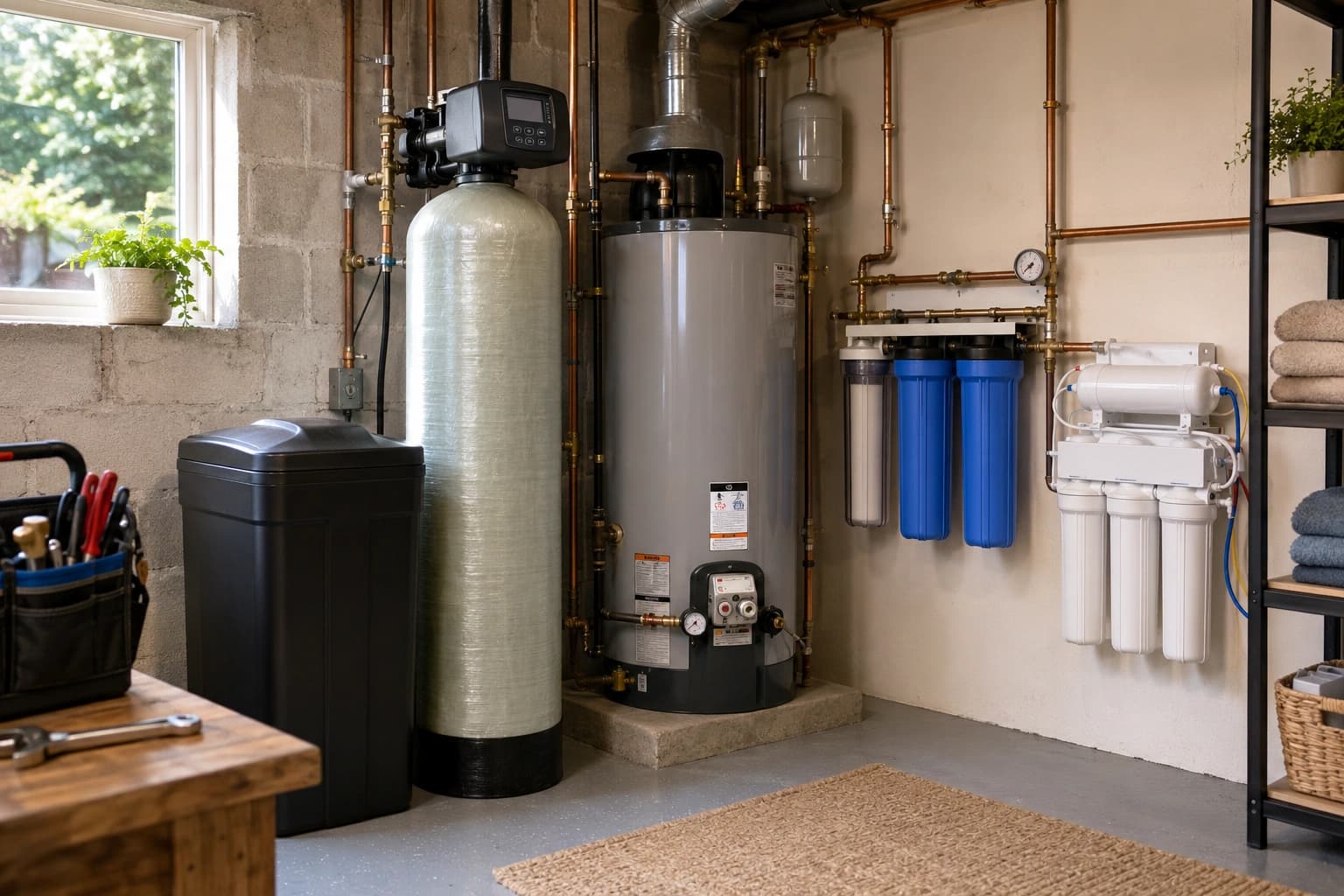
A proposal may place a heating component, water heater, softener, filter, and drinking-water system on the same page. Those items can interact, but they are not one diagnosis. Water system upgrade costs should be separated into confirmed repair work, test-supported treatment, water-heater choices, site work, and improvements that remain optional.

Jeneral Plumbing is owner-operated by a Licensed Master Plumber (MA #9628831-PL-M). I inspect the accessible plumbing and equipment, explain what the evidence supports, and quote authorized repair or installation work at a flat rate. Because Andover is outside my core service area, I consider work there case by case and confirm the location, scope, and availability by phone before scheduling.

Start Water System Upgrade Costs With the Decision

Good planning begins with the reason for the project. An active leak, failed water heater, confirmed treatment problem, and interest in better drinking-water taste have different priorities. Water system upgrade costs only become comparable after each proposed item has a defined goal and a way to verify completion.

I begin with four questions:

  • What changed? Record the leak, loss of hot water, pressure change, scale, staining, odor, taste, equipment alarm, or laboratory result without treating the observation as a diagnosis.
  • What is the water source? Identify Andover public water or a private well before applying a utility report or choosing a sampling plan.
  • What evidence answers the question? A plumbing inspection, field screen, certified-laboratory analysis, equipment manual, or current utility report may each answer a different part.
  • What outcome is being purchased? Define repair, replacement, treatment, monitoring, more testing, or no treatment at all before comparing proposals.

This sequence prevents an aesthetic concern from becoming an unsupported health claim and prevents a water-heater problem from automatically becoming a treatment sale. It also keeps water system upgrade costs tied to the home rather than a generic package.

Separate the Scopes Before Comparing Water System Upgrade Costs

Water treatment, water heating, and hydronic heating can share a mechanical room while doing different jobs. A household softener treats water flowing through the domestic plumbing. A water heater produces domestic hot water. A boiler heat exchanger may serve a closed heating loop, an indirect tank, or another configuration, so its actual flow path must be identified before household water chemistry is blamed for its condition.

That distinction matters to water system upgrade costs. If a failed component is not exposed to the treated domestic-water path, adding treatment cannot be presented as its repair. If a treatment system restricts flow, leaks, or has a verified performance problem, that condition deserves its own inspection and scope.

I divide a mixed proposal into practical categories:

  • Immediate plumbing or heating work: confirmed leakage, failed equipment, code concerns, drainage problems, or another condition that needs a defined repair.
  • Diagnostic work: source review, pressure checks, equipment inspection, field screening, or properly selected certified-laboratory testing.
  • Test-supported treatment: equipment selected for the measured condition, treatment goal, flow, plumbing, utilities, drain access, maintenance, and certification requirements.
  • Water-heater replacement: fuel, capacity, recovery, venting, electrical service, condensate, access, installation condition, and current incentive eligibility.
  • Optional upgrades: convenience, monitoring, fixture changes, efficiency preferences, or future planning that can be priced separately.

The homeowner can then approve one scope without assuming every other item is required. The plumbing installation and upgrade guide explains how access, code, site work, and equipment selection shape a proposal beyond the equipment box.

What Andover’s Current Water Report Can and Cannot Answer

The Town of Andover’s 2025 Water Quality Report, issued in June 2026 for public water system PWS ID 3009000, states that Andover’s public water met or exceeded all federal and state drinking-water standards during calendar year 2025. That utility-wide compliance statement is a starting point, not proof that a particular home needs a softener, filter, reverse-osmosis unit, or water-heater change.

MassDEP’s Private Well Guidelines cover private supplies, which are outside the municipal report. Whether a property uses town water or a private well, I start by identifying the supply, reviewing the applicable report, inspecting the home’s plumbing and equipment, and choosing a properly collected sample for the question being investigated.

Household evidence is the final step before treatment selection. Water system upgrade costs should follow results that are relevant to the sample point and stated concern, not a townwide assumption. Results may point to activated carbon, reverse osmosis, ion exchange, oxidation/filtration, UV, more testing, plumbing work, monitoring, or no treatment at all.

A specific model should be credited with addressing a contaminant only when that exact model carries a current third-party certification for that exact contaminant, within the certification’s stated operating conditions. A technology class, brochure, field TDS reading, or result from another property does not establish that claim.

About this water information

Utility reports summarize testing across a public water system; they are not a test of the water at your specific faucet. EWG health guidelines may be lower than enforceable federal or state limits. Homes on private wells are not represented by municipal utility data. Treatment recommendations should be based on the current utility report, household plumbing conditions, and a properly collected water sample.

Reviewed by: Jeneral Plumbing — August 21, 2026. Official water information: Town of Andover’s 2025 Water Quality Report · MassDEP Private Well Guidelines.

Water System Upgrade Costs for Treatment Follow the Test

The visible symptom does not select treatment. White residue can prompt hardness testing, but appearance alone does not establish total hardness or prove that ion exchange is appropriate. Staining, odor, taste, cloudiness, and sediment also need methods chosen for the concern rather than a one-size field strip.

The water-testing process distinguishes field screening from certified-laboratory analysis. A field instrument reports only what it is designed and calibrated to measure. A TDS meter estimates dissolved ionic content from conductivity; it does not identify the dissolved constituents, measure PFAS, or determine which treatment class should be installed.

For health-related or analyte-specific questions, the sampling containers, preservation, collection method, holding time, laboratory certification, and requested panel matter. The result then has to be interpreted against the relevant enforceable limit when one exists. The home water-quality decision guide helps connect source information, household conditions, and the correct testing path.

Water system upgrade costs for treatment also include the full installation. Flow, pressure, peak demand, drain capacity, backwash rate, power, bypass, sampling points, access, freeze exposure, pretreatment, consumables, startup, and future service all affect the scope. A lower equipment price is not comparable if those requirements are missing.

After the result is understood, the test-first water-treatment service can evaluate coordinated stages. The filtration and softener service covers equipment inspection, repair, maintenance, and installation when the need is established. Either path can end with no new treatment equipment.

How Each Treatment Class Changes the Scope

Technology classes should be matched to the verified goal. They are not interchangeable levels of a universal purification ladder, and combining more stages does not automatically create a better result.

  • Activated carbon: evaluate the exact media, certified claim, contact time, flow, capacity, pretreatment, and replacement plan for the documented goal.
  • Reverse osmosis: evaluate point-of-use demand, feed conditions, pretreatment, recovery, drain connection, storage, sanitation, maintenance, and the exact model’s current certified claims.
  • Ion exchange: use measured hardness or another specifically supported exchange goal, then size the system around demand, regeneration, salt, drain capacity, and water conditions.
  • Oxidation/filtration: base the design on relevant laboratory results, chemistry, flow, backwash needs, utilities, media, and waste discharge.
  • UV: confirm the microbial question, validated dose, rated flow, water clarity, pretreatment, lamp and sleeve care, power, alarm, and exact model documentation.
  • No treatment at all: keep this option when the evidence supports plumbing repair, equipment maintenance, monitoring, more testing, or no change.

Water system upgrade costs rise when the design needs several coordinated stages, new drainage, electrical work, larger piping, or difficult access. They can also fall when testing shows that an assumed stage is unnecessary. That is why the equipment list comes after evidence.

Current Water-Heater Pricing Within Water System Upgrade Costs

Water-heater pricing is easier to discuss than treatment pricing because Jeneral Plumbing publishes installed starting points and ranges for defined equipment classes. The following Jeneral Plumbing installed prices are stated as of August 21, 2026 and still require a site-specific scope:

  • Standard electric resistance tank: from $2,300.
  • Gas storage water heater: $2,900 – $6,500.
  • Hybrid heat pump water heater: up to $7,800 before the current Mass Save incentive described below.
  • Condensing tankless water heater: $8,500 – $11,000+.

Those figures, current as of August 21, 2026, are not interchangeable bids. Fuel changes, venting, gas supply, electrical capacity, condensate drainage, tank size, hot-water demand, access, permits, code work, recirculation, expansion control, leak protection, and removal can change the scope. The water-heater repair and replacement guide separates repair from the available replacement classes.

A hybrid heat pump water heater adds room-volume, ambient-temperature, air-path, sound, condensate, electrical, and recovery considerations. The heat pump water-heater planning guide covers those constraints before a model is selected. Water system upgrade costs should include required site work, not only the advertised appliance price.

The Current Mass Save Figure and Its Limits

As of August 21, 2026, Mass Save lists a $750-per-unit incentive for qualifying ENERGY STAR-certified heat pump water heaters. Eligibility, participating utility, property type, existing equipment, qualifying model, installation pathway, documentation, and current program terms must be confirmed before purchase. The incentive cannot be assumed from the words “heat pump” alone.

I keep the program decision separate from the plumbing proposal. I can identify the proposed equipment and installation scope, but the program administrator determines eligibility and payment. Water system upgrade costs should show the pre-incentive price and the currently verified incentive separately so a homeowner can see the project cost if eligibility changes or the application is not approved.

Do not add another incentive to water system upgrade costs without a current named program, an official link, a verification date, and terms that apply to the specific project. A homeowner should recheck the linked Mass Save page before equipment is ordered because program rules can change.

What a Flat-Rate Proposal Should Include

Repair and installation work is priced at a flat rate, with the total price and any applicable fees disclosed for approval before work begins. A clear proposal identifies the equipment or repair, access assumptions, plumbing changes, controls, drainage, venting, electrical responsibility, permit responsibility, startup, testing, removal, exclusions, and follow-up.

For treatment work, the proposal should also identify the test basis, design flow, technology class, exact model, certified claim when relevant, consumables, maintenance duties, sampling points, bypass, and verification method. For water heating, it should identify capacity, fuel, venting or electrical needs, condensate where applicable, hot-water performance, warranty boundaries, and incentive assumptions.

Water system upgrade costs are not comparable when one proposal includes site work and another leaves it undefined. Ask whether the existing piping can be reused, whether a drain or circuit is included, who handles finish restoration, what startup verifies, and what happens if a concealed condition changes the authorized scope.

A complete written scope keeps water system upgrade costs connected to work the homeowner can approve and verify. It also shows which responsibility belongs to the plumber, homeowner, laboratory, utility, program administrator, or another trade.

Price alone also cannot establish value. A written scope makes the tradeoffs visible without promising a specific payback, repair avoided, equipment lifespan, energy reduction, health result, or future property outcome.

Put Water System Upgrade Costs in a Defensible Order

When several issues exist, I prioritize conditions that are active and verified. Stop active leakage when it can be done without creating another hazard. Restore failed essential equipment under a defined repair or replacement scope. Then gather the evidence needed for optional treatment and performance decisions.

A practical sequence for water system upgrade costs is:

  • Stabilize: address active water movement, failed hot water, drainage trouble, or another confirmed condition that cannot reasonably wait.
  • Identify: confirm the water source, equipment path, affected fixtures, and whether the concern involves cold water, hot water, heating water, or one outlet.
  • Test and inspect: use the method that answers the question, then document sample points, units, limitations, plumbing conditions, and equipment observations.
  • Compare: review repair, replacement, treatment, monitoring, and no-change choices with separate flat-rate scopes.
  • Verify: define how the completed work will be checked and what ongoing maintenance belongs to the homeowner.

This order does not force every project into the same sequence. A leaking tank and an optional taste concern have different urgency. The point is to prevent optional equipment from obscuring the confirmed problem.

What Water System Upgrade Costs Cannot Promise

Water conditions can contribute to scale, corrosion, staining, odor, taste, fouling, or treatment-equipment stress, but the contribution must be established for the component and water path in question. A treatment proposal cannot promise that every fixture or appliance will last for a fixed period. It also cannot convert a laboratory result into a guaranteed repair avoided.

Energy performance depends on the equipment, fuel, installation, operating mode, hot-water use, incoming temperature, maintenance, and utility rate. A current incentive can reduce an eligible purchase price, but it does not establish a household payback. Water system upgrade costs should therefore separate known installed scope from modeled operating assumptions.

Health and real-estate outcomes require the same restraint. A treatment class alone cannot support a promised health or property outcome. A current certification can support the exact contaminant claim for the exact model under stated conditions; it does not support broader promises.

The honest benefit of test-first planning is narrower and more useful: it reduces the chance of buying equipment that does not match the measured condition. It also creates a record a homeowner can use to compare scopes and verify the stated goal.

Compare Water System Upgrade Costs on Equal Terms

Put competing scopes into the same categories before comparing totals. For treatment, compare test basis, technology, capacity, certification, plumbing, drain, power, startup, consumables, maintenance, and verification. For water heating, compare capacity, fuel, first-hour performance, venting or circuit work, condensate, warranty, removal, and currently verified incentive assumptions.

Then ask what is excluded. Finish work, electrical work, gas work, drainage, permits, disposal, laboratory fees, follow-up sampling, replacement cartridges, media, salt, lamps, and maintenance can change ownership cost. Water system upgrade costs are clearer when those responsibilities are written rather than implied.

A low initial number may still be the right choice when the scope is complete and fits the goal. A larger scope may also be reasonable when testing and site conditions support it. The decision should come from comparable evidence, not a promised savings total that cannot be verified for the property.

Andover Work Is Considered Case by Case

As of August 21, 2026, Andover is outside Jeneral Plumbing’s 23-town core service area across Middlesex & Essex County. I consider Andover work case by case based on location, requested scope, schedule, and whether the project fits the plumbing, water-heating, testing, or treatment services I provide. Calling first avoids treating this guide as a standing availability promise.

My core service-area planning starts with Westford, followed naturally by Chelmsford, Acton, Littleton, Groton, Carlisle, Tewksbury, and Wilmington. A town name never determines treatment or water system upgrade costs. The property’s source, plumbing, equipment, results, access, and goal still control the recommendation.

If an Andover project fits, I provide a defined scope and explain which decisions need laboratory, utility, incentive-program, electrical, heating, or other specialist input. If it does not fit, I say so before a visit is scheduled. Call Jeneral Plumbing at (978) 392-7789 with the address, water source, equipment, symptoms, prior reports, and proposed work.

Water System Upgrade Costs FAQs

How much should an Andover homeowner budget for a water-system upgrade?

There is no defensible universal package price because treatment, water heating, and plumbing repairs have different evidence and site requirements. Start by separating the goals, then price each confirmed scope. The installed water-heater figures in this guide are dated August 21, 2026, while treatment requires current test results and a property-specific design. Water system upgrade costs should be compared only after access, utilities, drainage, startup, maintenance, and exclusions are clear.

Which upgrade should come first?

Address active leakage or failed essential equipment first when the condition and safe next step are confirmed. Then identify the water source, inspect the relevant plumbing and equipment, and select testing for the concern. Optional treatment follows the results, and no treatment at all remains a valid outcome. This order keeps water system upgrade costs focused on the verified need.

Does every Andover home need a softener or filter?

No. Andover’s public-system report does not diagnose one faucet, and private wells require property-specific information. Test the condition tied to the homeowner’s concern before selecting ion exchange, activated carbon, reverse osmosis, oxidation/filtration, UV, or another response. Water system upgrade costs may support maintenance, plumbing work, monitoring, more testing, or no new equipment.

Can I count on the current Mass Save heat pump water-heater incentive?

As of August 21, 2026, the linked Mass Save page lists $750 per qualifying ENERGY STAR-certified heat pump water heater. The program administrator decides eligibility under its current utility, property, equipment, installation, and documentation rules. Verify the exact model and terms before purchase. Keep the pre-incentive project price visible when comparing water system upgrade costs.

Will water treatment extend my water heater or heating equipment life?

It may address a verified water condition in components exposed to that water, but no fixed lifespan can be promised. The equipment flow path, chemistry, pressure, temperature, installation, maintenance, and existing condition all matter. A closed heating loop should not be assumed to share the domestic-water treatment path. Use inspection and testing to define the goal before adding treatment to water system upgrade costs.

What should I compare in two upgrade proposals?

Compare the same equipment goal, test basis, model, capacity, plumbing, utilities, drainage, code work, startup, certification, maintenance, warranty boundary, and exclusions. Check whether incentive assumptions are dated and linked and whether the pre-incentive total is stated. Confirm how the completed work will be verified. Comparable written scopes make water system upgrade costs more useful than a headline price.

Written by Jeneral Plumbing.

This article was drafted with AI writing tools from Jeneral Plumbing job notes and source materials, then edited before publication. AI tools did not inspect the job or validate technical conclusions.

Last updated .

Related Topics:investmentsystemshomeownerssystemannualqualitymineraltreatment

Jeneral Plumbing is owner-operated by a Licensed Master Plumber (MA #9628831-PL-M) serving Westford and 23 towns across Middlesex & Essex County. Call (978) 392-7789 to schedule.

Dealing with this in your home? We can help.