

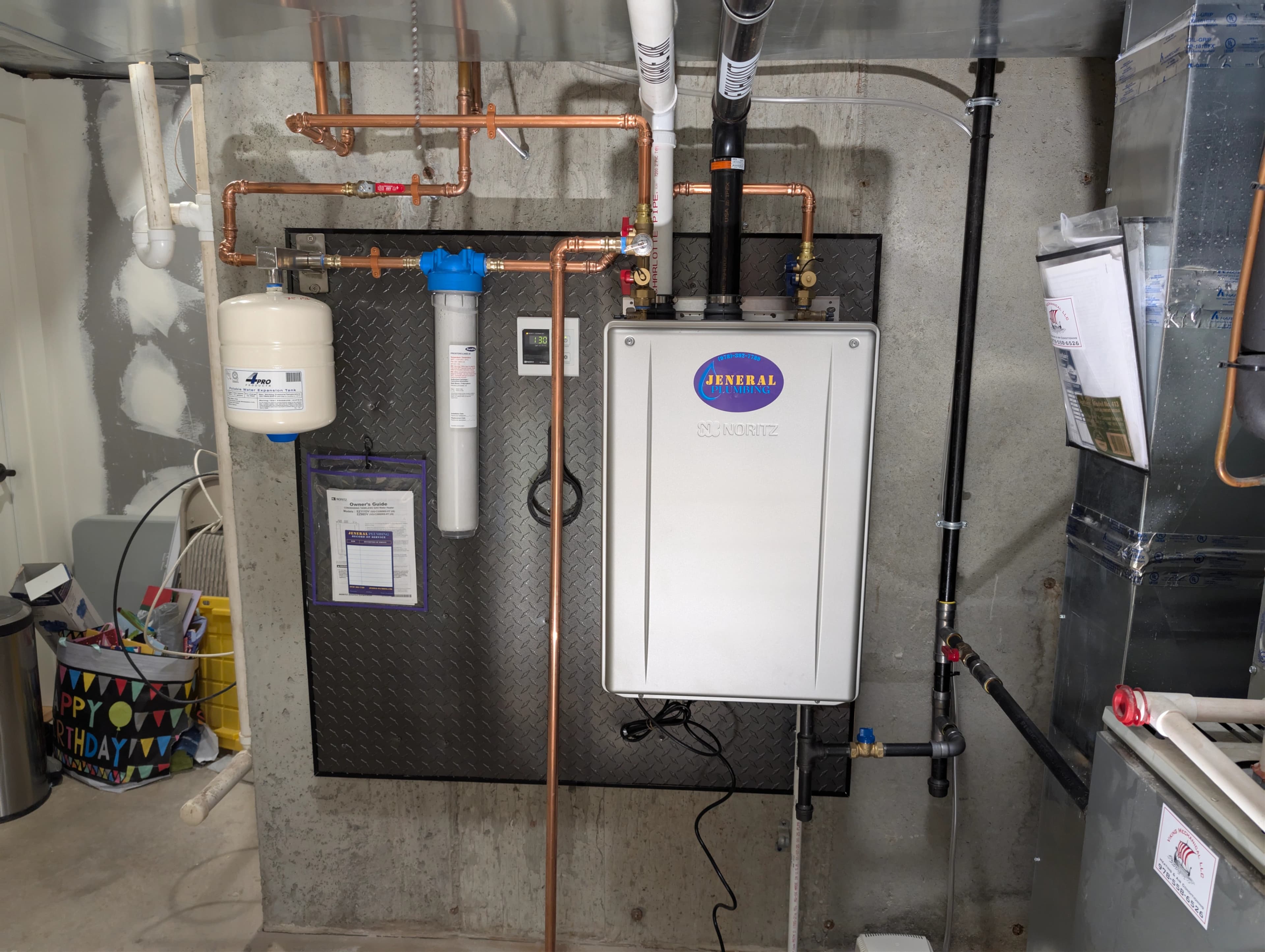
The tankless water heater cost in 2026 is $8,500 – $11,000+ for a complete condensing tankless installation from Jeneral Plumbing. A compatible tankless-for-tankless replacement may sit near the lower end, while a tank-to-tankless conversion or substantial connected work can move higher. That is the same installed range published in my Lowell cost guide and the main tankless water-heater service guide.
A $4,000 quote is materially below Jeneral Plumbing’s complete condensing range. It is a red flag for written scope review, not proof that the contractor’s work is poor or unsafe. The number may describe equipment only, a partial swap, owner-supplied equipment, a different product category, or assumptions about existing gas piping and venting that have not been verified. An honest tankless water heater cost in 2026 comparison starts with matching inclusions and exclusions.
Jeneral Plumbing is based in Westford, MA and is owner-operated by a Licensed Master Plumber (MA #9628831-PL-M). I have more than 20 years in the trade, and I spent seven years with a gas utility. I assess the property before presenting a firm flat-rate scope because gas capacity, approved venting, condensate, water conditions, electrical needs, access, permits, inspection, and commissioning can all affect the tankless water heater cost in 2026.
Tankless Water Heater Cost in 2026: The Complete Range
The quick answer is $8,500 – $11,000+ for a complete whole-home condensing installation. The range does not create a separate lower Jeneral Plumbing tier for an existing tankless replacement. When the location, customer-owned gas piping, intake and exhaust, condensate route, water piping, electrical supply, and controls are compatible, the project may land near $8,500. Conditions that require more connected work can move the proposal higher within or beyond the stated range.
The plus sign matters in tankless water heater cost in 2026 planning. A difficult vent route, customer-owned gas-piping correction, pressure or expansion work, recirculation changes, access constraints, electrical work by the proper trade, or unusual removal and restoration boundaries can extend the project beyond the standard range. I identify known work and important exclusions before authorization. The scope determines the price; the old appliance label does not.
This installed range applies to complete condensing tankless work, not every point-of-use heater, non-condensing product, equipment-only purchase, or owner-supplied project. A quote for a different product cannot be compared as though it covers the same installation. For Westford homeowners, the local water-heating service scope provides the broader repair-and-replacement context. The tankless water heater cost in 2026 becomes meaningful only after the equipment category and complete work are clear.
What a Complete Installed Range Should Cover
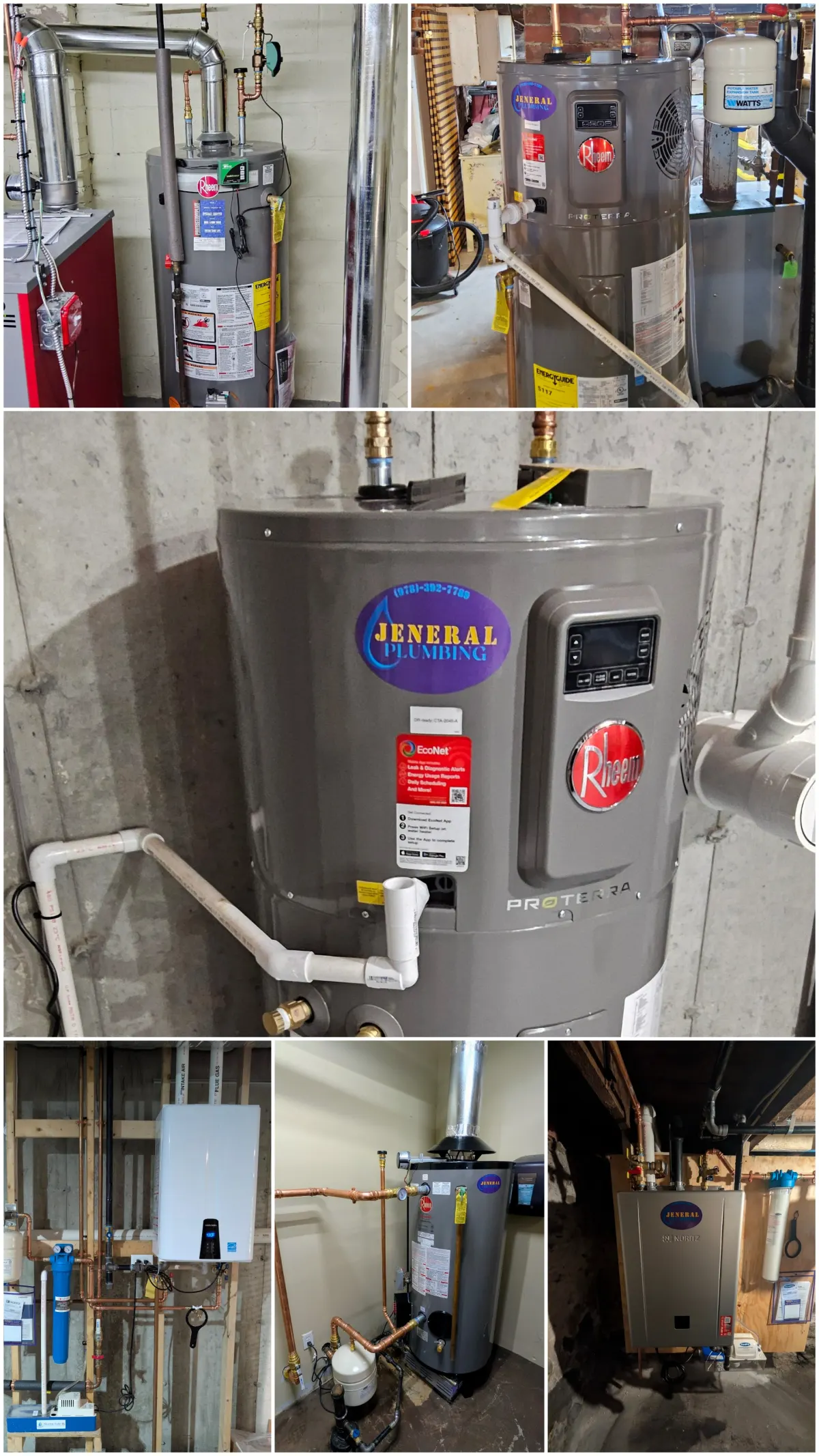
A complete tankless water heater cost in 2026 proposal should identify the appliance and the connected work required to install and commission it. Not every property needs every correction, but each category must be evaluated. A box price cannot show whether the existing gas, vent, water, drain, electrical, or access conditions suit the selected model. Written scope is the only useful basis for comparison.
- Equipment and removal: exact model, old-equipment removal, mounting, service clearances, isolation and service valves, relief protection, and water-piping transitions.
- Gas capacity: connected-load calculation, customer-owned pipe size and length, fittings, pressure, simultaneous demand, and any utility coordination.
- Intake and exhaust: model-approved materials, equivalent length, supports, slope, termination, clearances, and combustion-air route.
- Condensate: compatible drainage, trap, pump, neutralizer, air gap, or freeze protection where the model and site require them.
- Water and controls: piping, static pressure, expansion control, recirculation, electrical power, disconnects, and control requirements.
- Completion: access protection, permit, inspection coordination, startup, commissioning, documentation, and stated restoration boundaries.
Electrical work must be assigned to a licensed electrician when the project requires that trade. The local inspector performs the inspection; I coordinate the applicable plumbing and gas permit and inspection path for my work. The gas utility controls utility-owned service, meter, regulator, activation, and other utility-side decisions. Those boundaries keep the tankless water heater cost in 2026 from silently assuming that one contractor owns every part of the project.
Commissioning belongs in the finished scope. Depending on the model and installation, it can include required water, fuel, vent, condensate, leak, safety, temperature, flow, control, and combustion checks. A unit firing once does not establish that the installation is fully commissioned. The written proposal should make clear what return-to-service work supports the final tankless water heater cost in 2026.
Why a $4,000 Quote Needs a Written Scope Review
A $4,000 figure is materially below the $8,500 – $11,000+ complete condensing range. That difference should prompt questions about scope, not an accusation. The quote may be for equipment, limited labor, a partial replacement, owner-supplied material, or a different water-heater category. It may also assume that the gas line, venting, condensate, electrical supply, water piping, permits, and startup need no correction.
For a fair tankless water heater cost in 2026 comparison, ask whether the proposal includes a gas-load calculation, any required customer-owned gas-piping work, model-approved intake and exhaust, condensate handling, water and pressure corrections, recirculation changes, electrical scope, equipment removal, permit, inspection coordination, startup, and commissioning. Ask which items are allowances and which are exclusions. A one-line price cannot answer those questions.
The red flag is an unexplained scope, not flat-rate pricing. Repair and installation work is priced at a flat rate, with the total price and any applicable fees disclosed for approval before work begins. Two flat-rate proposals can still describe different projects. A complete tankless water heater cost in 2026 review compares the same equipment and responsibilities side by side.
Tankless Replacement Versus Tank-to-Tankless Conversion
An existing tankless replacement can involve less connected work when the mounting location, gas capacity, venting, condensate, water piping, power, and controls remain compatible with the new model. Compatibility must be verified rather than inferred because the old unit operated. Model requirements change, prior work may not suit the replacement, and a visible connection does not show developed gas-pipe length or vent equivalent length.
For tankless water heater cost in 2026 planning, a compatible replacement can sit near the low end of $8,500 – $11,000+. It does not fall into a separate published swap tier. If the new model needs a different vent route, gas correction, condensate change, controls, or piping transition, the replacement can move through or above the range. The proposal should say which existing components are being reused and why.
A storage-tank conversion usually adds design questions. A whole-home tankless unit may need a wall location, higher fuel capacity, new intake and exhaust routes, a condensate path, nearby power, altered water piping, and a plan for the old tank and vent. Household demand also has to be recalculated because stored volume and on-demand flow solve peak use differently. These conditions explain why the tankless water heater cost in 2026 cannot be set from the old heater’s gallon capacity.
Gas Capacity Behind the Installed Cost
Gas capacity is a major variable in tankless water heater cost in 2026 planning. A whole-home tankless model can have a much higher maximum input than the storage heater it replaces, but that does not mean every project needs new gas piping. The selected model’s nameplate input and the property’s connected system decide. A working old heater does not prove that its branch can support the new load.
I calculate credible simultaneous demand using the exact appliance inputs, available pressure, pipe material and diameter, developed length, fittings, and connected equipment. Meter and regulator capacity also need review, while the utility serving the property controls its equipment and service-side requirements. A remote statement such as “the existing line should be enough” is not a calculation. The result determines whether customer-owned piping belongs in the proposal.
When planned customer-owned piping needs a new route or larger section, the gas-line installation scope is developed with the appliance load and site conditions. Permit, pressure testing, inspection, leak checks, and commissioning are separate responsibilities described in writing. Utility coordination does not guarantee a utility upgrade or schedule. The confirmed gas scope, not a generic fuel-input comparison, shapes the tankless water heater cost in 2026.
Venting and Condensate Are Part of the Installation
A condensing tankless installation requires the intake, exhaust, and condensate plan specified for the exact model. Vent material, diameter, equivalent length after fittings, slope, supports, termination arrangement, clearances, snow exposure, and service access all matter. An existing vent is not reusable because it reaches an outside wall. A quote that says “venting included” should still identify the planned route and limits.
Condensing operation produces condensate that needs a compatible path. Depending on the equipment and site, the scope may require a trap, neutralizer, condensate pump, air gap, or freeze protection. A nearby floor drain does not automatically establish an acceptable connection. The required drain work can change the tankless water heater cost in 2026 even when the new appliance mounts where the old one did.
Venting and condensate are two reasons low quotes deserve a written comparison. The question is not whether every project needs the longest route or every accessory; it is whether the exact model and property requirements were evaluated. Omitting a needed item from a proposal does not make the need disappear. Including it only when evidence supports it keeps the tankless water heater cost in 2026 honest.
Water Conditions and Pressure Change the Scope
Water conditions affect maintenance and equipment decisions without making treatment automatic. I use a property-specific field hardness screen and review source, visible sediment, service history, and equipment requirements. That screen supports an equipment decision; it is not a certified-laboratory health or contaminant test. Town names are not substitutes for results from the house.
Hardness minerals can collect in heat-exchanger water passages and influence the model’s descaling schedule. The exact manual, measured water, service history, and scale found during service should guide the interval. I do not promise one schedule for every Westford home or claim that any single result automatically cancels a warranty. The water-testing guide for equipment decisions explains how a property result informs tankless water heater cost in 2026 planning.
I also measure static water pressure. Verified pressure above 80 PSIG triggers current Massachusetts pressure-reduction requirements, but the reading and system configuration still need proper evaluation. Pressure regulation, a downstream gauge, expansion control, or another correction may affect the scope where applicable. High pressure by itself does not mean every manufacturer warranty is automatically void.
If testing and the selected equipment support conditioning, the test-first water-treatment process considers hardness, flow, household demand, drainage, power, and maintenance. A sediment filter does not remove dissolved hardness, and a treatment unit should not be inserted into every quote. Any supported treatment is a separate stated scope. That distinction prevents the tankless water heater cost in 2026 from becoming a bundle of unverified add-ons.
Winter Output and Household Demand Determine the Model
Tankless sizing begins with temperature rise: desired outlet temperature minus incoming-water temperature. As the required rise increases, available gallons per minute decreases. Published maximum flow is not necessarily the output available during a cold Massachusetts inlet condition. I use the selected manufacturer’s performance data at a realistic winter design point.
For tankless water heater cost in 2026 planning, I ask which showers, tubs, faucets, and appliances may operate together. A large rain head, body sprays, soaking tub, or two simultaneous showers can change the design case. Continuous hot water means continued output while flow and temperature rise remain within the model’s rating. It does not mean unlimited gallons per minute.
Some homes are a better fit for storage, hybrid, or another water-heating strategy. The water-heating options guide compares those paths without assuming tankless is right for every property. Equipment fit comes before a return-on-investment claim. Choosing a larger unit without a demand and gas review is not a substitute for design.
Permits, Inspection, and Commissioning Affect the Final Scope
The tankless water heater cost in 2026 proposal should identify the applicable permit and inspection path. Requirements, inspection timing, equipment availability, utility coordination, and other-trade work vary by project. I do not promise a universal one-day installation or a one-week start. Scheduling is confirmed only after the work and dependencies are known.
I perform the licensed plumbing and gas work described in my proposal, pull applicable permits, and coordinate inspection. The local inspector performs the inspection, the utility controls its service-side responsibilities, and a licensed electrician handles electrical work outside my license. Structural, abatement, finish, and restoration work also remain with the responsible party when excluded. Clear ownership keeps the tankless water heater cost in 2026 from hiding another trade’s work.
Commissioning documents the installed equipment under model-specific procedures. It may include flow and temperature checks, fuel and leak testing, vent and condensate review, control setup, safety checks, and combustion measurements. The exact steps follow the model and permitted scope. A proposal should not end at mounting the unit if startup and return to service remain unfinished.
Heat-Exchanger Warranty Terms Are Component-Specific
Noritz carries an industry-unique 25-year heat-exchanger warranty on residential tankless water heaters. Rinnai and Navien each carry 15-year heat-exchanger coverage. These are component terms, not whole-unit lifespan guarantees. They do not promise the same term for parts, labor, access, installation, venting, water treatment, maintenance, or connected corrections.
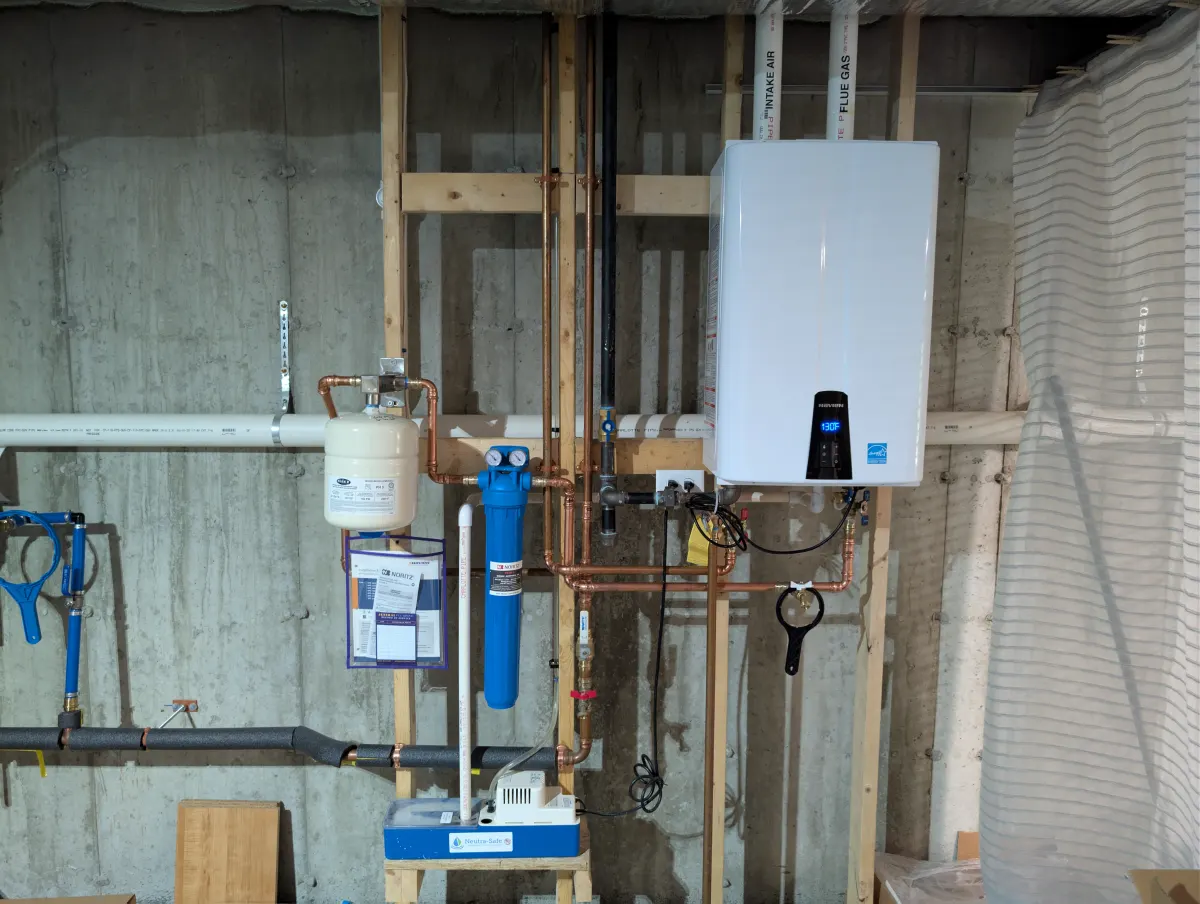
Warranty eligibility follows the exact model, application, registration or documentation, installation, water conditions, maintenance, and current written terms. The manufacturer reviews and decides a claim. A long heat-exchanger term should not be multiplied into a guaranteed equipment life or used to justify an incomplete installation. Warranty comparison is one part of tankless water heater cost in 2026, not the whole decision.
I am factory trained by Noritz, Rinnai, and Navien, and I am Navien Service Specialist certified. Noritz is included here as a factual warranty comparison, not a partner recommendation. Model selection still follows winter output, gas and vent conditions, water chemistry, service access, parts support, current availability, and the homeowner’s goals. The biggest warranty number does not select the equipment by itself.
Payback and Service Life Need Honest Assumptions
Jeneral Plumbing’s current comparison puts tankless payback at least eight years in the best case and commonly 30–50 years. The installed premium, existing heater, hot-water use, fuel price, maintenance, water chemistry, and actual service life move the result. Fuel savings may not recover the upgrade cost during one ownership period. I do not present tankless water heater cost in 2026 as a guaranteed investment return.
Current installed pricing for gas storage across all vent types is $2,900 – $6,500, compared with $8,500 – $11,000+ for condensing tankless. A maintained condensing tankless unit commonly reaches 20 years or more, while storage tanks commonly fall in an 8-to-12-year range, but neither span is guaranteed. Installation quality, water conditions, demand, maintenance, environment, and parts availability affect service life. A heat-exchanger warranty is not the same as an equipment-life promise.
Tankless may still fit because a properly sized unit provides continuous hot water within rated output, frees mechanical-room floor space, and has serviceable components. Those are practical benefits even when financial payback is long. Power dependence, periodic maintenance, winter flow, higher installed cost, and property fit belong on the other side of the comparison. The tankless water heater cost in 2026 should support that decision rather than predetermine it.
Maintenance intervals follow the exact manual, water results, service history, and observed scale. I do not attach a universal annual schedule or an unsupported per-visit price to every unit. Descaling, filter, condensate, vent, combustion, and control needs vary with the equipment and condition. Those future responsibilities belong in the ownership discussion even though they are not a fixed installation line item.
How to Compare Tankless Water Heater Cost in 2026 Quotes
Put each proposed model, maximum input, rated winter output, gas scope, venting, condensate, water and pressure work, electrical needs, permits, inspection, removal, startup, warranty, and exclusions side by side. The lowest total may describe a different project rather than a better price for the same work. A tankless water heater cost in 2026 comparison succeeds only when the responsibilities match.
- Confirm the exact model and household demand at a realistic winter temperature rise.
- Ask whether connected gas load, customer-owned piping, meter, and regulator capacity were evaluated.
- Identify the intake, exhaust, termination, condensate, electrical, and control plan.
- Confirm which water-piping, pressure, expansion, recirculation, and test-supported treatment items are included.
- Check equipment removal, access, permit, inspection coordination, startup, commissioning, and restoration boundaries.
- Read warranty coverage by component and current eligibility terms rather than by the largest year number.
Allowances and exclusions should be explicit before approval. A flat-rate quote can be fully transparent when the complete scope is written. A quote without enough detail should be clarified before it is compared to the Jeneral Plumbing range. The red flag remains an unexplained scope, not the existence of one lower number.
Owner-Operated 2026 Cost Assessments From Westford
From Westford, I serve Chelmsford, Acton, Littleton, Groton, Tyngsborough, Billerica, and other core communities across Middlesex & Essex County. Water source, gas capacity, vent routes, access, and household demand remain property-specific in every town. The same tankless water heater cost in 2026 range applies, but the confirmed work determines where a proposal lands.
For a regular-hours tankless assessment, Jeneral Plumbing charges an $80 dispatch fee — the cost of the visit, waived when you hire us for the work. I document the site conditions, explain required and conditional work, and present approved installation work at a flat rate. The total and any applicable fees are disclosed for approval before work begins. A firm proposal follows the property assessment rather than a remote promise.
Call (978) 392-7789 with the current heater, fuel, household demand, location, and known gas, vent, condensate, or water concerns. I can explain the $8,500 – $11,000+ planning range by phone, but measurements and site conditions set the final scope. That is how I keep the tankless water heater cost in 2026 consistent without pretending every house is identical.
Tankless Water Heater Cost in 2026 Questions
How much does a condensing tankless water heater cost to install?
The complete installed range is $8,500 – $11,000+ for a whole-home condensing tankless system. A compatible replacement may sit near the lower end, while conversion, gas, venting, condensate, pressure, recirculation, access, electrical, permit, or other connected work can move it higher. The tankless water heater cost in 2026 range does not create a separate low-cost swap tier. I confirm site conditions before presenting the flat-rate proposal.
Why should I review the scope of a $4,000 tankless quote?
A $4,000 figure is materially below Jeneral Plumbing’s complete condensing range, so ask what it includes and excludes. It may describe equipment, a partial swap, owner-supplied material, a different product category, or assumptions about gas, vent, condensate, water, electrical, permit, and commissioning needs. That is a scope-review red flag, not proof of poor or unsafe work. Compare the same equipment and responsibilities before comparing the tankless water heater cost in 2026.
Does an existing tankless unit guarantee a low-cost swap?
No. The old location, gas capacity, venting, condensate, water piping, power, and controls must suit the replacement model. A compatible swap may land near the low end of $8,500 – $11,000+, while required corrections can move higher. Operating history does not prove every existing component complies with the new model’s requirements.
Can I get a firm tankless installation price by phone?
A phone call can establish the tankless water heater cost in 2026 planning range and gather the current equipment, fuel, demand, and access details. It cannot confirm developed gas-pipe length, available pressure, meter capacity, vent clearances, water conditions, condensate route, or every permit boundary. Photos can help prepare for the visit but do not replace measurements. A firm flat-rate proposal follows the site assessment.
Which tankless brand has the longest heat-exchanger warranty?
Noritz has the industry-unique 25-year heat-exchanger warranty on residential tankless water heaters. Rinnai and Navien each have 15-year heat-exchanger coverage. Those are component terms, not whole-unit parts, labor, installation, maintenance, or lifespan guarantees. Confirm the exact model, application, documentation, water, maintenance, and current written terms before relying on coverage. Warranty belongs in a tankless water heater cost in 2026 comparison, but it does not set the installation scope.
How is a regular-hours tankless assessment priced?
For regular-hours service, Jeneral Plumbing charges an $80 dispatch fee — the cost of the visit, waived when you hire us for the work. I assess gas capacity, venting, condensate, water, electrical boundaries, access, permit needs, and household demand before presenting a proposal. Approved installation work is priced at a flat rate, with the total and applicable fees disclosed before work begins. Call (978) 392-7789 to discuss the tankless water heater cost in 2026 range for a Westford-area property.
Written by Jeneral Plumbing.
Last updated .