
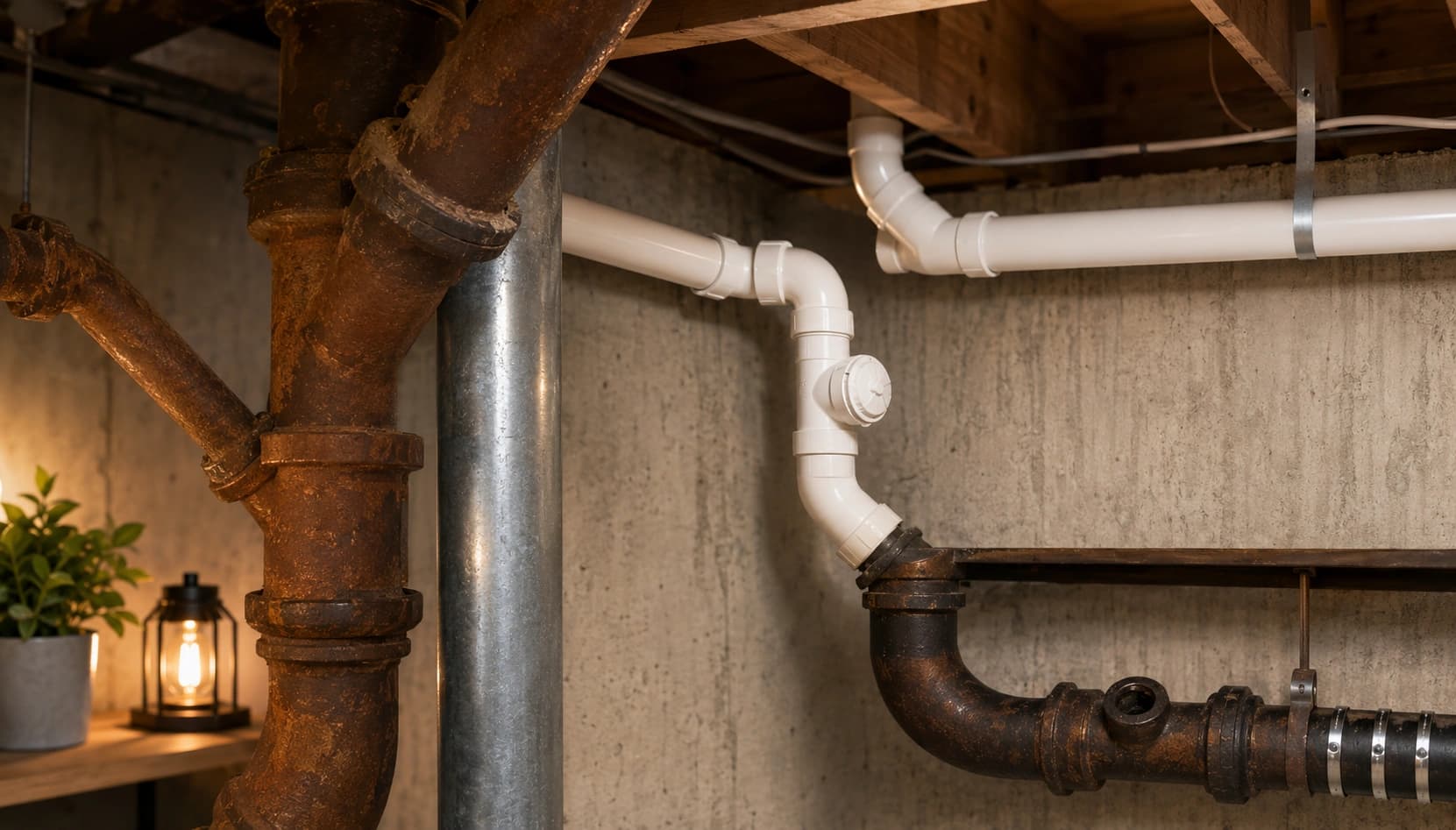
Improper drain venting matters because it can disturb drainage pressure, weaken the water seal in a fixture trap, and create a pathway for drain or sewer odors to enter occupied space. It is a code and safety concern only after the condition is verified. A gurgle, slow drain, or odor by itself does not establish the vent defect.
For Groton homeowners, the important sequence is evidence first, code comparison second, and repair scope third. Improper drain venting is not assigned by a home’s age, town, or one sound. The accessible layout, trap behavior, measured conditions, permitted venting method, and requirements in force for the work determine what needs correction.
Jeneral Plumbing is based in Westford, MA and is owner-operated by a Licensed Master Plumber (MA #9628831-PL-M) with 20+ years in the trade, including seven with a gas utility. When improper drain venting is suspected, I inspect accessible traps, trap arms, drain sections, and reachable drain-and-vent connections. Drain cleaning, sewer work, and buried or specialist-only investigation remain independent referrals.
Start With a Verified Condition, Not a Sound
A homeowner often reaches the venting question after hearing a kitchen sink gurgle, seeing a toilet water level move, or noticing an odor near a fixture. Those observations are useful, but they do not prove improper drain venting. A partial obstruction, dry trap, leaking connection, residue, shared branch response, or downstream condition can create overlapping symptoms.
If the question still begins with kitchen noise and appliance timing, use the first-response guide to a gurgling kitchen drain. That guide owns the symptom-level checklist. This article begins at the next layer: why a verified venting defect matters under Massachusetts code and how to respond to its safety consequences.
A documented finding of improper drain venting should keep the evidence ladder visible. A homeowner reports the symptom; I inspect or measure an accessible condition; the actual configuration is compared with the applicable code; the local plumbing inspector makes project-specific determinations; and only then does a correction become defined work.
Why Improper Drain Venting Matters Under Massachusetts Code
Massachusetts plumbing rules address venting because a sanitary drainage system needs controlled air movement and pressure while fixtures discharge. Improper drain venting can expose trap seals to siphonage or backpressure and can disrupt the intended relationship between a fixture, its trap, the drain, and the vent. The code purpose is functional and protective, not a rule that every fixture receives a separate pipe through the roof.
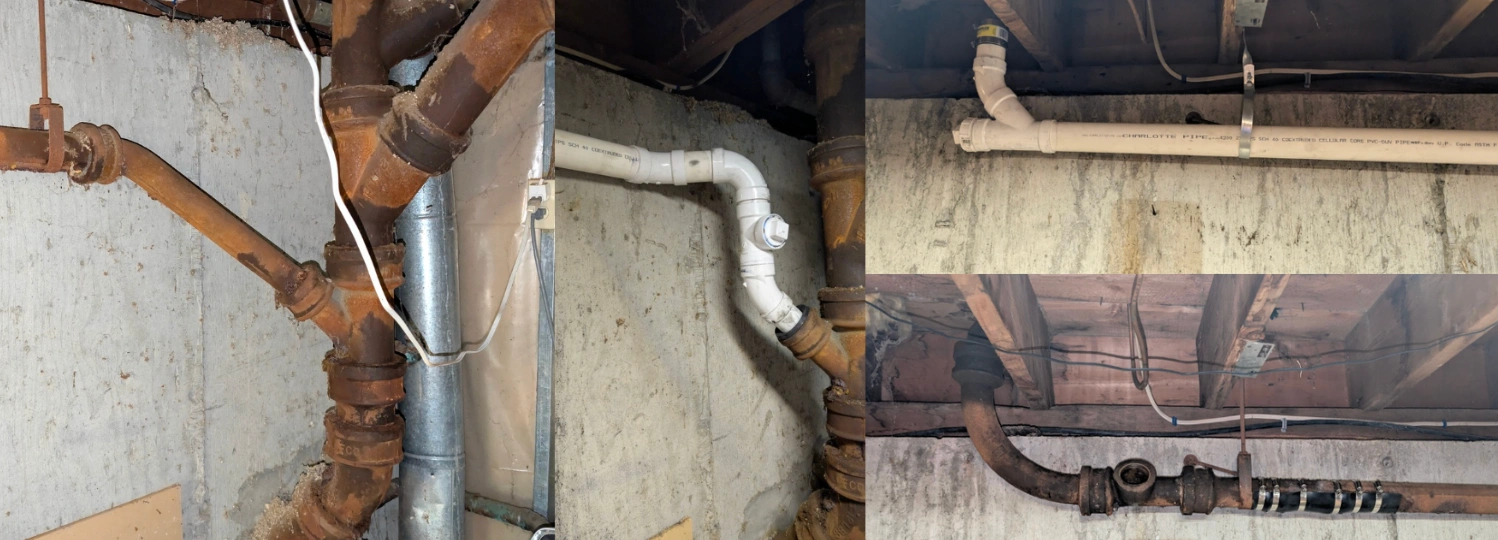
248 CMR 10.03 defines a vent system as piping that moves air to, from, or within the drainage system to protect trap seals from siphonage and back pressure. The vent arrangements themselves are governed by 248 CMR 10.16. Those provisions make improper drain venting a configuration-and-performance finding, not a label attached to one symptom.
248 CMR 10.08(2)(e), as amended effective December 8, 2023, generally calls for a liquid trap seal between two and four inches and protection against siphonage, aspiration, momentum, oscillation, back pressure, evaporation, and capillary action through compliant venting. The application, exceptions, and code edition in force for the permitted work still control. Improper drain venting cannot be decided from the seal dimension alone.
Code compliance also involves materials, fittings, support, drainage direction, testing, access, and inspection. A vent cannot be judged in isolation from the trap and drain it serves. A visible pipe that appears unusual may be compliant, incomplete, abandoned, or part of a method that needs the rest of the layout identified.
The Trap Seal Is the First Safety Boundary
A fixture trap intentionally holds water after the fixture drains. That water creates a seal between occupied space and the drainage system. The safety discussion around improper drain venting begins with how the vent system protects that seal from pressure changes created when water moves through connected piping.
Improper drain venting can contribute to a trap losing part or all of its water seal, but venting is not the only explanation. An unused trap can lose water through evaporation; a trap or fixture can leak; rapid discharge can disturb the seal; and a downstream condition can affect pressure. The cause needs to be separated before repair.
A trap seal is not a mechanical valve and cannot correct a failed vent connection. Refilling a clearly dry, unused trap with plain water may restore the barrier temporarily when there is no backup, but repeated water loss calls for evaluation. Do not add chemicals or cap an opening to hide the odor.
How Siphonage Can Reduce a Trap Seal
Siphonage occurs when negative pressure pulls water from a trap as wastewater moves through connected piping. Self-siphonage can involve the fixture’s own discharge, while induced siphonage can result from another fixture affecting the shared path. The distinction depends on the actual arrangement, not on which fixture made the loudest sound.
When improper drain venting leaves the trap inadequately protected, the seal can be lowered enough to open an air path from the drainage system. The homeowner may notice a changing trap level, bubbling, or an odor after another fixture drains. Those are consequence clues, not a complete vent diagnosis.
A slow drain does not prove siphonage, and a gurgle does not show how much water remains in the trap. Improper drain venting is one condition to compare with the observed trap level, accessible connections, normal fixture use, and permitted venting method. I stop testing before an overflow or wastewater release.
How Backpressure Can Disturb a Trap
Backpressure is positive pressure acting from the drainage side toward a fixture. It can push air through trap water, raise bubbles, or disturb the seal. Improper drain venting can leave pressure without the intended path, but downstream flow restriction can create similar behavior.
This is why bubbling is not automatic proof of a vent violation. Even when improper drain venting is suspected, the same symptom may call for independently provided obstruction clearing before an accessible vent or pipe correction can be defined. Code consequences and clearing needs must remain separate scopes.
If wastewater rises into a lower fixture while another fixture runs, stop household drain use. That pattern can involve shared downstream capacity, a building drain, a sewer lateral, or a septic path. Hire the appropriate drain, sewer, or septic provider directly rather than treating the event as an accessible vent repair.
What “Sewer Gas” Means in a Home
Sewer gas is a general name for the variable mixture of gases and vapors present in a drainage system. Composition and concentration change with the system and conditions. An odor confirms that something is being smelled; it does not measure concentration or identify the pathway.
Improper drain venting can matter when a disturbed trap seal or defective accessible connection allows drainage-system air into occupied space. Elevated concentrations of some drainage gases can present irritation, oxygen-displacement, toxicity, or flammability concerns. This guide does not assign a health threshold from smell or promise that every odor comes from a vent.
A fixture odor can also come from residue, a dry trap, a leaking joint, a failed seal, a downstream sewer condition, or another non-plumbing source. Improper drain venting is only one possible pathway. Rotten-egg odor is especially important because fuel-gas odorant can be mistaken for a drain smell, so fuel gas must be treated as such rather than tested through the drain.
Safe Response to a Strong or Persistent Odor
If an odor is strong, anyone feels unwell, or fuel gas may be present, leave the building and call emergency services or the gas utility from a safe location. Do not operate switches, use a flame, run a fan, or search for the source before leaving. A drainage appointment is not a substitute for immediate fuel-gas or medical response.
For a lower-level wastewater backup, stop household drain use, keep people and pets away, and avoid contact with contaminated water. Hire the appropriate sewer, drain, or septic provider directly. Improper drain venting alone should not be blamed for a wastewater backup without downstream evidence.
For a mild, localized drain odor with no backup and no possible fuel gas, stop using the affected fixture and note when the odor appears. A suspicion of improper drain venting does not justify pouring chemicals into the drain, forcing a cleanout, opening walls, or climbing onto the roof. If a chemical was already used, do not mix products and record the product, amount, and time for anyone who may handle the piping.
What Massachusetts Venting Requirements Mean in Practice
Under 248 CMR 10.00, a compliant installation is more than “a vent exists.” Evaluating improper drain venting means checking whether the approved method protects the served trap seals and whether the vent is sized, connected, routed, supported, and terminated for the actual system. Exact requirements depend on fixture relationships, pipe sizes, developed lengths, elevations, and the permitted design.
The code recognizes multiple venting arrangements when their conditions are satisfied. Wet venting, common venting, and other permitted methods are not automatically improper drain venting. Likewise, several fixtures sharing drainage is not automatically a violation; sizing, fixture load, geometry, and vent protection matter.
Vent termination is also controlled by the applicable code. Homeowners should not assume that every fixture needs its own roof penetration or that any sidewall or roof location is acceptable. The licensed plumber and local inspector review the proposed method, clearances, building conditions, and other requirements for the project.
Permit and Inspection Consequences in Groton
When improper drain venting requires ordinary covered residential plumbing work in Massachusetts, the licensed plumber applies to the local plumbing inspector before work begins. The Groton inspector determines the project-specific permit, exposure, testing, and inspection requirements. A plumbing permit does not replace building, electrical, structural, roofing, fire-protection, or other approvals that may apply.
Covered work must remain accessible until any required testing and inspector approval are complete. Concealing a new trap, drain, or vent connection early can require reopening finishes so the inspector can see or test it. An inspection documents the work and conditions at that stage; it is not a guarantee against every future blockage, odor, leak, or alteration.
Age alone does not prove improper drain venting, and current code language should not be used to accuse earlier installers of taking shortcuts. New and altered work follows the requirements applicable to that work. Whether an existing installation must be corrected depends on its condition, the proposed project, and the local inspector’s determination.
Consequences of a Verified Venting Defect
Once improper drain venting is verified, the consequence is no longer a vague sound. The finding should identify the affected trap or fixture group, the pressure-protection problem, the accessible configuration, the applicable code basis, and any safety or inspection concern. The correction then follows the finding rather than a template.
- Trap-seal disturbance: siphonage or backpressure can reduce or agitate the water barrier.
- Odor pathway: a reduced seal or failed connection can allow drainage-system air into occupied space.
- Drainage behavior: pressure imbalance can accompany gurgling, bubbling, or inconsistent fixture flow.
- Inspection delay: concealed or incomplete work may need to remain open or be exposed for the local inspector.
- Correction scope: connected traps, branches, fixture relationships, and access can affect how a compliant repair is designed.
- Trade coordination: roofing, carpentry, electrical, structural, or finish work may be separate from the plumbing correction.
A verified defect does not automatically require a whole-house rebuild. A focused accessible correction for improper drain venting may be enough in one property, while an altered fixture group may require broader permitted planning. The code finding, access, and inspector requirements determine the size of the work.
What Improper Drain Venting Does Not Establish
Improper drain venting does not by itself prove an obstruction, sewer backup, root intrusion, potable-water contamination, cross-connection, failed sewer lateral, or need for trenchless replacement. Drainage air and potable water are separate code subjects. A vent defect should not be used to sell unrelated work.
It also does not prove that pipe pitch is wrong. Pitch must be measured and compared with the applicable requirement for the pipe and configuration. An exposed pipe that appears level in a photograph is not a measurement.
A Groton address does not establish pipe material, vent arrangement, permit history, or defect. Properties throughout Groton and nearby communities have different construction and alteration histories. The visible and documented system controls the recommendation.
What I Inspect Before Writing a Correction
For suspected improper drain venting, I begin with the fixture pattern and accessible piping. I inspect the trap, trap arm, fixture connection, reachable branch, visible vent connection, support, measured drainage direction, and relationships among affected fixtures. I do not claim to have mapped concealed piping that has not been exposed or otherwise verified.
To support an improper drain venting finding, the written record separates what was reported, what was observed, what was measured, what code provision applies, what the inspector must decide, and what remains unknown. That distinction is especially important when an odor, gurgle, or moving trap level could have more than one explanation.
My accessible drain-and-vent repair scope can cover a confirmed reachable failed trap arm, joint, fitting, support condition, pitch issue, damaged transition, or drain-and-vent connection. Testing after repair applies to the corrected accessible section and the conditions present during that test.
The Repair and Referral Scope Map
Jeneral Plumbing does not provide drain cleaning, snaking or cabling, augering, hydro jetting, sewer camera inspection, root work, sewer-main or lateral repair, septic service, excavation, trenchless lining, or pipe bursting. Improper drain venting does not change those boundaries. The homeowner chooses, hires, and pays each independent provider directly.
I do not subcontract, dispatch, invoice, mark up, warranty, or present an independent provider’s work as mine. If obstruction clearing or downstream investigation is required first, that provider controls its method, findings, permits, price, warranty, and result. A later accessible repair is a separate Jeneral Plumbing scope only after a reachable defect is confirmed.
Roof access, roof flashing, carpentry, finish restoration, electrical work, fire-protection changes, and structural work may also require separate trades. The written scope identifies those boundaries before approved plumbing work begins. “Venting repair” should not hide work that belongs to someone else.
Planning a Permitted Code Correction
A focused correction may involve one accessible trap arm, vent connection, fitting, or supported section. A broader fixture-group change may need planning for connected plumbing-system corrections so the trap, drain, vent, access, and inspection sequence are considered together. The approved method must fit the actual layout.
When a renovation, fixture relocation, or new connection creates the scope, permitted plumbing upgrades must remain exposed for any rough inspection and testing the inspector requires. The written plan identifies plumbing work, other-trade responsibilities, testing, finish restoration, and final inspection steps. A product purchase or trim choice does not settle the concealed vent design.
If the issue is still which vent path failed rather than why the code consequence matters, use the linked guide to plumbing vent failure symptoms. That guide owns blocked, frozen, damaged, and misconfigured-path diagnosis. This Groton guide stays with trap protection, indoor safety, code, permits, and repair boundaries.
A Groton Plan for Code and Safety Concerns
Stop the affected fixture when wastewater rises, a trap repeatedly loses its seal, or an accessible connection leaks. Record which fixture ran, which trap or drain changed, when the odor appeared, and whether fuel gas can be ruled out. Do not create a new opening or roof hazard to investigate improper drain venting yourself.
For active wastewater, unsafe water spread, or another urgent plumbing condition, use the Groton emergency plumbing guidance and confirm availability by phone. That route does not promise drain cleaning, sewer service, or another excluded method. Fuel-gas uncertainty follows the leave-and-call response described above.
For regular-hours accessible-piping visits, Jeneral Plumbing charges an $80 dispatch fee — the cost of the visit, waived when you hire us for the work. Approved accessible plumbing repair is priced at a flat rate, with the total price and any applicable fees disclosed for approval before work begins. Independent providers and separate trades set and warranty their own prices and results.
From Westford, MA, I serve Groton along with Chelmsford, Littleton, Acton, Pepperell, and Ayer across Middlesex & Essex County. Call (978) 392-7789 to describe the trap, odor, fixture pattern, accessible piping, and project status. I will state whether the first step fits accessible plumbing inspection or belongs with an independent specialist.
Improper Drain Venting: Groton Homeowner Questions
What does Massachusetts code require drain venting to do?
Massachusetts code requires an approved venting arrangement that protects fixture trap seals and works with the sanitary drainage system. Size, connection, route, support, developed length, and termination depend on the actual configuration and permitted method. The code does not mean every fixture has a separate roof pipe. The licensed plumber and local inspector apply the requirements to the project.
How can improper venting siphon a trap?
Improper drain venting can leave negative pressure without the intended air path as wastewater moves. That pressure can pull water from a connected trap and reduce its seal. The same fixture’s discharge or another fixture can contribute, depending on the layout. A changing trap level is evidence to investigate, not proof of the exact failed vent section.
Is sewer gas from a drain dangerous?
Drainage gas is a variable mixture, and smell cannot measure its composition or concentration. Some components can create irritation, toxicity, oxygen-displacement, or flammability concerns at elevated concentrations. If the odor is strong, anyone feels unwell, or fuel gas cannot be ruled out, leave and call emergency services or the gas utility from a safe location. Do not test the odor with a flame or electrical switch.
Does an older Groton home automatically violate current venting code?
No. Age, town, and apparent pipe material do not establish improper drain venting or determine which rules applied when existing work was installed. New or altered work follows the requirements applicable to that project. The local inspector determines whether an existing condition must be exposed or corrected as part of the permitted scope.
Does Jeneral Plumbing clean drains or inspect sewer laterals?
No. Drain cleaning, snaking, hydro jetting, sewer camera inspection, roots, sewer-lateral work, septic service, excavation, and trenchless methods are direct independent referrals. Jeneral Plumbing does not subcontract or invoice those services. I repair only confirmed defects in accessible trap, fixture, branch, building-drain, or related reachable drain-and-vent piping.
What does a regular-hours venting visit cost?
A regular-hours visit includes an $80 dispatch fee — the cost of the visit, waived when you hire us for the work. Any approved accessible correction is priced at a flat rate based on the confirmed defect, material, length, fittings, support, access, testing, permit, inspection, and finish responsibilities. Independent specialists and separate trades price their work separately. Call (978) 392-7789 to discuss improper drain venting in Groton.
Written by Jeneral Plumbing.
This article was drafted with AI writing tools from Jeneral Plumbing job notes and source materials, then edited before publication. AI tools did not inspect the job or validate technical conclusions.
Last updated .