

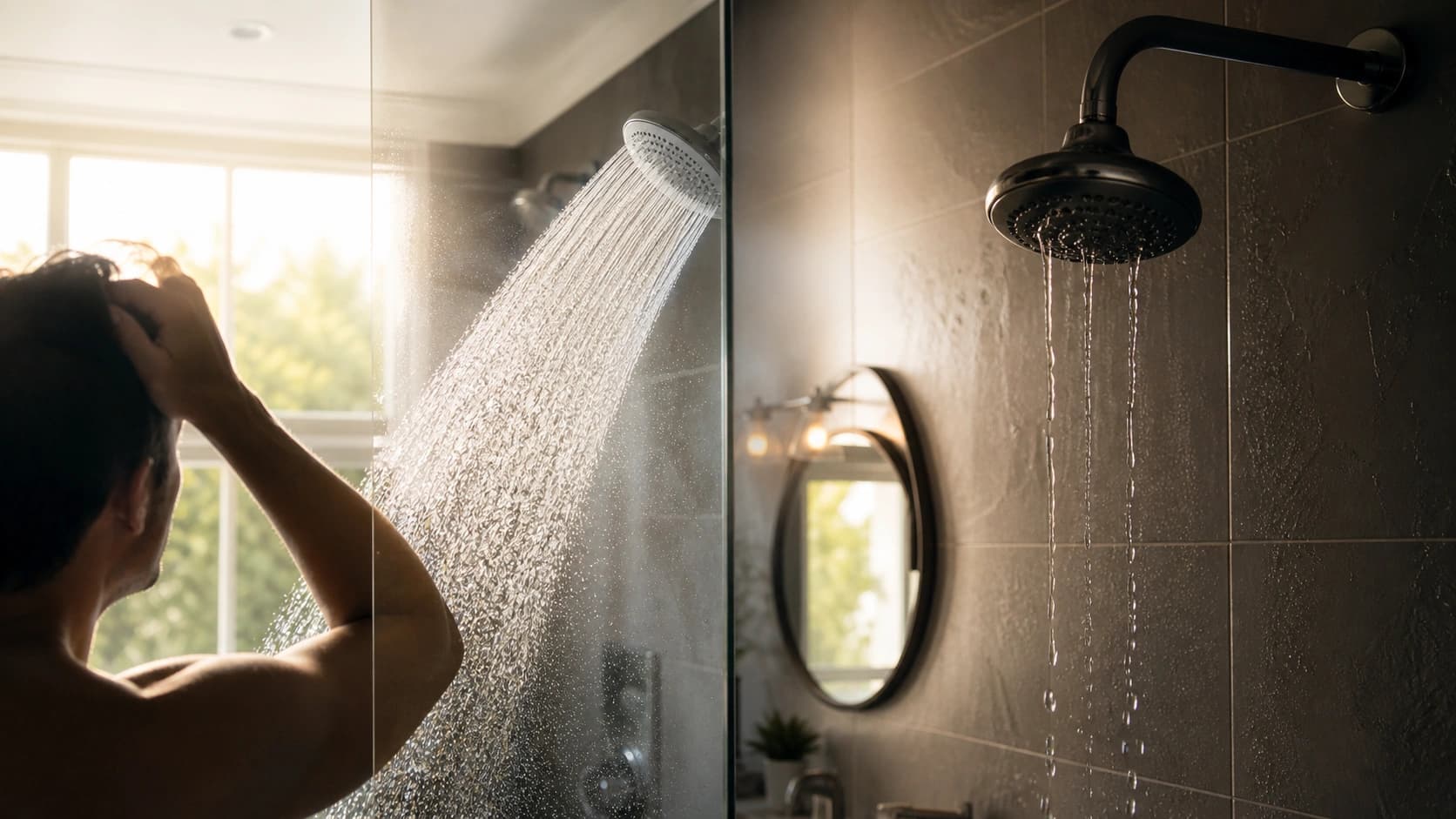
Sudden water pressure drops in a Stow, MA home can begin at one fixture, affect only hot water, appear when several fixtures run, or reduce flow throughout the building. Those patterns point in different directions. Before anyone names a repair, identify the affected fixtures and confirm whether the property receives water from a private well or a public or community system.
Town of Stow public-water planning information reviewed in August 2026 says Stow does not operate a town-wide municipal water system. Many addresses use private wells, while small community systems serve specific developments. That makes the supply boundary central to sudden water pressure drops: Jeneral Plumbing handles accessible customer-owned house piping, fixtures, valves, and confirmed plumbing repairs, while well pumps and pressure tanks go to an independent well specialist and public-system conditions go to the serving water district or operator.
Jeneral Plumbing is based in Westford, MA and is owner-operated by a Licensed Master Plumber (MA #9628831-PL-M). I have more than 20 years in the trade, including seven years with a gas utility. I use measurements and the property's verified supply type rather than treating weak flow as one universal plumbing problem.
This guide is educational, not a remote diagnosis. Sudden water pressure drops can overlap with fixture restrictions, customer-owned piping problems, active leaks, well-equipment faults, and supply-provider conditions. The next call depends on which side of the boundary the evidence reaches.
Sudden Water Pressure Drops Start With the Pattern
With sudden water pressure drops, what feels like low pressure at a faucet may be low flow through a restriction. Static pressure is measured while water is not flowing, while flowing pressure shows what happens under demand. Comparing those conditions helps separate a supply problem from a fixture or piping restriction, but the reading still needs context.
One fixture is weak. Sudden water pressure drops at one faucet or shower are more consistent with a fixture aerator, cartridge, stop, supply tube, or nearby branch than with the entire property supply. Compare hot and cold at that fixture and note whether neighboring fixtures changed. A confirmed fixture problem can fit my fixture repair scope.
Only hot water is weak. Hot-only sudden water pressure drops can involve the water heater inlet or outlet, a hot-side valve, mixing equipment, or hot distribution piping while cold flow remains normal. That pattern does not prove the heater needs replacement. My water-heater diagnosis and repair service separates a serviceable connection or component from a broader piping issue.
The entire home is affected. Whole-house sudden water pressure drops can involve an active leak, a customer-owned main valve, a pressure-reducing valve where one is installed, a restricted filter or treatment device, undersized or deteriorated piping, well equipment, or the serving water system. A symptom at every fixture does not identify which one. The source type and ownership boundary come before the repair proposal.
Flow starts normally and then fades. Demand-related sudden water pressure drops can reveal a restriction or a supply system that is not keeping up with sustained or simultaneous use. On a private well, pump or pressure-tank behavior may create that pattern; on a community system, the provider may need to check its side. Inside the house, a valve, regulator, filter, or pipe restriction can look similar.
Verify the Stow Water Source Before Scheduling Work
A Stow address should not be labeled “municipal” or “well” from the town name alone. Check the water bill, closing documents, community-system notices, or recorded property information to identify the actual source and provider. Do not open well controls, remove electrical covers, or operate an unfamiliar street-side valve while trying to determine ownership.
For a private-well property, sudden water pressure drops may involve the pump, pressure tank, pressure switch, electrical supply, well yield, or source-side piping. Jeneral Plumbing does not diagnose, repair, sell, price, dispatch, invoice, subcontract, or warranty well pumps, pressure tanks, controls, well yield, or source-side and underground well-line work. The homeowner hires an independent well or pump specialist directly for that scope.
I can assess accessible plumbing downstream of the well-equipment boundary when the evidence points to a house-side valve, fixture, treatment connection, leak, or distribution pipe. If the pressure behavior leads back to the pump or pressure tank, I explain the boundary and stop there. Advising which trade is needed does not convert the referral into a Jeneral Plumbing service.
For sudden water pressure drops at an address served by a public or community system, ask the serving water district or system operator about an outage, repair, flushing, main break, or supply-pressure condition. The provider defines its ownership boundary and decides what it will test or repair. If the provider confirms normal service at the property boundary, I can assess the customer-owned plumbing beyond that point.
A neighbor's experience can add context, but it does not establish the cause or the boundary for another property. Different connections, valves, elevations, building piping, and supply types can create different results. Sudden water pressure drops still need address-specific information.
House-Side Causes I Can Assess
Once the supply source and provider-side status are clear, I follow sudden water pressure drops through accessible customer-owned plumbing. The aim is to locate the first point where expected flow changes. I do not begin with a whole-home repipe, a treatment system, or a replacement part chosen from the symptom alone.
- Fixture restriction: an aerator, cartridge, pressure-balance component, stop, or supply connection can limit one outlet or one temperature side.
- Valve position or failure: a customer-owned main shutoff, branch valve, or appliance valve may be restricted, damaged, or not operating as expected.
- Pressure-reducing valve condition: where a regulator is installed on the customer-owned supply, its condition and response may affect the whole home.
- Active or concealed leak: water escaping from a pressurized line can reduce available flow, though pressure loss alone does not confirm a leak or its location.
- Pipe restriction: material condition, a damaged section, an incompatible alteration, or a local obstruction can reduce delivery through one branch or more.
- Connected equipment: a filter, treatment assembly, water heater, mixing device, or other installed component can create a pressure difference that must be isolated before repair.
If accessible evidence supports a leaking supply pipe, the pipe and water-line repair service explains how I separate a localized repair from broader replacement or specialty referral. Concealed underground locating, excavation, utility-owned work, and private-well equipment remain outside an assumed house-piping repair.
Safe Observations Before a Pressure Assessment
Useful observations do not require dismantling equipment. Record when sudden water pressure drops began, whether they are constant or intermittent, and whether one fixture, one floor, hot water, cold water, or the whole home is affected. Note any recent provider notice, plumbing work, freeze event, filter service, or visible leak.
Compare fixtures without repeatedly cycling equipment or forcing valves. A brief record of sudden water pressure drops, including which outlets changed and whether simultaneous use makes the symptom worse, is enough. Photos of safely visible piping, the water-heater data plate, a community-system notice, or an existing gauge can provide context without turning the homeowner into the diagnostician.
If water is actively escaping and the correct main shutoff is known, reachable from a dry location, and operates normally, close it without forcing the valve. Stay out of standing water near electrical equipment, do not touch wet wiring or panels, and keep people away from a sagging ceiling. Use the Stow emergency-plumbing guidance to confirm availability for an accessible house-side leak.
Do not adjust a pressure regulator, change a well pressure switch, add air to a pressure tank, reset a pump repeatedly, open a filter housing under pressure, excavate a service line, or operate a street-side shutoff. Do not remove electrical covers or test pump wiring. These are not safe diagnostic shortcuts for sudden water pressure drops.
How I Measure a House-Side Pressure Problem
To assess sudden water pressure drops, diagnosis begins by reproducing the reported pattern only when the property is stable and the test is appropriate. I compare flow at representative fixtures, hot against cold, and an isolated outlet against whole-house demand. The objective is to learn where the change begins, not to make every fixture run for an arbitrary stress test.
With sudden water pressure drops, static and flowing pressure measurements can show whether pressure is present but delivery falls under use. A single number cannot identify a regulator, leak, pipe restriction, fixture fault, or supply-provider condition. I compare the measurement location, flow rate, fixture pattern, valve arrangement, and verified source.
Where a meter exists and is safely visible, its activity may add evidence about unexplained water movement. Many private-well homes do not have a utility meter, and meter movement does not locate a leak. Moisture, sound, pressure behavior, fixture isolation, and accessible piping still have to be considered together.
I inspect accessible customer-owned shutoffs, connections, piping, fixtures, and installed plumbing devices relevant to the symptom. If the path reaches buried specialty locating, a public-system asset, well pump, pressure tank, or electrical fault, I identify the next responsible provider. A diagnostic assessment is not a promise that every cause can be confirmed without access or referral.
Pressure Regulators, Restrictions, and Repair Boundaries
A pressure-reducing valve may be installed where supply pressure needs control, but not every Stow property has one. Private-well systems use different pressure-control equipment, and small community systems may have their own arrangements. I verify the equipment before treating a regulator as the cause of sudden water pressure drops.
When a customer-owned plumbing regulator is confirmed faulty and accessible, replacement can fall within licensed plumbing scope. The proposal can include isolation, compatible connections, pressure verification, applicable permit requirements, and the effect on connected plumbing. It does not include a well pressure switch, well tank, pump, or provider-owned regulator.
Restrictions also need evidence. One clogged fixture component does not justify replacing building piping, and a corroded-looking exterior does not reveal the remaining inside diameter. I compare material, affected branches, repair history, access, and measurements before discussing localized repair or planned replacement.
For additions, renovations, or a distribution layout that has never delivered adequate flow, the issue may be design rather than a new failure. My complete plumbing system design service can evaluate customer-owned supply sizing and routing. That is a planned project, distinct from diagnosing sudden water pressure drops.
Water Quality and Treatment Are Separate Questions
Water pressure, water quality, and energy use are separate measurements. A pressure change does not establish a contaminant, hardness, or energy-use finding, and a water-quality result does not locate a hydraulic restriction. Each question needs evidence relevant to that property.
Stow's private-well conditions vary by address, and a community-system report describes that system rather than one home's piping. Discoloration, particles, taste, odor, or recurring deposits may justify property-specific water testing, but pressure loss is not a contaminant test. Treatment recommendations follow suitable results and equipment requirements.
A treatment device can also become a hydraulic restriction if its condition, sizing, or service state is wrong, but bypassing or opening it without knowing the equipment is not a safe first step. I can compare pressure before and after accessible plumbing equipment when that is within the assessment. The confirmed result decides whether plumbing service, treatment service, or another provider is needed.
A softener or filter will not repair a leaking pipe, restore a failing well pump, correct a pressure tank, or resolve a public-system supply condition. Sudden water pressure drops must be traced before any equipment is sold. Tracing the pattern first avoids buying equipment for the wrong problem.
Service Area, Pricing, and a Clear Next Call
Jeneral Plumbing serves its 26-town core across Middlesex & Worcester County and southern New Hampshire from Westford, MA. For this topic, Stow is the target community, with nearby work also considered in Acton, Maynard, Boxborough, and Harvard. I confirm the address, water source, observed pattern, and scope fit before scheduling.
During regular hours, there is an $80 dispatch fee — the cost of the visit, waived when you hire us for the work. Repair work is priced at a flat rate, with the total price and any applicable fees disclosed for approval before work begins. I do not quote, invoice, mark up, or warranty independent well-pump, well-pressure-tank, or public-system work.
Call (978) 392-7789 when sudden water pressure drops appear to involve accessible customer-owned plumbing. Be ready to say whether the property uses a private well or a named community system, which fixtures are affected, whether hot and cold behave differently, and whether water is actively leaking. If the evidence points to well equipment or the provider side, contact that independent specialist or serving district directly.
Sudden Water Pressure Drops FAQs
What should I check first when water pressure suddenly drops?
First identify whether sudden water pressure drops affect one fixture, only hot water, or the whole property. Confirm whether the address uses a private well or a public or community system, then note any active leak or provider notice. Do not adjust regulators, well controls, pump wiring, pressure tanks, or street-side valves. The pattern and supply source determine the correct first call.
Why would only one faucet or shower lose flow?
A one-fixture change can involve an aerator, cartridge, stop, supply tube, pressure-balance component, or nearby branch. Compare hot and cold and note whether neighboring fixtures remain normal, but do not dismantle pressurized or concealed parts for diagnosis. A fixture-specific symptom is less consistent with a whole-property supply failure. I confirm the affected component before proposing repair.
Does Jeneral Plumbing repair private-well pumps or pressure tanks?
No. Private-well pumps, pump controls, electrical supply, well yield, pressure switches, pressure tanks, and source-side or underground well lines are independent referral scope, not Jeneral Plumbing services. The homeowner selects, hires, pays, and receives any warranty directly from the well or pump specialist. I can assess accessible customer-owned plumbing downstream when the evidence supports a separate house-side issue.
Who handles low pressure from a public or community water system?
The serving water district or system operator handles pressure conditions and repairs on its side of the ownership boundary. Ask that provider about an outage, main break, maintenance, flushing, or other system condition and let it define the boundary for the address. If the provider confirms normal service at that point, I can assess customer-owned plumbing inside the property. Town of Stow planning information reviewed in August 2026 says Stow has no town-wide municipal water system, so verify the provider rather than assuming the town supplies the address.
Can I adjust the pressure regulator myself?
Do not adjust or replace an unidentified pressure regulator to troubleshoot sudden water pressure drops. A similar-looking device may serve another function, and changing it without measurements can create a different pressure problem. Private-well pressure controls and tanks are also outside homeowner troubleshooting. I identify accessible customer-owned plumbing equipment and define the licensed repair only after diagnosis.
When is a pressure drop an urgent plumbing problem?
Sudden water pressure drops are urgent when water is actively escaping, reaching electrical equipment, affecting a sagging ceiling, or continuing where it can damage the property. From a dry location, close a known accessible main shutoff only if it operates normally, and never force it. Keep clear of electrical and structural hazards while arranging the appropriate emergency help. For accessible house-side plumbing in Stow, call (978) 392-7789 to confirm availability.
Written by Jeneral Plumbing.
This article was drafted with AI writing tools and edited before publication. AI tools did not inspect any job or validate technical conclusions.
Last updated .