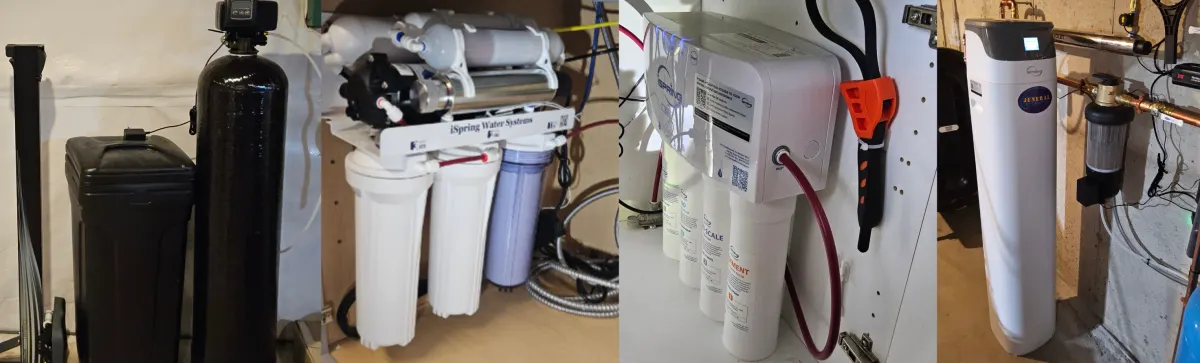
A filter should solve a measured problem, not add another tank to maintain. This filtration system installation guide shows how I move from a water source and a properly collected sample to a treatment plan, an installation scope, and follow-up verification. The result may be a whole-house stage, a drinking-water system, a plumbing repair, more testing, or no treatment at all.
Stow, MA needs that test-first approach because the town does not operate one townwide municipal water system. A private well, a small community system, and the plumbing inside a home create different questions. This filtration system installation guide keeps those paths separate so a town-level assumption never becomes a product recommendation for your address.
Jeneral Plumbing is based in Westford, MA and is owner-operated by a Licensed Master Plumber (MA #9628831-PL-M). I use this filtration system installation guide as an educational resource, not a diagnosis. Your current results, household demand, plumbing, available space, drainage, power, and willingness to maintain the equipment decide what fits.
Filtration System Installation Guide for Stow: Start With the Water Source
The first fact in any filtration system installation guide is the source serving the property. As reviewed on August 21, 2026, the Town of Stow’s official public-water planning page says many Lower Village properties rely on private wells while the town studies possible public-water options. That town page is planning information, not a report about the water at your faucet.
If a public or community water system serves your Stow home, get that supplier’s current Consumer Confidence Report and confirm the service boundary before interpreting it. There is no single townwide utility compliance statement to apply across Stow, and I will not borrow one system’s results for another address. A supplier’s dated CCR is where its monitoring results and compliance with federal health-based standards belong.
For a private well, there is no utility CCR. As reviewed on August 21, 2026, the Stow Board of Health private-well page provides the town’s current sampling requirements and approved-sampler resources. A properly collected sample from the property is the evidence that matters; a nearby well, a neighborhood map, or a seller’s old result is not a current test of your tap.
About this water information
Utility reports summarize testing across a public water system; they are not a test of the water at your specific faucet. EWG health guidelines may be lower than enforceable federal or state limits. Homes on private wells are not represented by municipal utility data. Treatment recommendations should be based on the current utility report, household plumbing conditions, and a properly collected water sample.
Reviewed by: Jeneral Plumbing — August 21, 2026. Official Stow water information: Stow private-well testing requirements. Stow has no townwide municipal water system or townwide CCR; customers of a community public water system should obtain that specific supplier’s current report through the EPA Consumer Confidence Report finder.
How Test Results Narrow a Filtration System Installation Guide
The right first step is to define the question you want the sample to answer. My test-first water testing service separates field screening from certified-laboratory analysis. Field measurements can add useful context for hardness, pH, chlorine, iron, total dissolved solids, temperature, and visible sediment when the instrument fits. Bacteria, PFAS, arsenic, lead, and other health-related questions require an appropriate certified laboratory, its containers, and its collection instructions.
A useful filtration system installation guide also records where and when a symptom appears. White scale at hot and cold fixtures points to a different investigation than an odor limited to hot water. Reddish staining, black staining, a pressure change, cloudy water, or particles can each have more than one cause. The symptom selects the testing path; it does not select the equipment.
- For scale or poor soap performance: measure hardness and inspect the affected fixtures and water-heating equipment.
- For taste or odor: identify the source, sample point, hot-versus-cold pattern, and any existing treatment before choosing an analyte list.
- For staining: test the likely chemistry and inspect the plumbing rather than identifying a contaminant by color alone.
- For a health-related concern: use a certified laboratory and keep the raw-water result distinct from any treated-tap result.
- For a real-estate decision: follow current Board of Health, lender, inspector, and laboratory requirements for that transaction.
After results arrive, I compare them with the home’s plumbing and your actual goal. A number can support treatment, but it can also support monitoring, a targeted repair, a better sample, or no equipment. That last outcome belongs in every honest filtration system installation guide.
What This Filtration System Installation Guide Compares
Treatment is a set of technology classes, not a brand-shopping exercise. My water-treatment design service matches results to activated carbon, reverse osmosis, ion exchange, oxidation and filtration, UV, coordinated stages, or no treatment at all. Each class has a defined job, operating limits, maintenance needs, and model-specific claims.
Activated Carbon
Selected activated-carbon media are designed to improve particular taste, odor, or chlorine concerns under stated conditions. Flow, contact time, incoming water, media volume, and replacement capacity all affect performance. Carbon is not a universal contaminant barrier, and a health-related reduction claim applies only when the exact model carries current third-party certification for that exact claim.
Reverse Osmosis
Reverse osmosis uses pretreatment and a membrane, stores treated water, and sends a concentrate stream to a drain. It is often considered for a drinking and cooking tap rather than every fixture, but the test result and household goal decide the layout. Pressure, temperature, production rate, storage, sanitation, drainage, and maintenance all belong in the design. No filtration system installation guide should turn an RO category into a blanket removal promise.
Ion Exchange
Ion exchange is the technology used by a conventional water softener to address measured hardness. Sizing depends on the tested hardness load, household demand, service flow, regeneration settings, drainage, and salt access. A softener does not automatically address sediment, odor, microorganisms, PFAS, or another health-related concern. Where hardness is not the problem, it is the wrong equipment.
Oxidation and Filtration
Oxidation and filtration may be considered when testing confirms an iron, manganese, or sulfur-like odor concern that fits the process. Media selection depends on the measured condition, pH, flow, backwash requirements, and other chemistry. A stain or smell alone cannot tell me which media belongs in the home.
Ultraviolet Treatment
UV may be considered after a properly collected laboratory sample identifies a microbial concern and the water conditions allow the unit to operate as designed. Clarity, flow, lamp condition, sleeve condition, power, alarms, and pretreatment affect performance. UV is not a filter for minerals, chemicals, taste, odor, or sediment, and follow-up sampling remains part of verifying the treatment goal.
No Treatment at All
No treatment at all is a valid result. The evidence may point to a plumbing repair, a maintenance correction on existing equipment, periodic monitoring, another sample, or no change. This filtration system installation guide puts that option beside every equipment class because buying nothing can be the correct technical decision.
Turn the Results Into an Installation Plan
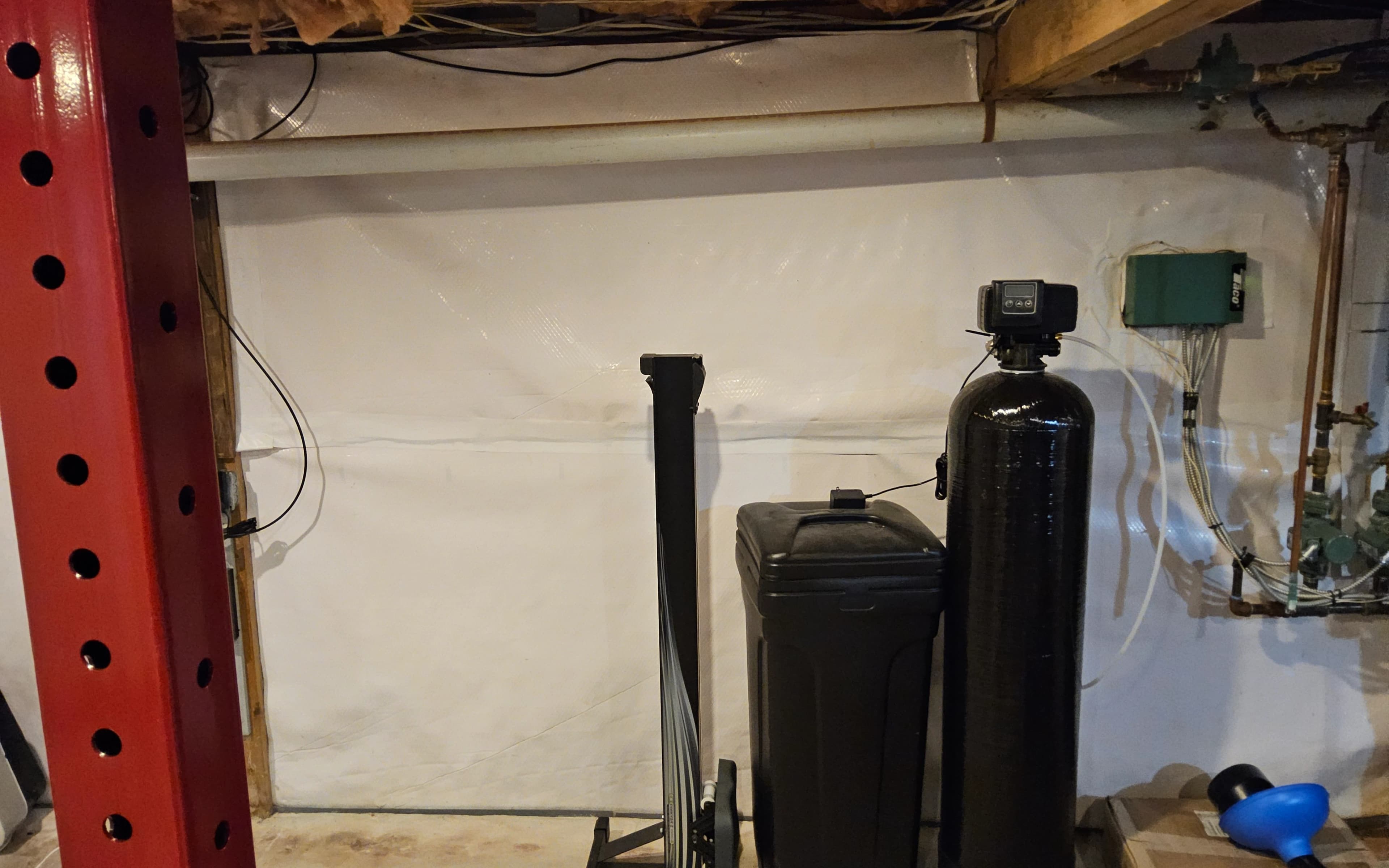
A complete installation begins on paper. I identify the raw-water sample point, main shutoff, pipe size and material, pressure, peak fixture demand, available floor and wall space, bypass route, drainage, electrical needs, and access for future service. The filtration and softener installation service uses those facts to size focused equipment after the need is established. That site plan turns a filtration system installation guide into a buildable scope.
The location matters as much as the tank or housing. Equipment needs a serviceable layout, isolation and bypass valves, protection from freezing, and a drain arrangement appropriate to the selected technology. A point-of-use drinking-water unit has a different plumbing and sanitation scope from a backwashing entry-point system. If licensed electrical work is required, that scope must be identified and coordinated rather than folded into a vague promise.
This filtration system installation guide does not promise a universal installation timeline. Existing treatment, cramped access, old valves, drainage, electrical work, permits, and the number of coordinated stages can change the sequence. I set the schedule only after the site and written scope are known.
Commission the System and Verify the Goal
Installation is not finished when water starts moving through the equipment. I check the accessible connections for leaks, confirm the bypass position, follow the manufacturer’s startup and flushing instructions, verify controls and drainage, and record the model-specific maintenance items. Where the treatment goal calls for a laboratory result, follow-up sampling must use the correct sample point and method.
A filtration system installation guide should also define what success means before the work begins. For measured hardness, that may be a documented post-treatment hardness result and correctly programmed regeneration. For a certified drinking-water reduction claim, it means the exact model, exact certification, correct installation, scheduled maintenance, and appropriate verification. The filtration system installation guide then becomes a handoff record instead of an unmeasured marketing assumption.
Plan Maintenance Before Approving Equipment
Every treatment stage consumes something: cartridge capacity, carbon media, membrane life, salt, backwash water, lamp output, sleeve condition, or homeowner attention. There is no universal replacement calendar. Incoming water, household volume, model instructions, rated capacity, alarms, pressure change, and verification results determine when service is due. A practical filtration system installation guide treats maintenance as part of system capacity.
The maintenance section of this filtration system installation guide is intentionally part of the buying decision. Ask which consumables the system uses, how you will know they are due, where replacement parts come from, how the system is sanitized, and which follow-up tests confirm performance. Equipment that will not receive its required maintenance is not a good fit, even when the technology class matches the test.
A monitoring device or automatic shutoff can protect against a different problem: uncontrolled water from a leak. It does not filter the supply, and filtration does not replace leak protection. If that distinction matters to your project, compare the separate smart-home plumbing and water-monitoring service before combining scopes.
How I Price a Stow Water Filtration Project
As of August 21, 2026, I do not publish one generic Stow price range because the source, test, equipment class, capacity, plumbing changes, drainage, power, and follow-up testing can produce different scopes. This filtration system installation guide explains those cost inputs without presenting a generic range as a quote. After I review the evidence and site, Jeneral Plumbing provides a flat-rate price and discloses the total and any applicable fees for approval before work begins.
As of August 21, 2026, a regular-hours visit starts with an $80 dispatch fee — the cost of the visit, waived when you hire us for the work. Repair and installation work is priced at a flat rate, with the total price and any applicable fees disclosed for approval before work begins.
That approach keeps this filtration system installation guide useful without turning it into a bait price. A small drinking-water installation and a coordinated entry-point treatment train are not interchangeable jobs. The written proposal should name the equipment, installation boundaries, startup work, verification, exclusions, and maintenance responsibilities.
Local, Owner-Operated Water Treatment
I take the same test-first approach from Westford to Acton, Littleton, Stow, Boxborough, Maynard, and Concord, serving Middlesex & Essex County. Water conditions still remain property-specific across every town. Jeneral Plumbing brings the plumbing perspective to Whole Home Health — I fix the cause, not just the symptoms, and I will say when the evidence supports no new equipment.
Use this filtration system installation guide to gather your source information, current reports, laboratory results, equipment labels, and maintenance history. Then call (978) 392-7789 to discuss the testing or installation scope. I will help you separate what is measured from what is assumed before a flat-rate proposal is prepared.
Stow Water Filtration Questions
What should I test before choosing a filter in Stow?
Start with the water source, the symptom, and the decision the result needs to support. Field measurements can screen selected physical and aesthetic conditions, while bacteria, PFAS, arsenic, lead, and other health-related questions belong with an appropriate certified laboratory. Follow the laboratory’s containers and collection instructions so the result is usable. This filtration system installation guide never selects equipment before that evidence exists.
Does every Stow home need a whole-house filter?
No. A Stow home may need focused drinking-water treatment, a whole-house stage, a softener for measured hardness, a plumbing repair, monitoring, more testing, or no treatment at all. The source and result matter more than the town name. A filtration system installation guide that treats whole-house equipment as automatic is skipping the diagnosis.
Can one system address every water concern?
No single technology does every job. Activated carbon, reverse osmosis, ion exchange, oxidation and filtration, and UV have different purposes and operating conditions. Coordinated stages may fit a tested set of concerns, but each stage adds maintenance and must earn its place. The exact model’s current third-party certification controls any contaminant-reduction claim.
How much does a complete water filtration installation cost?
There is no responsible universal price without a test and site review. Capacity, treatment stages, plumbing changes, drainage, power, startup, verification, and future service all shape the written scope. My filtration system installation guide explains the cost drivers without presenting a generic range as a quote. Jeneral Plumbing prices the approved work at a flat rate with the total and applicable fees disclosed before work begins.
How long does installation take?
The schedule follows the confirmed equipment and the property. A point-of-use unit, an entry-point filter, and a multi-stage system have different plumbing, drainage, electrical, startup, and verification needs. Existing valves and treatment equipment can also change the plan. I confirm timing after the site review instead of promising one duration for every Stow home.
Can a filter remove PFAS, arsenic, or another named contaminant?
Only make that claim when the exact model carries current third-party certification for the exact contaminant and the installation follows its conditions. A technology class, brand, or certification on a different model is not enough. Testing comes before selection, maintenance follows the model, and follow-up verification may be part of the plan. That certification-first rule is central to this filtration system installation guide.
Written by Jeneral Plumbing.
This article was drafted with AI writing tools from Jeneral Plumbing job notes and source materials, then edited before publication. AI tools did not inspect the job or validate technical conclusions.
Last updated .