

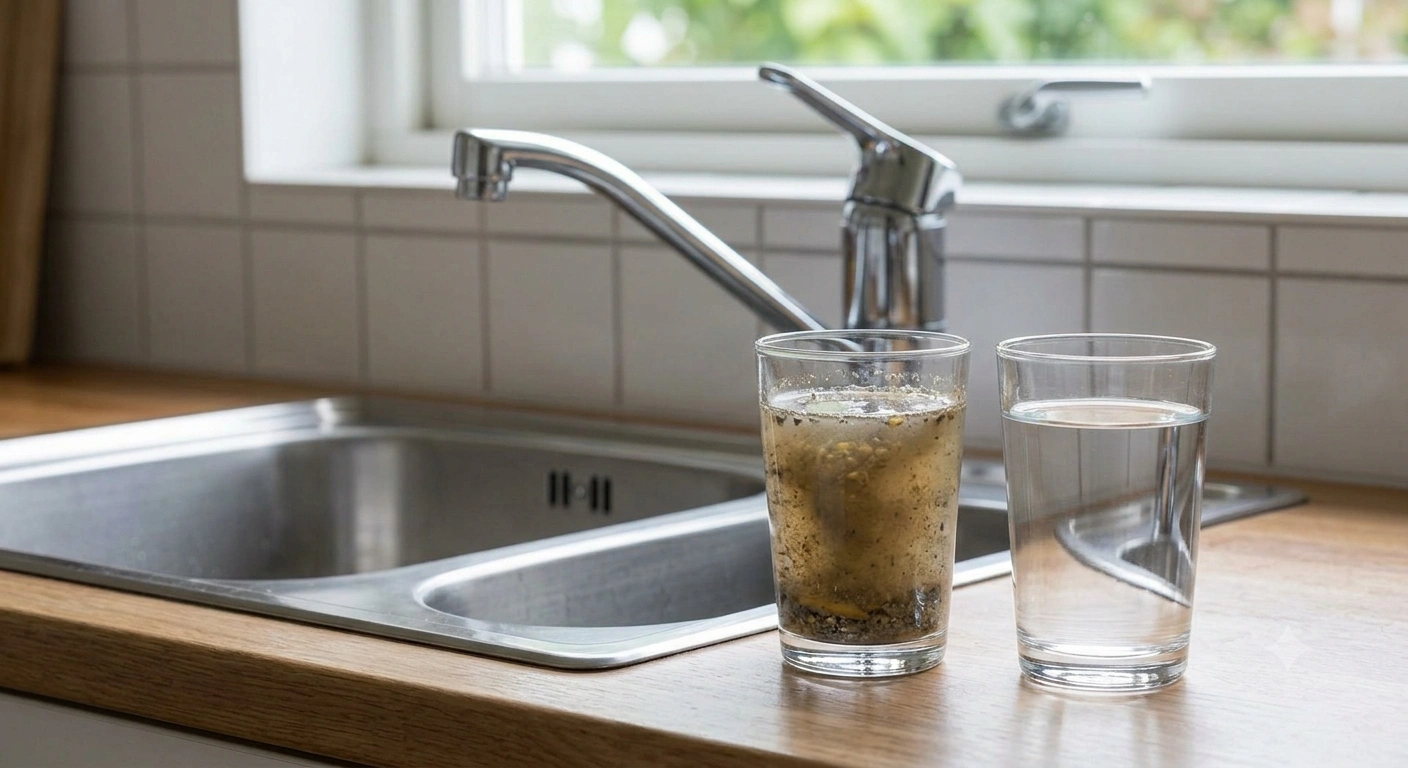
Turning on your kitchen faucet, and instead of clear, clean water, you're greeted with a murky, sediment-filled stream that looks more like chocolate milk than drinking water. That's exactly what happened to one of our recent customers – a homeowner who moved into a property with an existing well water system, only to discover that their filtration setup wasn't cutting it.
"The biggest thing with a well is the sediment," they explained during our consultation. "Sediment coming out of the ground." They'd inherited a filter system from the previous owners, but after experiencing problems, they had someone install what they described as "not an adequate system." Sound familiar? If you're dealing with well water in Massachusetts, you're probably nodding along right now.
This isn't just an inconvenience – it's a common challenge that well water users face throughout Middlesex and Essex counties. When your filter system can't handle the microscopic particles coming from your well, you end up with a frustrating cycle of frequent filter changes, mounting costs, and water that still doesn't meet your standards.
Why Well Water Sediment Overwhelms Basic Filter Systems
Well water presents unique challenges that city water users never have to think about. When water travels through underground rock formations and soil layers to reach your well, it picks up fine particles along the way. These aren't the large chunks of debris you might imagine – we're talking about sediment measured in microns, particles so small they can slip through inadequate filtration systems like sand through a screen door.
The homeowner we worked with had been using a cartridge-type filter that cost $45 per replacement. Here's the kicker: they were changing it constantly because it kept clogging with fine sediment. That's a telltale sign of a system that wasn't designed for their specific water conditions. Cartridge filters work great for some applications, but when you're dealing with high sediment loads from well water, they become an expensive band-aid solution.
Unlike municipal water systems that pre-treat water before it reaches your home, well water arrives at your tap exactly as nature created it. Every geological formation is different, which means the sediment content, particle size, and mineral composition varies dramatically from one property to the next. A filter system that works perfectly for your neighbor might fail miserably at your house, even if you're just down the street.
The Right Solution: Sizing Your System to Match Your Water
After scheduling a diagnostic visit with our customer, we knew we needed to approach this systematically. You can't solve a sediment problem without understanding exactly what you're dealing with. That's why we always start with a comprehensive assessment of the existing system and water conditions.
The solution isn't always the most expensive option on the market. Our customer was upfront about their budget constraints, saying, "I can't afford a huge brand-new system." We get it – not everyone needs or wants to invest in a whole-house treatment plant. Sometimes the answer is as straightforward as upgrading to the right type of filter for your specific sediment load.
For this particular situation, we discussed installing a stainless steel screen or properly sized cartridge filter designed to handle the micron-level particles coming from their well. Stainless steel screens offer several advantages: they're durable, cleanable, and won't need constant replacement like disposable cartridges. When sized correctly, they can capture sediment while maintaining good water flow throughout the house.
The key is understanding that "one size fits all" doesn't work with well water filtration. A professional plumbing service needs to evaluate your water's specific characteristics, your household's usage patterns, and yes, your budget constraints. Sometimes a targeted upgrade to your existing system delivers better results than starting from scratch with an entirely new setup.
We also discussed the importance of proper installation and positioning within the plumbing system. Even the best filter won't perform if it's installed in the wrong location or without adequate support systems. That's where professional expertise makes the difference between a solution that works and one that becomes another expensive disappointment.
Prevention: Maintaining Your Well Water System for Long-Term Success
Once you have the right filtration system in place, keeping it running efficiently requires some proactive maintenance. Think of it like changing the oil in your car – small, regular investments prevent major breakdowns down the road.
First, establish a monitoring routine. Check your water quality regularly, not just when something seems obviously wrong. Sediment levels can change seasonally, especially after heavy rains or during dry spells when the water table fluctuates. What works perfectly in summer might struggle during spring runoff season.
Keep spare parts on hand if you're using replaceable components. Our customer was spending $45 per cartridge and changing them frequently – that adds up fast. By understanding your system's maintenance schedule and buying components in bulk, you can reduce costs while ensuring you're never caught without a working filter.
Consider installing a pressure gauge to monitor your system's performance. When sediment starts building up, you'll notice pressure drops before the water quality becomes visibly affected. This early warning system helps you stay ahead of problems instead of reacting to them.
Document everything. Keep records of when you change filters, clean screens, or notice changes in water quality. Patterns often emerge that help predict when maintenance will be needed. Plus, if you ever need professional service, having this information helps technicians diagnose issues more quickly and accurately.
When to Call a Professional Plumbing Service
While some maintenance tasks are DIY-friendly, certain situations definitely warrant professional attention. If you're changing filters more than once every few months, that's a red flag that your system isn't properly matched to your water conditions. Don't keep throwing money at replacement parts when the underlying problem is system design.
Water quality changes that happen suddenly or seem to get worse despite regular maintenance also need professional diagnosis. Sometimes the issue isn't your filter at all – it could be changes in your well, problems with your pump, or issues with your plumbing system that are stirring up sediment.
When you're ready to upgrade or replace your filtration system, professional installation ensures everything works together correctly. Proper sizing, positioning, and integration with your existing plumbing prevents the frustration our customer experienced with their "not adequate" system.
Get Your Well Water Problems Solved
Dealing with sediment-filled well water doesn't have to mean constant filter changes and mounting frustration. Whether you're in Middlesex County, Essex County, or anywhere throughout our Massachusetts service area, Jeneral Plumbing has the expertise to diagnose your specific water conditions and recommend solutions that fit both your needs and your budget.
Just like we did for this homeowner, we start with a comprehensive diagnostic visit to understand exactly what you're dealing with. No guesswork, no one-size-fits-all recommendations – just honest assessment and practical solutions from a local, family-owned plumbing service that's been serving our community for years.
Ready to stop wasting money on inadequate filters? Contact Jeneral Plumbing today to schedule your diagnostic visit and get a service plan for clean and clear well water.
Need Help? Contact Jeneral Plumbing at (978) 392-7789 or visit jeneral-plumbing.com