

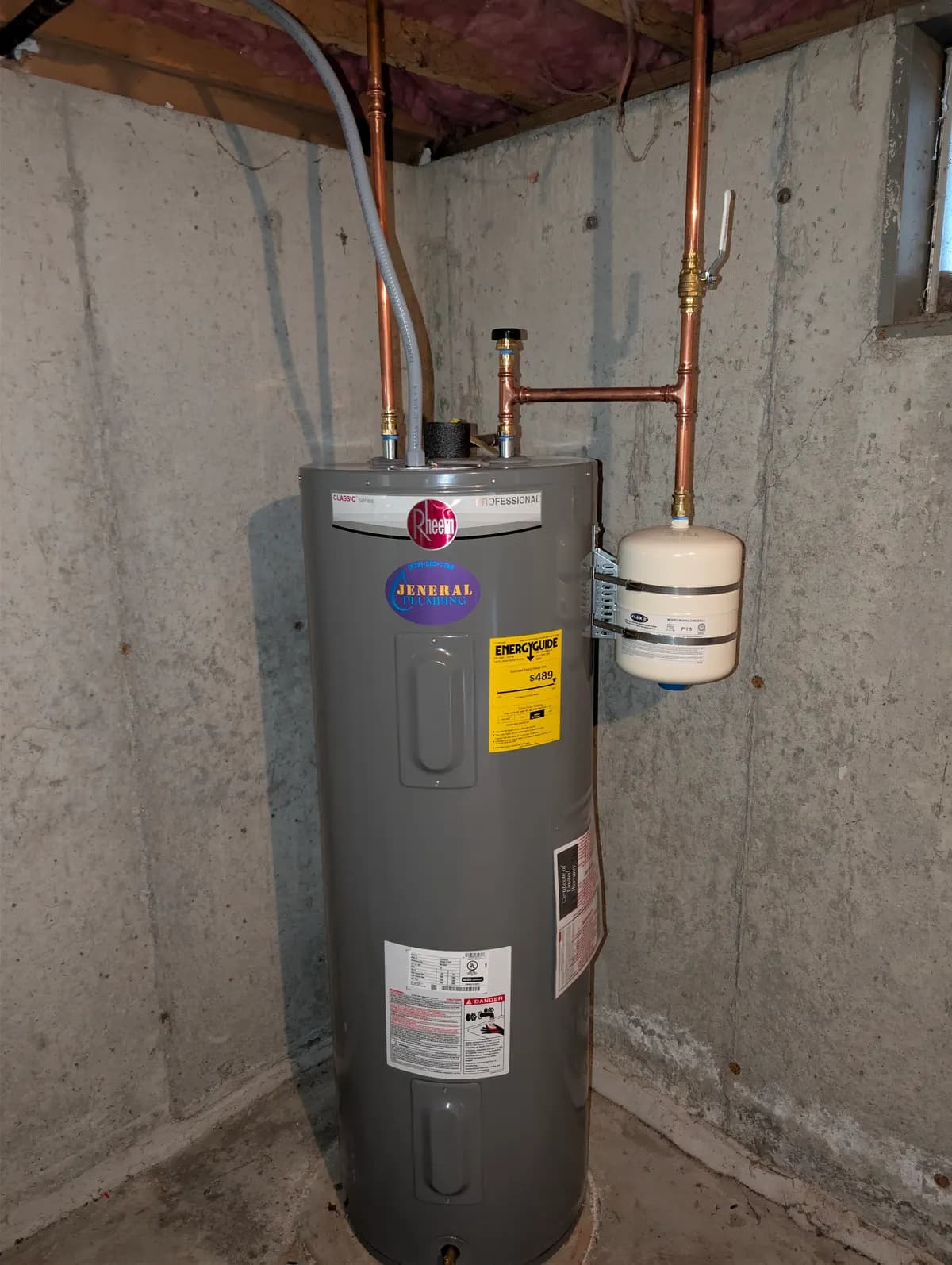
Your electric water heater is due for replacement, or it just quit, and the choice looks simple until you start reading. A standard tank, a hybrid heat pump, maybe an electric tankless unit. They heat water in very different ways and put very different demands on your electrical panel. The right one depends on your household's hot-water peak, the room the heater lives in, and the circuit that feeds it.
The options at a glance
| Option | How it heats | Installed price | Electrical demand |
|---|---|---|---|
| Standard electric resistance tank | Electric elements inside an insulated tank | From $2,300 | A dedicated circuit matched to the heater's nameplate |
| Hybrid heat pump | Moves heat from room air into the tank, with backup elements | Up to $7,800 before the $750 Mass Save discount (as of August 2026) | Set by the model's nameplate; requirements vary by model |
| Whole-house electric tankless | Heats water instantly as it flows | Not part of our published pricing | Far higher than either tank type |
The price column shows Jeneral Plumbing's installed prices, not equipment-only numbers. Capacity, access, water piping, pressure and expansion control, drainage, removal, permits and any separate electrician work shape the final flat-rate proposal. Confirm current Mass Save eligibility before counting that discount, because the program administrator decides who qualifies.
Standard electric resistance tank
This is the simplest option. Thermostats control elements that heat water in the tank, and there's no burner, flue or gas piping. It fits homes that value quiet operation, familiar parts and a straightforward swap where the existing electrical supply is suitable. The tradeoff is operating cost. Resistance elements turn electricity directly into heat, while a hybrid can move several units of heat for each unit of electricity when conditions suit it.
Hybrid heat pump
A hybrid's fan draws room air across a coil, and the refrigeration system moves that heat into the tank. Built-in elements provide backup or faster recovery in certain modes, as ENERGY STAR explains. Compared with a resistance tank, it needs more planning: enough air around it, room temperature, sound, cooler discharge air, filter and service access, and a condensate route. ENERGY STAR's design considerations cover those factors, and the selected model's installation instructions set the specifics. A closet that fits a resistance tank may not work for a hybrid. When a hybrid replaces an electric resistance tank, payback runs roughly three to seven years after the rebate, though your use, operating mode and electric rate move the result. Our heat pump and electric water heater guide goes deeper.
Electric tankless water heater electrical demands
An electric tankless water heater heats water only while it flows, so it has to produce all of its heat in that moment. For a whole-house unit, that can mean far more electrical capacity than a standard tank or a hybrid, often several large dedicated circuits, and sometimes more than the panel or service can supply without an upgrade. A tank spreads its heating over time. A hybrid draws modest power for its compressor and adds elements only when needed.
Winter matters too. Incoming water in Massachusetts gets colder, so a tankless unit has to raise it further, which reduces the flow it can deliver at a comfortable temperature. Smaller point-of-use electric units serve a single sink differently. Before anyone plans a whole-house electric tankless unit, a licensed electrician should confirm whether the panel and service can support the exact model.
Size for recovery, not gallons alone
Tank size matters, but first-hour rating and recovery show how much hot water the heater can deliver through a busy stretch. We start with fixtures and routines rather than bedroom count: back-to-back showers, a soaking tub, laundry and a dishwasher running together. With a hybrid, correct sizing helps it stay in its efficient mode. When demand outruns the heat pump, the elements take over, which is useful capacity but changes the electricity math. Colder winter inlet water affects recovery for every option.
What a water heater installer checks before quoting
On the electrical side, a water heater installer should check the selected model's nameplate voltage and amperage, the existing circuit and breaker, the disconnect, and whether the panel has room for any added load. That identifies electrician work before the heater is ordered, not on installation day. On the plumbing side, the checklist covers accessible piping and shutoffs, pressure, expansion control, relief-valve discharge, pan and drainage needs, a condensate route for a hybrid, access for delivery and service, and removal of the old unit.
We don't ask homeowners to open a panel, change a breaker or test wiring. If water has reached electrical equipment, stay clear of it and don't step into standing water to reach a control.
Who can install a hot water heater in Massachusetts?
Water heater installation is plumbing work, and Massachusetts issues plumbing permits to appropriately licensed individuals under 248 CMR 3.00. A homeowner building permit doesn't substitute for a plumbing permit. New circuits, panel changes and other electrical work belong to a licensed electrician under a separate electrical permit, and each local inspector reviews the work in their own trade. We handle the plumbing permit and inspection for our scope, and the written proposal names any electrician work.
Repair, replace or plan ahead
No hot water doesn't automatically mean replacement. A failed element, thermostat or connection can support a repair after diagnosis. Water escaping through the tank body is different, because a failed steel tank can't be patched into a reliable repair. If the tank is dry and stable, planning ahead gives you time to compare options instead of taking whatever fits an emergency. Our water heater repair and replacement guide compares electric options with gas and tankless, and the Home Essentials service plan includes an annual inspection and water heater flush.
Planning an electric water heater in Westford
Jeneral Plumbing is based in Westford, MA, owner-operated by a Licensed Master Plumber (MA #9628831-PL-M), and serves homes across Middlesex & Worcester County. During regular hours, a visit carries an $80 dispatch fee — the cost of the visit, waived when you hire us for the work. That visit is where we measure the space, read the nameplates and separate required work from optional upgrades. Call (978) 392-7789 with your current heater's details and whether the project is planned or prompted by a leak. Our Westford water heating page explains the local process.
Written by Jeneral Plumbing.
This article was drafted with AI writing tools and edited before publication. AI tools did not inspect any job or validate technical conclusions.
Last updated .