

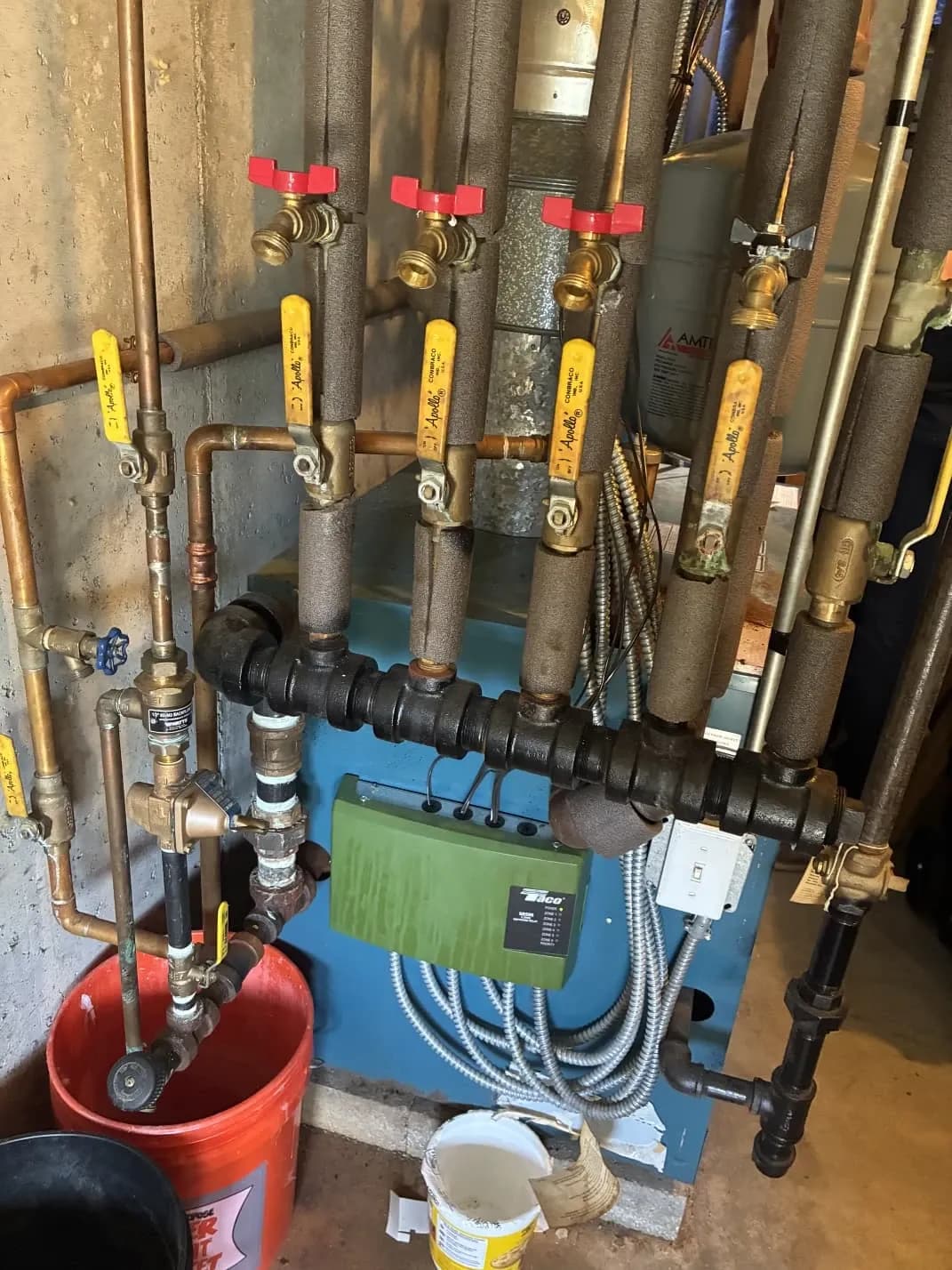
A boiler replacement estimate at a Westford, MA home recently highlighted a situation many homeowners with older heating systems will recognize: a cast iron boiler original to the house, now 34 years old, paired with an indirect hot water tank that had begun bubbling and weeping at the fittings. For anyone facing a similar aging system heading into winter, this case is a useful walkthrough of how a licensed plumber evaluates whether to repair or fully replace — and how to think about boiler repair decisions before the cold weather makes the choice for you.
What a Bubbling, Rusted Indirect Tank Signals
During the visit, the homeowner pointed out visible rust and active water seepage at the connections on the indirect hot water tank, along with a notable bulge — described during the inspection as "a big bubble" — on the tank itself. Water actively coming from the fittings, combined with corrosion and an aging tank, is a sign the tank's integrity is failing. Indirect tanks don't typically fail all at once; they weep, then the leak grows. An actively bubbling or visibly deforming tank is not something to wait on, and it should be evaluated by a licensed plumber promptly rather than monitored.
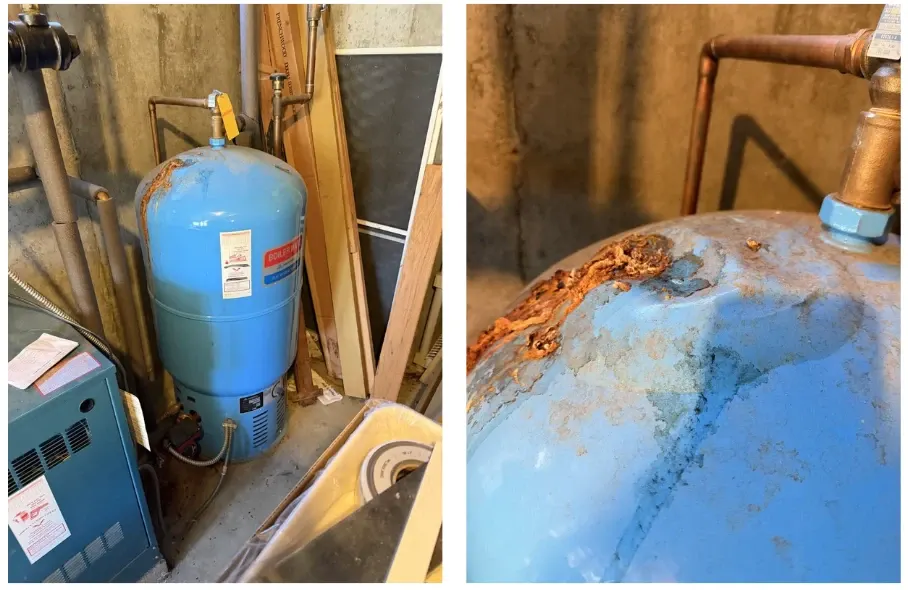
In this case, the tank was about 40 years old, well beyond what's reasonable to keep patching. The flanges were also noted as disintegrating — another sign of a system at the end of its service life.
Why Age Alone Changes the Conversation
The boiler itself was 34 years old and, by the homeowner's own account, had never caused real trouble. But longevity isn't a guarantee of continued safe operation — it's often a sign that a system is simply due. When a boiler of that age is paired with a failing indirect tank, patch repairs on one component while the other continues to age isn't usually the most practical path. That's part of why this homeowner chose to evaluate a full system replacement rather than just swapping the tank.
If you have a boiler that has gone decades without major service and notice rust, mineral scale, or slow pressure issues, it's worth having a licensed plumber assess the whole system rather than addressing symptoms one at a time. Homeowners facing no-heat conditions or active leaks should not wait — Jeneral Plumbing answers emergency calls 24/7, and you can read more about that service at our emergency plumbing page.
Combi Boiler vs. Traditional Boiler: Sizing Matters
Before the visit, the homeowner had already researched combination (combi) boiler units — which heat domestic hot water on demand instead of using a separate storage tank — and had been advised against one. That turned out to be the right call for this home. As discussed on site, a combi unit is generally appropriate for homes up to about 2,000 square feet with no more than two and a half bathrooms. This home exceeded that size, and a soaking tub was specifically flagged as a reason to avoid an on-demand unit: a large tub's flow demand can outpace what a combi can deliver, and running two showers simultaneously can cause an on-demand system to cut out. For larger homes or homes with higher simultaneous hot water demand, a traditional boiler paired with a separate water heater or indirect tank remains the more reliable choice.
Comparing Boiler Options: Stainless Steel Modulating vs. Cast Iron
Several high-efficiency boiler options were quoted for this replacement, including stainless-steel modulating units and a cast iron model. Weil-McLain was among the boiler brands discussed. The right choice between a stainless-steel modulating boiler and a traditional cast iron boiler depends on the home's heating load, hot water demand, and existing piping. A licensed plumber can explain the available options and the trade-offs of each before you commit. You can review boiler and heating system options on our heating system services page.
Don't Overlook the Water Supply Side
The home also had a booster pump installed to address weak incoming water pressure, which was reported to be functioning fine. However, the technician noted the pump setup was old, hadn't been inspected in years, and raised concerns about the condition of the connections, especially given the area's hard water. A water test was recommended as a next step. Hard water can accelerate corrosion at fittings and valves over time, and periodic testing helps determine whether water treatment is warranted to protect plumbing and heating equipment investments.
Separately, the condition of the water line into the home — including anything from the street to the meter — is typically the responsibility of the town, though practices vary: some towns replace only up to the meter, others may require the homeowner to replace valves beyond a shutoff at the street. If you have an older service line, it's worth confirming with your town what they will and won't cover before a failure forces the issue.
Shutoff Valves: Your Backup Plan
One detail worth highlighting for any homeowner with an older system: know where your main shutoff valves are, and don't rely on aging valves you rarely touch unless you have to. In this home, valves installed years ago by a previous contractor served as the "backup" shutoff for the house. If those fail, there often isn't another backup — which is one more reason not to let known issues like rusted connections or weeping fittings go unaddressed.
A Note on Cost
This post does not include pricing, since the final equipment selection, installed cost, and any water service work determined by the town were still being worked out at the time of this visit. Any boiler or water heater replacement should come with a clear, flat-rate price disclosed before work begins — never a surprise bill.
Call Jeneral Plumbing
If your boiler is approaching or past the 30-year mark, or your indirect tank shows rust, corrosion, or active leaking, don't wait for a full failure in the middle of winter. Jeneral Plumbing, owner-operated by a Licensed Master Plumber, serves Westford and surrounding communities and can evaluate your system, explain your replacement options, and provide a flat-rate quote before any work begins. Regular-hours visits come with an $80 dispatch fee — the cost of the visit, waived when you hire us for the work. Call (978) 392-7789 to schedule an evaluation.
This post is for informational purposes only and does not substitute for an in-person evaluation by a licensed plumbing or heating professional. Boiler and gas-fired equipment should only be inspected, repaired, or replaced by a licensed professional.
Written by Sierra Sorongon.
This article was drafted with AI writing tools and edited before publication. AI tools did not inspect any job or validate technical conclusions.
Last updated .