

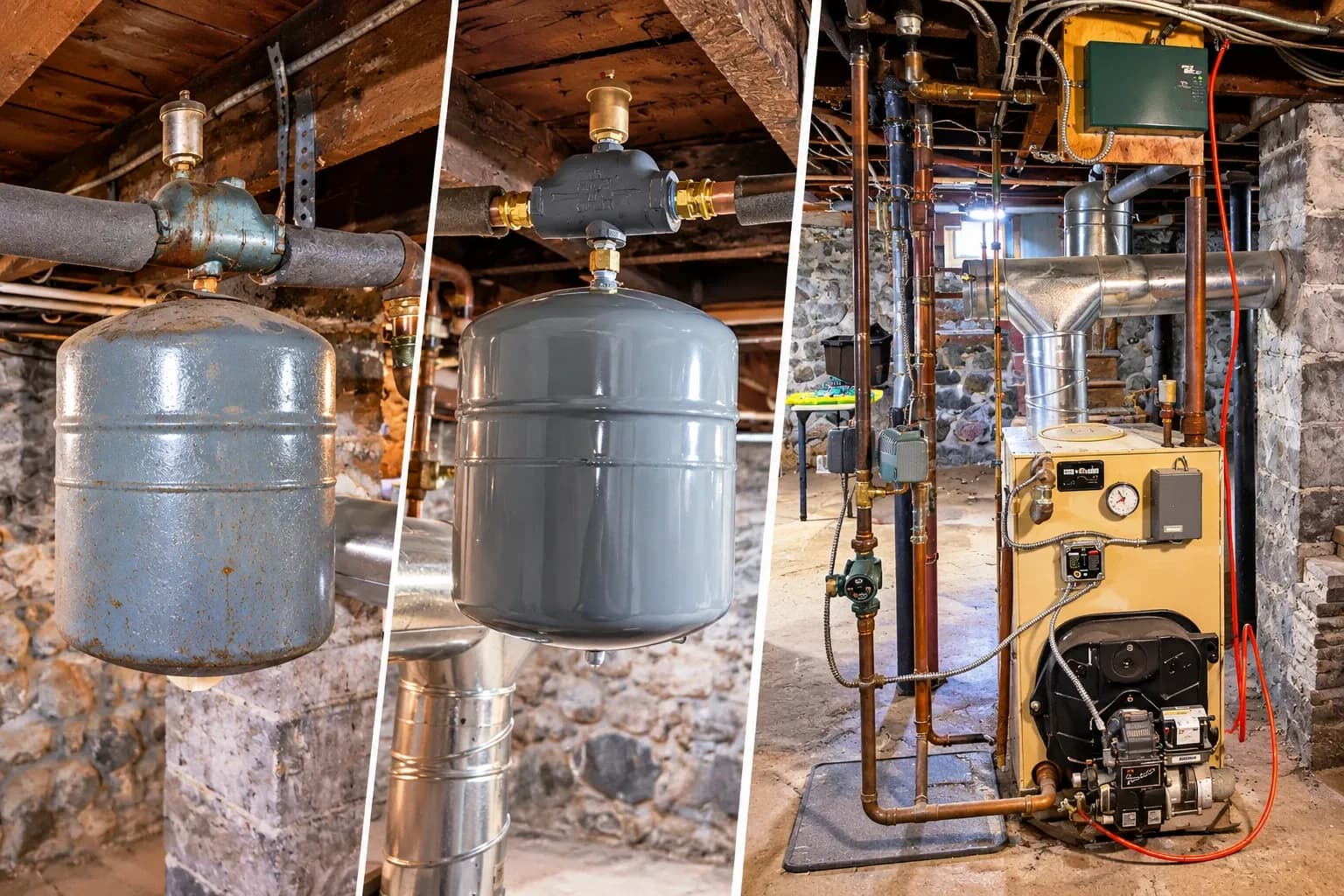
A noisy expansion tank sounds like a minor annoyance, but during a recent visit to a home on Lawrence Street in Billerica, MA, it turned out to be the first clue pointing to several heating system issues that had been building for years — long before the current homeowners bought the house. The lesson for any new homeowner, especially in older Merrimack Valley housing stock: a tank that sounds hollow instead of solid when tapped is worth a professional look before it fails in the middle of winter.
Why an Expansion Tank Makes Noise
The customer had called in a straightforward complaint — noise coming from the water expansion tank, with the added detail that he could feel it was solid when he knocked on it but it didn't sound right. An expansion tank's job is to absorb the extra volume and pressure that builds up as water in a closed heating system heats up. When it's failing, it can lose its internal air charge and start taking on more water than it's designed to hold, which changes the sound when you tap it.
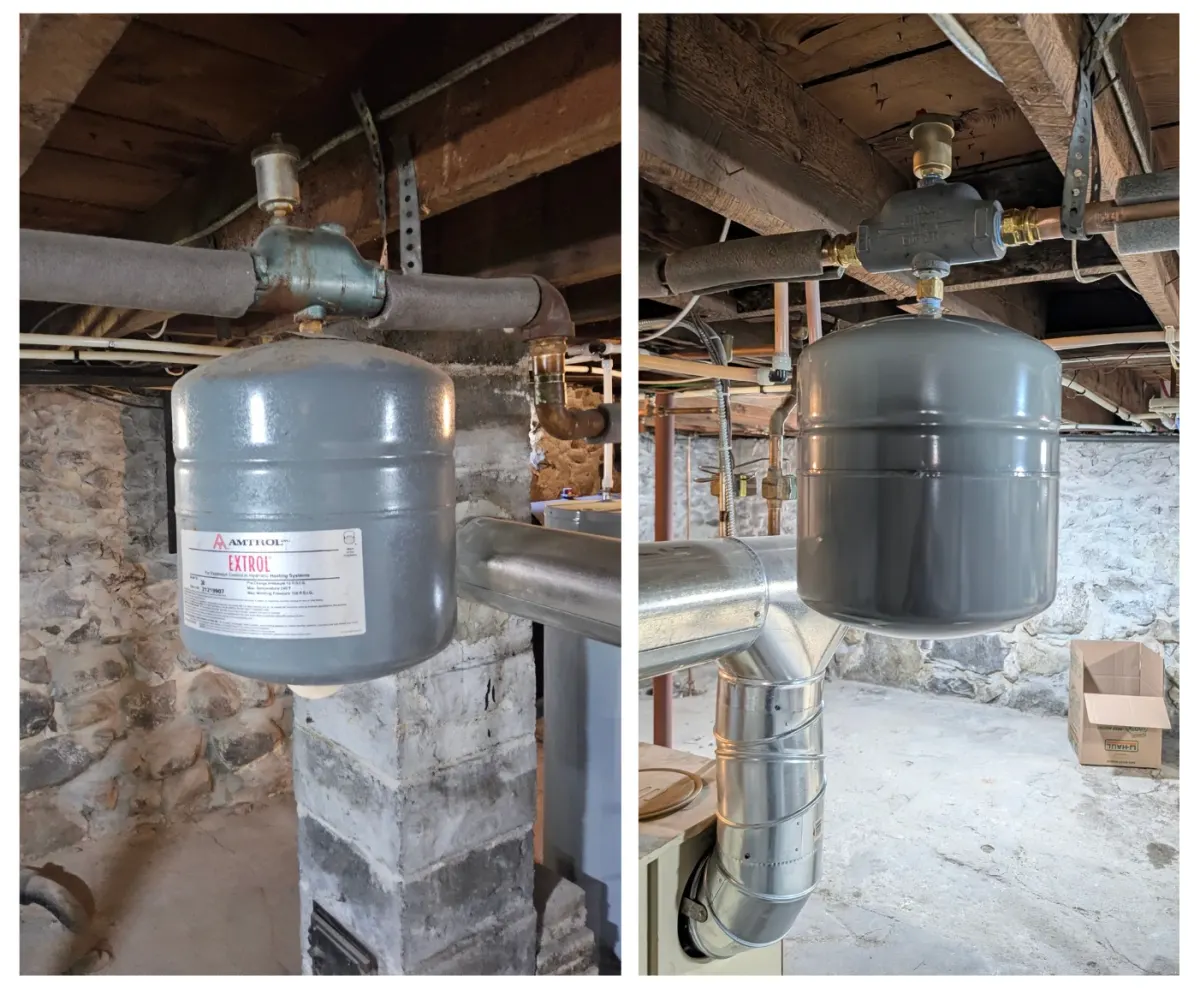
During the visit, our technician confirmed the tank needed to be replaced. But the bigger problem wasn't the tank itself — it was what surrounded it.
No Isolation Valves Anywhere
The homeowner had already purchased a replacement expansion tank and planned to install it himself with his father's help, until he discovered there were no isolation valves anywhere near the tank or several other fixtures in the house. Without an isolation valve, swapping out a tank means shutting down and draining a much larger portion of the heating system than necessary — turning a simple part replacement into a bigger job.
This is a common finding in homes where piping has been added to or modified over the years without bringing every connection up to a consistent standard. The fix going forward is to install a valve designed specifically for the expansion tank connection, so future replacements only require a quarter-turn shutoff rather than draining the whole system.
PEX Fitting Too Close to the Water Heater
While examining the expansion tank's connection, our technician noted that the PEX piping run was installed far too close to the heat source — it needed roughly 30 inches of copper pipe before PEX should ever be used in that location. The style of PEX fitting involved is typically only available through a plumbing supply house, meaning whoever installed it should have known better. The home inspector had flagged the same issue during the pre-purchase inspection but reportedly noted it was acceptable because the water heater was electric — which does not hold up, since the heating side of the system still generates the heat that the clearance requirement is meant to protect against.
Pressure Relief Valve and Gauge Readings
The home's pressure relief valve is rated for 30 psi — its job is to release water if thermal expansion pushes the system pressure above that threshold. A functioning expansion tank is what's supposed to prevent the system from ever reaching that point. The homeowner had noticed leaking around relief valves after moving in and turning on the heat in the spring, which lines up with a tank that isn't doing its job.
Checking the system gauge, the reading initially appeared to show 40 pounds of pressure before our technician corrected for feet versus pounds, settling on roughly 20 psi — elevated, though not extreme. The adjustment knob showed signs of having been changed by someone previously, which can explain inconsistent readings. The valve itself is designed to only let in about 15 pounds when the system is cold, climbing to somewhere around 20–25 psi once heated, and should never approach the 30 psi relief threshold.
High Street Pressure Is a Regional Issue
One detail that applies well beyond this one address: in parts of Massachusetts, utilities sometimes raise pressure in the street mains rather than dig up and replace aging pipe with larger-diameter mains. Massachusetts code limits incoming pressure to no more than 80 psi inside a home, but when a street main runs high, it becomes the homeowner's problem to manage — typically with a pressure-reducing valve. This is worth checking on any home, especially one with an older or modified plumbing setup, since chronic high inlet pressure stresses fixtures, fittings, and expansion tanks over time.
Aging Oil Boiler and a Natural Gas Opportunity
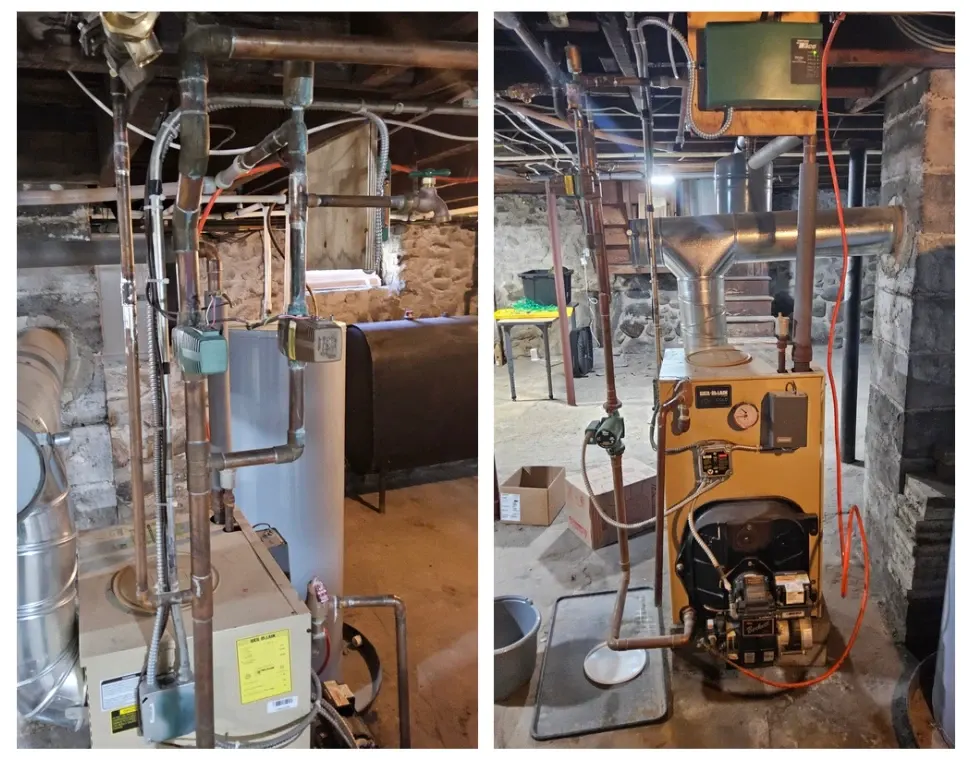
The home's boiler dates to around 2005 — a bit over 20 years old — and runs on oil, though a previous owner had already brought a natural gas line to the property and capped it off for future use. The homeowner's plan is to keep running the oil system until it fails and then convert to gas. Our technician recommended against waiting for failure: an aging boiler is far more likely to leak or fail in the middle of winter than during the off-season, and a failure in January becomes an emergency repair rather than a planned, lower-stress replacement. With only two heating zones in the home, converting to gas is a comparatively modest scope of work. Planning that conversion for spring, summer, or fall — rather than waiting through another heating season — avoids turning a predictable upgrade into a no-heat emergency.
The boiler also hadn't been serviced yet this season. Annual boiler service, along with scheduling fuel service through the oil provider, helps catch small issues like worn components or venting problems before they turn into failures during peak heating months. Homeowners dealing with an aging steam or hydronic system can learn more about service options through Jeneral Plumbing's heating system services.
Other Issues Found Along the Way
A walkthrough of the home turned up several other plumbing concerns unrelated to the heating system, all consistent with piping work that had been modified over time without full attention to code:
A washing machine standpipe with no proper vent, which can siphon water from the trap and allow sewer gases into the home
PVC pipe joined with what our technician identified as non-rated adhesive rather than proper solvent cement
A toilet supply connection using an incorrect clamp
A water heater pan with unclear drainage
None of these were part of the original service call, but they're the kind of findings that come up during a thorough look at a newly purchased home's plumbing — and they underscore why a full system check is worthwhile for any new homeowner, not just a response to one noisy part.
Safety Note Before Any DIY Attempt
Working on a pressurized heating system, including anything connected to a water heater or boiler, carries real risk — pressurized water and steam lines can cause burns, and misdiagnosing a relief valve or expansion tank issue can lead to water damage or a bigger failure later. This is work for a licensed plumber, not a weekend project, even for someone with some plumbing experience. If you're noticing similar symptoms — a tank that sounds different than it should, relief valve leaking, or an aging boiler you haven't had serviced this year — have a licensed professional take a look before heat season is in full swing.
Get Your Heating System Checked Before Winter
If your home has an older boiler, piping you're not sure was installed correctly, or you've noticed leaking around relief valves, don't wait for a mid-winter failure. Jeneral Plumbing serves Billerica and the surrounding Merrimack Valley, and our visits carry an $80 dispatch fee — the cost of the visit, waived when you hire us for the work. For heating failures outside normal business hours, we answer emergency calls 24/7. Call Jeneral Plumbing at (978) 392-7789 to schedule a heating system inspection or discuss planning a gas conversion before next winter.
This post is for informational purposes only and is not a substitute for an in-person evaluation by a licensed plumbing professional.
Written by Sierra Sorongon.
This article was drafted with AI writing tools and edited before publication. AI tools did not inspect any job or validate technical conclusions.
Last updated .