

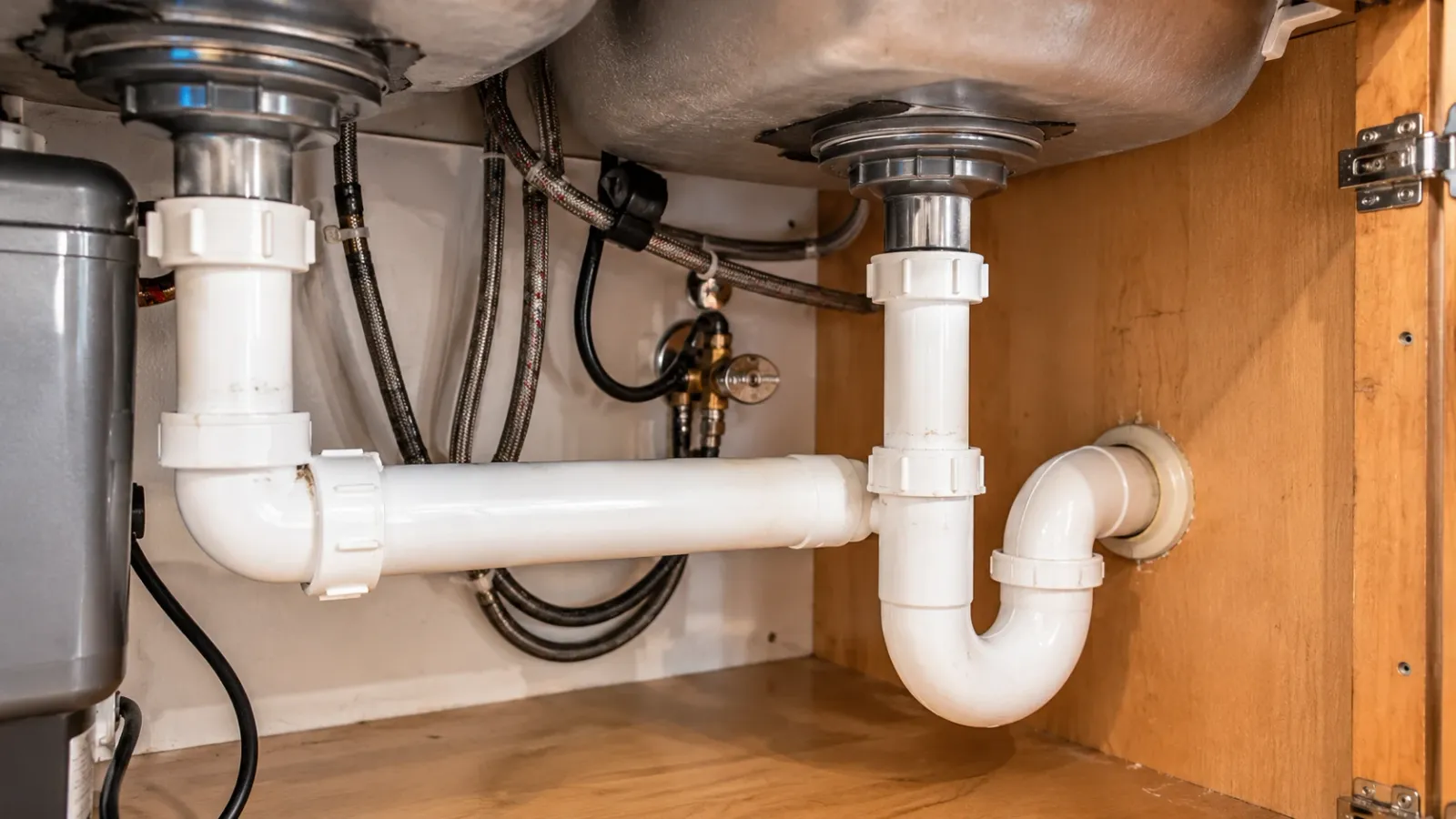
A homeowner in Acton recently called Jeneral Plumbing about a strange, repeating sound coming from under a bathroom sink — not quite a drip, not quite a knock, but enough to cause real worry about a hidden leak. After a visual inspection of the kitchen sink pipes and the plumbing chase running up through the floor, the sound turned out to have nothing to do with water escaping anywhere.
The Sound Homeowners Mistake for a Leak
The homeowner described hearing an intermittent sound roughly every thirty to forty-five seconds, concentrated in one area near where a pipe ran up through the framing. It had started a couple of weeks earlier and had gotten noticeable enough to prompt a service call. Understandably, any unexplained sound near plumbing reads as "leak" to most homeowners — but the pattern here was the first clue that something else was going on.
What's Actually Happening: Thermal Expansion
When hot water runs through a pipe, the pipe itself heats up and physically expands, just like most materials do under heat. If a hole drilled through framing or subflooring is cut too tight against the pipe, that small amount of expansion has nowhere to go — so the pipe rubs, or squeaks, against the wood. That's what the technician found here: a PVC drain line running tight through a framing hole, expanding slightly whenever hot water drained through it, and rubbing against the surrounding wood.
This is a common and largely harmless condition, especially in older construction or multi-unit buildings where framing holes weren't drilled with extra clearance. It doesn't indicate a failing pipe or an active leak on its own.
How a Technician Rules Out an Actual Leak
Because any unusual sound near under sink pipes deserves a real inspection rather than guesswork, the technician checked several things before ruling out a leak:
Pattern of the sound: A leaking or dripping pipe tends to produce a more constant sound, sometimes starting slow and building, rather than a sharp, repeating squeak every 30–45 seconds.
Moisture check: The technician checked the tile, the area around the pipe penetration, and behind a nearby mirror for any sign of moisture. All of it was dry.
Staining or discoloration: A slow drip over two to three weeks would typically have already produced a visible wet spot or yellowing on the ceiling or wall — none was present.
Pipe condition: The piping itself showed no signs of being new or recently disturbed, suggesting the run had been in place and functioning without issue for some time.
Based on the lack of moisture, the sound pattern, and the pipe's condition, the conclusion was that this was expansion noise from a drain pipe rubbing against a framing hole — not a leaking pipe.
When This Kind of Sound Should Actually Concern You
A squeak near a drain line usually isn't an emergency, but a few signs do warrant a professional look:
A sound that is constant rather than intermittent, especially one that starts faint and builds.
Visible moisture, staining, or a soft spot on drywall, ceiling, or flooring near the pipe run.
A musty smell without any visible source.
Homeowners who want to monitor the area themselves can use a simple moisture meter, available at most hardware stores, to check drywall or framing near the suspected pipe run over time. This is a monitoring tool, not a diagnosis — if a meter shows elevated readings, that's the point to call a licensed plumber rather than open up the wall yourself.
Why You Shouldn't Just Open the Wall
If expansion noise does become bothersome or persistent, the eventual fix involves opening the wall or ceiling near the pipe penetration, cutting the pipe free, enlarging the framing hole slightly for clearance, and resealing everything — not a simple DIY job, since it involves cutting into a wet-wall drain assembly correctly and re-securing the pipe without creating a new leak point. This kind of work should be scoped and performed by a licensed plumber.
When to Call a Professional
If you're hearing an unexplained sound near your plumbing and you're not sure whether it's expansion noise or an early sign of a leak, it's worth having it looked at rather than guessing. Jeneral Plumbing evaluates situations like this as part of our pipe leak repair services, and for any sink or fixture issue uncovered along the way, our fixture repair team can address it directly. For true plumbing emergencies — active leaks, flooding, or no-heat situations as the weather turns colder — our emergency plumbing line is answered 24/7.
Jeneral Plumbing visits in Acton and the surrounding area are subject to an $80 dispatch fee — the cost of the visit, waived when you hire us for the work.
Call Jeneral Plumbing
If a sound under your sink has you second-guessing whether it's harmless expansion or something more serious, call Jeneral Plumbing at (978) 392-7789. We'll inspect the pipe, check for moisture, and give you a straight answer.
This post is for informational purposes only and is not a substitute for an in-person evaluation by a licensed plumber.
Written by Sierra Sorongon.
This article was drafted with AI writing tools and edited before publication. AI tools did not inspect any job or validate technical conclusions.
Last updated .