Cast Iron Drain Pipe Failure in Westford: When to Patch vs. Full Repipe

Cast Iron Drain Pipe Failure in Westford: When to Patch vs. Full Repipe

Sierra Sorongon

Drains & Water Line

When a Westford homeowner noticed a slow drip collecting on the basement floor, they did the right thing and called us before it turned into a real flood. What we found underneath their 1972-built home is one of the most common calls we get from homes of that era: a cracked cast iron drain pipe, rotted right along its seam. If you're searching for a drain cleaning company because you've spotted rust, drips, or a slow leak near your basement drain pipes, this real Westford job walks through exactly what we look for, what your options are, and what it actually costs to fix it right.

Safety First: This Is Not a DIY Repair

Before we get into the details, a clear warning: cutting, patching, or repiping cast iron and PVC drain lines is not a homeowner project. Improperly cut or joined drain pipe can lead to sewage backup, structural issues, and water damage that's far more expensive than the original leak. Massachusetts requires a licensed plumber for this type of drain work. If you notice rust, dripping, or a crack on your own drain pipes, shut off water use to that line if you can and call a licensed professional — never attempt to cut into cast iron or glue PVC fittings yourself.

What We Found at This Westford Home

The homeowner told us the drip had started about a week earlier. It wasn't flooding — just enough water collecting over a full day to be noticeable and concerning. That's actually the best-case scenario: a problem caught early, before it becomes an emergency.

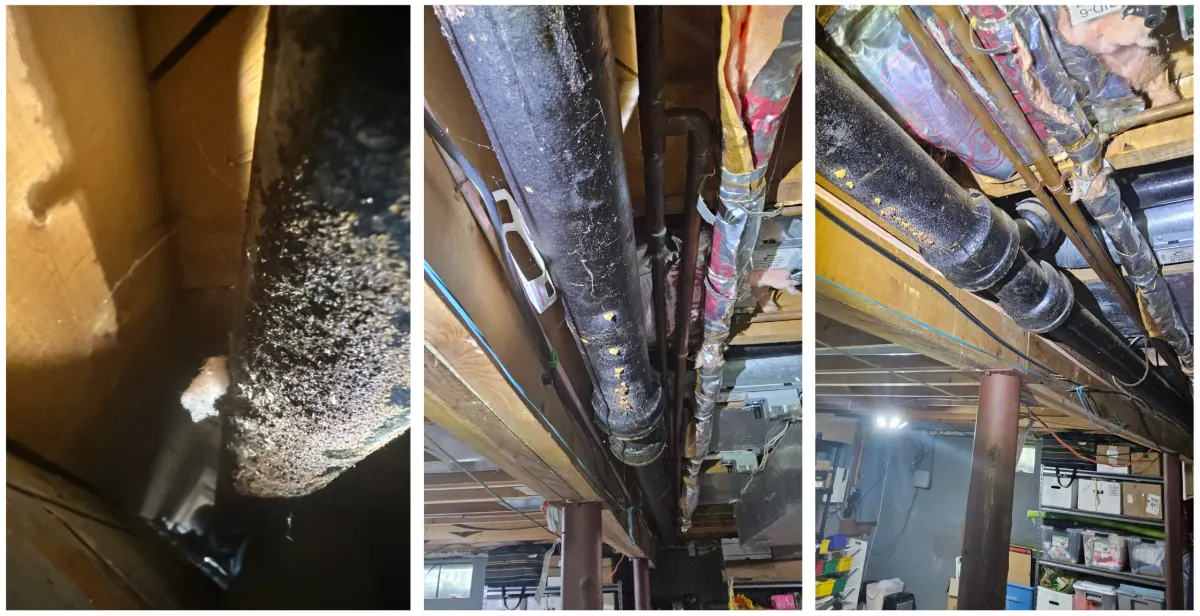
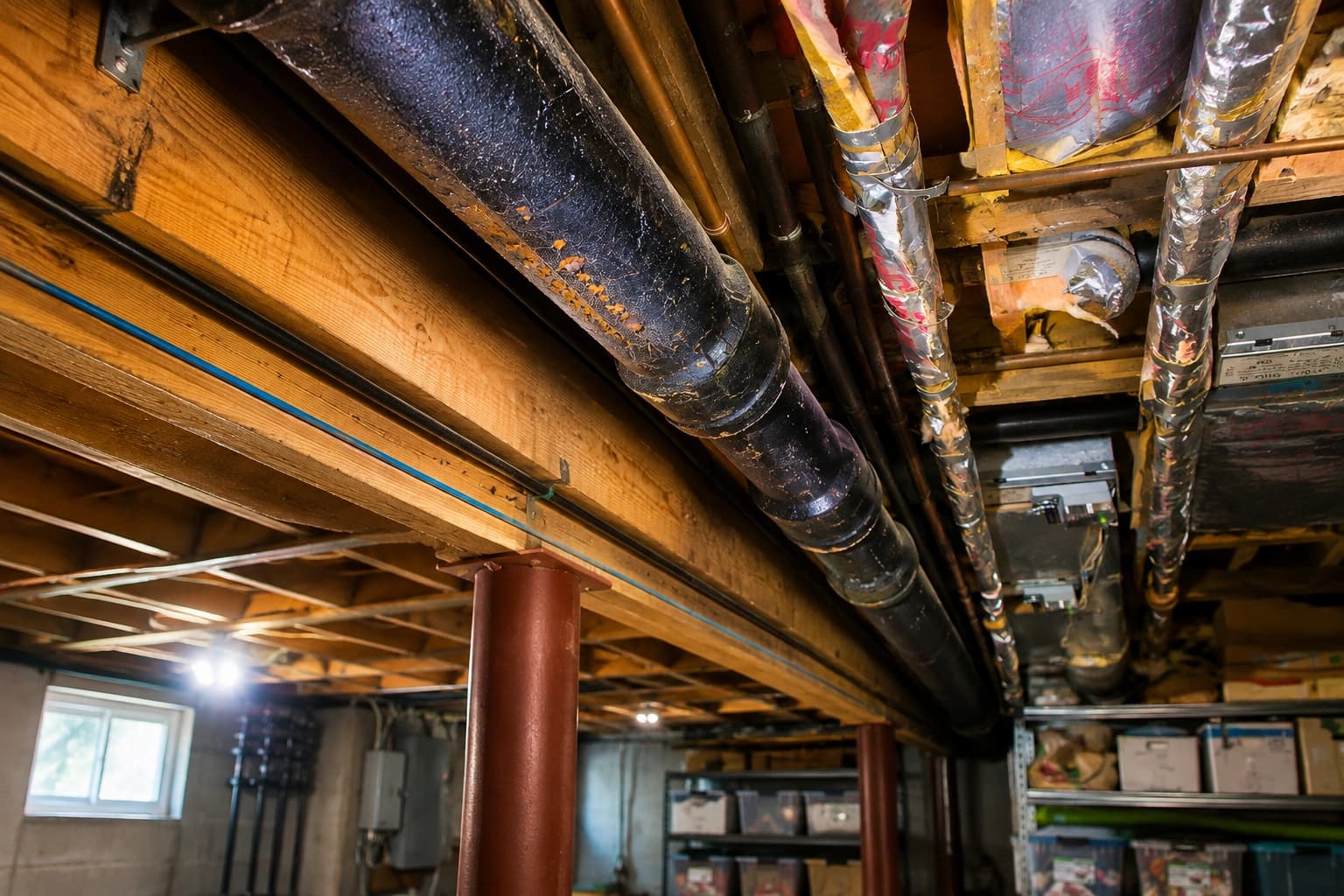
old cast iron pipes

Walking the basement, we found a mix of pipe materials: copper, cast iron, and a section of PVC that a previous owner had already installed — likely because of an earlier cast iron failure in that spot. The active leak was in the original cast iron, dripping from a crack right along the pipe's seam.

This is a textbook failure pattern. Cast iron pipe is manufactured with a seam running down its length, and that seam is the thinnest point in the pipe wall. Over decades, that's where rust and corrosion eat through first, causing a crack to open up. We pointed out the seam line to the homeowner directly on the pipe, and once you know what to look for, it's easy to spot — a faint line running the length of the pipe, right where the crack had formed.

Checking the Rest of the Drain Pipes

Because this home still had a good amount of original cast iron in the basement, we didn't just look at the one leaking spot — we checked every visible section of drain pipe. That's an important step whenever cast iron is involved, since it doesn't fail uniformly. One section can look nearly perfect while a few feet away, another section is pitted with rust holes and actively dripping.

In this case:

  • Most of the cast iron in the basement was still in solid shape.

  • One additional section — separate from the main leak — showed the same rust and pitting pattern and was also dripping, just more slowly.

  • The copper piping throughout the house was in great condition. Copper doesn't rot out the way cast iron does, so that portion of the system didn't need any work.

We were upfront with the homeowner: pipe that's already showing rust and pinholes is going to need replacement eventually. It's not always urgent the day you find it, but it's not a "maybe" — it's a "when."

Patch the Leak, or Repipe the Whole Run?

This is the real decision point on almost every cast iron drain call, and it's one worth thinking through carefully rather than just patching the one active leak.

The homeowner asked a smart question: rather than patch just the leaking section, would it make more sense to remove all of the remaining cast iron and replace it with PVC in one shot? We laid out both paths honestly:

  • Targeted repair: Cut out the failed cast iron section — in this case a roughly five-foot piece — and replace it with a single new run of PVC, transitioning cleanly from the copper into PVC with one glued joint and a clamp near the existing cleanout. Removing cast iron is significantly more labor-intensive than working with copper or PVC, which is part of why that cut is the bulk of the cost even on a short section.

  • Full repipe: Remove all of the remaining cast iron in the basement — including the second spot that was also showing rust and dripping — and replace the entire run with new PVC pipe, roughly twenty feet, eliminating the old patchwork of cast iron, copper, and PVC completely.

We gave the homeowner real numbers on the spot, not a rough guess. Replacing just the actively leaking section — the roughly five-foot cut from the fitting down to the cleanout — was quoted at approximately $1,100. A full repipe of all the remaining cast iron, continuing in roughly five-foot increments at approximately $800 per section beyond the first, would run close to $3,800 total. It's a significant jump, and the homeowner decided to move forward with fixing the active emergency section first rather than committing to the full repipe immediately.

There's no universally "right" answer here — it depends on your budget, how much of the remaining pipe is showing wear, and whether you'd rather handle it in phases or all at once. What matters is getting an honest look at the whole system, not just a patch on the loudest problem.

Why This Matters for Older Homes in Westford

Homes built in the 1960s and 70s throughout Westford, as well as in nearby Chelmsford and Littleton, very often still have some or all of their original cast iron drain pipes. If your home falls in that range and you've never had the basement drain lines inspected, a crack like this one can develop quietly for years before it becomes visible as a drip or, eventually, a bigger leak.

If you're already dealing with a slow drip or rust spots on your own drain pipes, it's worth getting ahead of it before it becomes an after-hours emergency. You can learn more about how we handle urgent situations on our emergency plumbing services page, and if you're weighing a full repipe versus ongoing repairs, our drain repair page covers what that process typically looks like.

Don't Forget Your Heating System While You're at It

While our technician was in the basement working on drain pipes, it's a good reminder that basements are also home to your water heater and heating equipment — and fall is the right time to have both checked before the cold weather hits. A drain leak dripping near a water heater or boiler can cause its own problems down the line. If it's been a while since your heating system had a tune-up, or if your water heater is getting up there in age, it's worth scheduling an inspection through our heating system services or water heater page before winter demand hits.

Frequently Asked Questions

Is there a $49 drain cleaning near me?

We didn't quote a drain cleaning service on this particular job — this call was specifically about a cracked cast iron drain pipe needing repair, not a clog needing cleaning. For any drain service, including cleaning, our visit starts with an $80 dispatch fee — the cost of the visit, waived when you hire us for the work. If your issue turns out to be a clog rather than a pipe failure, we'll let you know on-site.

How do I find reliable drain cleaning services near me?

Look for a licensed, local company that will show you the actual problem — not just tell you about it. In this Westford visit, our technician physically pointed out the seam crack on the pipe and walked the homeowner through every section of cast iron in the basement before quoting any work.

Why does cast iron pipe crack along a seam?

Cast iron pipe is manufactured with a seam running its full length, and that seam is the thinnest part of the pipe wall. Over decades, rust and corrosion wear through that thin spot first, which is why cracks and leaks so often appear right along the seam line rather than randomly around the pipe.

Should I patch a cast iron leak or replace the whole line?

It depends on the condition of the rest of your pipe and your budget. If other sections are already showing rust or pitting, they will eventually need replacement too. Some homeowners prefer to handle it all at once; others prefer to fix the active leak first and plan for the rest later. Either approach is reasonable as long as you know what you're looking at.

Does copper pipe fail the same way as cast iron?

No. Copper pipe holds up well over time and doesn't rot out the way cast iron does. In this Westford home, all of the copper piping was in good condition and required no work at all — only the cast iron sections needed attention.

Key Takeaways

  • Cast iron drain pipes typically fail at the seam — the thinnest point in the pipe wall — after decades of rust and corrosion.

  • A slow drip today can indicate more widespread wear elsewhere in the system, so it's worth having all visible drain pipes inspected, not just the leaking spot.

  • Copper pipe does not corrode the same way and often doesn't need replacement even in an older home.

  • Patching a single failed section is less expensive than a full repipe, but sections still showing rust and pitting will need replacement eventually.

  • On this Westford job, replacing just the actively leaking cast iron section was quoted at approximately $1,100; a full repipe of the remaining cast iron was estimated near $3,800.

This post is for informational purposes only and does not replace an in-person evaluation by a licensed plumber. Drain and pipe conditions vary by home, and only a hands-on inspection can determine the right repair for your situation.

If you're in Westford, Chelmsford, Littleton, or elsewhere in our Middlesex County service area and you've noticed rust, dripping, or aging pipe in your basement, don't wait for a small leak to become a big one. Call Jeneral Plumbing at (978) 392-7789 — we answer emergency calls 24/7 and we'll always show you exactly what we find before recommending a fix.

Written by Sierra Sorongon.

This article was drafted with AI writing tools from Jeneral Plumbing job notes and source materials, then edited before publication. AI tools did not inspect the job or validate technical conclusions.

Last updated .

Related Topics:drain cleaning companydraindrain pipesdrain cleaning companiesdrain cleaning services near me$49 drain cleaning near me

Dealing with this in your home? We can help.