

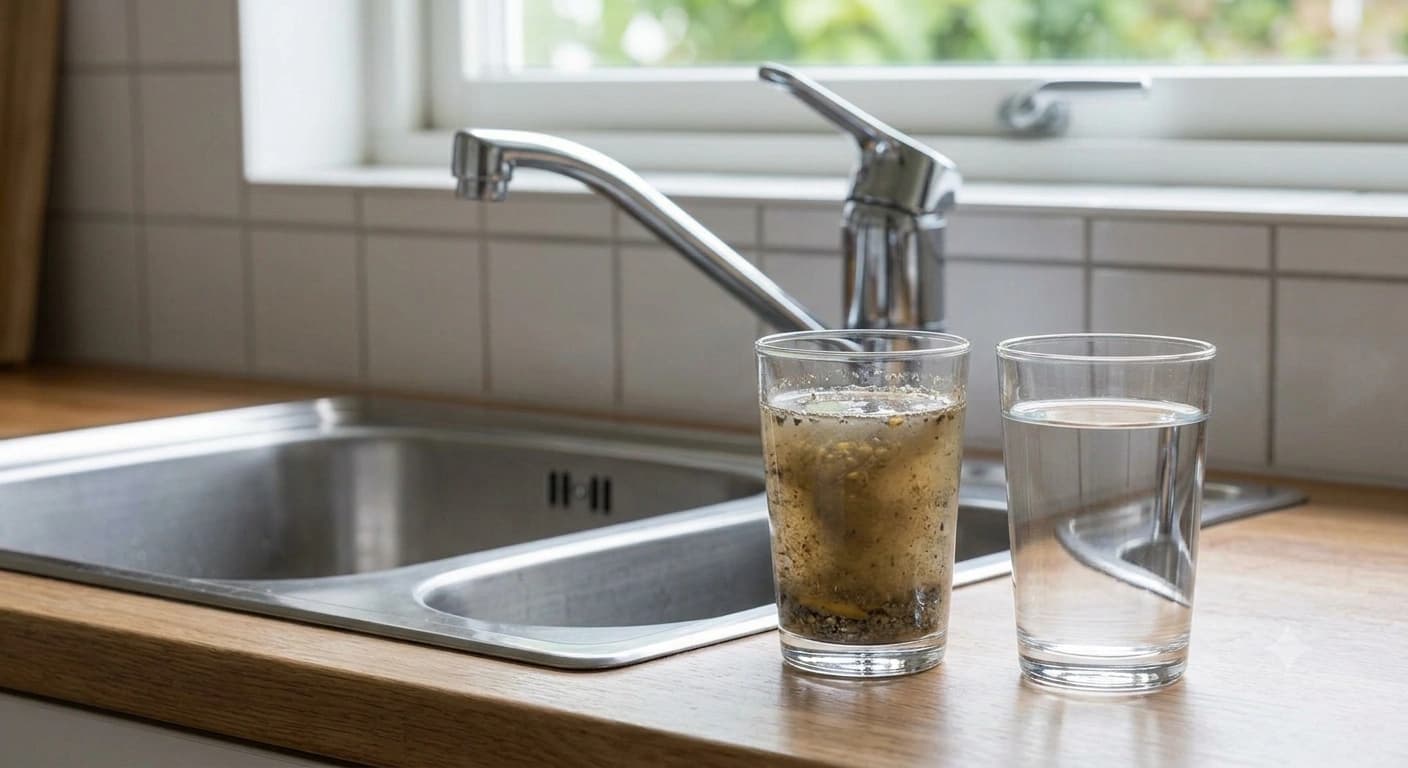
You turn on the kitchen faucet and get murky, sediment-filled water, even though there's a filter on the line. Maybe you changed the cartridge a few weeks ago, and it's already clogged. A filter that can't keep up usually isn't defective. It's mismatched to the water coming out of the ground.
What happened in one home
A homeowner had moved into a house with a private well and an existing filter system inherited from the previous owners. After problems with that setup, they had someone install a replacement, which they later described as not an adequate system. By the time they called us, they were changing a cartridge filter constantly because fine sediment kept clogging it, at about $45 per cartridge. They told us sediment was the biggest issue with the well, and they were upfront that a large new treatment system wasn't in the budget.
That's a common and reasonable position. The right answer isn't always the most expensive equipment. Sometimes it's the right type and size of filter for the sediment you actually have.
Why fine sediment beats a basic filter
Water picks up fine particles on its way through soil and rock to a well. Much of that sediment is measured in microns, small enough to pass through a filter with the wrong rating or clog one that's too fine for the load. A private well also has no utility treating the water before it reaches you, and particle size and amount vary from one property to the next. A filter that works at your neighbor's house can fail at yours.
Frequent cartridge changes are the clearest sign of that mismatch. A cartridge that clogs in weeks is spending your money on a job it wasn't designed for.
Matching the filter to the water
A well water filtration system should be chosen from your water and your household, not from a shelf. We start by looking at the existing equipment, how fast it loads up, what the sediment looks like, and how much water the house uses. For this home, we discussed two directions: a stainless steel screen filter, or a cartridge filter properly sized and rated for the fine particles coming from the well.
A stainless steel screen is durable and cleanable instead of disposable, and when it's sized correctly it can catch sediment while keeping good flow through the house. A properly rated cartridge can work too, especially when it isn't being asked to carry the whole load alone. Placement matters as much as the filter itself. It needs to sit in the right spot on the supply, with shutoffs and a bypass so it can be serviced without taking the house off water.
If sediment is only part of the picture, and you're also seeing staining, odor or other changes, test before adding equipment. Our water treatment systems guide explains how different problems call for different technologies, and our filter and softener installation service sizes equipment from what the water shows.
Keeping it working
Once the right filter is in, a little routine keeps it that way. Pressure gauges before and after the filter are the best early warning. As sediment builds up, the pressure difference grows, often before the water looks different. Change cartridges when the sediment load and pressure drop call for it, not just when a calendar reminder comes due.
Sediment levels can change with the seasons, after heavy rain or during a dry spell, so a schedule that works in summer may fall short in spring. Keep a simple log of when you change cartridges or clean screens and what you noticed. Patterns show up quickly, and the record helps anyone diagnosing the system later.
When the filter isn't the problem
A sudden change in sediment, or water that gets worse despite regular maintenance, may not be a filter issue at all. Changes in the well, a problem with the pump or a disturbance in the plumbing can stir up sediment. Well and pump work belongs to a well contractor, and we'll tell you when the evidence points there. Health questions, such as bacteria, need a certified laboratory rather than a filter change. The EPA's private-well guidance explains why appearance alone can't establish safety, and our water testing service covers the difference between field checks and lab analysis.
Getting the sediment under control
Jeneral Plumbing is based in Westford, MA and serves homes across Middlesex & Worcester County. A regular-hours visit carries an $80 dispatch fee — the cost of the visit, waived when you hire us for the work. Call (978) 392-7789 if your well filter clogs faster than it should, and we'll look at what you have before recommending what to change. Our well water treatment guide covers the broader picture. The Water Care service plan includes a water treatment visit about every three months to check eligible equipment; ask whether it fits your filter.
Written by Jeneral Plumbing.
This article was drafted with AI writing tools and edited before publication. AI tools did not inspect any job or validate technical conclusions.
Last updated .