

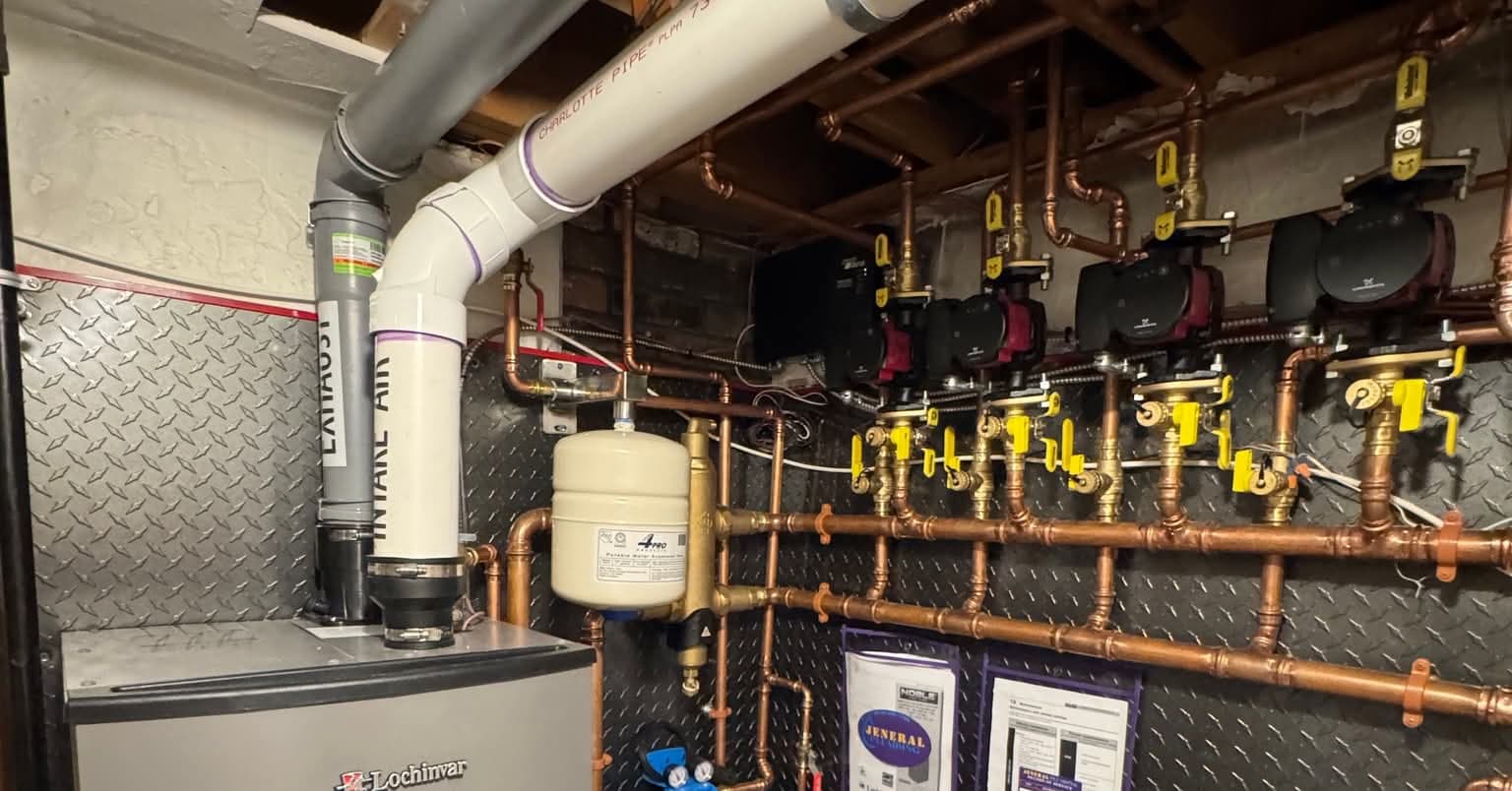
A Pepperell homeowner called about spotty heat. We found a zone valve stuck shut, restored its movement and saw the system operate during the visit. The same visit raised a second question: what condition were the water passages and heating-system water in? A working valve answered the immediate complaint, but it didn't settle the maintenance plan for a 17-year-old boiler.
If you smell gas or a carbon monoxide alarm sounds, leave and call 911 from outside. Don't operate switches, phones, appliances or valves inside. Stay out until the fire department or gas utility clears the property. Boiler diagnosis and water-side cleaning belong to a qualified professional; don't open the equipment or force a valve yourself.
The call: a zone valve that wouldn't open
A zone valve opens to send hot water to one part of the house when that area calls for heat. This one could be heard trying to run, but it never opened, so the call for heat went unanswered. We worked the valve free, and once it could move, the system ran normally.
That restored operation during the visit. It didn't establish why a valve on a 17-year-old boiler had seized or how long the freed valve would remain reliable.
What the water was doing
The home is on a private well. The August 2026 visit recorded about 11 grains per gallon of hardness, notable iron and concern about clogging in the cast-iron heat exchanger. Those were reasons to investigate the water side; the household water sample wasn't an analysis of the material inside the boiler.
Deposits can interfere with heat transfer or valve movement, but their source matters. A closed heating loop doesn't continuously use fresh well water the way a faucet does. Repeated makeup water can add minerals and oxygen, while corrosion within the heating system can produce iron-rich debris. Weil-McLain's boiler user guidance warns about continual fresh makeup water and calls for leaks to be corrected. For this home, the inspection needed to connect the fill history, loop condition and valve findings rather than infer them from one domestic-water reading.
Why "not that hard" still mattered
The homeowner reported being told the water was not very hard. The recorded 11-grain result justified a closer look, but it didn't prove that hardness caused the stuck valve. Sample location, test method, existing treatment and the heating loop's fill history all matter when comparing those findings.
An on-site plumbing test checks basics like hardness, pH and iron. It won't detect everything a private well can carry, such as radon, arsenic or uranium, which need a certified laboratory. The EPA's guidance on protecting your home's water covers private-well testing and finding a certified lab. Town water reports don't describe private wells at all.
Boiler cleaning and maintenance after scale and iron
For this system, the visit recommended water-side cleaning rather than immediate replacement: assessing and flushing deposits, refilling the loop and using a suitable inhibitor where the boiler and treatment instructions permit it. The cleaner, concentration, circulation time and refill water have to suit the actual equipment. The record describes a recommendation, not a completed clean or measured improvement afterward.
"Boiler cleaning" can also mean inspecting and cleaning the combustion passages. That work follows the boiler and burner instructions for the installed equipment. This case concerned the water side.
The equipment manual and service findings set the maintenance schedule. Repeated water additions, leaks or visible debris may call for earlier attention, but a hard-water address alone doesn't set the cleaning interval. Our boiler repair service covers the diagnostic side.
Diagnosing zone valves, flushing a heating system and adding inhibitors involves pressurized hot water, controls and equipment-specific chemicals. Leave that work to the service professional using the boiler's instructions.
Two connected problems, separate decisions
The options were discussed separately: water treatment, heating-system work and a combined plan. A softener and UV disinfection were among the water-treatment options, but they address different questions. Hardness can inform a softening decision; it doesn't establish a need for disinfection. The record doesn't include a bacterial laboratory result. The homeowner was encouraged to review the reports and findings before choosing any equipment. Our water treatment service and water testing pages explain that process.
What maintenance can and can't do
Appropriate cleaning and water management can help preserve performance. They don't reverse corrosion, restore lost pipe-wall thickness or guarantee extra years of service. The heating loop and the home's drinking-water plumbing also have different treatment requirements; a boiler inhibitor isn't treatment for household tap water.
Should I replace a 17-year-old boiler instead of cleaning it?
Not on age alone. A sound, serviceable heat exchanger may support cleaning and repair. The decision also depends on controls, leaks, parts availability, performance and the cost of the complete work. If the loop repeatedly needs makeup water, find and correct that loss rather than relying on cleaning alone.
How do I know if my boiler needs cleaning?
Report uneven heat, unusual valve noises, changed run time, leaks or repeated water additions. Those symptoms can involve deposits, circulation or controls; inspection and testing decide which. Share the water-test results as context without assuming that cleaning is the answer.
Boiler and water evaluation in Pepperell
Jeneral Plumbing is owner-operated by a Licensed Master Plumber (MA #9628831-PL-M), based in Westford, MA, and serves homes within 20 miles, including Pepperell, with address, work and availability confirmed before booking. Gas appliance work is Massachusetts-only. For uneven heat or a sticking zone valve, an evaluation of the boiler and heating system can separate the immediate repair from longer-term maintenance. Call (978) 392-7789 to discuss the symptoms. A regular-hours visit carries an $80 dispatch fee — the cost of the visit, waived when you hire us for the work. Repair work is priced at a flat rate, with the total and any fees disclosed for approval before work begins. Ongoing coverage options are described under our plumbing service plans.
Written by Jeneral Plumbing.
This article was drafted with AI writing tools and edited before publication. AI tools did not inspect any job or validate technical conclusions.
Last updated .