
Boiler expansion tank replacement sounds like a simple fix, but a real consultation between plumbing professionals — reviewed here for educational purposes — shows how quickly a handful of wrong piping decisions can snowball into repeated service calls, a voided manufacturer warranty, and a system that never holds steady pressure. This post is based on a technical phone consultation between plumbers troubleshooting a multi-unit hydronic heating installation. No Jeneral Plumbing visit took place at this address, and no specific town was identified in the conversation, so this is shared as a case study in what can go wrong — not a record of a completed repair.
Why This Matters Before Winter Arrives
Important safety note: Hydronic boiler systems involve pressurized water, gas connections, and components like temperature-and-pressure (T&P) relief valves that exist specifically to prevent dangerous overpressure events. Diagnosing or correcting issues with expansion tanks, backflow preventers, or circulator pump placement requires a licensed plumbing professional. Homeowners should never attempt to adjust, bypass, or repipe these components themselves. As the heating season begins, systems that have been limping along with marginal pressure issues tend to fail at the worst possible time — during the first sustained cold snap.
What the Technicians Found: Pressure Readings in the 30–32 PSI Range
In the consultation, a field technician described two Navien combi units on different floors of the same building, both showing system pressure readings between 30 and 32 psi while running — right at the rated threshold of the units' 30 psi T&P relief valves. The T&P valves were not popping open, which raised an important diagnostic question discussed on the call: is that reading accurate, or is something else going on?
The senior technician's guidance was direct: compare the panel's internal water pressure sensor reading to an external gauge. If the two readings match closely, the issue likely points to the expansion tank. If they don't match, the internal pressure sensor itself may be faulty. Either way, a pressure reading that close to a relief valve's rated limit is not something to leave unaddressed — it's a signal that the system is under stress.
The Installation Errors That Were Found
Photos shared during the call revealed a list of problems with the original installation, reportedly completed by an unlicensed homeowner using hardware-store fittings:
A circulator pump installed on the return side of the system instead of the supply side — a configuration that can prevent proper hydronic separation and push pressure where it shouldn't go.
An expansion tank piped into the port meant for a low-water cutoff, rather than being properly placed on the supply side near the boiler.
A backflow preventer plumbed directly into the heating system rather than installed per the unit's specifications, which was contributing to an abnormal pressure signal.
Plastic, homeowner-grade fittings throughout, rather than materials suited to a hydronic heating application.
A replacement backflow preventer that began leaking again within a week of installation — a sign that the underlying pressure problem was still feeding back into that component.
As the technician on the call put it, the pump being on the return side "doesn't make a lot of sense" and can prevent the system from achieving proper hydronic separation — which may explain why both units were reading unusually high pressure during operation.
The Warranty Consequence
One of the two Navien units discussed had already had its heat exchanger replaced earlier in the year, and by the time of this call, the unit's warranty had lapsed. Manufacturer warranties on boilers and water heaters generally depend on proper registration and correct installation per the manufacturer's specifications. When a unit is installed with incorrect piping — pump placement, expansion tank location, and backflow preventer configuration all out of spec — it can create ongoing conditions that contribute to component failures, and it can complicate warranty coverage going forward. If you're unsure whether your system was installed to manufacturer specifications, a licensed plumber can review the installation and confirm registration status.
Why This Had Already Taken Multiple Visits
By the time of this call, the technician reported being the third or fourth plumbing company to be called out for this installation. A plumbing inspector reportedly visited the property two or three times without flagging these issues. That detail is worth sitting with: an inspection confirming no code violations is not the same as a licensed plumber confirming a system was installed correctly for long-term reliability. The technician's assessment was that multiple specific corrections — proper pump placement, correct expansion tank location, and proper backflow preventer installation — would need to be made before the system could be considered sound, and that anything less would likely mean continued service calls.
What a Correct Expansion Tank Installation Looks Like
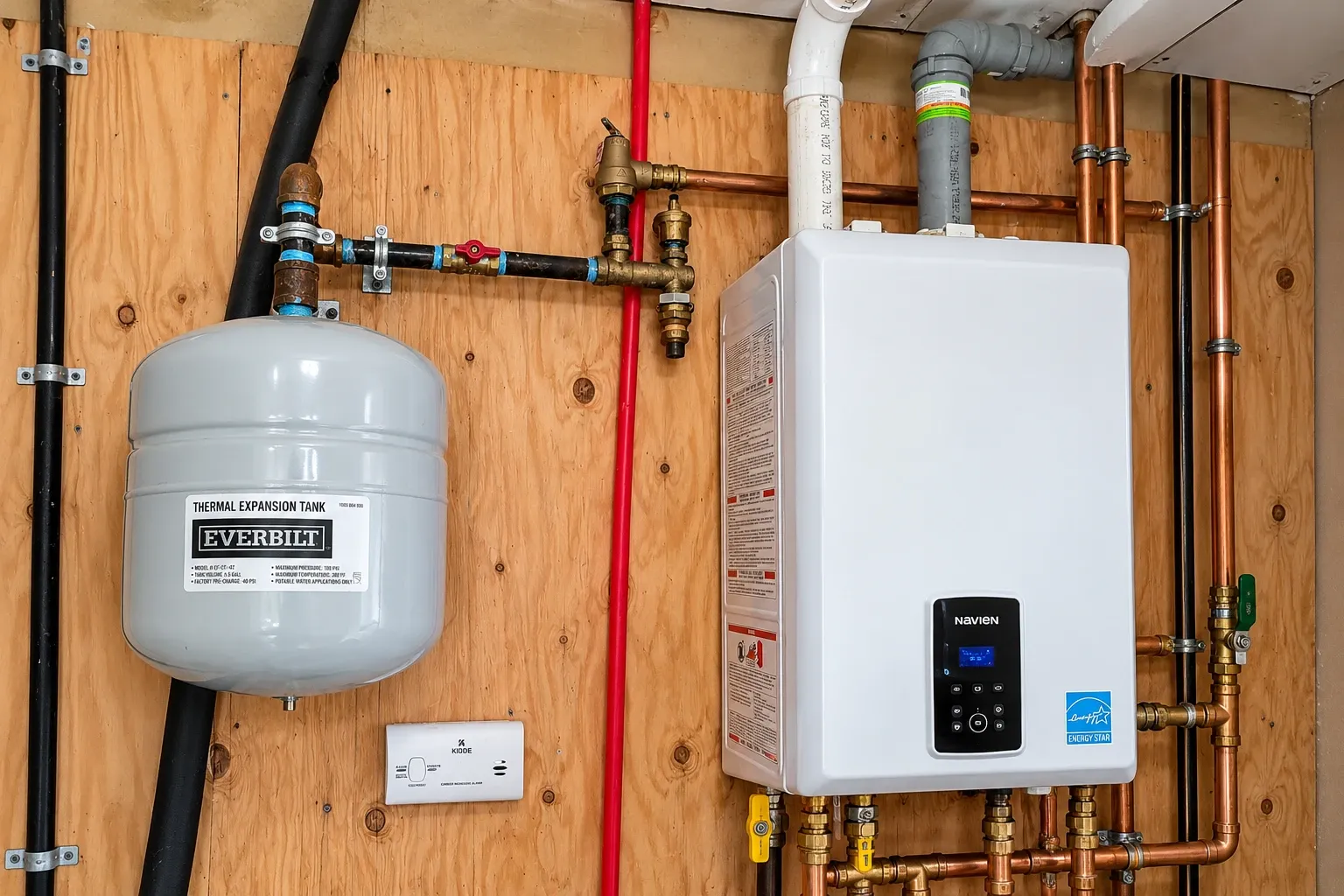
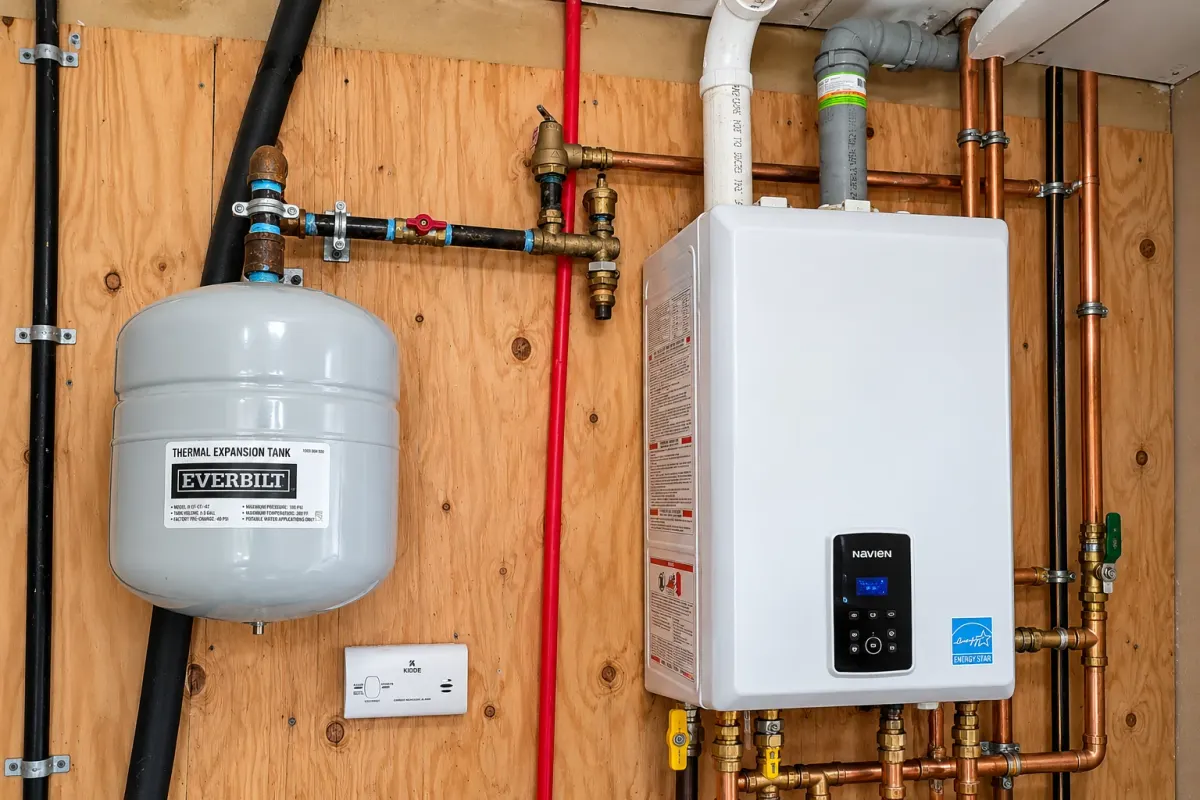
During the call, one technician shared photos of a properly piped installation for comparison: potable water piping organized on one side, heating piping organized on the other, and the expansion tank located where it belongs — on the supply side of the unit, not repurposing a port meant for a different component. The difference, as described on the call, was "night and day."
What to Do If Your Boiler Is Showing High or Inconsistent Pressure
If your hydronic heating system is reading pressure near or above 30 psi, showing a T&P valve that won't stop weeping, or you've had more than one plumbing company out for the same recurring issue, don't wait for a cold snap to force the question. A licensed plumber can check your system's pressure reading against an external gauge, inspect expansion tank placement, and verify the pump and backflow components are configured to the manufacturer's specifications. Jeneral Plumbing provides heating system service for hydronic and boiler systems, and because heat failures don't wait for business hours, we also answer emergency plumbing calls 24/7. If pressure issues are tied to a leaking or failing backflow preventer or other fitting, our pipe leak repair team can also evaluate the broader piping.
Call Jeneral Plumbing
If your boiler's pressure readings seem off, your expansion tank was installed by a previous contractor you're not confident in, or you're facing repeated no-heat calls as the weather turns, call Jeneral Plumbing at (978) 392-7789. We answer emergency calls 24/7.
This post is for informational purposes only and does not substitute for an in-person evaluation by a licensed plumbing professional. Always consult a licensed plumber before attempting to diagnose or repair boiler, gas, or pressurized water system components.
Written by Sierra Sorongon.
This article was drafted with AI writing tools and edited before publication. AI tools did not inspect any job or validate technical conclusions.
Last updated .