If you own a Bradford White water heater in Chelmsford, MA and you're wondering how long it should last, when a repair makes sense, or whether it's time to plan a replacement — you're not alone. Most homeowners can't name their water heater's age, its warranty status, or the one maintenance item that does the most to extend its life.
During a recent Bradford White water heater service call near Chelmsford, I walked a homeowner through exactly that: the manufacture date hiding in his serial number, the warranty clock he didn't know had already run out, and the anode rod nobody had ever mentioned to him.
In this guide, we'll cover what Chelmsford homeowners should know about Bradford White water heaters — warranty coverage, serial-number lookups, anode rod maintenance, gas water heater upkeep, and how to weigh repair against replacement. It's an educational resource, not a diagnosis of your specific unit — but it will tell you which questions to ask.
First, How Do You Even Know How Old Your Water Heater Is?
This is the question most homeowners can't answer off the top of their heads — and honestly, that's okay. You don't always remember when a major appliance was installed, especially if it came with a house you purchased or was replaced years ago.
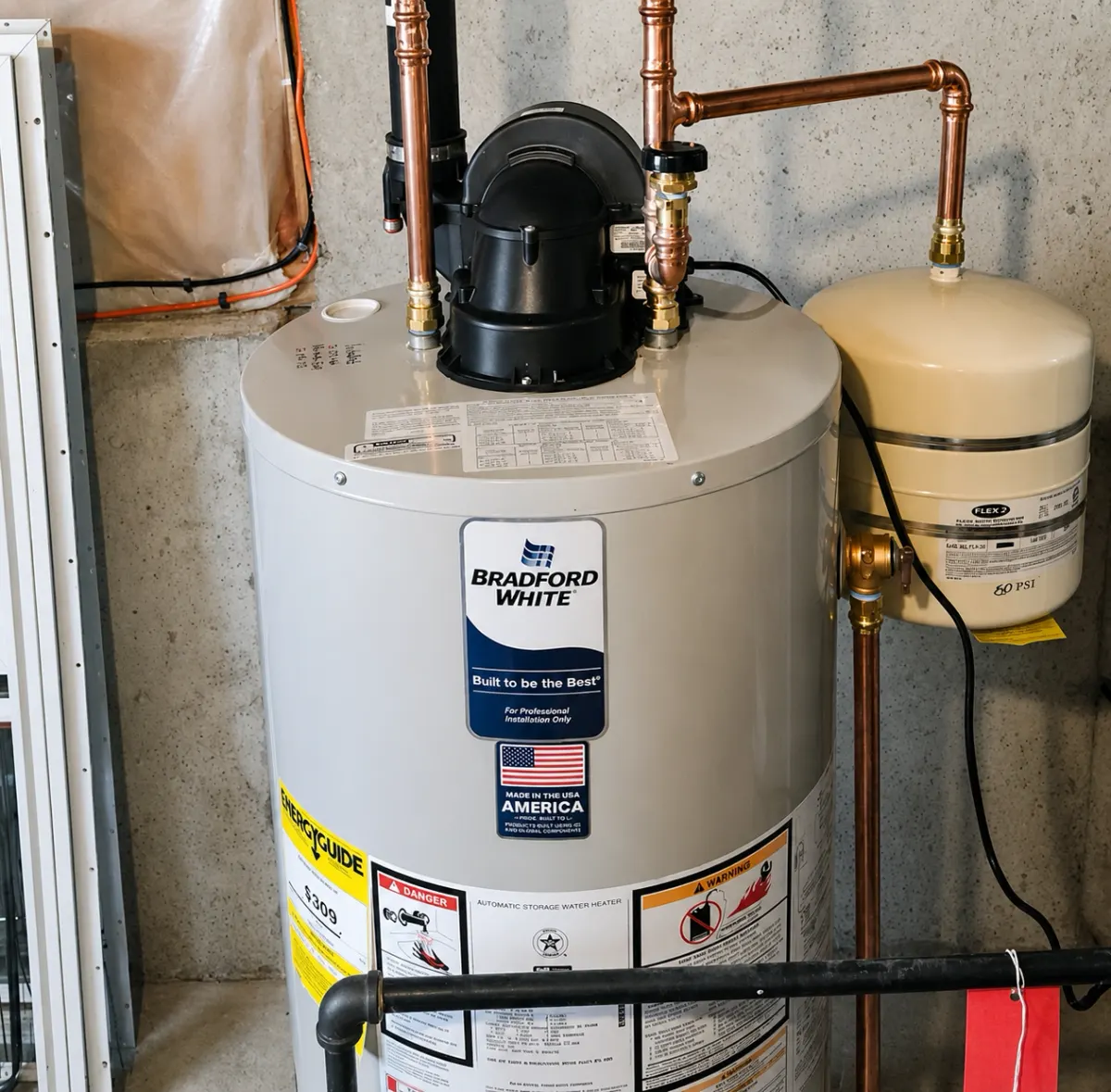
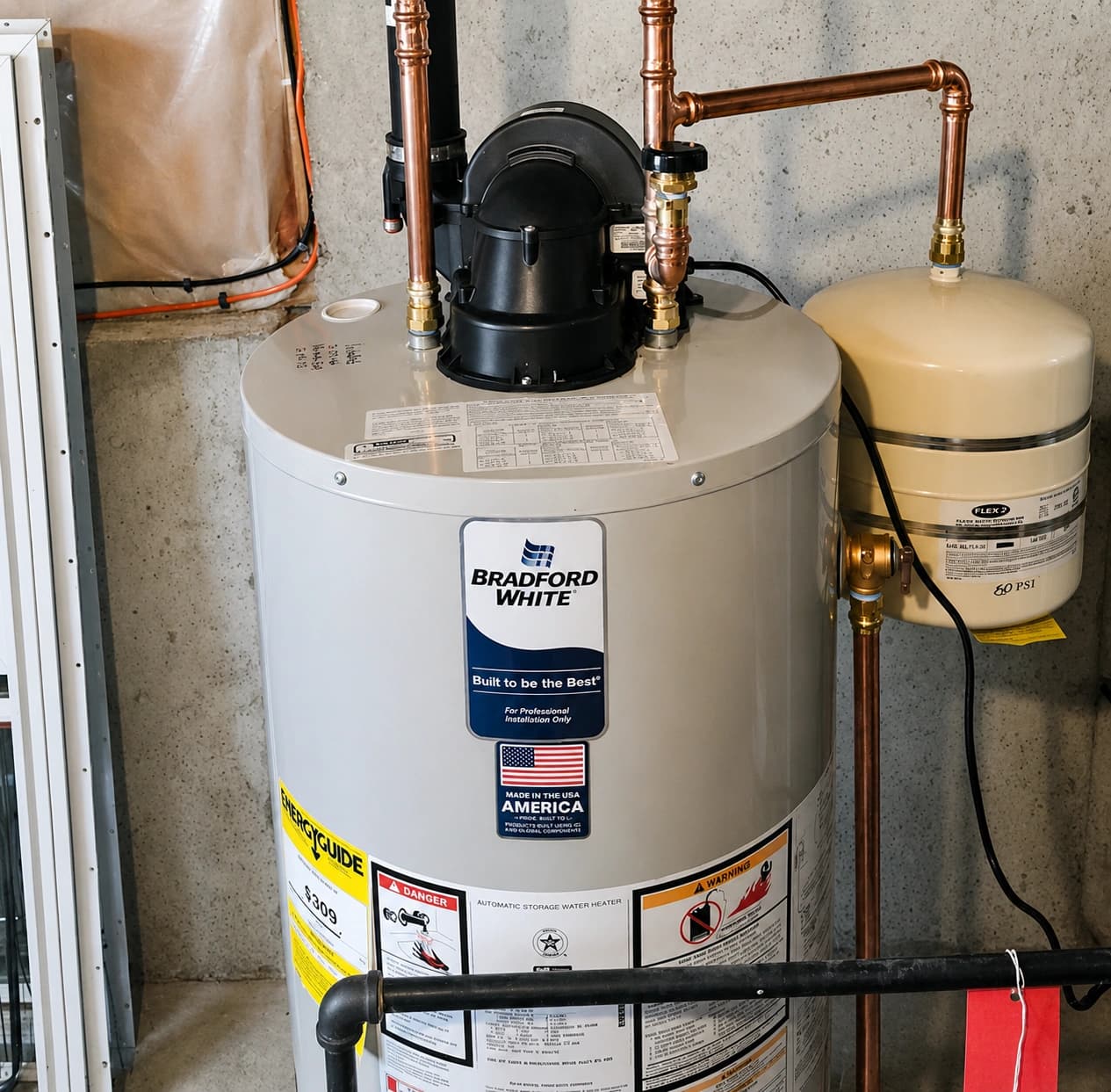
Here's a trick I use on every water heater call: check the manufacturer's label on the unit and look up the serial number on the brand's website. For Bradford White, you can go directly to their site, enter the serial number, and pull up the manufacture date and warranty status in a couple of minutes.
On this particular call, that lookup revealed the unit was manufactured several years back — and the six-year tank warranty had expired about three years prior. The homeowner had no idea. That's not a knock on him; most people don't. But it matters, because once you know where you stand on the warranty clock, you can make a real plan instead of getting blindsided by a failure.
Decode Your Bradford White Serial Number: A Two-Minute How-To
Bradford White encodes the manufacture date in the first two letters of the serial number: the first letter maps to a year and the second to a month. The catch is that the year letters repeat on a cycle of roughly twenty years, so a letter alone can't tell you which cycle your tank belongs to. Rather than memorizing a cipher, run the number through the manufacturer's own lookup — it settles the question definitively. Here's the whole process:
- Find the rating plate. It's the factory label on the front of the tank, usually near the gas control or thermostat. The serial number is printed there alongside the model number.
- Copy the serial number exactly. Letters and digits both matter — a photo on your phone works.
- Run it through Bradford White's serial-number lookup on their website. It returns the manufacture date and warranty status straight from the manufacturer's records.
- Write the manufacture date somewhere you'll see it. A strip of painter's tape on the tank jacket works. Then set a calendar reminder for an anode rod inspection — more on that below.
If the label is damaged or the lookup can't find your serial number, we check this on every water heater visit — it takes the same two minutes, and it changes the entire repair-or-replace conversation.
Bradford White Water Heater Repair in Chelmsford: What the Brand Does — and Doesn't — Change
Not all water heaters are built or sold the same way — and this comes up in nearly every water heater service conversation we have. But the honest version of that statement is more specific than a slogan, so here are the factual differentiators. Bradford White distributes through licensed plumbing professionals rather than retail shelves, which means the unit in your basement was specified and installed by someone accountable for it. The company builds its residential tanks in the United States. And its warranty terms can be confirmed by serial number before you spend a dollar on service — which is exactly what we did on this call.
What the brand doesn't change: chemistry. A gas storage water heater typically lasts 8 to 12 years, whatever name is on the jacket. Water quality, pressure, installation conditions, and maintenance move that number in both directions — and the tanks that run well past the typical range are almost always the ones whose anode rod was inspected and replaced on schedule. We install both Bradford White and Rheem water heaters, and we'll tell you plainly: the maintenance matters more than the badge.
Water conditions are a genuinely local variable. Hardness varies considerably from house to house across Chelmsford, Westford, Lowell, Tyngsborough, Littleton, and Groton — by supply, by season, and by property. We test rather than assume, because water chemistry is usually what decides how fast a tank ages.
The Anode Rod: The Single Best Thing You Can Do for Gas Hot Water Heater Maintenance
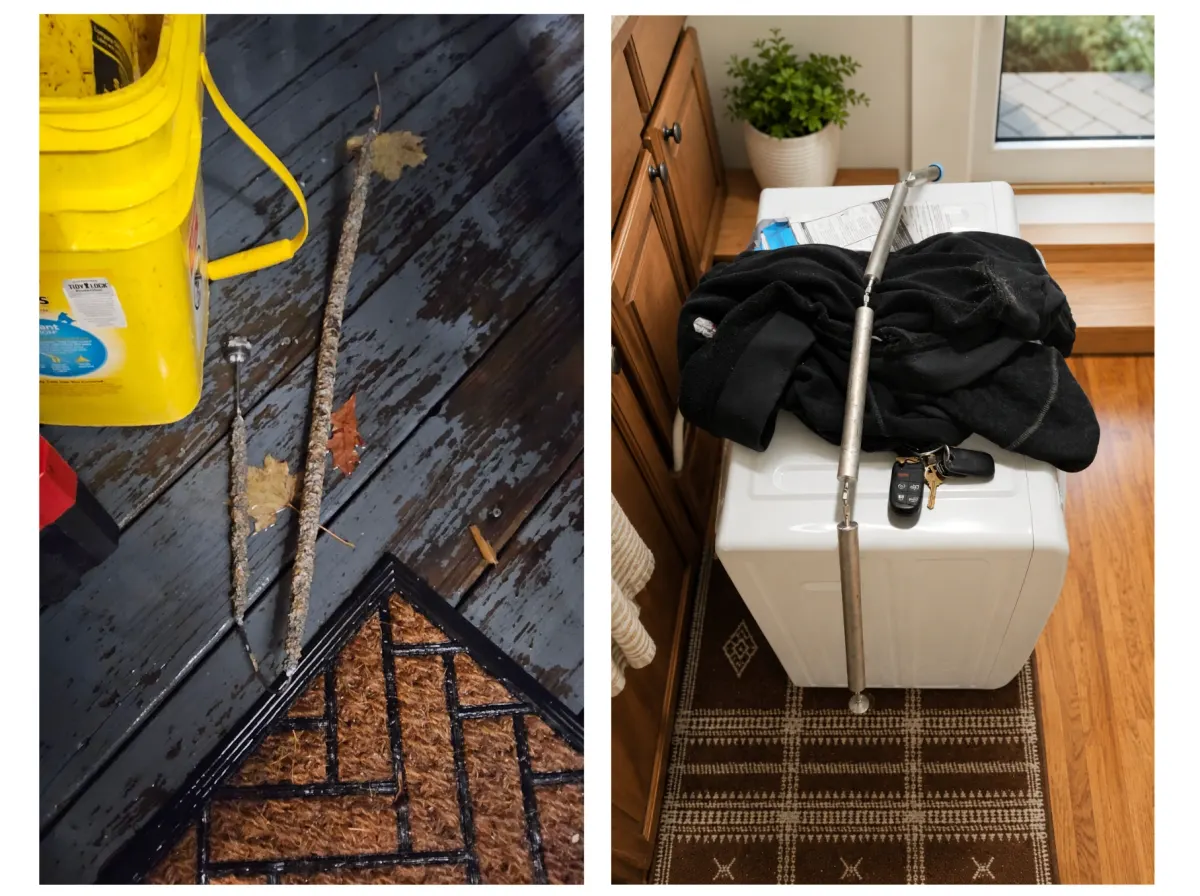
Here's the piece of information that genuinely surprised the homeowner on this call — and it surprises a lot of people. There's a component inside your water heater called an anode rod. It's a sacrificial metal rod, usually magnesium or aluminum, that sits inside the tank and attracts the corrosive elements in the water. Instead of those elements eating away at the steel tank itself, they attack the anode rod first.
In other words, the anode rod is taking the hit so your tank doesn't have to.
The catch? It doesn't last forever. Over time the rod gets consumed — and once it's gone, the tank starts corroding from the inside out. That's how perfectly good water heaters die years before they should.
The fix is straightforward: have the anode rod inspected around the five-year mark and replaced when it's depleted. Water chemistry moves that schedule in both directions — more aggressive water consumes a rod faster — which is why we check the rod's condition rather than guess from the calendar. Cost-wise, an anode rod swap is a routine service visit: a small fraction of what a full water heater replacement costs. Keep up with it, and you give a tank its best chance of outrunning the typical 8-to-12-year window.
On this particular call, the unit was already several years past its warranty and the rod had never been serviced. I was honest with the homeowner: at that point, replacing the anode rod alone no longer makes financial sense. The internal corrosion has had a head start, and the better move is to start planning a full replacement — and commit to the anode rod schedule on the new unit from day one.
The lesson? Don't wait. Set a reminder. Around five years after your water heater is installed, call us. It's one of the cheapest, highest-return gas hot water heater maintenance steps you can take.
The Six-Year Warranty vs. Extended Coverage: What's Covered — and What Isn't
Many standard residential gas tanks — Bradford White's included — carry a six-year tank warranty, with longer coverage tiers offered by model line. Warranty length is the closest thing to a manufacturer's own estimate of how long a tank should last, and terms change — so confirm the actual coverage for your specific unit through the serial-number lookup rather than trusting a general figure.
Three fine-print realities are worth knowing before you need them. First, labor is typically not covered on a standard residential tank: the warranty replaces the failed tank or part, while removal, installation, and reconnection are billed separately — and on a mid-life failure, the labor is often the larger number. Second, extended coverage generally has to be purchased at installation, through your installer — not added in year five when the tank starts making noise. If you want it, say so before the unit is ordered. Third, a longer warranty term is not always a different build: some models are identical hardware with the longer term sold as an option, while others add components such as a second anode rod. Ask which situation applies before paying for the upgrade.
Two more details from the fine print: improper installation can void coverage — manufacturer terms are commonly conditioned on installation by a qualified licensed professional — and transferability to a new owner varies by manufacturer, which is worth checking if you might sell the house. We register every unit we install and give you the model and serial number for your records. For venting, sizing, and deeper warranty guidance, see our gas water heater installation and replacement guide.
How to Make a Smart Plan When Your Water Heater Is Past Its Warranty
One thing we do differently is break down options transparently — upfront pricing, no hidden fees, and no pressure toward a same-day decision. On this call, I put together three separate estimates and sent them directly to the homeowner's email:
- Option 1: Both the valve repair and the water heater replacement together
- Option 2: Water heater replacement only
- Option 3: Valve repair only
That approach lets a homeowner look at the numbers, talk it over with their family, and make a decision that fits their budget and timeline — not one made in a panic. The water heater wasn't leaking. There was no emergency. But knowing the warranty had expired and the anode rod had never been serviced gave this homeowner a clear picture: start budgeting for a replacement within the next year or two, and don't get caught off guard.
That's the kind of honest, practical guidance we aim to give on every call — whether it's water heater repair in Chelmsford or anywhere else in the towns we serve.
Repair or Replace: A Decision List for Chelmsford Homeowners
Age and failure point decide it. Here's how we walk through the decision on a tank-style unit:
- Repair usually wins when the unit is inside its warranty window and the failed part is serviceable — a gas control valve, thermostat, thermocouple or flame sensor, or temperature-and-pressure relief valve.
- Repair can still make sense past the warranty when the tank body is sound, nothing is leaking, and the anode rod has been maintained. We price it case by case and show you the numbers.
- Replacement is the answer when the tank is leaking through its body. A leaking tank is not repairable at any price.
- Replacement is usually the smarter plan when the unit is roughly ten or more years old with a never-serviced anode rod — a sizable repair on a tank that age is often money spent twice.
- Budget with real installed pricing, not guesses: a gas storage water heater runs $2,900 – $6,500 installed across all vent types, and a standard electric resistance tank starts from $2,300 installed.
- Ask for both numbers. We put the repair estimate and the replacement estimate side by side, explain both paths, and tell you when the cheaper one is the right one. Our water heater repair and replacement guide covers the failure signs and the full decision in more depth.
What About Tankless and Hybrid Water Heaters?
While this particular call focused on a traditional tank-style Bradford White gas unit, we know homeowners have plenty of questions about the alternatives. Tankless water heaters and hybrid heat pump systems each come with their own maintenance schedules, cost profiles, and ideal use cases — and the right answer depends on your home's fuel service, electrical capacity, and hot-water demand. If you're approaching a replacement and want to compare tank, tankless, and heat pump options, that's a conversation worth having before you commit to anything.
Key Takeaways
- Look up your water heater's manufacture date using the serial number on the rating plate and the manufacturer's lookup — Bradford White makes this easy.
- Many standard gas tanks carry a six-year tank warranty. Warranty length is the manufacturer's own estimate of tank life — confirm your model's coverage rather than assuming.
- Have the anode rod inspected around the five-year mark and replaced when it's depleted. It's the single biggest lever you control on tank lifespan, at a small fraction of replacement cost.
- Past the warranty with a never-serviced rod? Put the money toward planning a replacement rather than stacking repairs — and start the rod schedule fresh on the new unit.
- Bradford White's differentiators are factual, not hype: professional-only distribution, U.S.-built tanks, and warranty terms you can verify by serial number. Maintenance and water chemistry still matter more than any badge.
- Get itemized estimates so you can make an informed decision on your own timeline — not under pressure.
Frequently Asked Questions
How do I tell how old my water heater is?
Find the rating plate on the front of the tank, copy the serial number, and run it through the manufacturer's lookup on their website. Bradford White encodes the manufacture date in the first two letters of the serial number, but the year letters repeat on a cycle of roughly twenty years — so the official lookup is the reliable way to settle it. The result gives you the manufacture date, which is what warranty coverage and lifespan planning are measured against. Once you know it, write the date on the tank jacket so the next person doesn't have to solve the puzzle again.
How do I know if my water heater warranty is still active?
The fastest way is to find the serial number on your unit's label and look it up on the manufacturer's website. For Bradford White, the lookup returns the manufacture date and warranty information directly. Keep in mind that labor is typically not covered on a standard residential tank, so an in-warranty part failure can still carry an installation cost. If you're not sure what you're looking at, we check this on every water heater service call.
How often should the anode rod be replaced?
Plan on an inspection around the five-year mark, and replace the rod when it's depleted rather than on a fixed date. Water chemistry moves the schedule in both directions — more aggressive water can consume a rod noticeably faster. That's why we check the rod's condition instead of guessing from the calendar. Staying on that cycle is the most effective thing you can do to push a storage tank past its typical 8-to-12-year lifespan.
Is it worth replacing an anode rod?
On a younger tank with a sound body, yes — it's a routine service visit that costs a small fraction of a full replacement and directly extends tank life. The math changes on an older unit: if the tank is well past its warranty and the rod has never been serviced, internal corrosion has usually had a head start, and the money is better put toward planning the replacement. Timing is everything — the rod protects a tank that hasn't started corroding yet; it doesn't rescue one that has. If you're not sure which side of that line your tank is on, that's exactly what an inspection answers.
What does gas hot water heater maintenance involve?
The highest-return task on a tank-style gas unit is anode rod inspection and replacement, as covered above. Beyond that, it's worth checking the temperature-and-pressure relief valve periodically and flushing sediment from the tank — though on an older tank that has never been flushed, we discuss it first, because aggressive flushing can expose deterioration the sediment was masking. Gas-specific items include the burner, draft, and venting condition. These are simple steps most homeowners skip, and they make a real difference in how long a unit lasts.
Should I repair or replace a 9-year-old water heater?
Nine years sits near the far end of the typical 8-to-12-year range for a gas storage tank, so the failure point decides it. A serviceable part on a tank with a sound body and a maintained anode rod can still justify a repair. A tank leaking through its body, or one whose rod was never serviced, points to replacement — a sizable repair at that age is often money spent twice. We put both numbers in front of you and let you weigh them on your own timeline.
What is a hybrid water heater, and is it right for my home?
A hybrid water heater — also called a heat pump water heater — uses electricity and heat-pump technology to heat water more efficiently than a traditional electric tank unit. They're a strong option for homeowners looking to reduce energy costs, but they have specific installation requirements around space, ambient temperature, and electrical capacity. Whether one fits your home depends on conditions we'd confirm on site. If you're curious whether one makes sense for your home, give us a call and we can walk through it with you.
Is tankless water heater repair more complicated than traditional tank repair?
Tankless systems have different components than traditional tank heaters — including flow sensors, heat exchangers, and electronic controls — so repairs do require a technician familiar with those systems. They also need periodic descaling where water hardness warrants it, which testing confirms. That said, tankless units can last twenty years or more with proper care, making them a long-term value for the right home. If you're weighing tankless against a tank replacement, we'll compare both against your home's conditions before recommending either.
Ready to Find Out Where Your Water Heater Stands?
Whether you're in Chelmsford, Westford, Lowell, Tyngsborough, Littleton, or Groton, Jeneral Plumbing is here to give you honest answers — not upsells. We're family-owned and operated in Westford, MA — owner-operated by a Licensed Master Plumber (MA #9628831-PL-M) — serving 23 towns across Middlesex & Essex County; the full list of towns we serve has every one. We'll look up your water heater's warranty status, check your anode rod, and give you a clear picture of what you're working with and what it'll cost to address it. No pressure, no surprises.
For regular-hours visits, there is an $80 dispatch fee — the cost of the visit, waived when you hire us for the work. And when a tank lets go outside business hours, our emergency plumber coverage in Chelmsford is available 24/7, with availability confirmed by phone; off-hours, holiday, and Sunday dispatch carries a $599 emergency callout fee — non-refundable, non-negotiable, collected prior to dispatch, covers the dispatch only and is never applied to repair work.
Call (978) 392-7789 or reach out online to schedule a water heater inspection. We'd rather you know now than find out the hard way.
Written by Jeneral Plumbing.
This article was drafted with AI writing tools from Jeneral Plumbing job notes and source materials, then edited before publication. AI tools did not inspect the job or validate technical conclusions.
Last updated .