

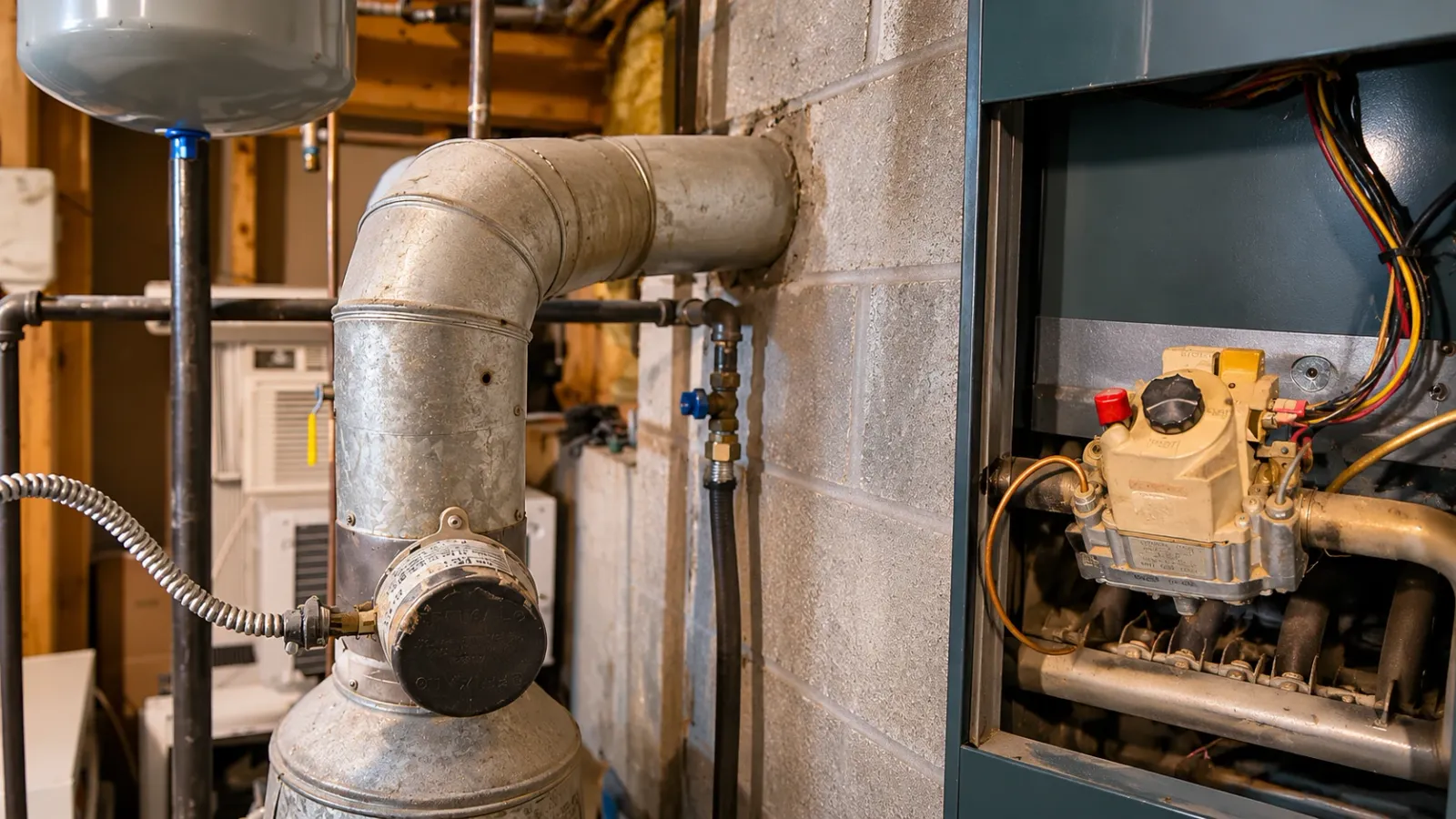
A no-heat call on an old cast iron atmospheric vent boiler in Billerica, MA offers a useful look at how these older systems fail — and why a problem that seems electrical often turns out to be about airflow and venting instead. This kind of boiler repair call tends to spike during the coldest stretches of winter, which is exactly when a struggling heating system gets pushed hardest.
Important Safety Note Before You Touch Anything
Boilers involve combustion, gas, high-temperature water, and electrical controls working together. Components like rollout switches and flame sensors exist specifically to shut a system down before a dangerous condition — like flames rolling out of the burner compartment or exhaust gases failing to vent — develops further. If your boiler stops igniting, do not bypass, reset repeatedly, or disable a safety switch. Have a licensed plumbing and heating professional diagnose the actual cause. Jeneral Plumbing answers emergency calls 24/7 for situations like this.
The Scenario: Pilot Lit, But No Ignition
At the Billerica property, the thermostat was calling for heat, the pilot light was on, but the boiler would not ignite. The homeowner — a mechanical engineer comfortable with troubleshooting — had already done some reasonable diagnostic work before calling: confirming the thermostat was sending a signal, checking that the pilot was lit, bleeding the relief valve to rule out a low-water cutoff issue, and relighting the pilot to see if that resolved it. None of that fixed the problem, which is actually a good sign that he was narrowing things down correctly rather than guessing randomly.
What the Technician Found: Tripped Rollout Switches
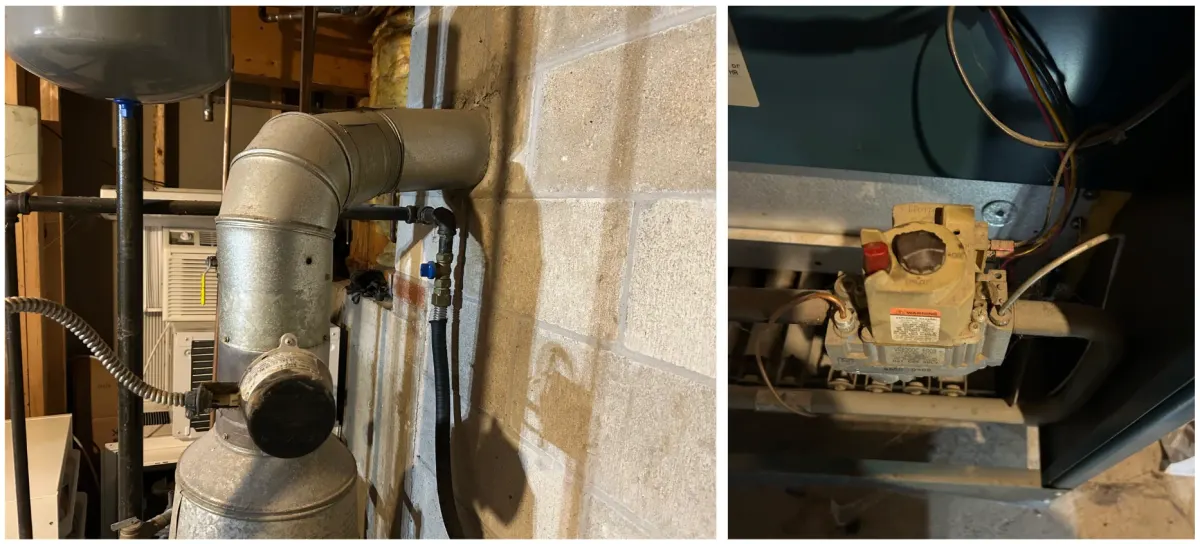
During the visit, the Jeneral Plumbing technician identified two rollout switches that had tripped — one with a visible reset button, and one without (a fiberglass bulb-style switch with a reset loop on the bottom). These safety devices sit in the ignition circuit and kill power to the system if they detect that heat or flame is rolling out of the combustion chamber instead of traveling correctly up through the venting. Touching near the tripped switch confirmed noticeable heat where there shouldn't have been sustained heat buildup. Rollout switches are inexpensive, low-cost parts to replace, but replacing them without addressing the underlying cause just invites a repeat failure.
The Real Cause: Restricted Venting
On these cast iron atmospheric vent boilers, combustion gases are supposed to rise naturally through the cast iron sections and exit through the vent — not get pushed back down into the unit. During inspection, air was found pushing back out of the vent opening instead of drafting upward, indicating a blockage or restriction somewhere in the chimney venting path. The automatic damper was functioning as designed: when the flue draft is choked off, the damper reads that restriction and shuts, which in turn helped trip the rollout switches as a protective response.
The homeowner noted the chimney does not currently have a liner, and that the same exterior chimney also serves a fireplace. In Massachusetts, an external chimney on the outside of a house is required to have a liner. Without one, heat loss and gaps in the chimney structure can contribute to the kind of venting restriction and seepage that was observed here.
What This Means for Repair Scope
Replacing the tripped rollout switches addresses the symptom, but the draft test at this property pointed to a venting-related root cause that a liner and chimney work would need to resolve. For an aging cast iron boiler like this one, the technician also discussed longer-term equipment options, including a hybrid cast iron boiler design that vents through dedicated intake and exhaust piping rather than relying on an atmospheric chimney draft — eliminating the chimney-draft dependency altogether. Any decision about repairing versus replacing an older boiler should be based on a full inspection of both the heating unit and the venting system, not just the parts that failed.
A Note on Water Quality in the System
The water flushed from the system during troubleshooting was described as visibly dirty. For older hydronic systems, a proper flush-and-treat process (clearing out built-up sediment, then introducing a corrosion inhibitor) is different from simply draining a little water out periodically, and should be handled as part of a professional service visit rather than an ad hoc flush.
When to Call a Professional
A no-heat call during a cold snap is stressful, and it's understandable to want to troubleshoot before committing to a service visit. But once gas, ignition controls, or safety switches are involved, further diagnosis belongs with a licensed technician. If your older boiler is tripping on safety switches, short-cycling, or simply won't ignite, Jeneral Plumbing's heating system services cover both boiler diagnostics and chimney-venting evaluation needed to find the actual cause, not just the failed part.
For situations that can't wait, our emergency plumbing line is available. And if your home relies on an older system that hasn't been reviewed in a while, a service plan can help catch developing venting or component issues before they turn into a no-heat emergency.
Call Jeneral Plumbing
If your boiler is tripping safety switches, failing to ignite, or you suspect a chimney venting issue, don't keep resetting it and hoping it holds. Call Jeneral Plumbing at (978) 392-7789 for a proper diagnosis. Regular-hours visits come with an $80 dispatch fee — the cost of the visit, waived when you hire us for the work.
This post is for informational purposes only and is not a substitute for an in-person inspection by a licensed plumbing and heating professional.
Written by Sierra Sorongon.
This article was drafted with AI writing tools and edited before publication. AI tools did not inspect any job or validate technical conclusions.
Last updated .