

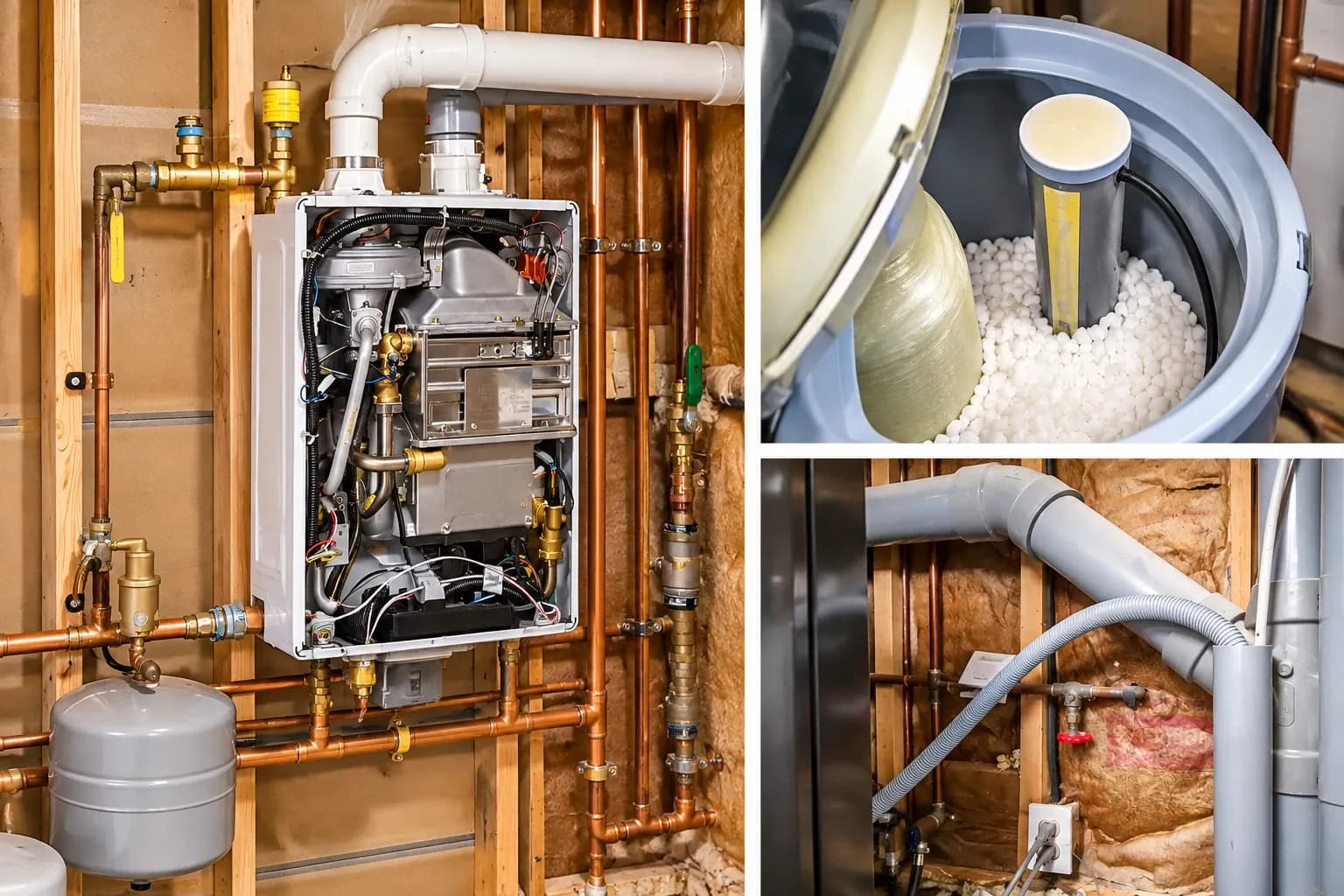
A combi boiler that heats both your home and your domestic hot water is a great space-saving option, but on well water it needs a slightly different maintenance approach than a unit on municipal supply. During a recent consultation at a home in Westford, Massachusetts, a Jeneral Plumbing technician walked through what a roughly year-and-a-half-old combi boiler actually needs to stay efficient — and what the original installer had gotten slightly wrong.
Why Water Testing Matters More With a Tankless System on Well Water
A combi boiler is essentially a tankless water heater's close cousin — it heats water on demand for both your heating loop and your faucets, which means mineral content and water chemistry affect it on two separate fronts. The technician recommended testing the water on both sides of the system: the closed heating loop and the domestic (potable) side.
On the heating side, if the system was properly serviced at installation — meaning the old boiler's loop was flushed with a cleaner and a phosphate-based inhibitor was added once the new unit was purged and connected — then ongoing maintenance is minimal. A simple annual pH test tells you whether more inhibitor is needed. If that step was skipped or done incorrectly, the loop is more prone to scale and corrosion over time.
The domestic side is different because it depends entirely on your actual water quality. In this case, the home had a water softener already in place, which the technician noted is a significant advantage. If a softener is working correctly, a full flush of the lower heat exchanger may not even be necessary — but that determination should be made only after testing, not assumed.
Softener Troubleshooting: The "Salt Dam" Most Homeowners Miss
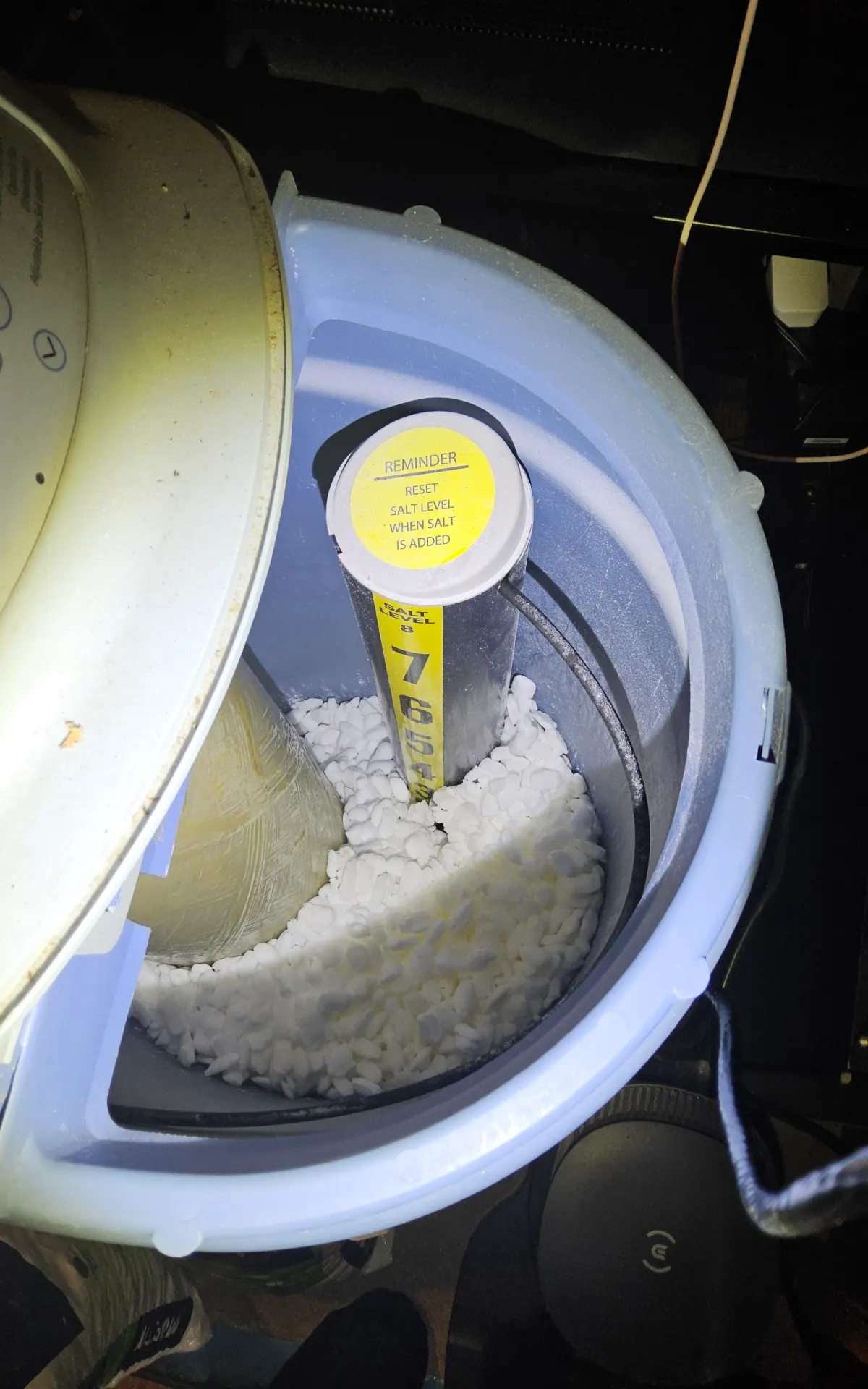
During the visit, the homeowner mentioned going through salt faster than expected, with softener levels dropping in a way that didn't add up. The technician asked whether a salt dam — a bridge of hardened salt that forms above the water line in the brine tank — had been checked for. It hadn't. A salt dam can make it look like salt is being used when the softener isn't actually regenerating properly, which directly undermines the water treatment protecting your plumbing and your combi boiler's heat exchanger. Routine softener checks are an easy thing to overlook, especially with young kids and a busy household, but they matter for both water quality and heating efficiency.
Minor Install Issues Found on a Combi Boiler Less Than Two Years Old
Overall, the technician noted the original installation was solid, but pointed out a few details worth correcting:
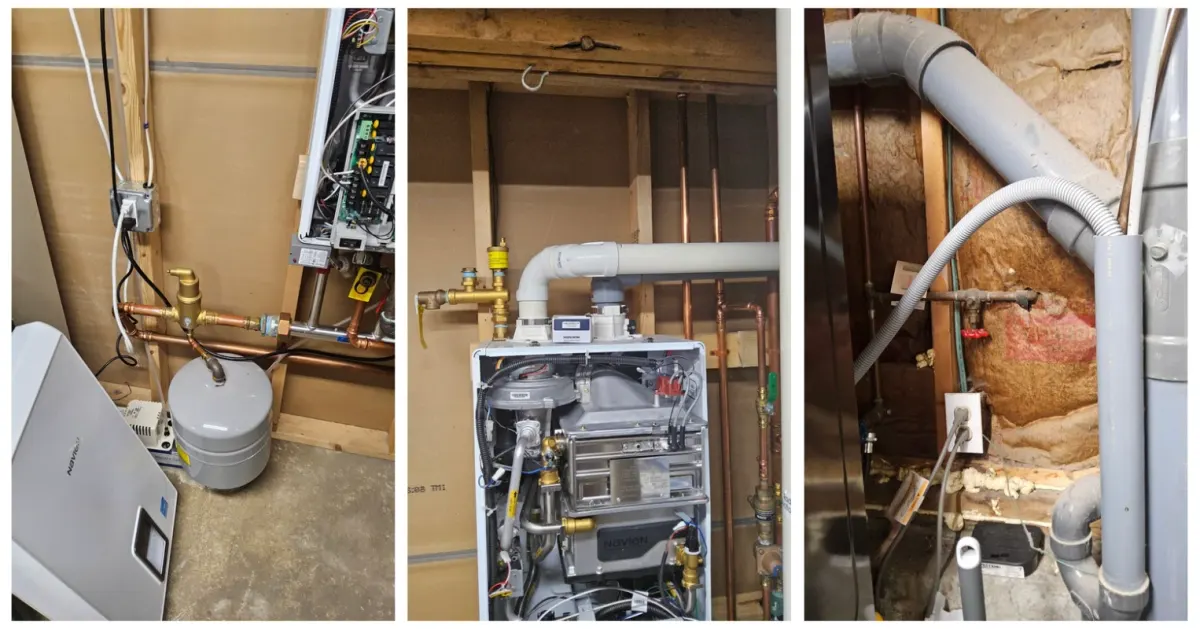
Zone switches reversed on the board — this had made it appear one heating zone wasn't working, when it was actually calling the wrong zone. This was corrected during the visit.
Pressure relief piping — the unit's auto-fill feature wasn't piped in correctly, which can eventually trigger a pressure error code as the system looks for water pressure it isn't getting. Correcting this now avoids a nuisance fault down the road.
Outdoor temperature sensor not yet installed — this was flagged as the most impactful item for efficiency.
Why the Outdoor Sensor Is "All Your Efficiency"
A combi boiler's outdoor reset sensor lets the system modulate water temperature based on actual outdoor conditions — sending cooler supply water (for example, around 130°F) on milder days and hotter water (closer to 180°F) only when it's genuinely cold out. Without that sensor connected, the boiler has no way to modulate and will tend to run at higher temperatures constantly, which the technician described as a direct hit to efficiency. In this case, the fix is a simple wiring run — drilling through the exterior wall near the unit and running thermostat wire to the sensor — but it's a job for a licensed professional familiar with combi boiler wiring and manufacturer specifications, not a DIY project given the gas and electrical components involved.
The Minimal Maintenance Path on Good Water
When a softener is sized and functioning correctly, the ongoing maintenance list for a combi boiler on well water is short: an annual pH check on the heating loop, periodic cleaning of the inlet screens, and replacement of the cold inlet's ion filter cartridge (rated for a number of years depending on the specific product). When the system is set up right and the water is good, there isn't a lot of recurring maintenance required — which is the goal of getting the install details right in the first place.
If your combi boiler or tankless water heater is coming up on its first or second annual service, especially on well water, it's worth having a licensed plumber verify the inhibitor, inspect the sensor wiring, and test water on both sides of the system. You can learn more about our approach to these systems on our water heating services page, and ongoing annual checks like this are also covered under our service plans.
Other Small Items Addressed During the Visit
The same visit also covered an exterior hose bib with an aging gate valve. Gate valves are known to fail over time, and the technician recommended replacing it with a ball valve — a straightforward swap during other plumbing work. For homeowners dealing with a stuck or frozen-feeling outdoor spigot as temperatures drop, our fixture repair services cover exactly this kind of valve replacement before winter sets in.
A garbage disposal installation was also discussed, but after inspecting the existing plumbing layout, the technician recommended against it in this case — the drain pipe height would have created a deep trap prone to collecting debris. A basic strainer was suggested instead, a reminder that the right answer isn't always the one that generates the most work.
A Note on Safety
Any work involving a combi boiler's gas connections, pressure relief piping, or electrical/sensor wiring should be performed by a licensed plumber or heating technician. Incorrect piping or wiring on a gas-fired appliance can create pressure, scalding, or carbon monoxide risks. If you notice error codes, inconsistent heat, or unusual water pressure on your combi system, have it evaluated before attempting any adjustments yourself.
If your combi boiler or tankless system is due for its annual service — or you're not sure what the original installer did or didn't do correctly — Jeneral Plumbing can test your water, check your inhibitor levels, and make sure your outdoor sensor is wired in for proper modulation. Call (978) 392-7789 to schedule a visit.
This post is for informational purposes only and does not substitute for an in-person evaluation by a licensed plumbing or heating professional.
Written by Sierra Sorongon.
This article was drafted with AI writing tools and edited before publication. AI tools did not inspect any job or validate technical conclusions.
Last updated .