

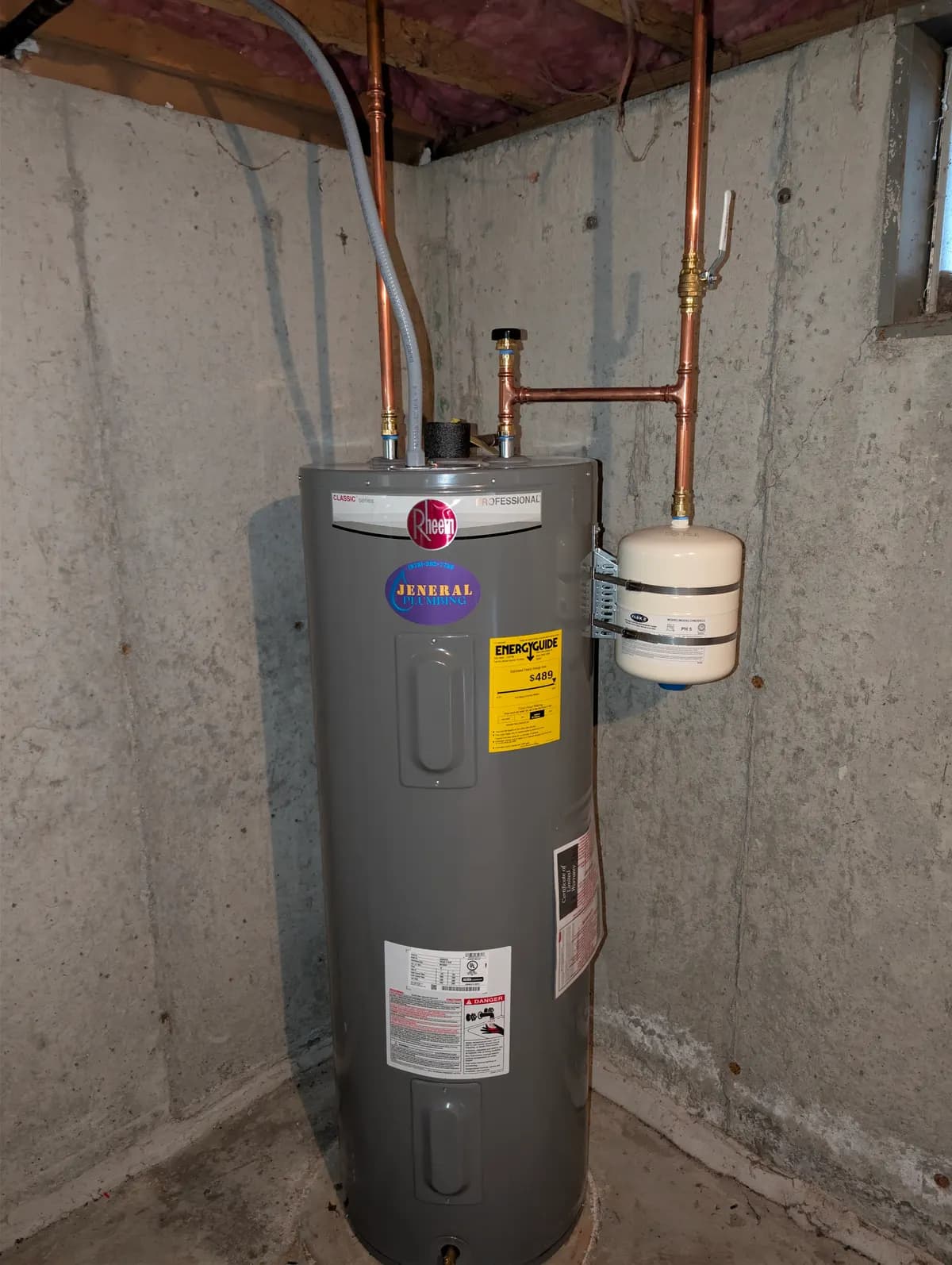
Draining removes water from a storage tank. Flushing uses water flow to carry loose sediment out. Neither repairs a leaking tank, and neither should start until you know the heater's model, its maintenance instructions and where the discharge can safely go.
If you smell gas or a carbon monoxide alarm sounds, leave and call 911 from outside. Don't operate switches, phones, appliances or valves inside. Stay out until the fire department or gas utility clears the property. Water around electrical equipment is another reason to keep away and arrange professional help.
How to flush a water heater: choose the right maintenance task
Sediment can collect at the bottom of a tank and interfere with heat transfer. Rheem's residential flushing bulletin explains that flushing helps control buildup but doesn't remove every trace. Heavy deposits can also obstruct a drain valve.
A small maintenance draw-off and a full tank drain are different jobs. The amount of water, interval and method come from the manual for your model. Don't assume an annual full flush is right for every heater, or that heavy sediment calls for a more aggressive DIY rinse. A water test can help explain scale; it can't tell you whether an old drain valve will open and reseal.
This guide concerns storage tanks. Tankless maintenance uses different procedures, and a heat pump model may have additional instructions. Match the model and serial number on the heater to the manufacturer's manual before choosing a procedure.
Before opening a drain valve
Use this preparation check even if a technician will do the work:
- Identify the controls. Know which electrical circuit or fuel control serves this heater. If you can't identify the correct shutdown method, stop before moving any valve.
- Plan the discharge. The hose and receiving drain must handle the expected water temperature and volume without reaching people, electrical equipment or surfaces that could be damaged. Don't assume any floor drain or outdoor spot is suitable.
- Address scald risk. Turning off heat doesn't make stored water cool. Arrange a safe cooldown and discharge plan under the model's instructions; a fixed wait of a few hours doesn't prove the tank is cool enough.
- Look at condition. Visible corrosion, a leaking or seized valve, an uncertain service history or a tank already leaking calls for assessment before routine draining. Age alone doesn't decide whether to flush.
- Plan the restart. Energy stays off until the heater is fully refilled, air is purged, valves are in their required positions and there are no unresolved leaks. Don't restore heat just because water stopped coming out of the hose.
How to drain a water heater: a scoped electric-tank example
Rheem manual AP9029-12 covers residential single- and double-element electric tanks. It isn't a gas, tankless or heat-pump procedure. If it matches your heater and you understand its instructions, pages 7, 12 and 16 describe this sequence:
- Disconnect the heater's power before draining. Protect everyone from hot discharge.
- Close the cold supply. Open a hot faucet to admit air, connect the drain hose to a suitable drain, then open the tank's drain valve.
- To refill, close the drain valve, reopen the cold supply and open hot faucets to release air. A steady flow indicates a full tank.
- Confirm full refill and resolve any leaks before restoring power. Never energize an empty or partly filled tank, or one with its cold supply closed.
That manual suggests a small monthly draw-off for sediment control. It doesn't make a full drain the routine answer for every symptom. Its faucet option means this draining sequence doesn't require lifting the temperature-and-pressure relief valve. Relief-valve inspection is a separate maintenance task under the applicable instructions.
Gas tanks need their own instructions
Bradford White's atmospheric gas manual 238-51012-00, linked to its RG1/RG2 30-, 40- and 50-gallon atmospheric models, assigns the maintenance schedule to a qualified service technician. The schedule includes a monthly gallon draw-off, with frequency affected by use and conditions. It also requires gas shutdown before draining, complete filling and air removal before operation, and the correct lighting instructions for the installed control.
That is why the electric example above shouldn't be adapted by replacing “breaker” with “gas valve.” Gas controls and ignition arrangements differ. Homeowners can gather the model, service history and symptoms and make the work area accessible; qualified service handles this manual's maintenance procedure. We don't provide a universal gas-control or relighting sequence.
Stop if a valve sticks, leaks or won't drain
Don't force a valve, probe through an obstructed drain, remove it under pressure or use a cap as a substitute for repairing a leak. Keep the heater's energy off and get help. If water continues escaping, use a known water shutoff only if it is safely reachable from a dry location; otherwise stay clear. Never cap or plug a relief valve or its discharge pipe.
Tell the service provider whether the tank was partly drained, whether the cold supply is closed and whether power or fuel has been shut off. Those details matter before anyone restores operation.
When flushing won't solve the problem
Rumbling can justify a sediment assessment, but noise alone doesn't identify the cause. No hot water may involve a control, heating element, fuel supply or demand problem. Discolored or odorous water needs its source investigated. Water beside the heater may come from a fitting, relief discharge or another pipe rather than the tank itself.
If the storage tank is confirmed to be leaking through its body, flushing won't repair it. Our water heater repair and replacement page explains the options. Installed prices start at $2,300 for a standard electric tank; gas storage heaters are $2,900 – $6,500, depending on vent type and the approved work.
How to drain a hot water heater for a vacant house
A vacant house needs a freeze-protection and restart plan for the whole plumbing system. Emptying the heater alone doesn't protect supply lines, fixtures, traps or heating equipment. Have the responsible service provider identify what must be isolated or drained and leave clear instructions preventing an empty heater from being turned on. Discuss return-to-service checks before leaving, especially after a long shutdown. Avoid treating a routine sediment flush as winterization.
Booking water heater maintenance service
Water heater maintenance service is the next step when the manual assigns the task to a technician, shutdown or discharge arrangements are unclear, or a valve or tank has a defect. Have the model number and maintenance history ready, along with notes about leaks, noise or changes in hot-water supply.
Jeneral Plumbing is based in Westford, MA, and serves homes within 20 miles across Middlesex & Worcester County. We confirm your address, equipment, work and availability before booking; gas work is Massachusetts-only. A regular-hours visit carries an $80 dispatch fee — the cost of the visit, waived when you hire us for the work. Our Home Essentials service plan includes a water heater flush, subject to the equipment's requirements and condition. Call (978) 392-7789 to discuss the right maintenance for your heater.
Written by Jeneral Plumbing.
This article was drafted with AI writing tools and edited before publication. AI tools did not inspect any job or validate technical conclusions.
Last updated .