
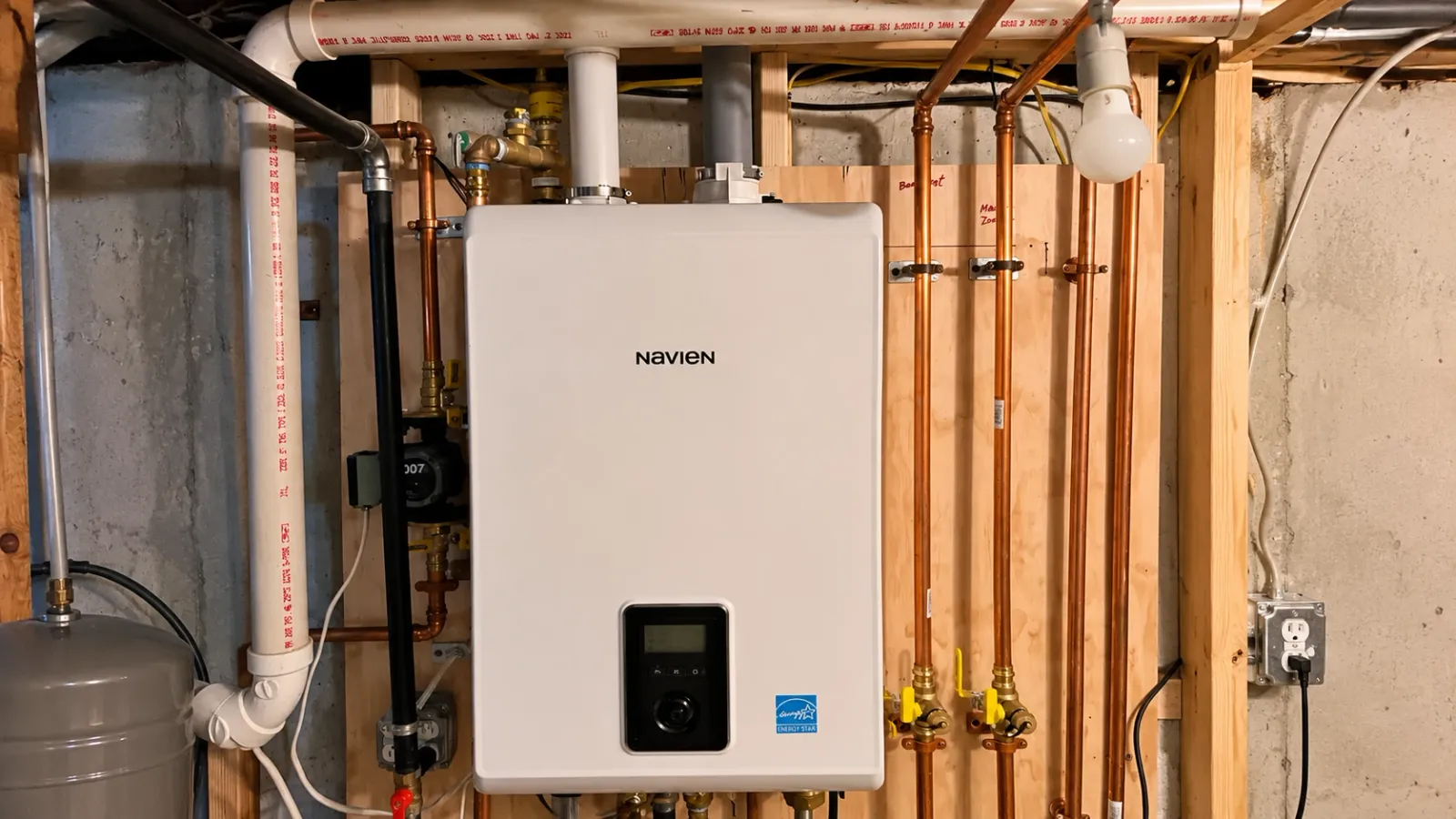
If you own a Navien combi boiler and you're searching for a "boiler fix near me" because something feels off — strange odors, condensation stains, or even unexplained headaches and fogginess when you're home — venting clearance is one of the first things a licensed technician should check. Improper vent termination on a combi unit isn't just a performance issue. It can allow exhaust gases, including carbon monoxide, to re-enter the home.
Safety first: carbon monoxide is colorless and odorless, and low-level exposure can cause symptoms like headaches, fatigue, or brain fog that are easy to mistake for something else. If you suspect a CO issue, don't attempt to diagnose or adjust venting yourself — this work involves combustion safety, gas appliances, and local code compliance, and should only be handled by a licensed plumber or heating technician. If you have a working carbon monoxide detector sounding an alarm, leave the home and call your gas utility or 911 before troubleshooting anything.
A Real-World Example of a Boiler Fix Near Me Call
In one recent consultation, a homeowner had booked a visit after noticing low-level carbon monoxide readings from a personal CO detector — sensitive enough to register readings as subtle as seven parts per million. The homeowner described a pattern: readings worsened overnight when the unit was running a small, low-intensity flame to maintain temperature, and also during periods of heavy hot water use. They'd already replaced a gas dryer with an electric model and had the utility company inspect and tighten a gas line leak, but the Navien combi unit itself still needed evaluation.
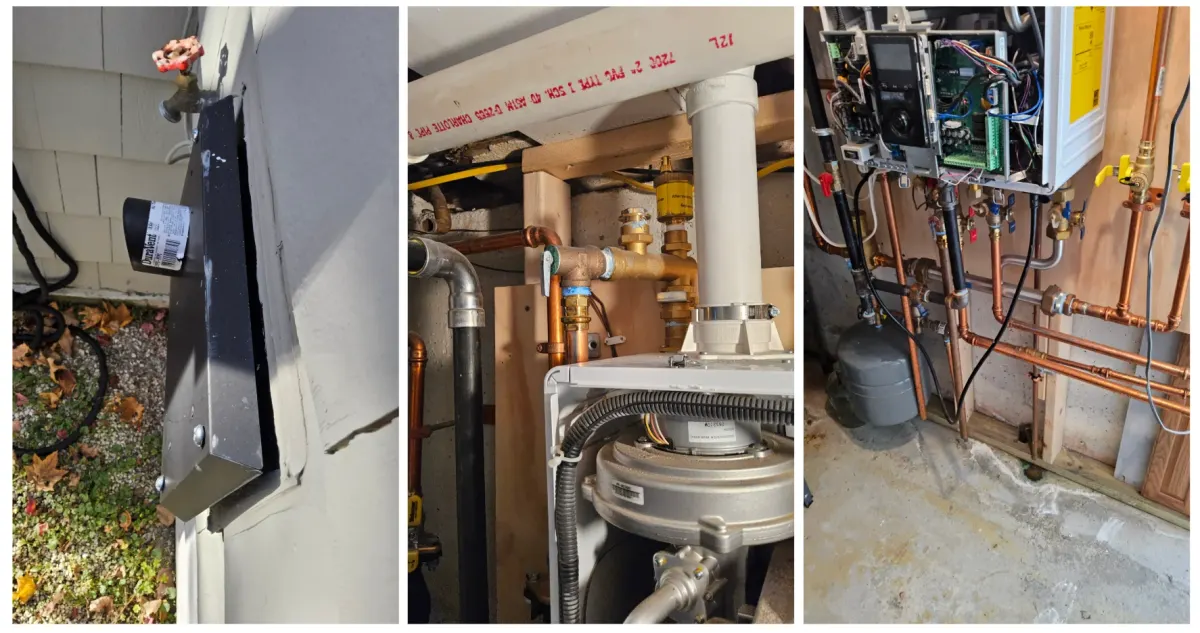
Upon reviewing photos submitted ahead of the visit, the technician identified a venting error before even arriving on site, which was confirmed during the in-person inspection.
Why Venting Clearance Matters
Combi boiler exhaust terminations have manufacturer-specified clearances for a reason: when exhaust exits too close to a wall or into an alcove, wind can create a small cyclone effect that pulls the exhaust right back into the termination point — and potentially into the home.
In this case, the termination was measured at approximately 23 inches from one sidewall and about 29 to 30 inches from the other. The applicable clearance rule requires the vent to sit at least 3 feet from any wall or alcove. Because the termination fell short of that distance on both sides, it was positioned to pull exhaust back toward the house instead of dispersing it safely.
The technician also noted the broader horizontal clearance guidance: a vent generally needs about 4 feet of horizontal separation from an opening like a window, or it can be run vertically to clear a window by at least 1 foot. Moving the termination to a different wall was discussed as an option, as well as routing the vent vertically above a nearby window — since a vertical run allows condensation to drain back down through the unit rather than pooling and freezing in a horizontal section.
Linear Footage and Fittings Matter Too
Vent sizing isn't just about clearance — it's also about total pipe length. For this Navien combi unit, the 2-inch vent pipe has a maximum run of 65 linear feet. Every 90-degree elbow fitting reduces that maximum by the equivalent of 5 feet of straight pipe. In this case, with one elbow already accounted for, the system still had plenty of room to work with if the vent needed to be relocated to another wall.
Condensation, pH, and the Missing Neutralizer
High-efficiency combi units like this one generate condensation as part of normal operation — and that condensation is acidic, with a pH that can run around 5.5. Because of this, condensate lines are designed to be plastic, not metal. During the inspection, the technician found a corroded metal section where plastic piping should have been, along with no acid neutralizer in place before the condensate drained into the ground via a French drain. Routing untreated, acidic condensate through metal piping or directly into the ground without neutralizing it first is the kind of issue that needs correction by a licensed professional, not a DIY fix.
Pressure Relief Valve Orientation
A second issue identified was the orientation of the pressure relief valve (PRV). This valve is a safety device: it contains a spring and rubber washer designed to open and drain automatically once pressure exceeds 30 psi. For the valve to function correctly, it needs to be mounted so air stays at the top — if it's installed on the side instead, it can remain submerged in water, which corrodes the mechanism over time and can render the safety device useless. The port where the valve was incorrectly installed is actually intended for a different safety device, a low water cutoff.
No Permit, No Record of Installation
In this case, the homeowner had purchased the home with the Navien unit already installed, and found no permit on file with the town — only a blueprint belonging to a neighbor's similar unit. Without permit documentation, there was no way to confirm who installed the system or whether it was ever inspected by a licensed professional. This is a good reminder for any homebuyer: if a home has a combi boiler or similar gas appliance, it's worth asking for permit and inspection records before assuming the system was installed to code.
What This Means If You're Troubleshooting Your Own System
If your Navien combi boiler is showing signs of a venting or condensate issue — corrosion near the exhaust, a PRV installed in an unusual position, or CO readings on a detector — these are not conditions to inspect or correct yourself. A licensed plumber or heating technician can evaluate vent placement, condensate drainage, and safety device orientation against manufacturer specifications and local code.
For ongoing heating system needs, Jeneral Plumbing's heating system services cover boiler inspection and repair, and our water heating services address combi and tankless units specifically. If you're dealing with a suspected gas or carbon monoxide issue outside of regular business hours, our emergency plumbing line is answered 24/7.
Get It Checked
If you're noticing symptoms like unexplained headaches, fatigue, or a CO detector that occasionally alarms, don't wait for it to get worse. Call Jeneral Plumbing at (978) 392-7789 to schedule an inspection of your combi boiler's venting, condensate line, and safety devices.
This post is for informational purposes only and does not substitute for an in-person evaluation by a licensed plumbing or heating professional.
Written by Sierra Sorongon.
This article was drafted with AI writing tools and edited before publication. AI tools did not inspect any job or validate technical conclusions.
Last updated .