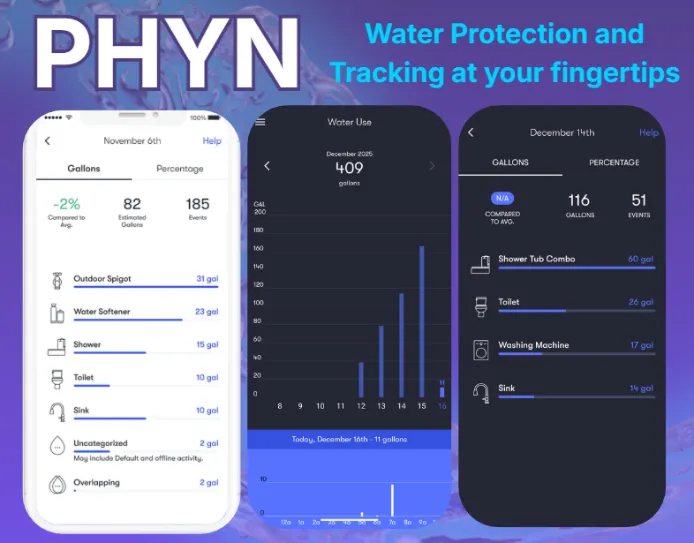
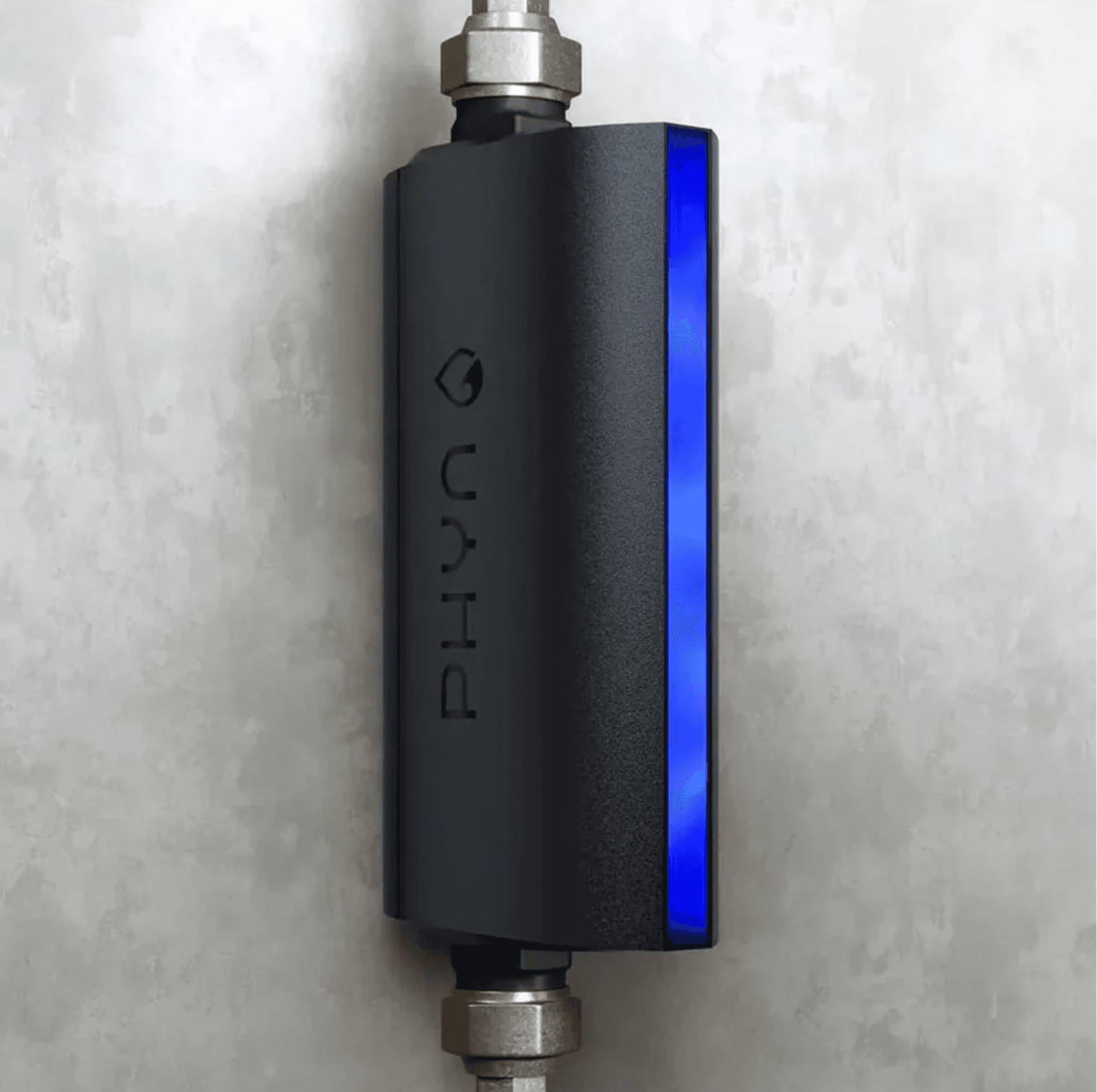
Phyn Plus installation gives an Acton homeowner a main-line view of pressure and flow activity, app alerts, and an integrated valve that may close the monitored water line after a qualifying event when automatic shutoff is enabled. The practical benefit is earlier information and a way to limit additional incoming water in some situations. It is not a promise that every leak will be found or every loss will be stopped.
A sound Phyn Plus installation starts before any pipe is cut. The water source, responsibility boundary, main shutoff, pipe size and material, mounting room, support, power, Wi-Fi, connected equipment, and response plan all affect whether the product fits. Installation then moves through controlled isolation, supported main-line connections, water restoration, leak checks, valve verification, account setup, and homeowner handoff.
Jeneral Plumbing is based in Westford, MA and is owner-operated by a Licensed Master Plumber (MA #9628831-PL-M) with 20+ years in the trade, including seven with a gas utility. Phyn is Jeneral Plumbing’s smart-water partner, and I recommend Phyn Plus installation for compatible properties after a site-specific review. My Phyn smart-home plumbing service keeps the plumbing work, product behavior, account responsibilities, and system limits clear.
What Phyn Plus Installation Adds to the Main Water Line
Phyn Plus installs inline on an approved section of a home’s domestic main. It uses pressure-wave sensing plus flow information to learn water-use patterns and flag qualifying activity. A Phyn Plus installation also places an integrated valve in that monitored path, allowing the device to close the line under enabled settings or an authorized manual command.
Pressure-wave sensing starts with a basic plumbing fact: opening or closing a fixture changes pressure and flow in a pressurized supply system. Phyn records information at its installed position and uses current product software to compare events with learned household activity. During Phyn Plus installation planning, I explain that those patterns may support an alert or use classification, but they do not let the device see through a wall or prove the exact room, fitting, or cause.
The Phyn Plus installation position also sets the flow boundary. Water must pass the installed device for Phyn Plus to observe it through the main-line path. Water upstream of the device, on a separate supply, stored in an appliance or tank, or released from a non-plumbing source can remain outside that view.
When automatic shutoff is enabled, the integrated valve may close after an event that meets the current criteria. That can limit additional incoming supply water downstream of the valve. It cannot prevent the first component failure, pull water out of finished materials, drain all downstream piping, or guarantee that an event will qualify.
Start With the Water Path
Before planning a Phyn Plus installation, I identify where water enters the property, who owns each part of the service, which valve isolates the house, and which branches leave before the proposed device location. That map establishes what the monitor can observe and what its valve can close. A label saying “main” is not enough when bypasses, accessory structures, treatment equipment, irrigation, or other branches are present.
For any Phyn Plus installation in Acton, I confirm the source instead of calling every home municipal or assuming every property has the same meter arrangement. Most addresses are served by the independent Acton Water District, while some properties use private wells. For a district-served home, the utility-side boundary, meter, and district-controlled equipment remain separate from accessible house-side plumbing.
A private-well property needs a different Phyn Plus installation review. Current Phyn guidance and the actual system determine placement downstream of well equipment, including the relationship to the pressure tank and sediment filtration. Pressure-tank cycling, treatment backwash, irrigation, and pump behavior can affect the observed patterns and shutoff consequences.
Jeneral Plumbing can handle an approved Phyn Plus installation on accessible interior plumbing when the arrangement fits. Well-pump, pressure-tank, pressure-switch, well-yield, and source-side electrical work remain outside my scope and need the appropriate well or electrical specialist. A monitor installation does not convert that equipment into ordinary house-side plumbing.
Confirm the Main Shutoff Before Choosing a Mounting Point
A working isolation valve is foundational to Phyn Plus installation. It must close the intended house-side section without being forced, and the planned shutdown must account for everyone and every connected system that will lose water. A seized, corroded, passing, inaccessible, or utility-controlled valve can change the project before the product is mounted.
I do not force a questionable valve to prove that it works. Its condition, responsibility, and replacement access are evaluated first. If an accessible house-side shutoff needs replacement, that is a separate approved plumbing scope with its own material, connection, permit, and restoration considerations before Phyn Plus installation.
The Phyn valve is not a reason to conceal or abandon required manual isolation. Future service still needs safe access to the main shutoff, the device, its unions or approved connections, and the surrounding piping. The homeowner also needs to know which physical control to use if an app or network is unavailable.
Where Phyn Plus Mounts on Existing Plumbing
A Phyn Plus installation uses an accessible, manufacturer-approved position on the domestic main after the responsibility boundary is clear. The exact point depends on flow direction, pipe material and size, pressure, orientation, existing valves and regulators, branch order, and the equipment connected to the line. There is no universal cut-in point that fits every Acton mechanical room.
A Phyn Plus installation needs working room for the device, approved adapters or fittings, unions where required, supported piping, tool access, valve movement, and future service. A crowded corner may have enough bare pipe length but still lack room to support the assembly or remove it later. Corrosion, incompatible materials, freeze exposure, impact risk, or a location likely to flood can also disqualify an otherwise convenient spot.
Phyn Plus installation planning reviews the water path before branches are moved or a device is placed around treatment equipment. An automatic close can affect a boiler makeup line, irrigation system, water-treatment regeneration, humidifier, appliance, accessory building, or another connected use. Fire-protection and other critical connections require project-specific design and authority review; they are never handled with a generic placement rule.
When a broader piping change is needed, complete plumbing-system planning can define the main-line layout, accessible valves, treatment sequence, and service access before installation begins. The product should fit the water system, not force an improvised water path around it.
Installation Requirements to Check Before Scheduling
A pre-installation review prevents a device appointment from turning into an unplanned main-line reconstruction. I verify the property rather than relying on a photograph that hides scale, rear clearances, branch takeoffs, or valve condition. A complete Phyn Plus installation fit check covers these items:
- Responsibility boundary: utility, district, private-well, and house-side ownership are identified before isolation or cutting.
- Reliable isolation: the intended valve closes the correct section without force, leakage through the seat, or uncertain downstream consequences.
- Compatible piping: material, nominal size, pressure, flow direction, condition, and transition methods fit current product and plumbing requirements.
- Approved mounting position: orientation, clearance, unions or fittings, support, service access, and environmental exposure are acceptable.
- Continuous power: a compatible powered outlet is available in the required location without using an improvised electrical arrangement.
- Usable connectivity: Wi-Fi reaches the mounting area and the homeowner can access the network and Phyn account.
- Connected equipment: treatment, irrigation, boiler makeup, appliances, separate buildings, and critical water uses are mapped.
- Response ownership: alert recipients, manual valve access, travel contacts, and the plan after an automatic close are understood.
Current Phyn instructions govern the final product requirements. A model revision, software change, or property condition can alter a detail that was valid for another installation. I confirm the current requirements as part of the written Phyn Plus installation scope.
Define Plumbing, Electrical, Network, and Finish Responsibilities
The plumbing scope includes the agreed accessible main-line work: isolation, drainage of the affected section, approved fittings and support, device connection, water restoration, new-joint checks, and valve-operation verification. If deteriorated piping or a failed shutoff is discovered, I separate that condition from the device work and price approved plumbing at a flat rate.
A missing or unsuitable outlet belongs to a qualified electrician. Router placement, network changes, phone replacement, account recovery, and internet service belong to the homeowner or the appropriate technology provider. Carpentry, masonry, concealed access, fire-protection changes, and finish restoration are separate unless a written scope assigns them.
Applicable permit and inspection requirements depend on the work performed and the local authority’s determination. I identify the licensed-plumbing portion and keep required work accessible for inspection. A product box or app setup does not replace the plumbing approvals that apply to an altered domestic main.
The written plan should also state the expected water outage and any preparation that must occur first. Installation duration depends on access, pipe condition, fittings, valve performance, permit steps, testing, and unexpected conditions. I do not promise a fixed duration for Phyn Plus installation.
What Happens on Phyn Plus Installation Day
On installation day, I reconfirm the approved location, flow direction, device requirements, valve condition, and connected systems before shutting down the water. The household receives a clear outage plan, and equipment that depends on water is handled according to its instructions. This last confirmation catches changes that may have occurred since the first visit.
I isolate the accessible house-side main and relieve pressure from the agreed section. The amount of draining depends on the piping layout and elevation. I protect the work area and avoid treating a passing shutoff as if it created a reliable dry boundary.
The pipe is prepared for the approved connection method, and the Phyn Plus is installed in the required flow direction and orientation. Adapters, unions, fittings, and support must suit the existing pipe and allow future service. A sound Phyn Plus installation does not leave the device carrying unsupported pipe weight or hide connections where they cannot be inspected.
After the assembly is complete, I restore water in a controlled way and clear air according to the plumbing arrangement. Every new accessible joint is checked for visible leakage, and normal house-side flow is confirmed. If the isolation valve passed or another condition blurred the result, that limitation is documented instead of being called a completed verification.
I then verify the Phyn valve’s reported and physical open-close operation through the approved commissioning process. The device must return to the intended state before handoff, and the homeowner must know how to operate it locally. A deliberate uncontrolled leak is not an acceptable commissioning test.
The installation and upgrade scope ends with a record of the approved plumbing work, product model, installation date, account owner, open items, and separate trade responsibilities. That record supports future service without claiming that power, connectivity, or homeowner settings will never change.
Power, Wi-Fi, and the Homeowner Account
Phyn Plus installation requires both plumbing and operating dependencies. The device needs continuously available compatible power and usable Wi-Fi at the mounting location for full connected behavior. An outlet elsewhere in the room or a strong signal beside the router does not prove that the planned mechanical-room position works.
The homeowner owns the Phyn account, credentials, alert recipients, modes, and day-to-day settings. I can guide pairing and handoff, but I do not retain a homeowner’s password or promise access to a third-party account. Account recovery and network support remain separate from the licensed-plumbing installation.
Internet loss and power loss are not the same condition. Current Phyn instructions state what limited local protection may remain when power is available, Offline Leak Protection is active, and the event meets the applicable criteria. App control and immediate remote alerts can be unavailable during an outage, and a power loss should never be described as battery-backed protection unless the exact current product provides it.
Manual access still matters after a Phyn Plus installation. A homeowner or trusted local contact should know how to view the physical valve state, operate the device under current instructions, and reach the house shutoff safely. Connected technology is most useful when the response does not depend on one phone or one person.
Commissioning, Alerts, and Automatic Shutoff Settings
Commissioning connects the installed plumbing to the homeowner’s operating plan. The Phyn Plus installation handoff confirms that the app communicates with the correct device, the displayed valve state agrees with physical operation, current pressure or flow information appears, and the selected recipients can receive the supported notifications.
Automatic shutoff should be enabled only after its consequences are reviewed. Closing the domestic main may interrupt ordinary fixtures along with irrigation, treatment cycles, appliance fills, boiler makeup, or another connected use. Shared services, fire protection, medical needs, animal care, and properties without a nearby responder need added planning.
Phyn uses learned household activity and current settings, but there is no universal one-week learning promise. Guests, long showers, tub filling, irrigation, treatment regeneration, appliances, a running toilet, seasonal occupancy, and schedule changes can look unusual. Identifying known activity and reviewing supported settings can improve the operating profile without guaranteeing perfect classification.
An unexpected alert may represent legitimate unusual use rather than a false device event. A real leak may also be small, intermittent, upstream, separate from the monitored path, or otherwise below the selected criteria. Phyn Plus installation adds evidence and an action option; it does not make physical symptoms safe to ignore.
Commissioning uses controlled checks described by current Phyn instructions. I review manual valve operation, notification ownership, the safe process after a close, and the need to investigate before reopening. The household should not create a damaging water release to see whether the system reacts.
What Phyn Plus Can Detect—and What It Cannot
Phyn Plus can use pressure-wave and flow information at its installed position to identify qualifying activity supported by its current software and settings. That may include leak-like or unusual-use patterns and other supported pressure conditions. The app can provide a useful event history, but an alert remains evidence rather than a final plumbing diagnosis.
A main-line device cannot see water that never passes it. Upstream service loss, a separate supply, roof entry, groundwater, condensation, shower-enclosure leakage, a drain or sewer event, sump failure, and stored appliance or tank water are outside the monitored main-line measurement. Closing the valve cannot remove water already released or all water remaining downstream.
Phyn Plus does not name the exact failed joint with certainty, open a wall, test a pipe section, or repair a component. If an alert and physical inspection point to accessible pressurized piping, my accessible pipe-leak diagnosis and repair handles that separate scope. If the evidence isolates a toilet, faucet, shower control, or connector, fixture repair may be the next step.
The product is not a water-quality instrument. It does not test for hardness, lead, PFAS, bacteria, potability, or any other water constituent. A Phyn Plus installation decision is about water activity and valve control, not a contaminant finding or treatment recommendation.
What the Device Does Not Replace
Phyn Plus installation does not replace a working manual shutoff, physical leak diagnosis, approved repair, plumbing maintenance, freeze protection, winterization, point sensors, or an emergency response plan. Each layer answers a different question. The device can report information and close its valve under qualifying conditions, while people still have to inspect, make the area safe, and correct the cause.
Point moisture sensors remain useful at selected locations because they respond after water reaches that spot, including some water that may not create a qualifying main-line pattern. They can be placed near equipment or fixtures where stored water or a local drain-use event matters. Point sensing and Phyn Plus installation can complement each other without making either system universal.
Visible water takes priority over an app status. If water is active, avoid electrical hazards, use sound isolation when practical, and do not enter an unsafe area. For uncontrolled active water, follow emergency plumbing guidance in Acton and confirm availability by phone.
Maintain the System After Installation
A Phyn Plus installation is not finished forever at handoff. Power, Wi-Fi credentials, routers, phones, alert recipients, occupancy, plumbing, appliances, irrigation, and treatment equipment can change. Review the system after any change that affects the water path, network, account, or response plan.
Follow current Phyn instructions for software, supported tests, valve operation, modes, learning, alerts, and maintenance. Keep the device and manual shutoff accessible, and do not stack storage around service connections. If a valve does not report or operate as expected, correct that condition before depending on automatic closure.
Keep the Phyn Plus installation record and the documentation requested by an insurer, if applicable. The exact model may qualify for a credit, satisfy a carrier request, or have no policy effect. Only the carrier controls eligibility, premiums, renewal requirements, and claim decisions; Jeneral Plumbing can document approved installation work but cannot promise savings or coverage.
After travel or an extended absence, review events and inspect the property before assuming silence means no problem occurred. A normal app screen does not rule out an event outside the monitored path. The response plan should include a trusted person who can reach the home when the owner cannot.
Plan Phyn Plus Installation in Acton
I plan Phyn Plus installation for compatible homes from Westford through Chelmsford, Acton, Littleton, Concord, and Bedford, serving communities across the 23-town core in Middlesex & Essex County. The first decision is fit: what the device will monitor, what its valve will close, and what preparation the existing plumbing needs. A clear scope keeps the product, plumbing, electrical, network, and homeowner responsibilities separate.
For regular-hours planning visits, Jeneral Plumbing charges an $80 dispatch fee — the cost of the visit, waived when you hire us for the work. I price approved plumbing installation and repair at a flat rate, with the total price and any applicable fees disclosed for approval before work begins. Call (978) 392-7789 to describe the main-line location, shutoff, pipe, power, Wi-Fi, and water source.
Phyn Plus Installation Questions From Acton Homeowners
Can Phyn Plus installation work with existing plumbing?
Yes, when the existing main line, responsibility boundary, shutoff, pipe, access, support, power, Wi-Fi, and connected equipment meet current requirements. Corrosion, a failed isolation valve, limited clearance, incompatible piping, or critical connections can require preparation or make the proposed location unsuitable. I verify those conditions before approving the plumbing scope. A photograph alone may not reveal rear clearance, valve performance, or every branch.
Where is Phyn Plus installed in an Acton home?
It installs inline at an accessible, approved position on the domestic main after the water path and responsibility boundary are confirmed. The exact location depends on municipal or private-well service, flow direction, pipe size and material, branches, treatment, working room, support, power, Wi-Fi, and current Phyn instructions. For a compatible well property, placement must account for the pressure tank, sediment filtration, treatment, and irrigation. Well-pump and pressure-tank service remain outside my plumbing scope.
Will Phyn Plus close the water automatically?
Its integrated valve may close the monitored main after a qualifying event when automatic shutoff is enabled and the operating conditions are met. It does not guarantee closure for every leak, stop water upstream or on a separate path, empty downstream piping, or remove water already released. Connected systems and the effects of losing water must be reviewed before enabling the setting. Inspect the cause safely before reopening a closed valve.
What happens if power or Wi-Fi goes down?
Full app behavior, remote control, and immediate notifications depend on power, connectivity, account access, recipients, and settings. Limited local shutoff protection may remain only when power is present, Offline Leak Protection is active, and a qualifying event meets current Phyn criteria. Internet loss is not the same as power loss, and neither should be described as guaranteed protection. Confirm current instructions and know the manual controls before relying on offline behavior.
Does Phyn Plus identify the exact leaking fixture?
No. Pressure-wave and flow patterns may support an event classification, but they do not prove the exact room, fitting, or failure cause. Household patterns can overlap, and small or intermittent events may not meet the alert criteria. Physical isolation and inspection still determine whether the next step is an accessible pipe repair, fixture repair, another specialist, or no plumbing repair.
How much does Phyn Plus installation cost?
A regular-hours visit starts with an $80 dispatch fee — the cost of the visit, waived when you hire us for the work. The flat-rate installation price depends on the main-line arrangement, shutoff condition, pipe material and size, fittings, support, access, permit requirements, power, connectivity, and any approved preparation. Electrical, network, finish, well-equipment, and other separate-trade work are not folded into the plumbing price unless stated in writing. Call (978) 392-7789 to plan a Phyn Plus installation in Acton.
Written by Jeneral Plumbing.
Last updated .