

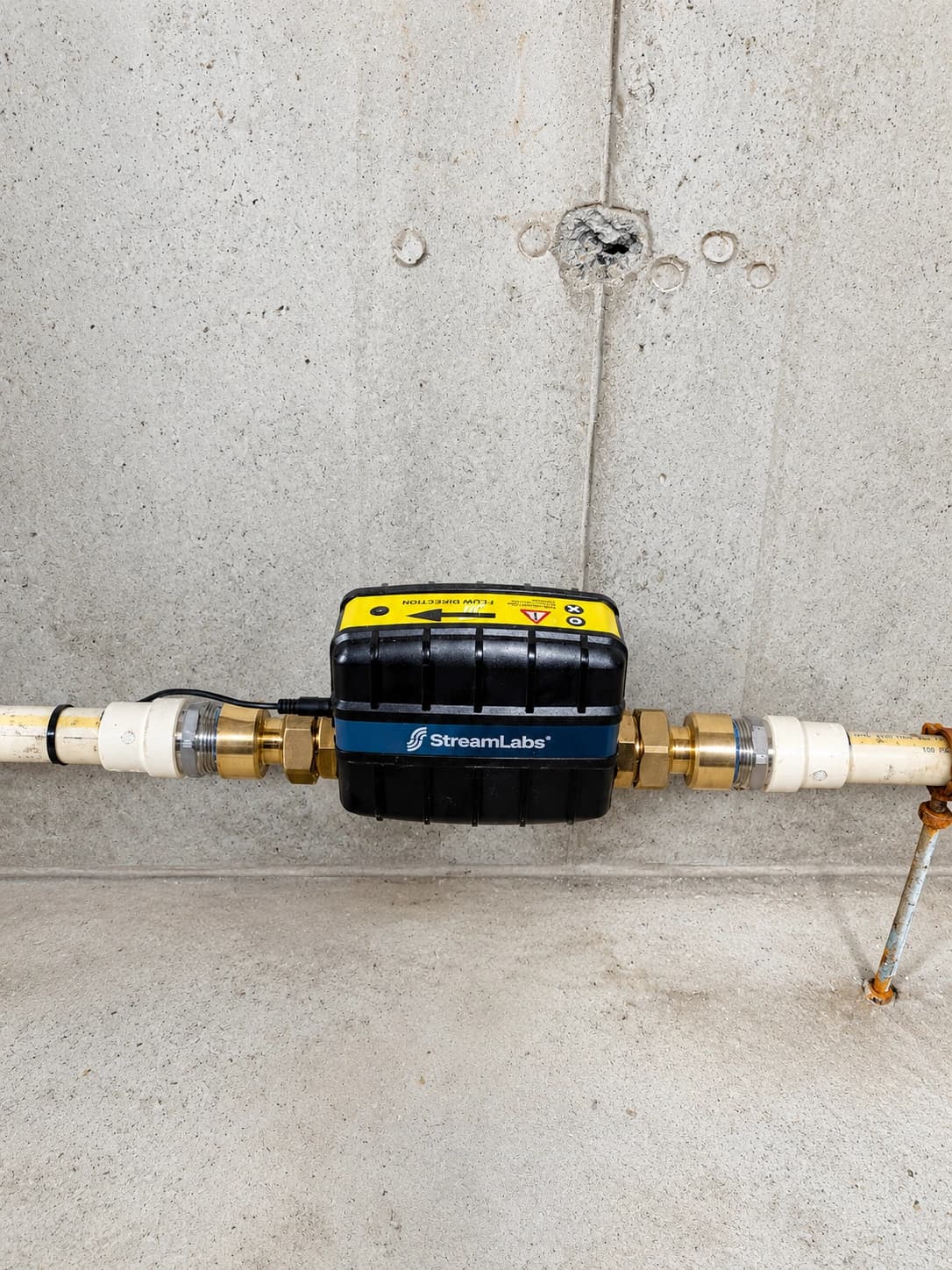
Smart water monitoring can protect a Bedford home by shortening the time between unusual water use and a homeowner’s response. A point sensor can alert after water reaches a selected floor or cabinet location. A main-line monitor can flag qualifying flow or pressure patterns, and a compatible automatic valve may close incoming water after some events. None of those devices prevents every pipe or component from failing.
The honest answer is that smart water monitoring adds awareness and, in some systems, a way to limit continued incoming flow. It does not guarantee a damage-free home, identify the exact failed fitting, remove water already released, or replace physical diagnosis and repair. “Protection” depends on the device category, placement, settings, power, connectivity, connected equipment, and a real response plan.
Jeneral Plumbing is based in Westford, MA and is owner-operated by a Licensed Master Plumber (MA #9628831-PL-M) with 20+ years in the trade, including seven with a gas utility. Phyn is Jeneral Plumbing’s smart-water partner. I recommend it only after confirming that the main-line arrangement and household goals fit the product; smart water monitoring remains one layer of plumbing protection, not a promise that every water event will be caught.
Does Smart Water Monitoring Protect a Home?
Smart water monitoring can reduce exposure when it recognizes a qualifying event early enough for an alert or enabled shutoff to matter. An alert can get someone to inspect a utility room before a slow seep becomes obvious elsewhere. An automatic close can stop additional water entering through the monitored main, which may limit continued flow from a downstream supply leak.
The device cannot undo the first failure. It cannot pull water back out of insulation, flooring, a cabinet, a water-heater tank, or downstream pipe. It may also miss a small, intermittent, unusual, upstream, separate-supply, or non-plumbing event. A monitor protects best when its limits are understood before anyone depends on it.
Three Categories of Home Water Monitoring
Homeowners often use one phrase for three different device classes. Smart water monitoring may mean a point moisture sensor, a main-line flow and pressure monitor, or an automatic shutoff valve. Some products cover one class, while others combine monitoring and valve control.
- Point moisture sensor: sits at a selected location and alerts after water reaches its contacts or sensing area.
- Main-line monitor: observes water activity passing its installed position and applies model-specific rules or learned patterns.
- Automatic shutoff: closes a compatible water line after a qualifying event or an authorized manual command, subject to settings and operating conditions.
A power meter, remote appliance switch, smoke alarm, sump alarm, and water-quality instrument belong to other categories. They may be useful, but they should not be described as smart water monitoring. Clear categories make it easier to compare what a device observed with what happened.
A Neighboring Westford Call Shows Why the Categories Matter
Bedford homeowners can learn from a neighboring Westford consultation that began with an approximately 13-year-old Rinnai tankless water heater that misfired intermittently. The homeowner had performed several checks and formed theories before calling, but those homeowner observations did not establish the cause. The water-monitoring lesson came from separate equipment in the utility area, not from a confirmed tankless diagnosis.
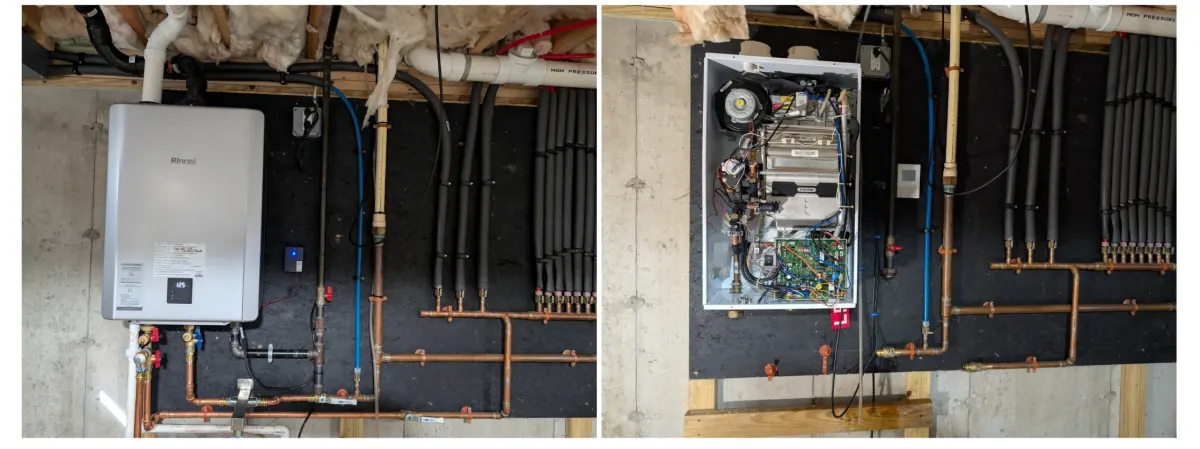
The home had distributed point moisture sensors connected through a hub. A separate relay and power reading were associated with the heater, but neither was a main-line water monitor. Remotely rebooting a faulting gas appliance is not smart water monitoring and is not a substitute for diagnosis under the manufacturer’s procedures. Intermittent tankless faults belong with tankless water-heater diagnosis, not with leak-alert marketing.
No leak event, automatic shutoff, avoided loss, or Jeneral Plumbing installation was established in that Westford example. Its value is simpler: point sensors can watch selected places, while a heater relay watches or controls something else. A Bedford category guide should preserve that distinction instead of relocating the consultation or claiming the setup prevented damage.
The Homeowner-Installed Sensor Setup Was Point Protection
The observed setup placed sensors at several chosen locations and connected them to a central hub. That can be a useful form of smart water monitoring because a wet sensor may alert someone sooner than a stain in the next room. Coverage still ends where the sensors end, and no actual water event or alert response was established during that consultation.
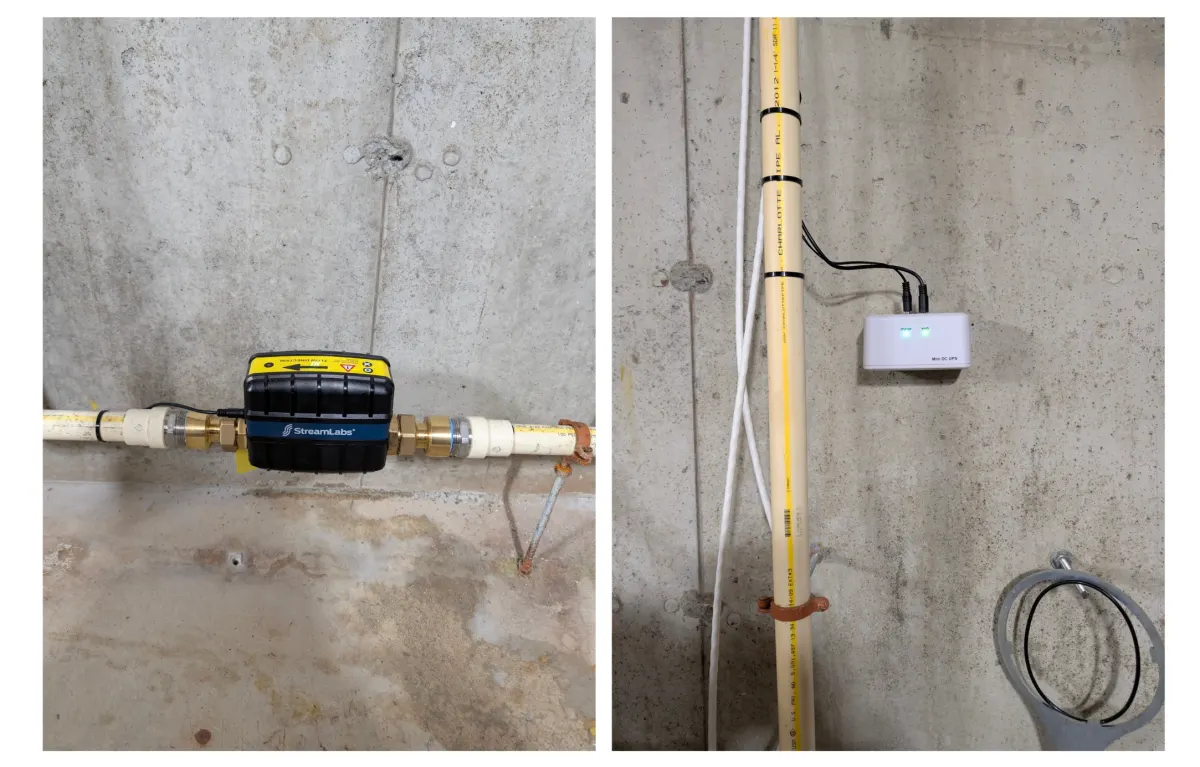
The category lesson does not depend on the homeowner’s device brand, radio range, retail price, or unverified reliability claims. A point sensor works only when the selected model, placement, battery or power source, hub or network, notification path, and testing routine all remain functional. Those conditions matter more than a broad claim about the category.
The heater-power relay also stays outside the recommendation. A control that makes a reboot easier can mask repeated equipment lockouts without correcting combustion, venting, fuel, control, or heat-exchanger conditions. If equipment repeatedly faults, document the code and operating condition, then use the appropriate equipment service path.
What Point Sensors Detect—and What They Miss
A point sensor detects water only after water reaches its selected sensing area. Common locations include a water-heater pan area, laundry connection, sink cabinet, dishwasher area, mechanical room, or another accessible low point where water is likely to collect. The device does not infer a leak on another floor merely because it is online.
Point-based smart water monitoring works well as local evidence. If the sensor under one sink gets wet when that faucet runs, the time and location narrow the inspection. If a pipe leaks inside a wall but water travels away from every sensor, no point alert may occur. Placement should follow the likely path of water, not a generic room count.
A point sensor normally does not close the main unless it belongs to a compatible, configured valve system. It also cannot tell whether the water came from a supply connector, drain-use event, condensation, an overflowing fixture, exterior entry, or someone cleaning the floor. The alert starts the inspection; it does not finish the diagnosis.
What a Main-Line Monitor Adds
Main-line smart water monitoring observes activity that passes the device’s installed position. Depending on the product, pressure and flow information can help identify a qualifying change from normal use. That broader view may catch a pattern without waiting for water to reach a point sensor.
“Whole home” still has a boundary. The monitor does not directly see through walls, and it does not automatically name the fixture, room, pipe material, or cause. A loss before the device, on a separate branch, at utility-side equipment, or from a source that never passes the main-line monitor remains outside that view.
Roof water, groundwater, condensation, shower-enclosure leakage, drain or sewer events, and stored water already inside equipment are not made visible merely by installing a flow monitor. Smart water monitoring follows the water and measurements available to the selected device. Physical evidence still decides the repair.
What an Automatic Shutoff Changes
An enabled automatic shutoff can close the monitored incoming line after a qualifying event under the current settings. That action can limit additional supply water feeding a downstream leak. It does not prevent the pipe, connector, valve, appliance, or fixture from failing in the first place.
Closing the main does not drain downstream piping or remove water already released. It may not stop stored water from a tank or appliance, and it cannot stop an upstream or separate-source event. Even a successful close needs a safe inspection before the valve is reopened.
Automatic shutoff also affects normal water use. Irrigation, treatment regeneration, boiler fill, appliances, guests, long showers, tub filling, and other connected uses can change the observed pattern or make a closure consequential. Fire-protection or other critical connections require project-specific design review rather than a universal cut-in point.
Monitoring Can Reduce Exposure; It Cannot Prevent Every Loss
The strongest benefit is time. Smart water monitoring may move awareness from “when someone sees damage” to “when a device flags a qualifying condition.” If an automatic valve also closes and the leak is downstream of that valve, the system may reduce how much additional water enters after the close.
The initial failure still occurred. The event may not meet the alert or closure criteria, the device may be offline, or the water may come from somewhere outside the monitored path. No responsible recommendation describes this category as flood prevention, complete protection, or guaranteed continuous detection.
A smart water monitoring response plan is therefore part of the protection. Know who receives the notification, where the manual shutoff is, who can safely inspect the home, what equipment loses water when the valve closes, and when emergency help is appropriate. Technology without a response path can produce an alert that no one acts on.
Where Phyn Fits in the Category
Phyn is Jeneral Plumbing’s documented smart-water partner, and Phyn Plus is the main-line device I install for compatible homes. It combines pressure-wave and flow information with app alerts and an integrated valve. When automatic shutoff is enabled, that valve can close after a qualifying event under the product’s current settings.
Phyn Plus is a useful recommendation when a homeowner wants both main-line smart water monitoring and valve control, and the property fits. It cannot see through walls, repair a failed pipe, guarantee an alert, or promise a damage-free home. Detection depends on the event, learned patterns, settings, power, connectivity, and the water that passes the device.
The Phyn smart-home plumbing service owns the fit review and supported installation scope. For the product-specific sequence—main-line planning, access, power, Wi-Fi, water restoration, account handoff, and settings—use the separate Phyn Plus installation guide. This category article does not duplicate that installation walkthrough.
What a Water Monitor Cannot Diagnose
Smart water monitoring cannot tell you that one cartridge, pipe joint, toilet seal, supply connector, water heater, or appliance has failed merely from an alert. The app may classify an event or show a pattern, but the actual source still needs physical isolation and inspection. A monitor supplies evidence; it does not perform the repair.
It also does not diagnose the tankless misfires discussed in the Westford example. Water-use and appliance-power information may establish timing, but combustion, fuel, venting, control, and manufacturer fault questions remain an equipment scope. Do not use a water alert system to normalize repeated appliance lockouts.
A pressure-and-flow monitor is not a water-quality instrument. It does not test Bedford’s water for hardness, potability, or a named substance. Bedford’s MWRA-supply context does not change the category boundary: this article concerns plumbing flow, pressure activity, alerts, and shutoff behavior.
Unexpected Alerts, Learning, and Missed Events
An unexpected alert is not always a false alarm. Guests, a long shower, tub filling, irrigation, a humidifier, an appliance cycle, a running toilet, or treatment regeneration may be real water use that differs from the recent pattern. Labeling known activity and reviewing settings can improve classification for products that support those functions.
There is no responsible universal learning period. Household routines, software, settings, fixtures, seasons, and connected equipment differ. Smart water monitoring should be reviewed after move-in changes, travel, new appliances, irrigation startup, treatment work, or another change in normal use.
Some events may not meet the selected system’s criteria. Small, intermittent, unusual, upstream, or separate-path losses can be missed. Investigate visible water, meter movement, staining, or an unexplained change even when the app shows no alert.
Power, Connectivity, Accounts, and Manual Control
Not every sensor uses the same connection. A point device may use a battery, hub, radio, Wi-Fi, or another model-specific arrangement. Main-line smart water monitoring with app control usually has separate power, network, account, and local-valve considerations that must be reviewed for the exact product.
For Phyn Plus, full app behavior and immediate notifications depend on current power, connectivity, account access, recipients, and settings. Limited offline protection is model- and setting-specific and is not the same as power-loss protection. Current product instructions govern what remains active when internet service is unavailable.
The homeowner controls credentials, alert recipients, and day-to-day settings. Every adult who may respond should understand the notification path and manual valve operation. Installation does not certify continued internet service, app delivery, or account access.
Is a Bedford Home a Fit?
A Bedford home may be a good candidate for smart water monitoring when the main-line location is accessible and the household wants earlier flow awareness or an automatic-close option. The fit review checks the responsibility boundary, main shutoff condition, pipe material and size, working clearance, support, suitable power, usable connectivity, and connected equipment.
Bedford’s public-supply context differs from the private-well Westford property in that example. I do not transfer well piping, pressure-tank, or pump assumptions to a Bedford address. The actual service entry and household plumbing determine where monitoring can observe water and what an enabled shutoff would affect.
Point sensors may still complement a main-line device at selected fixtures or equipment. The best smart water monitoring plan uses each category for its real strength: local contact sensing where water may collect, main-line pattern awareness for broader use, and compatible valve control when limiting incoming flow is the goal.
What to Do After an Alert
First, treat the alert as evidence. Check the app event and time, contact someone at the property when you are away, and inspect only from a safe location. If water is actively spreading, use a sound shutoff when practical and stay clear of electrical hazards.
Do not reopen an automatically closed valve until the reason for the event is understood. Photograph visible conditions, note which fixtures or appliances were operating, and preserve the event history. An alert tied to an accessible pipe concern can move into accessible pipe-leak diagnosis and repair; an isolated running fixture may belong with fixture repair.
For uncontrolled active water, follow emergency plumbing guidance in Bedford and confirm availability by phone. Smart water monitoring can notify or close under qualifying conditions, but it does not make the wet area electrically safe or replace an on-site assessment.
Maintain the Monitoring Layer
Protection changes when batteries expire, a sensor is moved, Wi-Fi credentials change, an outlet loses power, app recipients become outdated, a valve seizes, or connected equipment is added. Review those dependencies on a routine schedule and after any plumbing or network change. Follow the current manufacturer test procedure rather than creating an uncontrolled water event.
Keep the manual shutoff accessible and labeled. Confirm who receives alerts and who can enter the home when you travel. Smart water monitoring belongs in a broader response plan that includes heat, winterization where applicable, plumbing maintenance, and timely repair of known defects.
Plan Smart Water Monitoring for a Bedford Home
I discuss smart water monitoring with homeowners from Westford through Chelmsford, Bedford, Burlington, Lexington, and Acton, serving communities across Middlesex County. The right category depends on what you want to know and what action you want the system to take. A point alert, main-line pattern, and automatic close are different outcomes.
For regular-hours planning visits, Jeneral Plumbing charges an $80 dispatch fee — the cost of the visit, waived when you hire us for the work. I price approved plumbing installation or repair work at a flat rate, with the total price and any applicable fees disclosed for approval before work begins. Call (978) 392-7789 to discuss the property’s main-line access, power, connectivity, and monitoring goal.
Smart Water Monitoring Questions From Bedford Homeowners
Does smart water monitoring prevent leaks?
No. Smart water monitoring may identify qualifying water activity sooner, and a compatible enabled valve may limit additional incoming flow after some events. It does not prevent the pipe or component from failing, remove released water, or catch every loss. Physical diagnosis and repair still address the cause.
What is the difference between a point sensor and a main-line monitor?
A point sensor alerts after water reaches its selected location. A main-line monitor observes pressure or flow activity passing its installed position and may flag patterns across more of the house. Neither automatically proves where or why a leak occurred. Point and main-line smart water monitoring can complement each other when their coverage is planned honestly.
Can an automatic shutoff close during normal water use?
It can respond to an event the system classifies under its current settings, including unusual activity that may turn out to be legitimate use. Guests, long fixture use, irrigation, appliances, or treatment cycles can change the pattern. Review alerts and label known activity when the product supports it. Connected equipment and the consequences of an automatic close belong in the fit review.
Will monitoring still work when Wi-Fi is down?
The answer depends on the exact device, power status, enabled settings, and connection design. Some point sensors use a hub or radio rather than direct Wi-Fi. Phyn Plus may retain limited local protection only under its current offline requirements, while app control and immediate notifications can be unavailable. Confirm current product instructions instead of assuming that offline and power loss are the same.
Can Phyn Plus work in an existing Bedford home?
It may fit when the main line, shutoff, pipe, access, power, connectivity, and connected equipment meet current requirements. Corroded piping, a failed valve, limited clearance, or a critical connected system can change the scope. I verify the plumbing arrangement before recommending installation. The product guide linked above covers the installation sequence without turning smart water monitoring into a guarantee.
How much does a smart-water planning visit cost?
A regular-hours visit starts with an $80 dispatch fee — the cost of the visit, waived when you hire us for the work. The installed plumbing price depends on the selected device, main-line configuration, shutoff condition, pipe material and size, access, support, power, connectivity, and connected equipment. I provide approved plumbing work at a flat rate and disclose the total and any applicable fees before work begins. Call (978) 392-7789 to discuss smart water monitoring for a Bedford home.
Written by Jeneral Plumbing.
This article was drafted with AI writing tools from Jeneral Plumbing job notes and source materials, then edited before publication. AI tools did not inspect the job or validate technical conclusions.
Last updated .