

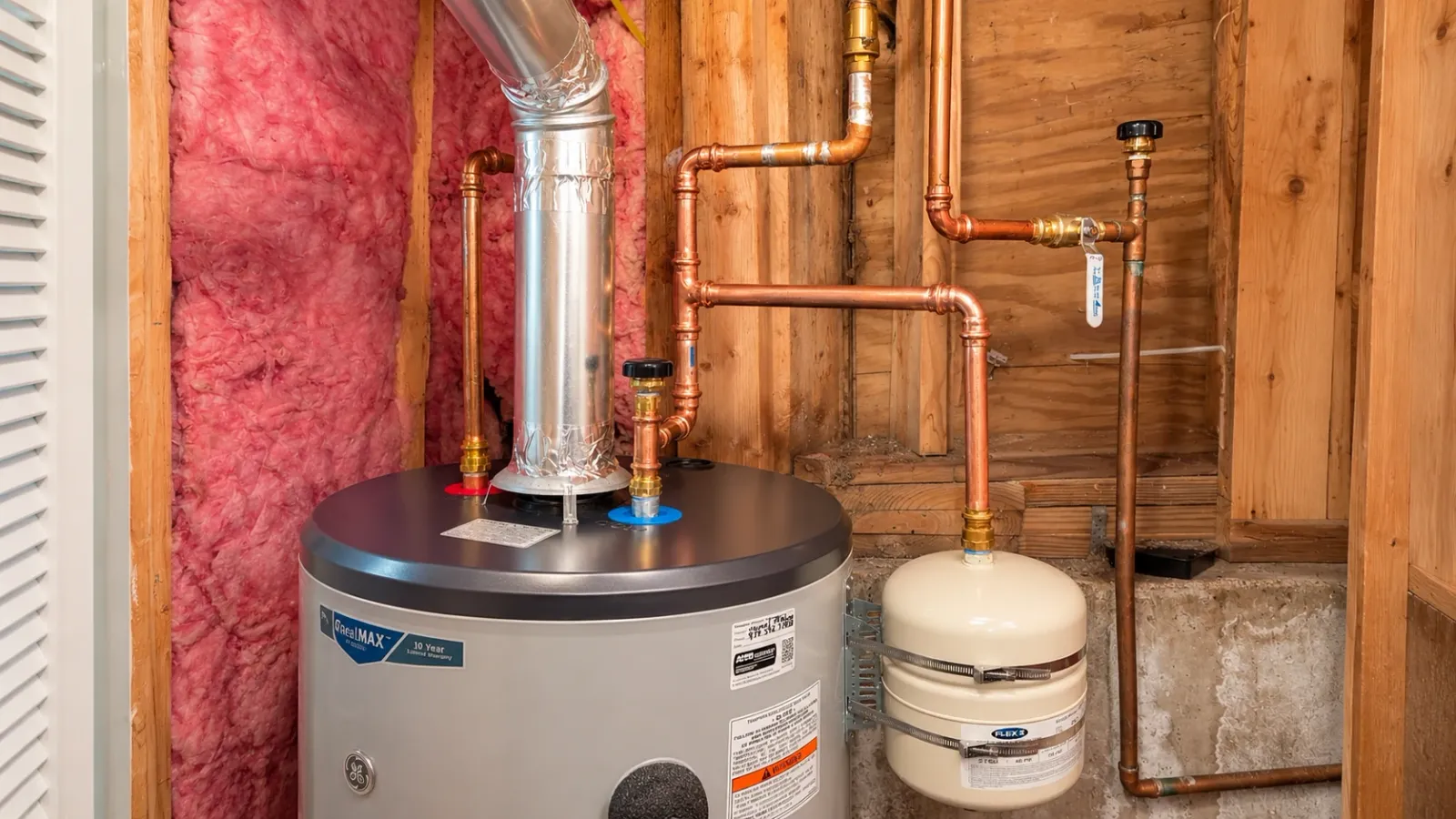
When a water heater starts acting up — long recovery times, a weeping joint, a shower that runs cold after seven minutes — it's tempting to just keep calling for another repair. But a recent consultation we did to review water heating options for a homeowner highlights a pattern worth understanding before you decide to repair or replace: how a big-box water heater's warranty actually works, and why old, undersized piping can undermine even a brand-new unit.
The Problem: Repeated Repairs on an Electric Water Heater
The homeowner's existing water heater — an electric tank unit purchased from Home Depot and roughly five years old — had already been through several repair visits. A technician from the original installing company had replaced one heating element and thermostat on one visit, then came back to replace another element, and reportedly planned to "flush it" after that. The tank was also leaking at one of the fittings. On top of the repairs, hot water supply had become seriously limited, with usable hot water lasting only around seven minutes per shower.
During the consultation, it became clear that parts on this unit should have still been covered. Big-box water heaters typically carry a tank warranty that is prorated: full coverage in year one, declining to a percentage of the unit's value by year five. At five years old, this tank was still within a warranty window where the parts — elements, thermostats — should not have been an out-of-pocket cost. Labor is generally the homeowner's responsibility either way, but paying for parts that should have been covered is the kind of hidden cost that makes a "cheaper" water heater more expensive over its life.
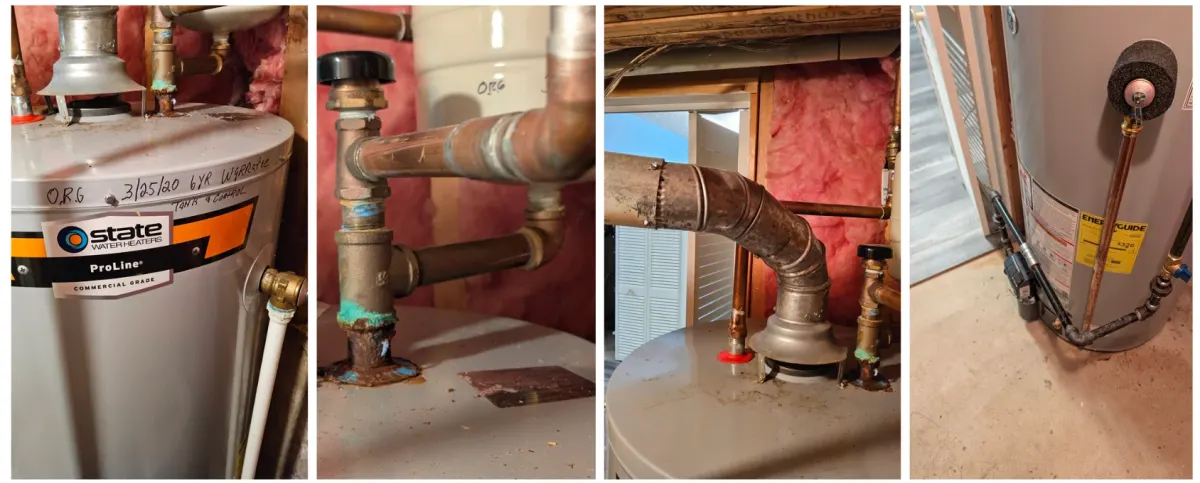
If your own water heater is leaking, losing hot water volume, or has already been repaired more than once, it's worth having a licensed plumber evaluate whether further repair makes sense or whether you're approaching the point where replacing the water heater is the better long-term investment.
Tank, Heat Pump, or Tankless: Weighing the Options
Because this home's water heater is electric, the consultation walked through the realistic replacement paths:
Standard electric tank — similar to what's there now.
Hybrid heat pump water heater — an electric tank with a heat pump on top that draws ambient air from the room to heat water most of the time, using a fraction of the electricity a standard electric element uses.
Electric tankless — heats water on demand, but electric tankless units draw a very large amount of power to heat water instantly, which is a meaningful energy consideration. One advantage raised in the consultation: a tankless unit limits the water involved in a catastrophic tank failure to roughly a gallon rather than a full tank's worth, provided the water supply is shut off.
The homeowner also asked about a gas tankless option similar to a Rinnai tankless water heater they'd had previously in another home running on propane. Because this property is on electric service rather than gas or propane, switching to a Rinnai tankless would require bringing in propane tanks and running new gas piping — a real cost factor, discussed below.
Why Equipment Placement and Piping Distance Matter
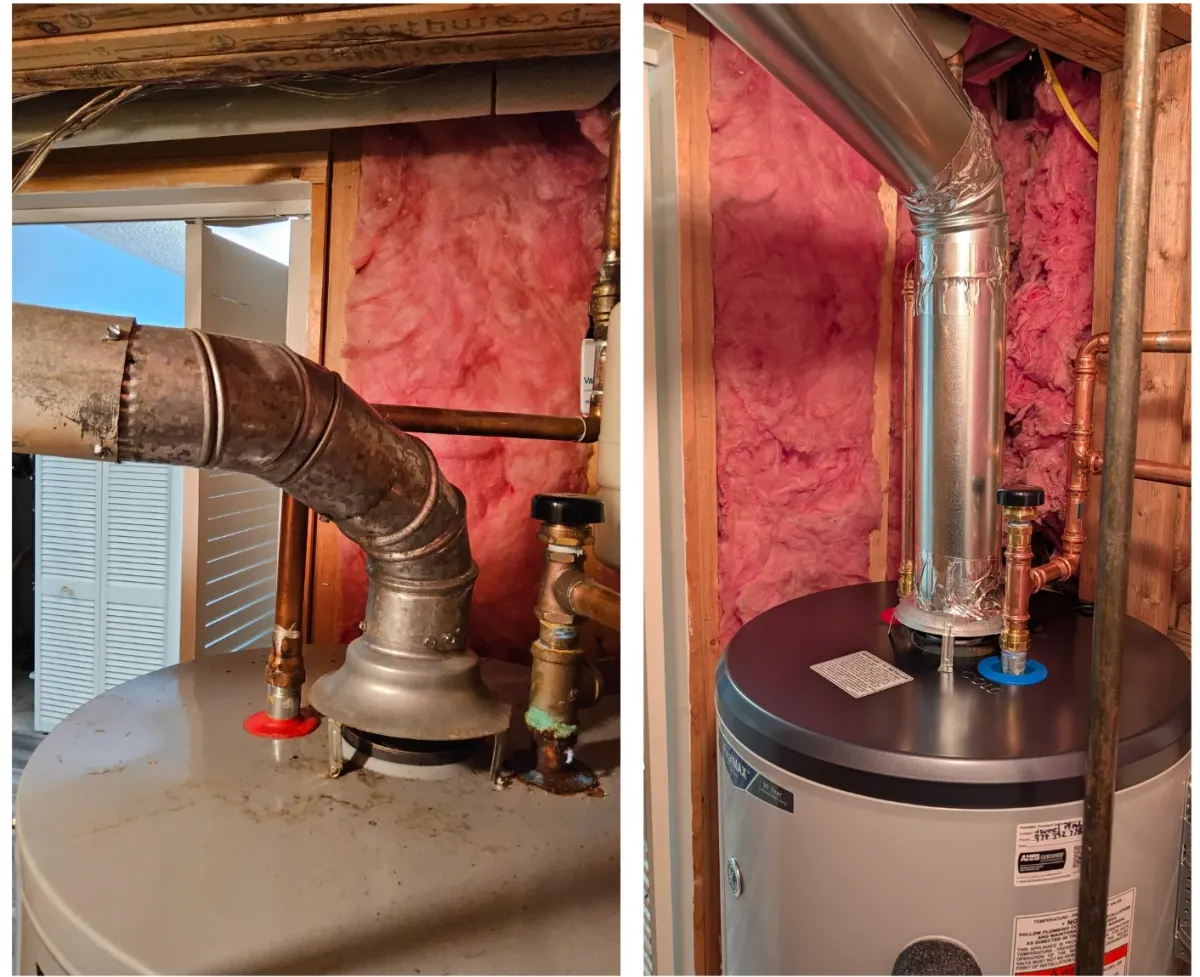
One detail that doesn't get enough attention in replacement decisions: the cost of running piping to the new equipment. Installation pricing generally assumes equipment sits within about ten feet of its connection point. If a new tankless water boiler or propane tank is installed farther from where the water heater will sit, the homeowner pays for that additional linear footage of piping — and gas pipe is considerably more expensive to run than PEX water pipe. In this case, locating the water heater near the existing heat pump equipment (where holes for piping already existed) was identified as the more cost-effective placement, since only hot and cold water lines would need to be run rather than gas line.
The Hidden Culprit: Undersized Half-Inch Piping
Beyond the water heater itself, the consultation uncovered a separate issue affecting daily water pressure and volume: the home's piping had been reduced down to half-inch, where a larger pipe had previously been in place. A pressure-reducing valve had also been installed by a prior company. The distinction matters — a pressure-reducing valve addresses force, but it does nothing for volume. Volume is what actually determines whether a shower runs strong or weak, and in a home with half-inch supply lines, running another fixture (like a dishwasher) at the same time as a shower can cause a noticeable fluctuation in water flow.
This is a common but under-diagnosed issue: homeowners chase pressure complaints with flow reducers or valve adjustments when the real constraint is pipe diameter. A plumber evaluating a water heater replacement should also be looking at the supply piping feeding it, since undersized lines can limit the benefit of new equipment no matter how good the water heater itself is.
What We'd Recommend Evaluating
Confirm whether your current water heater is still within a warranty period, and if a prorated big-box warranty has left you paying for parts that should be covered.
Have a licensed plumber assess whether a standard electric tank, a hybrid heat pump water heater, or a tankless system best fits your household's hot water needs and energy setup.
If switching fuel types (electric to gas or propane) for a tankless water boiler, factor in the full cost of new gas piping and tank placement, not just the unit price.
If you're dealing with weak water pressure or flow, ask whether the issue is pressure (force) or volume (pipe size) — they require different fixes.
A Note on Winter Timing
Water heater problems — weeping tanks, failing elements, limited hot water — have a way of surfacing or worsening during the colder months when hot water demand is highest and incoming water is coldest. If your water heater is already showing signs of strain, it's worth having it evaluated before a failure turns into a no-hot-water emergency over a holiday weekend. Jeneral Plumbing answers emergency calls 24/7, and you can review emergency plumbing services for situations that can't wait for a scheduled appointment.
Call Jeneral Plumbing
If your water heater is leaking, aging, or no longer keeping up, or if you suspect your home's piping is undersized and limiting your water pressure, Jeneral Plumbing can evaluate your system and lay out your real options — including full-warranty, supply-house grade equipment rather than prorated big-box units. Regular-hours visits include an $80 dispatch fee — the cost of the visit, waived when you hire us for the work. Call (978) 392-7789 to schedule an evaluation.
This post is for informational purposes only and is not a substitute for an in-person evaluation by a licensed plumber. Water heater and gas piping work should always be performed by a licensed professional.
Written by Sierra Sorongon.
This article was drafted with AI writing tools and edited before publication. AI tools did not inspect any job or validate technical conclusions.
Last updated .