
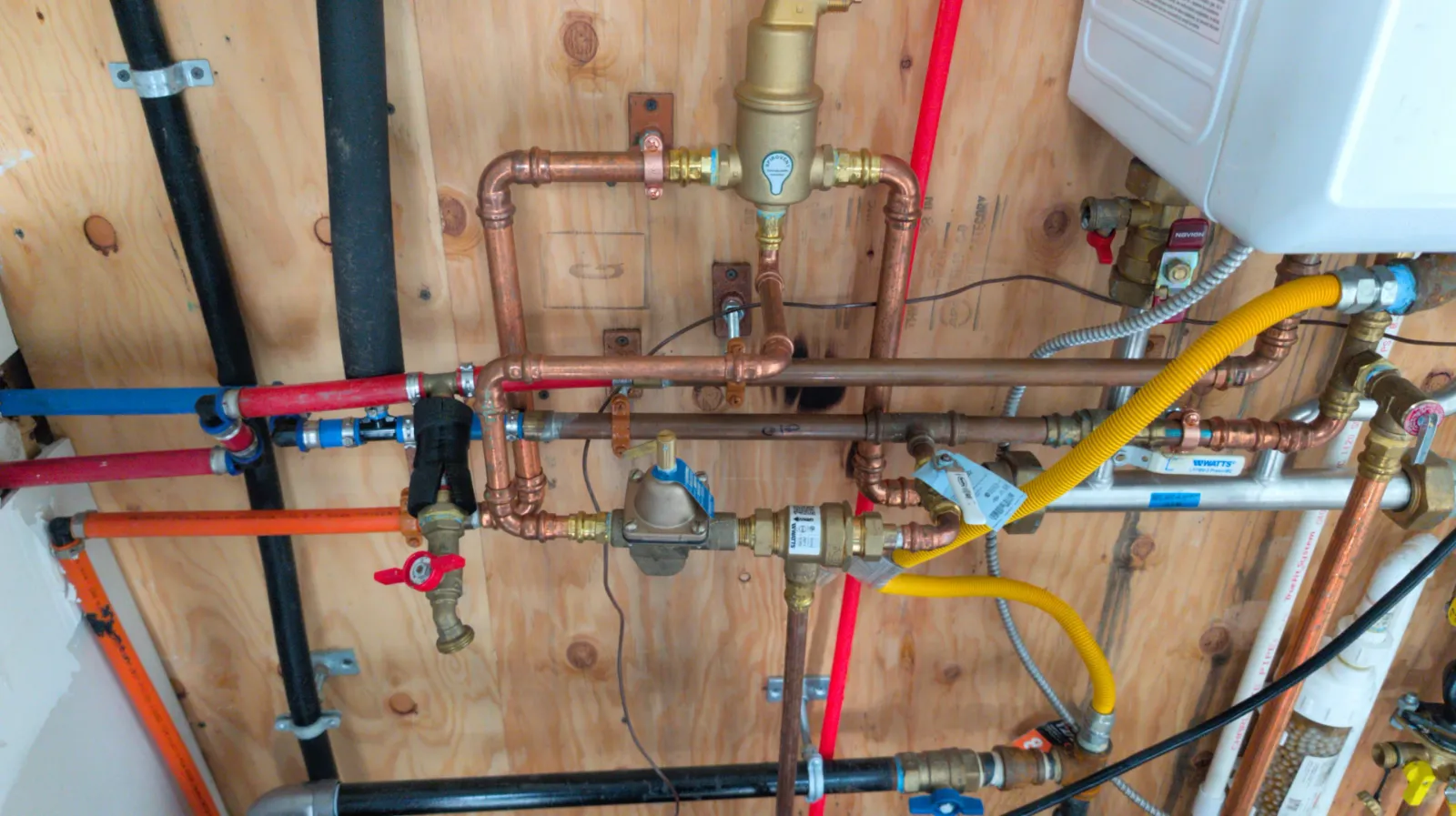
A homeowner in Westford recently called us with a problem that had already cost him hundreds of dollars and two flooded mechanical rooms. His Navien combi boiler — a unit that handles both heat and domestic hot water in one system — was running nonstop, the pressure gauges were reading three different numbers, and a previous contractor's "fix" had made things worse. This wasn't a question of water heater tank less versus a traditional tank; it was a cautionary tale about what happens when a high-efficiency boiler isn't installed or serviced correctly in the first place.
Safety First: This Is Not a DIY Repair
Before we get into what our technician found, it's worth saying plainly: never attempt to diagnose or repair a boiler, gas line, or pressure-relief system yourself. These systems involve gas connections, scalding-hot water, and pressurized components that can fail suddenly and dangerously. Massachusetts law requires a licensed plumber or gas fitter to perform this kind of work. If you notice constantly running water, unusual noises, error codes, or leaking near your boiler, shut off what you safely can and call a professional immediately.
What Was Happening in This Westford Home
The homeowner explained that his combi boiler — only two to three years old — had been working fine until another company came out, along with an inspector, who said the system needed a neutralizer and some additional brass fittings. Shortly after that work was completed, the system discharged a large amount of water, flooding down into two mechanical rooms below. The homeowner had to shut off the water manually just to stop the bleeding, and in the process, his water bill spiked to around $800 in a single month from the constant leak.
When our technician arrived, the first floor system was throwing an error, and the third-floor unit's pressure gauges were inconsistent — one reading 11.6, another showing just over 20, when the system should have been holding steady around 15 psi. The boiler kept running and never appeared to reach its shutoff temperature, a clear sign that heating system water was leaking out somewhere rather than staying in the closed loop.
Tracing the Leak: A Small Part, A Big Problem
Our technician methodically ruled things out. The pressure-reducing valve was tested to confirm it was functioning — it was. The air vent, which needs to stay open so the system can purge air during fill-up, was working properly too. But when we traced the discharge line running down to the basement, we found water actively leaking out of a fitting that should never have water passing through it at all. Water is supposed to flow in one direction only through that line; instead it was draining straight down, meaning the part had failed and needed to be replaced before any further troubleshooting could happen.
This traced back to the very brass fittings the previous company had installed. Rather than keeping the pressure relief valve in its original, simpler position, they relocated and added extra hardware — work our technician noted "made it harder on themselves." The original relief valve had been up near the top of the system, which is the correct spot, since that's the highest point where air naturally collects and needs to be released. Moving that setup around introduced a new failure point that led directly to the flooding.
The Missing Step: the Jeneral Plumbing technicians Treatment
Beyond the failed fitting, our technician raised a bigger concern: there was no evidence the system had ever been properly flushed. When a heating system is installed, it should have a chemical cleaner run through it for about two hours, then be fully flushed, refilled, and dosed with an inhibitor to protect the internal components long-term. This system also lacked a magnetic filter, meaning any debris circulating through the pipes has nowhere to be caught before it reaches the boiler's internals. Skipping this step during installation is a common shortcut — and it's one that often shows up later as clogs, pressure inconsistencies, or reduced efficiency.
A full service flush and cleaning is roughly half a day of dedicated work per unit. It's not a quick add-on, which is exactly why it should be done correctly at the time of install rather than skipped and revisited later, if it gets revisited at all.
Why Corner-Cutting on Boiler Installs Gets Expensive
This Westford homeowner's experience is a good example of why installation quality matters as much as the equipment itself. A well-built Navien combi boiler can run efficiently for years, but only if it's commissioned properly — correct pressure settings, a properly placed relief valve, a full flush and inhibitor treatment, and a magnetic filter to protect against sludge. Skip any of these steps and you end up with the kind of cascading failure this homeowner experienced: flooding, a damaged fitting, and an $800 water bill from a leak that should never have happened.
We see similar issues in older heating systems throughout Chelmsford and Littleton, where cast iron radiators tend to collect more sludge and debris over time, making a proper flush even more critical. Whether you're dealing with a newer high-efficiency boiler or an older cast iron setup, the fundamentals of a correct install don't change.
Key Takeaways
A combi boiler that runs constantly without reaching its target pressure or shutoff temperature usually indicates a leak somewhere in the closed heating loop.
Relocating or adding fittings to a pressure relief system without following proper venting placement can introduce new failure points.
Skipping the chemical flush and inhibitor treatment during installation is a common shortcut that leads to clogs and pressure problems down the line.
A missing magnetic filter allows debris to circulate freely through the system, increasing wear over time.
Water damage and inflated water bills — like the $800 spike this homeowner saw — are often the visible symptom of an invisible installation shortcut.
Frequently Asked Questions
How do I find hot water installers near me who do this kind of work correctly?
Look for a licensed plumbing company with specific experience commissioning high-efficiency combi boilers and tankless systems, not just installing tanks. Ask whether a full flush, inhibitor treatment, and magnetic filtration are included as standard steps, not optional extras.
What should I expect from water heater repair prices for a job like this?
Costs vary significantly depending on what's actually failed — a relief valve, a clogged line, or a full system flush are very different jobs. We didn't have exact figures for every line item in this case, so we'd recommend getting a written estimate before any work begins.
Are hot water tank costs different for a combi boiler versus a standard tank?
Yes. A combi boiler integrates heat and domestic hot water production into one unit, so pricing and maintenance considerations differ from a standalone tank. If you're weighing a water heater tank less option against a traditional tank, it's worth discussing your household's hot water demand and heating needs with a technician first.
Should I consider used water heaters to save money?
We'd advise caution. This case shows how much can go wrong even with a new, high-efficiency unit when installation steps are skipped. A used unit adds uncertainty about prior maintenance, flushing history, and wear that makes proper commissioning even more important.
How do I find water heater plumbers near me who handle Navien systems specifically?
Ask directly about experience with Navien combi boilers, including pressure calibration, relief valve placement, and post-install flushing procedures. A qualified technician should be able to explain each step clearly, the way our technician did on-site in this case.
Get It Done Right the First Time
If your boiler is running constantly, showing inconsistent pressure readings, or you've noticed unexplained spikes in your water bill, don't wait for a small issue to become a flooded mechanical room. Our team offers heating system service throughout Westford, Chelmsford, and Littleton, along with water heating installation and repair for both tank and tankless setups. We also offer emergency plumbing support and answer emergency calls 24/7.
Every regular-hours visit includes an $80 dispatch fee — the cost of the visit, waived when you hire us for the work. If you're in Westford or the surrounding Middlesex County area and dealing with a boiler that just isn't performing the way it should, call Jeneral Plumbing at (978) 392-7789.
This post is for informational purposes only and is not a substitute for an in-person evaluation by a licensed plumbing or heating professional. Always consult a licensed technician before attempting any diagnosis or repair of gas, heating, or pressurized plumbing systems.
Written by Sierra Sorongon.
This article was drafted with AI writing tools from Jeneral Plumbing job notes and source materials, then edited before publication. AI tools did not inspect the job or validate technical conclusions.
Last updated .