

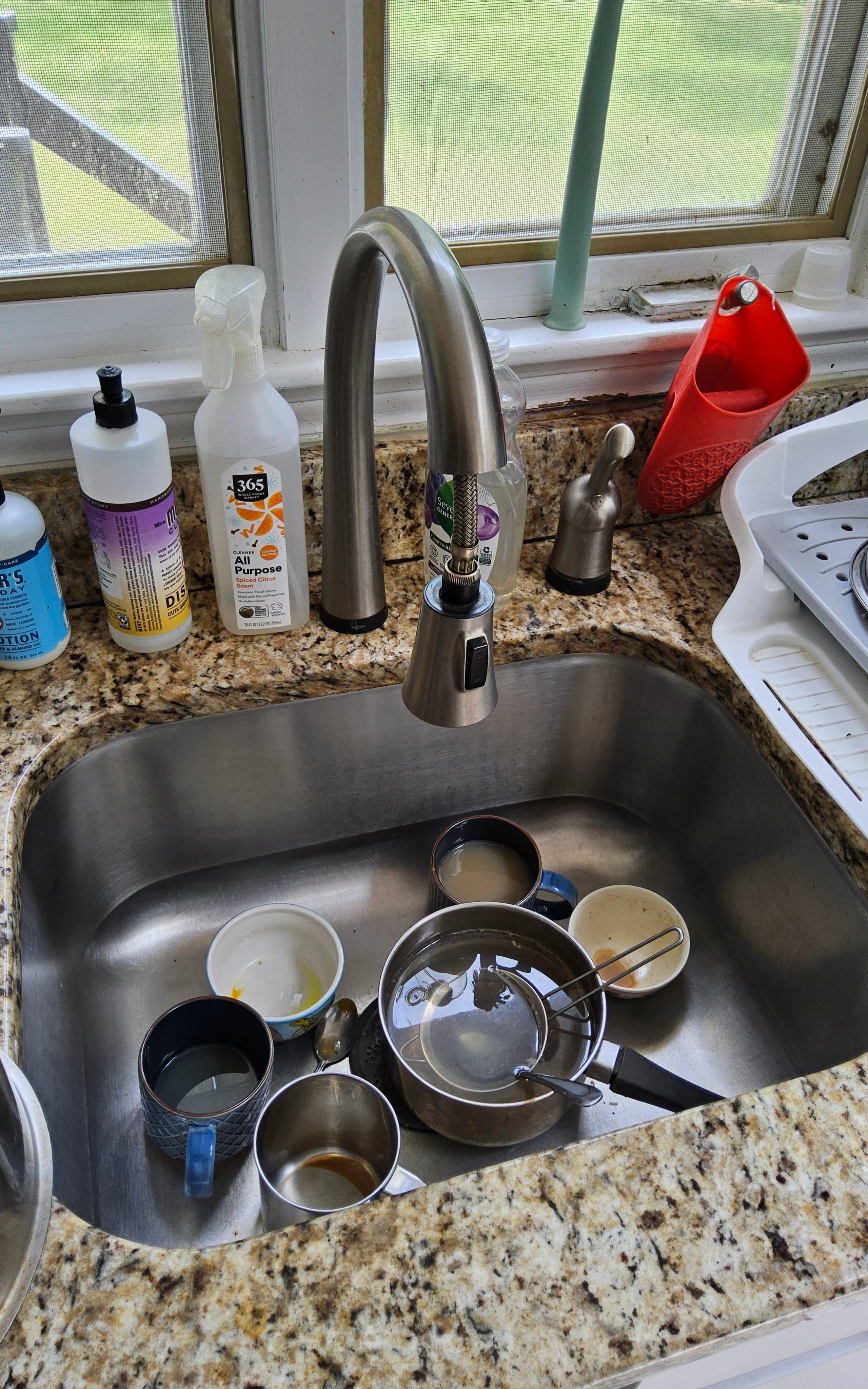
Two sinks quit on the same morning. A Maynard homeowner brushed her teeth over a bathroom sink draining like cold molasses, went downstairs to rinse a coffee mug, and watched the kitchen sink hold water too. One slow drain is an annoyance. Two at once feels like the house is plotting something.
Before you search for drain cleaning in Maynard, MA, it helps to know what two slow drains can mean — because the pattern tells you more than the plunger will. Jeneral Plumbing is a family-owned plumbing company based in Westford, MA, serving Maynard and its neighbors across Middlesex & Essex County. This call came from a homeowner who thought she had one problem. She had two, and neither was the one she expected.
I tell longtime customers they could call once in a while to say hi. Somehow the phone only rings when a sink misbehaves. Here is the story of that call, what I found under the kitchen cabinet, and how to read your own drains before reaching for the chemicals. Treat it as an educational resource, not a diagnosis — every house argues its own case.
The Call: Two Clogged Sinks and a Hidden Waterfall
The booking sounded routine — two slow sinks, one house. The bathroom sink upstairs was the obvious patient: it drained, but slowly enough that toothpaste foam outstayed its welcome. The kitchen sink was the one the homeowner apologized for. “There’s some water under there,” she warned as I opened the cabinet doors.
There was more than some. I found a leak as we emptied the cabinet — she had described a waterfall under her kitchen sink, and she was not exaggerating by much. Water had been escaping at the drain connections every time the sink ran, soaking the cabinet floor and everything stored on it.
When I got a light on the piping, the cause introduced itself. Every mechanical connection under that kitchen sink was loose — trap, tailpiece, the works. And smeared across the threads sat a thick coat of white thread sealant, far more than any fitting calls for. The homeowner mentioned her nephew had tried to fix a drip a few weeks earlier. He meant well. The sealant told the rest of the story, and I will come back to why it made things worse instead of better.
Plumbing problems rarely travel alone. A slow drain and a hidden leak often share a cabinet, because the same failing joints that let water out also let the drain assembly sag out of alignment. That is why a careful look under the sink comes before any clearing work — pushing more water through a drain above a leaking joint means more water past the leak, and the cabinet pays for it.
One Clog vs. Two: Reading the Pattern
A single slow fixture points to a local problem: hair wrapped around a pop-up stopper, grease in a kitchen trap, buildup in the tailpiece. The clog lives within a few feet of the drain opening, which is why fixture-side service can often reach it.
Two or more fixtures slowing together raises a different question: what do they share? Sinks, tubs, and laundry connections in the same area of a house often tie into a shared branch line — a horizontal run that collects several fixtures before joining the building drain. When the branch chokes, every fixture upstream of the blockage slows at once, even though each individual trap is clean. Fixtures far apart — different floors, different walls — are less likely to share a branch, so when those slow together the suspicion moves downstream to the building drain, or to venting trouble that starves the pipes of air rather than a blockage at all.
The pattern to take seriously is the lowest drains in the house acting up: a basement floor drain backing up, a first-floor tub gurgling when the washer empties. That points at the building drain or the sewer main, which is cable-and-camera territory for a drain or sewer specialist. Our guide to drains, sewers, and water lines maps the whole system from trap to street if you want the full picture.
And sometimes the pattern lies. In this Maynard house, the two clogged sinks turned out to be unrelated — a vintage trap upstairs, a failed repair downstairs. A two-drain pattern is a starting question, not a verdict. The evidence answers it.
Why DIY Thread Sealant Fails on Slip Joints
Here is the mistake I find under more sink cabinets than any other, in Maynard and everywhere else we work: thread sealant on slip joints.
Thread sealant — pipe dope or PTFE paste — exists for tapered pipe threads, where the threads themselves form the seal as they wedge together. The white tubular piping under a sink does not seal that way. Those connections are slip joints: a nut compresses a beveled plastic or rubber washer against the pipe, and the washer makes the seal. The threads on a slip nut only carry clamping force — they never touch water.
So a coat of sealant on slip-joint threads does nothing for the seal, but it does plenty of other things. It lubricates threads that were designed to hold by friction, so nuts that felt snug back off as the assembly flexes with use. It gums up the washer’s seat so the bevel cannot sit square against the pipe. And it hides the evidence — a joint packed with white paste looks serviced, which keeps the next person from spotting the real problem. In this kitchen, that combination produced loose connections at every joint: sealant everywhere, washers doing none of the work they were made for. The nephew’s drip had grown into a waterfall.
The fix for a weeping slip joint is almost never more goop. It is a fresh washer, a clean seat, and a nut tightened to snug — parts that cost less than the tube of sealant.
How Both Sinks Got Fixed
The bathroom sink held one more surprise. The drain arrangement pointed to a drum trap — a sealed canister, wider than the familiar P-trap, that shows up in some older homes around Middlesex County. Drum traps collect debris in a chamber instead of a curved tube, so they clog differently and need different handling than modern tubular traps.
That clog sat where fixture-side service could reach it. I used a drain bladder — a rubber tool that connects at the fixture, swells under water pressure to seal the pipe, then pulses a jet of water at the obstruction. A few minutes of that, a careful reassembly, and the bathroom sink drained at full flow with dry joints underneath.
The kitchen needed rebuilding, not clearing. Tightening the loose nuts slowed the waterfall, but between sealant-packed threads, distorted washers, and connections that had been flexing loose for weeks, snugging things up would have been a patch, not a repair. I made a parts run and rebuilt the drain assembly — new trap, new washers, clean threads, every joint seated square. That made a longer visit than anyone planned, but the repair holds, and nobody pays twice for the same fix. We fix the cause, not just the symptoms.
Before packing up, I ran both sinks hot and full. Dry cabinet, clear drains, and one homeowner who now knows more about thread sealant than she ever wanted to.
Drain Cleaning in Maynard, MA: What I Handle and What I Refer Out
Honest scope matters more in drain work than almost anywhere else in plumbing, so here is ours, plainly stated.
What I bring to a drain call: slip-joint washers in every common size, replacement tubular traps and trap arms, tailpieces and basket strainers, and the patience to disassemble, inspect, and rebuild the fixture side of a drain rather than force it. Repairing leaking or damaged accessible drain piping — a failed trap arm, a cracked fitting, a corroded branch section you can see and reach — is written scope; the full boundary lives on our accessible drain line repair page.
What I do not carry: a cable machine or a jetter. Jeneral Plumbing does not offer drain cleaning, snaking, or hydro jetting. When a blockage sits past the reach of fixture-side service — deeper in a branch or the building drain — I say so and refer you to a drain-cleaning specialist with the right equipment, so you hire the right provider once instead of the wrong one twice.
Two more boundaries worth knowing before you book anyone. If the problem turns out to be the faucet, the pop-up hardware, or the fixture itself rather than the piping below it, that is fixture repair territory. And moisture that keeps appearing while every fixture is off points to pressurized supply piping — a pipe leak repair visit, not a drain call.
On cost: a regular-hours visit includes an $80 dispatch fee — the cost of the visit, waived when you hire us for the work. Because a slow sink can come from a dozen different conditions, we do not price drain work from a phone description. You get a written scope after inspection, before any approved repair begins.
Clogged Sink Questions Maynard Homeowners Ask
Why are both my sinks clogged at the same time?
Two sinks slowing at once can mean a shared branch line, a venting problem, or plain coincidence — two unrelated clogs that picked the same week. Fixtures near each other, or stacked on the same wall, often drain into one branch, so a blockage there slows all of them together. When the lowest drains in the house gurgle or back up, suspicion shifts downstream to the building drain or sewer main. In the Maynard call above, it was coincidence: a drum trap upstairs and a failed DIY repair below. The pattern tells you where to look first — the evidence under the sink settles it.
Is Drano safe for kitchen sinks?
Chemical drain openers are caustic or oxidizing products, and the label — not the marketing — defines where each one can be used, so read it before anything goes down a kitchen sink, especially one with a disposal. The practical problem: in a sink already holding water, the product can sit in the trap instead of reaching the clog, and if the clog survives, that trap now holds caustic water a person eventually has to open. Repeated use can also be hard on older metal traps, slip-joint washers, and gaskets. A clog that shrugs off one labeled application is telling you it needs mechanical clearing, not more chemistry. And tell whoever works on the sink next if chemicals went down it — that changes how the trap gets handled.
When is a clogged drain an emergency?
A clogged sink by itself can usually wait for a regular-hours visit — stop using the fixture, and nothing gets worse overnight. It turns urgent when water keeps moving on its own: sewage backing up at the lowest drains, a leak reaching the ceiling below, or any flow you cannot stop by shutting the fixture off. In those cases, close the nearest shutoff valve — or the main, if that is what it takes — and get help on the phone. Our emergency plumber in Maynard page walks through what to shut off and what to expect when you call.
Does Jeneral Plumbing offer drain cleaning in Maynard?
Not in the cable-machine sense — snaking, augering, and hydro jetting are referred out to drain-cleaning specialists, and we tell you that before scheduling rather than after a visit. What we do handle in Maynard is the fixture side: trap and slip-joint service, clogs within reach of the fixture, and repair of leaking or damaged accessible drain piping. Many “clogged sink” calls land in that territory — this one did. If yours does not, the visit ends with a straight answer and the name of the kind of specialist who can help.
Slow Drains in Maynard, Acton, or Stow? Start With a Straight Answer
Jeneral Plumbing is family-owned and operated, owner-operated by a Licensed Master Plumber (MA #9628831-PL-M), and based in Westford, MA — an easy reach to Maynard, Acton, Stow, and Concord, with all 23 towns we serve across Middlesex & Essex County listed on the service-areas page.
If one sink is slow, if two are slow, or if there is a puddle where your cleaning supplies used to be, call (978) 392-7789 and describe what you are seeing. We will tell you honestly whether it sounds like fixture-side work we handle or clearing work that belongs with a drain specialist — before anyone is standing in your kitchen. And if the answer involves a nephew and a tube of thread sealant, do not worry. We have seen it before, and we will leave every joint clean, seated, and dry.
Written by Kris Record, Massachusetts Master Plumber, License #9628831-PL-M.
This article was drafted with AI writing tools from Jeneral Plumbing job notes and source materials, then edited before publication. AI tools did not inspect the job or validate technical conclusions.
Last updated .