

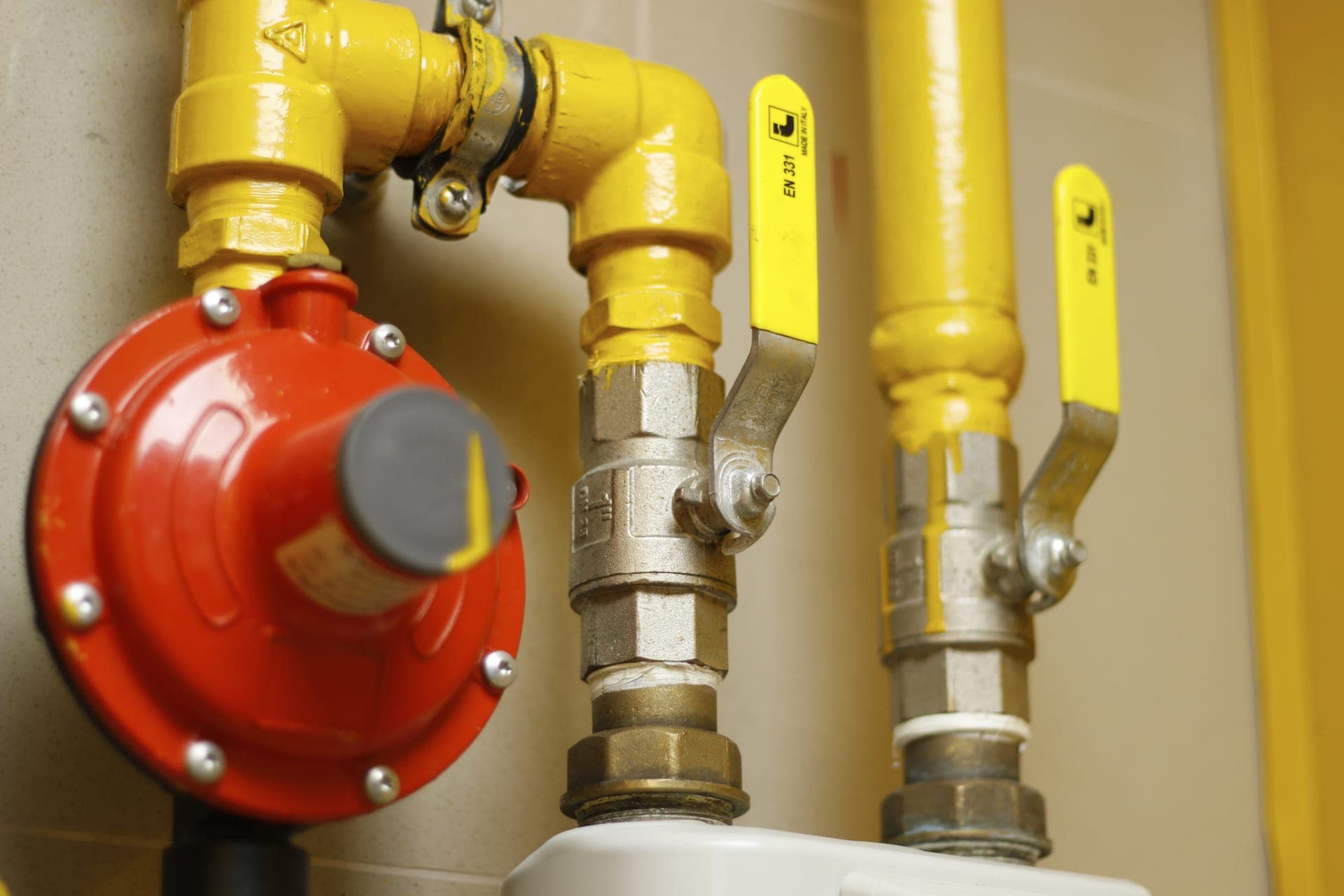
If you smell gas or a carbon monoxide alarm sounds, get everyone out of the house and call 911 from outside. Don't use switches, phones or appliances on the way out, and don't go back in until the fire department or gas utility says it's safe. Repairs come after that clearance.
For a planned project, like a new range, a gas dryer, a water heater or a fireplace, the questions are different. Will the existing line carry the new appliance? Can the old connector be reused? What happens to a line you no longer need? Here's what a licensed installation involves in Dracut, and what to ask before delivery day.
Before delivery day
Good planning starts with the appliance's paperwork, not a connector pulled off a shelf. We need the exact model, its fuel type (natural gas or propane), its listed input, where the gas connection sits and the manufacturer's clearances and instructions. Then we look at the house side: the meter or propane supply, what else is already connected, the pipe size and material, how far the line runs and where the shutoff will be.
A capped pipe near the range or dryer spot doesn't prove it's the right size, in the right place or even meant for that appliance. If new or extended piping is needed, that's our gas line installation service.
Why a load check matters
A load check answers one question: can your gas supply feed the new appliance while everything else runs at the same time? We compare the new appliance's input with the meter or supply capacity, delivery pressure, the other connected equipment, and the pipe's size, material and length. A bigger range, water heater or fireplace can expose a limit the old appliance never reached. If capacity falls short, the answer may be a new branch, a resized section or a conversation with the gas utility or propane provider, whose equipment stays under their control.
Swapping an old appliance for a new one
Most appliance projects replace something. These are the questions worth asking whoever does the work.
Is the gas line valve shut off before the old appliance is disconnected?
It should be, every time. We close the appliance's shutoff valve and confirm it's holding before disconnecting anything. After the new appliance is connected, we leak-test the connection before the appliance runs. That's the installer's job, not the homeowner's.
Will the old flex gas line be reused?
We typically replace an old flex gas line connector rather than reuse it on a new appliance. The old one has already been bent into place once, it may be the wrong length or rating for the new appliance's input, and it costs little next to the risk of a weakened connection. The connector also can't be pinched behind the appliance or stretched to make up for a badly placed outlet.
What happens to a line that no longer serves anything?
When an appliance is removed and not replaced, the unused stub gets a gas line cap and a leak test. A closed valve alone isn't the finish line; the cap is what makes the open end safe if someone bumps the valve later.
Common residential projects
Ranges and cooktops. We confirm the input, available capacity, shutoff access and the space behind the appliance. During a kitchen remodel, settle the gas outlet location before cabinets and counters close off access.
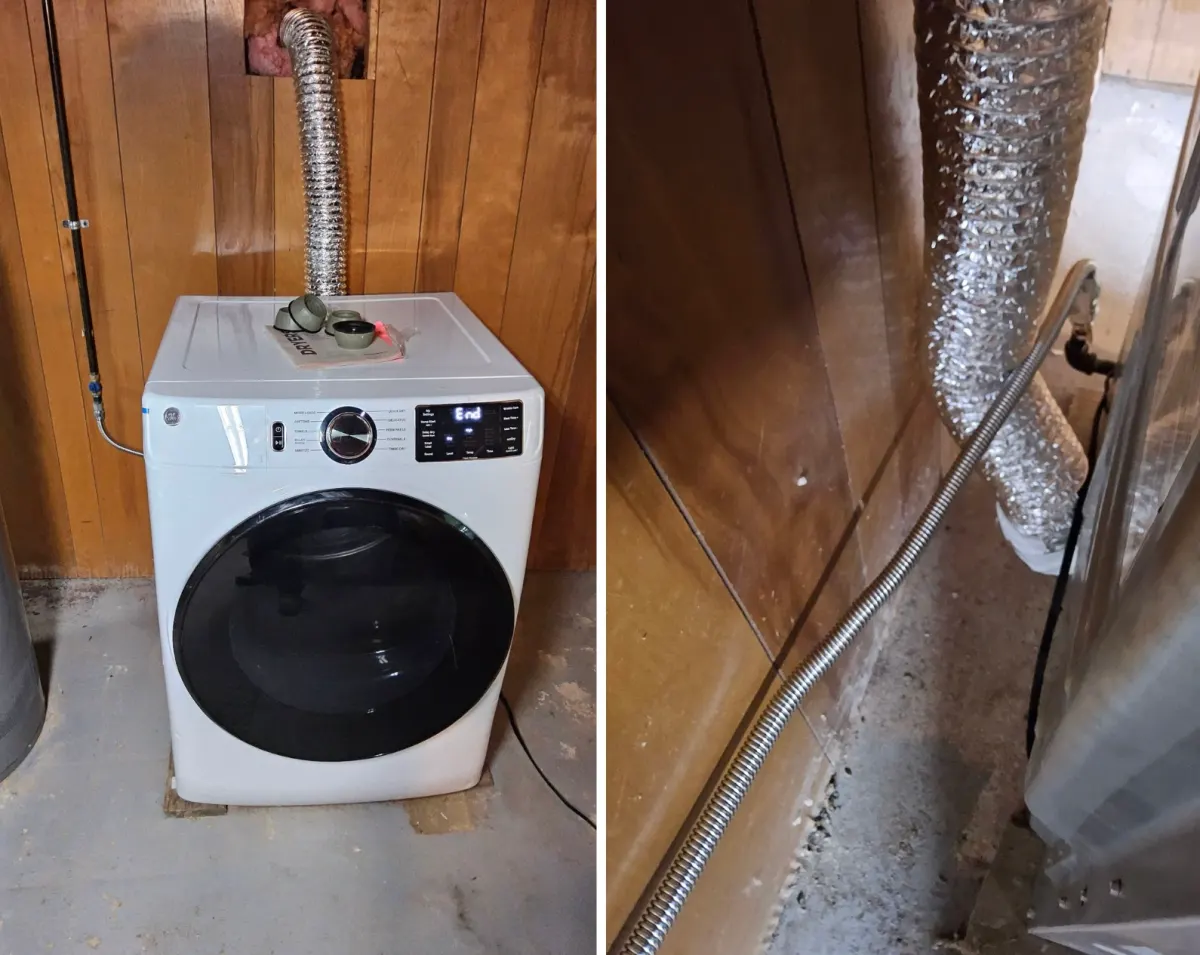
Gas dryers. A dryer needs confirmed capacity, a reachable shutoff and enough clearance that pushing it into place doesn't strain the connector. The exhaust duct and electrical outlet also shape the layout, even though they're separate work.
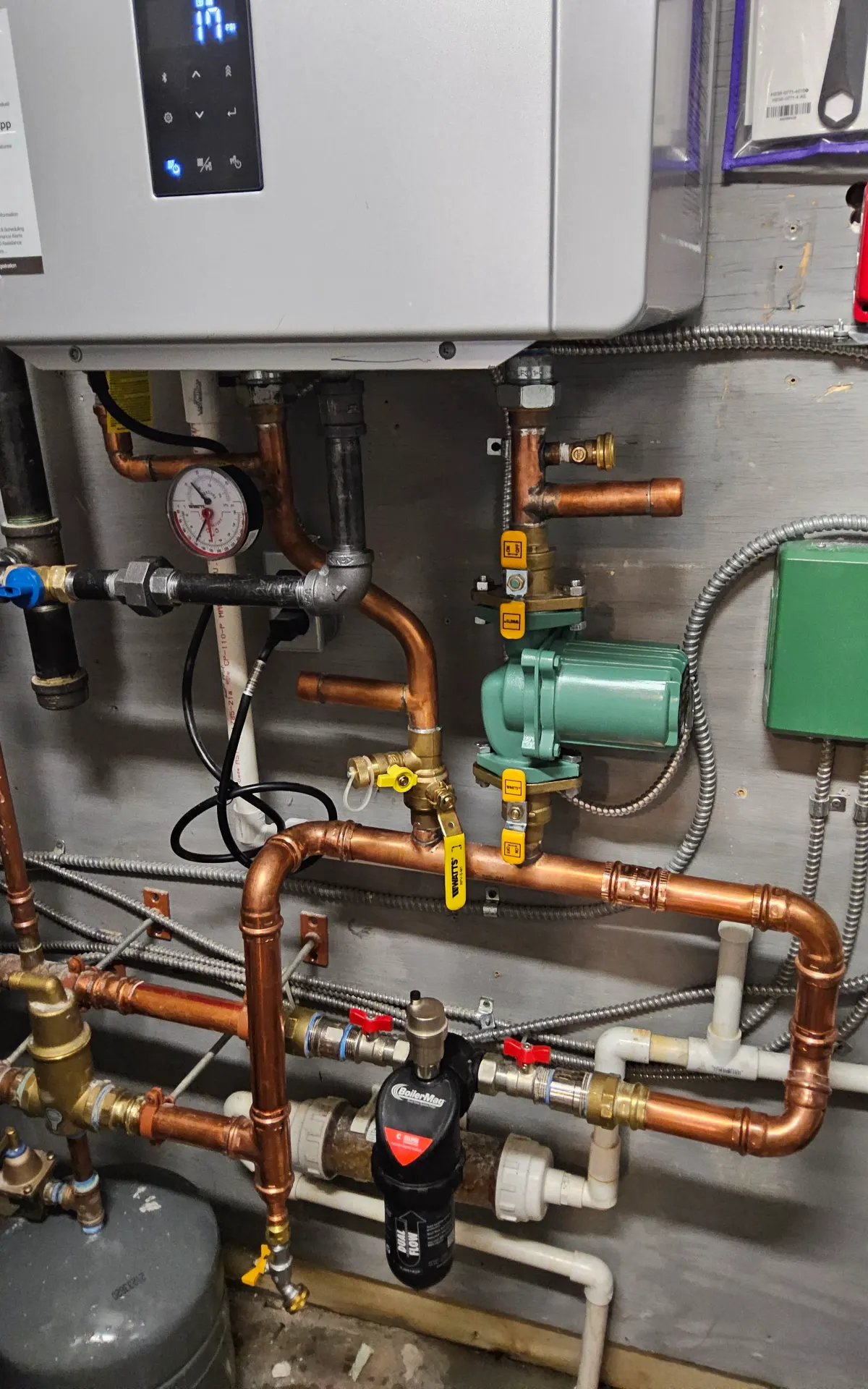
Water heaters and boilers. These combine the gas connection with water piping, venting, relief protection and clearances, so we evaluate them together. Chimney-vented, power-vented and direct-vent models need different scopes. Our gas water heater installation and venting guide explains the difference.
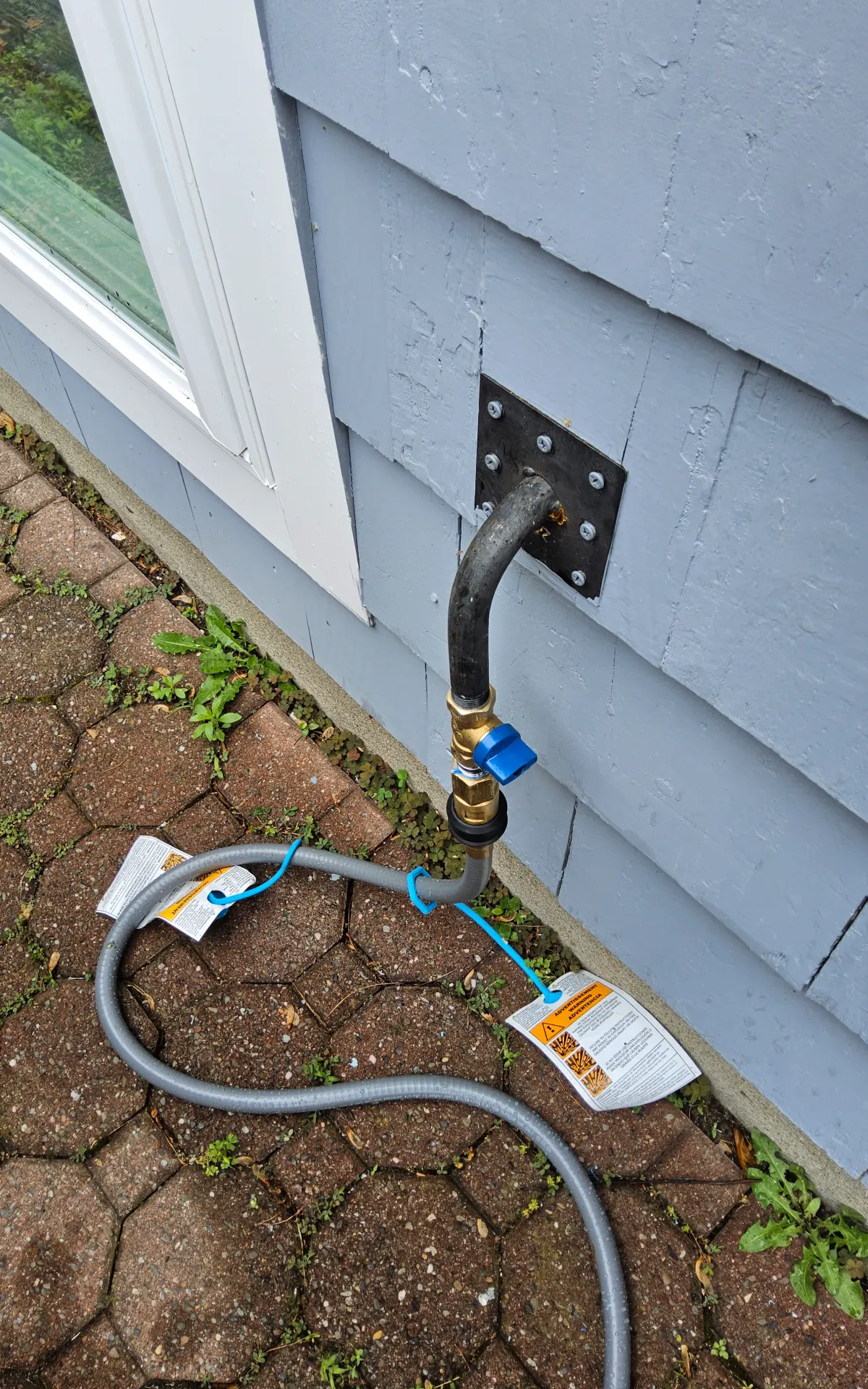
Fireplaces and outdoor appliances. Inserts, built-in grills, fire pits and patio heaters add routing, weather exposure, shutoff access and sometimes digging. We handle the properly sized gas line and connection, while a fireplace specialist, electrician or hardscape contractor handles their parts. Natural gas and propane use different pressures and appliance setups, so an appliance is never converted or a fitting substituted based on appearance. For a bigger remodel or outdoor project, plumbing system design settles the route before finishes go in.
Who does what
A gas appliance project can involve several trades. Our written scope covers the gas piping and connection, plus the permits, pressure testing and inspection that go with that work. Appliance delivery, cabinetry, electrical circuits, dryer ducts, fireplace framing and masonry stay with their own contractors unless the scope says otherwise. A delivery company may set a range in place without being licensed to connect it to gas, and that's why the boundary is written down. Our installation and upgrade planning service coordinates the sequence during a kitchen, laundry or mechanical-room project.
Permits and inspection
Massachusetts assigns fuel-gas piping work to licensed plumbers and gas fitters, and the local permit and inspection requirements depend on the work. We confirm the Dracut filing path before starting, and where a permit, pressure test or inspection is required, it's part of the written sequence. The appliance doesn't go into normal use until the required work and approvals are complete. If the gas utility has shut off service, nobody bypasses its process for turning it back on.
On installation day, we check that the delivered model matches the planned fuel and input, install or modify the piping, add an accessible shutoff where needed, make the connection, test it and coordinate the inspection. At handoff, you'll know what was installed, which permits and records belong with the house and what other trade work remains. You'll never be asked to adjust a regulator, loosen a fitting or relight equipment against its instructions.
Pricing and next steps
Price follows the actual scope: capacity, route, pipe size and material, access, shutoff and connector needs, permits, testing and inspection. A like-for-like range connection and a new buried line to an outdoor kitchen are different jobs. We price from verified conditions, not a delivery receipt or a photo, and you approve a flat-rate total with any fees before work begins.
Jeneral Plumbing is owner-operated by a Licensed Master Plumber (MA #9628831-PL-M) with 20+ years in the trade, including seven with a gas utility. In most cases, the licensed master plumber who evaluates your home is the one who performs the work. We're based in Westford, MA, and do gas work in the Massachusetts towns of our Middlesex & Worcester County service area, including Dracut. Our gas work is limited to Massachusetts. Gather the model number, fuel type, installation instructions and proposed location, then call (978) 392-7789. A regular-hours visit carries an $80 dispatch fee — the cost of the visit, waived when you hire us for the work. If you smell gas after an appliance is connected, leave and call 911 from outside first. Our gas line repair service takes over after the property is cleared.
Written by Jeneral Plumbing.
This article was drafted with AI writing tools and edited before publication. AI tools did not inspect any job or validate technical conclusions.
Last updated .