
If you smell gas or a carbon monoxide alarm goes off, leave the building now with everyone inside and call 911 from outside. Don't go back in until the fire department or gas utility says it's safe. Repair comes after that clearance, never instead of it.
This guide explains what happens from there: what responders handle, who owns which piping, and what a proper gas line repair looks like once the house is cleared. It's written for Andover homeowners, and the safety steps apply wherever you live.
Right now
- Get everyone out of the building without stopping to search for the source.
- Don't operate anything on the way out: switches, appliances, phones, windows, valves or flames.
- Once you're away from the building, call 911. Say whether you smelled gas, heard a carbon monoxide alarm or both, and whether anyone feels sick.
- Stay out until the fire department or gas utility says the property is safe.
Some steps feel helpful and aren't: going back in to find the smell, opening windows, turning a valve, using a handheld detector or soap solution, or tightening a fitting. Each one puts someone back in a dangerous atmosphere or disturbs what responders need to see. There is no do-it-yourself gas check inside a house that might have gas in it.
A gas smell and a CO alarm are different problems
Natural gas has no smell of its own. Suppliers add an odorant so a leak can be noticed, and a faint or on-and-off smell doesn't tell you where the leak is or how big it is, which is why the response is the same either way. Carbon monoxide is different. It's colorless and odorless, and fuel-burning equipment can produce it. The absence of a gas smell doesn't cancel a CO alarm. If anyone develops headache, dizziness or nausea and you suspect CO exposure, move outside and call 911, even without an alarm. Test and replace CO alarms as their manufacturer's instructions say. CPSC's CO safety guidance explains the response to an alarm.
After clearance, the two need different investigations. A gas leak may involve piping, a connection or an appliance. Responders and the appropriate qualified professional must identify the CO source; appliance combustion and venting are among the possibilities.
After clearance: who owns which pipe
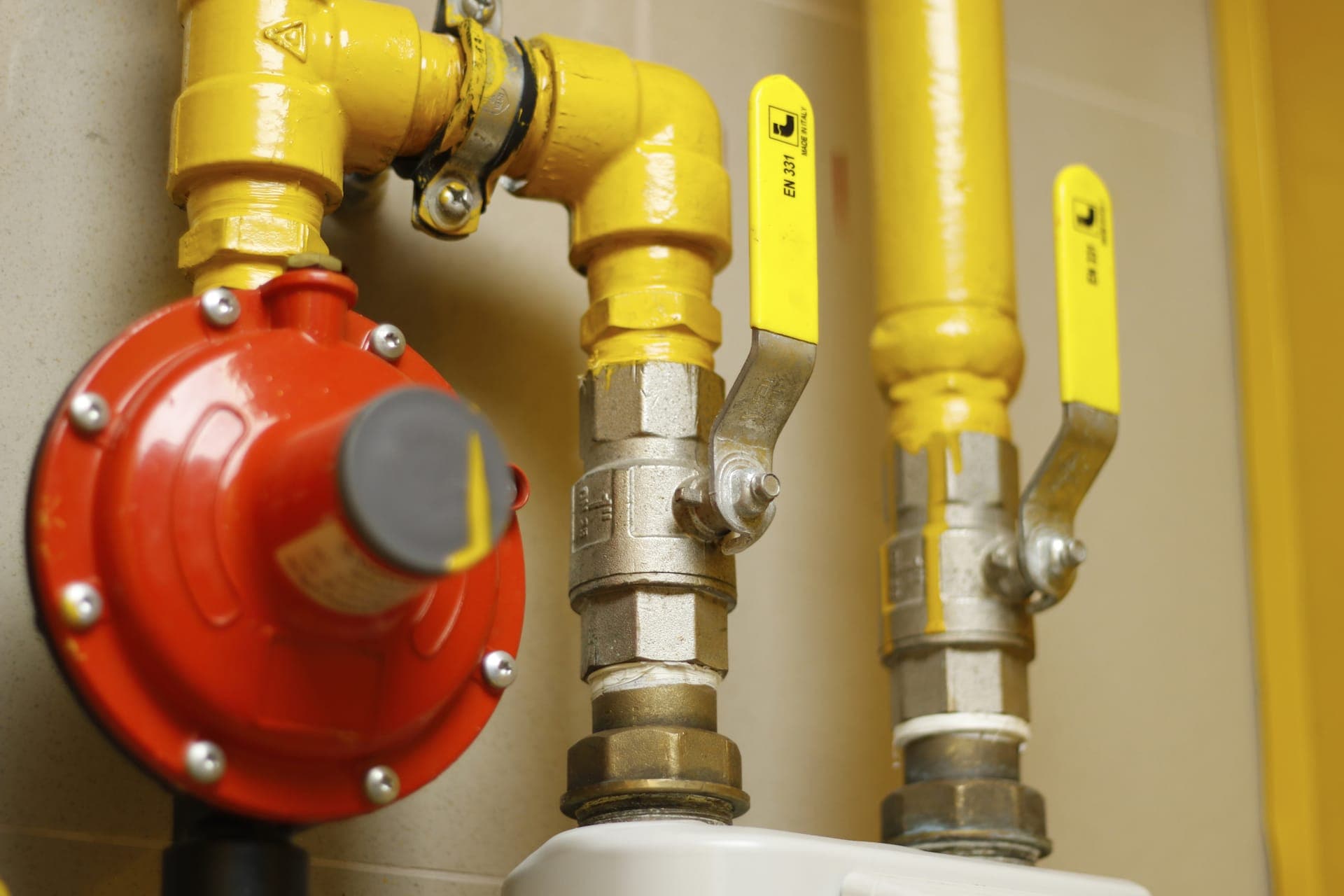
Once responders clear the property, the next question is ownership. The gas utility generally controls the main in the street, the service line to the house and the meter, and it makes the emergency shutoff and restoration decisions. Piping on the house side of the meter, including branches, shutoffs, fittings and appliance connections, is usually the homeowner's, and a licensed professional repairs it under the applicable permit. The utility confirms exactly where that line falls on your property.
Keep any paperwork the utility or fire department leaves. A shutoff tag or report may name the affected section or list conditions for restoring service, and it's where a repair starts.
What a gas line repair involves
A repair starts with the report, the shutoff status and the accessible piping, not with anyone recreating the smell or turning gas back on. Conditions found after clearance can include corrosion on threaded pipe, a fitting disturbed by other work, an unsupported branch, physical damage or a worn appliance connector. Those are categories, not a diagnosis of your home. The repair should match what the evidence shows: one bad fitting doesn't prove the rest of the system is sound, and it doesn't prove the whole system needs replacing.
Two steps belong only to licensed professionals. A pressure test is a permitted procedure with set equipment, pressure, duration and documentation. And a finished repair doesn't turn the gas back on by itself: inspection approval, the utility's release and relighting or recommissioning each appliance all have a responsible party, and the written scope should name each one. No one should remove a utility lock or relight equipment without that authority.
If an appliance itself has failed, its internal repair may belong to an appliance technician. For gas water heaters and boilers, our gas water heater service and boiler repair pages explain what we handle once a home is cleared.
Coverage, costs and when to call us
Jeneral Plumbing is owner-operated by a Licensed Master Plumber (MA #9628831-PL-M) with 20+ years in the trade, including seven with a gas utility. We're based in Westford, MA, serve homes within 20 miles across Middlesex & Worcester County and southern New Hampshire, and do gas work in Massachusetts only. Our service-area directory provides local coverage guidance, including neighboring Tewksbury and Wilmington. Wherever you live, your gas utility can tell you what it requires before service is restored.
After responders have cleared your home, have the report, the shutoff status and any inspection instructions ready. Call (978) 392-7789 with your address and the repair needed. Before booking, we'll confirm the address is within our 20-mile service area, whether the work fits our Massachusetts gas scope and our availability. Our gas line repair service page explains that scope in more detail. During regular hours, a visit carries an $80 dispatch fee — the cost of the visit, waived when you hire us for the work. Approved repairs are quoted at a flat rate before work begins. Off-hours, Sunday and holiday dispatch carries a separate $599 emergency callout fee, collected prior to dispatch; it is non-refundable and non-negotiable, covers the dispatch only and is never applied to repair work.
For an active gas smell or CO alarm, don't call us first. Leave the building and call 911 from outside.
Written by Jeneral Plumbing.
This article was drafted with AI writing tools and edited before publication. AI tools did not inspect any job or validate technical conclusions.
Last updated .