

Safety first: gas line work is never a DIY project. A gas leak can lead to fire, explosion, or carbon monoxide exposure, and Massachusetts law requires that any gas piping be installed, repaired, or altered by a licensed plumber or gas fitter. This post documents a real gas line fix we completed at a home in Lowell — and why gas line sizing and routing, the two steps a rushed installer is most likely to skip, decide whether a system stays safe as appliances are added over the years. It’s meant to show what proper diagnosis and repair look like, not to serve as instructions for homeowners.
Smell Gas? Do This First
Before the story, the sequence that matters more than anything else in it. If you smell gas — the rotten-egg odor, or hissing near an appliance or the meter — take these four steps, in this order:
- 1. Leave the building immediately with everyone in the home. Don’t stop to open windows, flip switches, use a phone indoors, light a flame, or look for the source.
- 2. Call 911 and your gas utility from outside, once you’re safely away from the building.
- 3. Stay out until the fire department or utility says the property is safe. A faded odor isn’t clearance — gas can move through a building.
- 4. Arrange licensed repair after clearance. Work on the customer-owned piping begins once the authorities have made the site safe — never in place of that call.
Massachusetts publishes the same sequence in its guidance for what to do if you smell gas. The Lowell job below started differently — with a home-inspection report, not an active odor — but when gas is in the air, the four steps above always come first.
The Call: A Suspected Gas Leak in Lowell
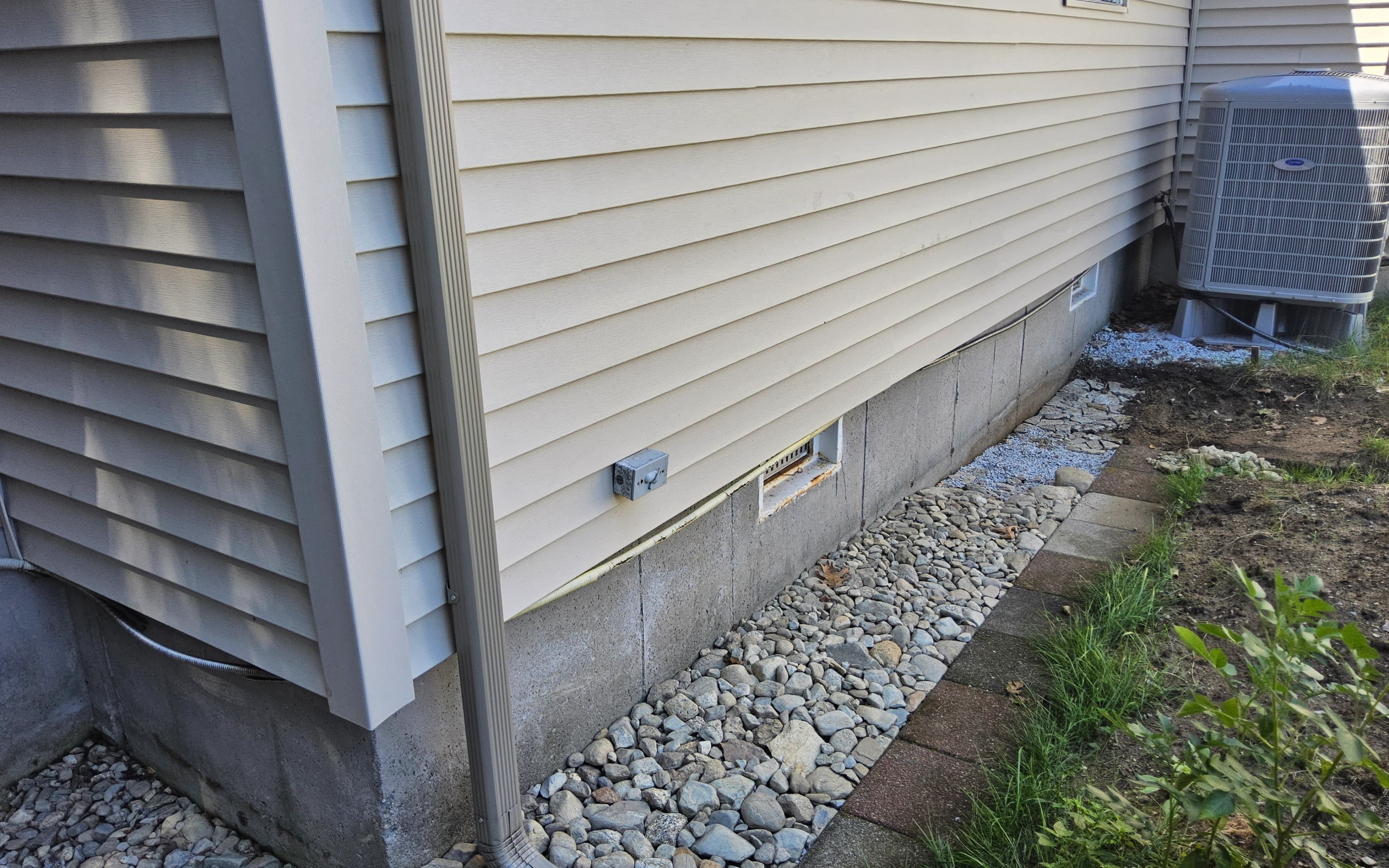
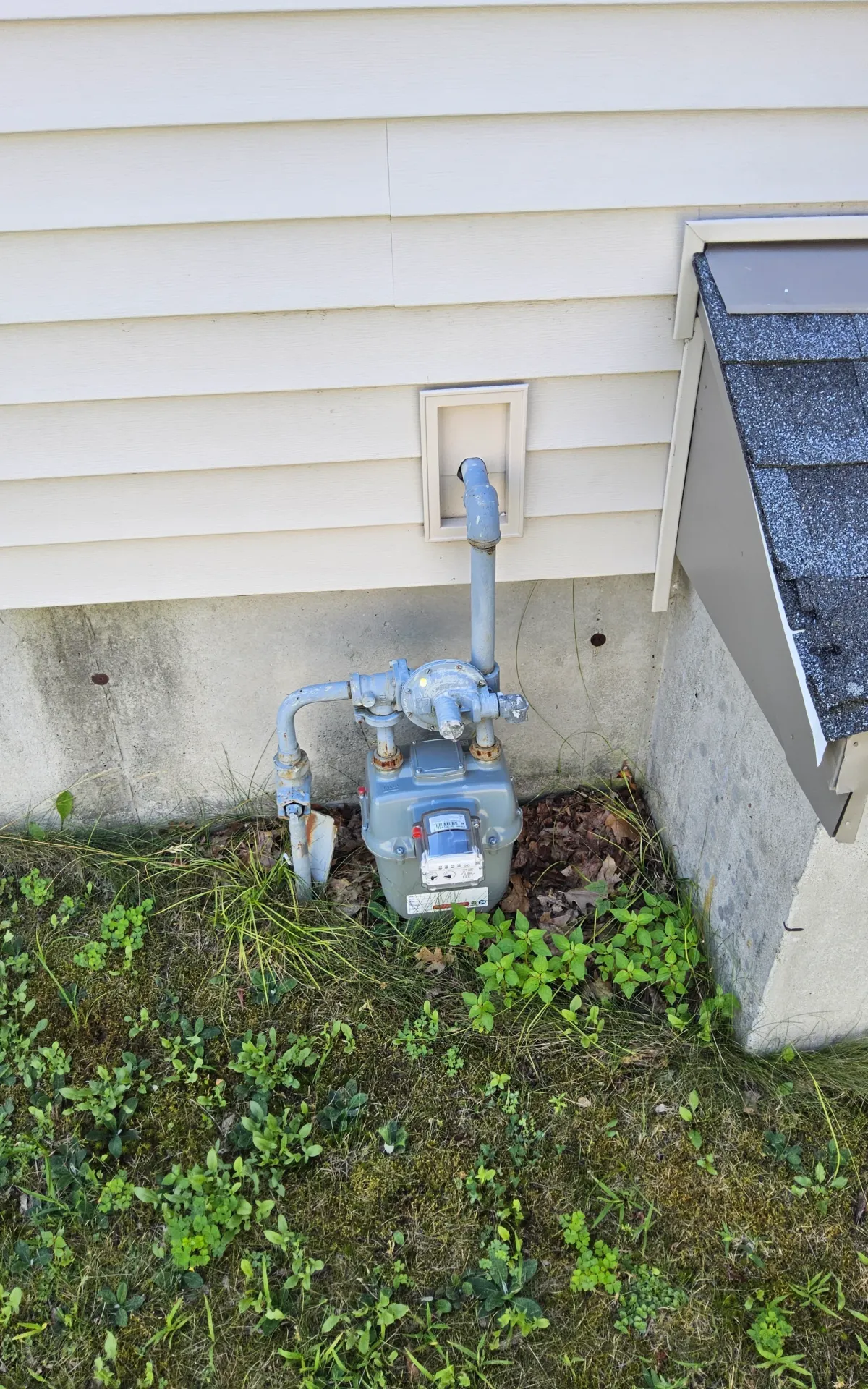
We were called out to a home in Lowell after the homeowners discovered a gas leak outside their house. A home inspector had already flagged the issue during a pre-purchase inspection, running a spray test on the exterior gas line and finding a leak point along the pipe that fed the outdoor fireplace. The report didn’t specify exactly where the leak was located along the run, so our first job was to trace the piping and figure out what we were dealing with.
This is a common scenario for us. Homes throughout Lowell, and in neighboring towns like Groton and Acton, often have gas piping installed decades ago — sometimes by contractors who took shortcuts that were technically “allowed” at the time but wouldn’t pass muster today. Working on these aging systems from our Westford, MA shop, Jeneral Plumbing sees the same pattern again and again: undocumented splits, outdated pipe types, and lines that were never sized for the appliances that came later.
What We Found: A 1990s-Era Workaround
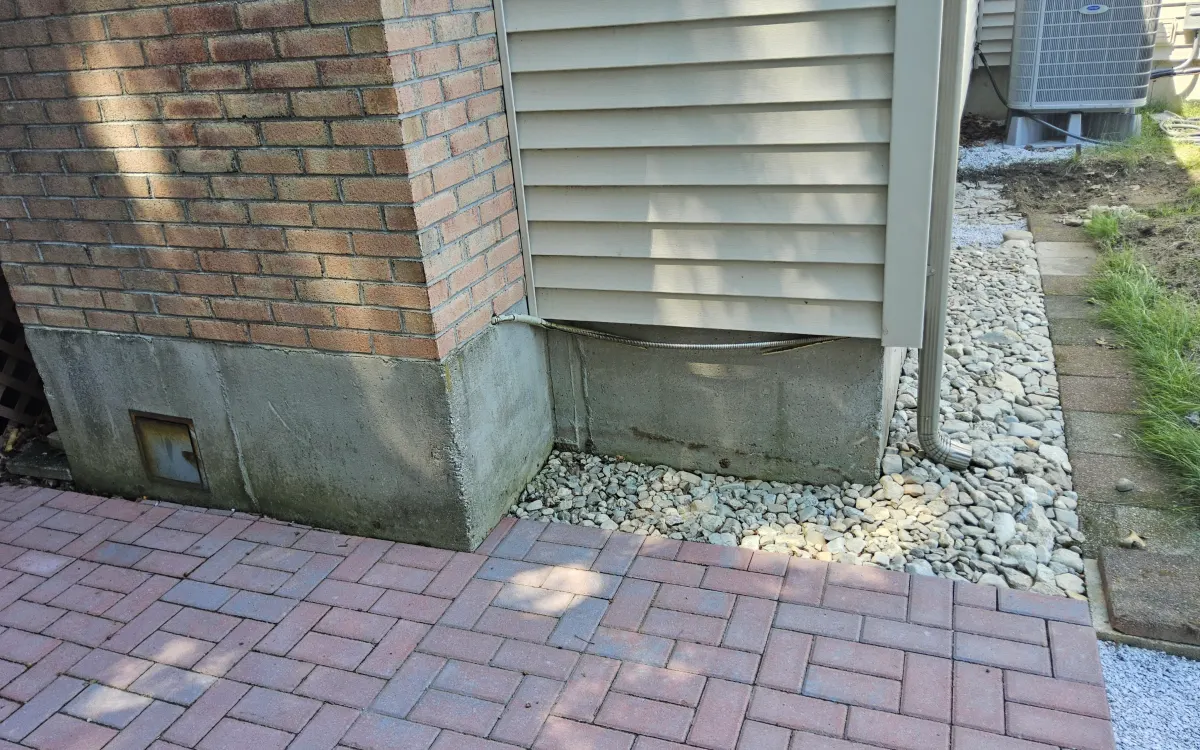
Once we got into the space where the piping ran, it became clear that whoever installed this system back in the 1990s had made some questionable choices. Rather than routing the gas line through the crawl space — an acceptable place to run approved, properly supported gas piping, contrary to what the homeowners had been told — the original installer used a different, faster piping method that required routing around the crawl space entirely.
To be clear: gas lines can run through crawl spaces, and they can even run outdoors and on rooftops in the elements, provided the material is approved for the location and installed to code. The idea that gas lines can’t pass through an uninsulated space isn’t accurate. The original installer chose a type of pipe that was quicker to install using an alternate route, and that decision is part of why this system ended up as complicated as it did.
We also found a T-fitting where the line had been split to feed the dryer on one side. When the leak was discovered, the homeowners had to shut off the valve — which meant losing their dryer — before we could get in, cap the leaking branch, and get the remaining line properly tested. That capped line is now sealed and confirmed leak-free, but the branch that had fed the outdoor fireplace remains out of service until it can be properly repaired.
Who Can Legally Work on Gas Lines in Massachusetts
Massachusetts assigns fuel-gas piping work to licensed plumbers and gas fitters. The permit is filed by the license holder, the installed work is pressure-tested, and an inspection follows before gas flows. There is no homeowner do-it-yourself lane for gas piping the way some trades allow — and that restriction is about combustion safety, not paperwork. The state’s consumer fact sheet on plumbers and gas fitters explains how to verify any contractor’s license before they touch fuel piping.
Jeneral Plumbing is owner-operated by a Licensed Master Plumber (MA #9628831-PL-M) with 20+ years in the trade, including seven with a gas utility. That utility experience shaped how this Lowell job ran: reading what the inspection report did and didn’t establish, respecting the boundary between the utility’s side of the meter and the customer-owned piping, and knowing what an inspector expects to see before a repaired line goes back into service. Our gas line repair service follows that same licensed sequence — diagnosis, written scope, pressure test, inspection — on every job.
Why Gas Line Sizing Is the Part Most Contractors Skip
Once we resolved the immediate leak concern, we moved into the part of the job that doesn’t get enough attention: properly sizing the gas line for everything it needs to serve. This home has a hybrid furnace — a combined heat pump and gas system — rated at 80,000 BTUs, plus a gas dryer, a gas stove, and a gas water heater all pulling from the same main line.
Before doing any gas line repair, or planning a new run for an appliance like an outdoor fireplace, a gas plumber needs to calculate the total BTU load of every appliance on the system and measure the distance each run travels from the meter. That load-and-route work is the heart of our gas line installation service, where sizing and route planning are confirmed before any pipe is cut. Skip that step, and you can end up with a line that’s undersized for the demand placed on it — which can cause pressure problems, appliance performance issues, or in worse cases, safety hazards down the road.
This is exactly the kind of detail that gets missed when a job is done quickly rather than correctly. In this case, tracing the main line from the exterior inlet, through the water heater connection, and out toward the stove and fireplace branch let us understand the full picture before recommending next steps — rather than patching the leak and moving on.
How Gas Line Sizing Is Calculated
Gas line sizing isn’t guesswork — it follows the sizing tables in the fuel gas code. In plain terms, four inputs drive the pipe size:
- Total connected load. Every appliance’s listed input, in BTUs per hour, added together. Typical residential inputs run roughly 30,000–35,000 BTU for a gas dryer, 50,000–65,000 for a range, 30,000–50,000 for a tank water heater, and 60,000–120,000 or more for a furnace or boiler — but the number that counts is the listed input on each appliance’s rating plate, not an estimate.
- Developed length. The distance gas travels from the meter to the farthest appliance, counting every bend and fitting along the route. Longer runs lose more pressure, so the same load can need a larger pipe over a longer distance.
- Operating pressure and meter capacity. The system’s delivery pressure and what the meter and regulator can supply cap everything downstream. A generator or tankless water heater added later can push a meter past its rating even when the piping looks generous.
- Material and route. Black iron, CSST, and copper each carry their own sizing charts and installation requirements, and the route — crawl space, outdoors, overhead — affects support, protection, and connection points.
In this Lowell home, that math had to account for the 80,000 BTU furnace, the dryer, the stove, and the water heater sharing one main line — plus the fireplace branch the homeowners want back in service. A pipe running near your project is not proof of available capacity. The calculation is.
Tracing the System: What We Found
Walking the piping in this Lowell home, we identified:
- The main gas inlet coming in from outside the house
- A connection feeding the water heater
- A branch running to the gas stove
- The T-fitting where the line split off to feed the dryer
- The leaking exterior line that ran out to the outdoor fireplace — now capped and confirmed leak-free
With the leak isolated and the immediate danger addressed, the path forward for restoring gas service to the fireplace involves properly re-running that line — ideally through the crawl space this time — sized correctly for the load, and tested to code before it’s put back into service.
When to Call a Gas Line Plumber
The right first call depends on what’s happening. If you smell gas or hear hissing near an appliance right now, that’s a 911-and-utility call, made from outside — see the four steps at the top of this post. If a leak was flagged during a home inspection like this homeowner’s, or an appliance isn’t performing the way it should, that’s a call to a licensed plumber: we can pressure test the system, trace the piping, and identify exactly where a leak is occurring — something a general inspection report often can’t pinpoint on its own.
We see this kind of aging, patchwork gas piping frequently in older homes throughout our service area. Homeowners considering a natural gas line replacement in Groton or Acton often come to us after a home inspection turns up similar surprises: outdated pipe types, undocumented splits, or lines that were never sized for the appliances eventually added to them. Our full guide to gas line installation and repair in Massachusetts walks through how to tell whether your situation is a repair matter or a planned installation project — and what the permit path looks like either way.
And when the urgent problem isn’t gas at all — a burst pipe, water through a ceiling, a failed water heater in a triple-decker — our emergency plumber in Lowell page covers how we handle urgent plumbing calls in the city’s mill-era housing stock.
Key Takeaways
- If you smell gas: leave the building first, then call 911 and your gas utility from outside. Everything else waits for clearance.
- Gas lines can run through crawl spaces and even outdoors — the idea that they can’t is a myth, as long as the material is approved for the location and installed to code.
- A leak on one branch of a gas system can force a shutoff that knocks out service to unrelated appliances, like this home’s dryer.
- Proper gas line sizing requires calculating the total BTU load of every connected appliance — furnace, dryer, stove, water heater, and any additions like an outdoor fireplace — plus the developed length each run travels from the meter.
- Home inspection spray tests can identify that a leak exists but often don’t pinpoint the exact location — that requires a licensed plumber tracing the system directly.
- Capping a leaking branch is a make-safe step, not a permanent repair — the fireplace line in this home still needs a proper re-run before it carries gas again.
- In Massachusetts, only licensed plumbers and gas fitters can install, repair, or alter gas piping — with a permit, a pressure test, and an inspection.
Frequently Asked Questions
Can a gas line run through a crawl space?
Yes. Gas lines can be routed through crawl spaces, and even run outdoors or on rooftops, when the piping material is approved for the location and properly supported. There’s no code requirement that a crawl space be insulated or conditioned for gas piping to pass through it. In the Lowell home above, the crawl space was the straightforward route the original installer avoided — and re-running the fireplace line through it, sized for the load, is the recommended path forward.
What should I do if a home inspection finds a gas leak?
Treat it as real, but keep the sequence straight. If you smell gas at the property, leave first and call 911 and the gas utility from outside — an active odor is an emergency, whatever the report says. If there’s no odor, keep the affected valve off, don’t relight anything, and schedule a licensed evaluation: an inspector’s spray test can establish that a leak exists, but it usually can’t pinpoint the location or tell you what the repair involves. That’s how this Lowell job unfolded — the report raised the flag, and licensed tracing and testing did the rest.
How much does gas line repair cost?
There’s no honest flat number, because the scope drives the price: the affected section, the pipe material, access, permit and inspection steps, pressure testing, and any utility coordination all move it. A damaged accessible fitting and a corroded concealed run are both gas line repair, and they are not the same job. What we can state plainly is how the visit works: for a regular-hours assessment there’s an $80 dispatch fee — the cost of the visit, waived when you hire us for the work. You see a written scope before you authorize anything; we don’t price gas work from a phone description.
Who should I call for a suspected gas leak?
If the leak is active — you can smell it — the first calls are 911 and your gas utility, from outside, not a contractor. After clearance, or for a leak that’s been flagged but isn’t an active odor, look for a licensed plumber or gas fitter with experience specifically in gas line repair and installation, not general plumbing alone. Massachusetts lets you verify any license through the state’s licensing boards. Ask whether they’ll trace the entire system and calculate BTU load, rather than only patching the visible leak point.
What is involved in a natural gas line replacement in Groton or Acton?
The process starts the same way it did in this Lowell home: tracing the existing piping, identifying every appliance drawing from the line, calculating total BTU demand, and sizing new piping to handle that load safely over the required distance. From there the work follows the licensed path — permit, installation, a documented pressure test, and inspection before gas flows. The permit steps are confirmed town by town, since the process in Groton can differ from Acton or Lowell.
Why does gas line sizing matter so much?
An undersized line can’t deliver adequate gas pressure to every appliance running at once. As homes add appliances over the years — a gas dryer, a gas stove, an outdoor fireplace — the original line may no longer be adequate, which is why a full load calculation matters every time something new is added. Sizing follows the listed BTU input of every connected appliance and the developed length of each run, not a guess based on what pipe happens to be nearby.
Is a capped gas line safe to leave as-is?
A properly capped and pressure-tested line is safe, but it means that branch is out of service. In this home, the fireplace line remains capped until it can be properly re-run and reconnected. Leaving a cap in place indefinitely is a reasonable choice when an appliance is retired; when you want the appliance back, the branch is re-run, sized for the load, tested, and inspected before it carries gas again.
If you’re in Lowell, Chelmsford, Tyngsborough, Dracut, Groton, Acton, or elsewhere in our 26-town service area across Middlesex & Worcester County and southern New Hampshire, and a gas leak has been flagged at your home, an appliance isn’t performing the way it should, or you’re planning a gas line installation for a new appliance, don’t take chances. Call Jeneral Plumbing at (978) 392-7789 for a licensed evaluation from our Westford, MA base. This post is for informational purposes only and is not a substitute for a professional, in-person evaluation of your home’s gas system.
Written by Kris Record, Licensed Master Plumber (MA #9628831-PL-M).
This article was drafted with AI writing tools and edited before publication. AI tools did not inspect any job or validate technical conclusions.
Last updated .