
If you've replaced an instant hot water dispenser once and the new one is already failing the same way, the unit may not be the whole problem. A call in Westford, MA showed why it's worth looking at the water before buying a third.
The Westford call
We were booked to install an instant hot water dispenser and a refrigerator water line. The homeowners told us this wasn't their first dispenser. The original had burned out, and the replacement they'd installed afterward had failed the same way. When they switched on the newest unit, it tripped the circuit breaker every time.
A breaker that trips each time a small appliance turns on usually points to a fault inside the appliance, though a faulty breaker or an overloaded circuit can do it too, so the circuit is worth checking as well. Either way, resetting the breaker again won't fix it. Our technician's read on the visit was a seized internal pump drawing extra current. The unit wasn't taken apart to confirm that, and designs vary by model; a failed heating element or another internal fault could cause the same trips. What stood out was the pattern. Two units had failed the same way in the same kitchen, the house had no water treatment, and the homeowners said a similar dispenser with a built-in filter at their previous home had run for years without trouble.
That made the water a likely contributor, not a proven cause. On the same visit, we connected the refrigerator water line and confirmed it ran without leaks before we left.
Dispenser, point-of-use heater or tankless?
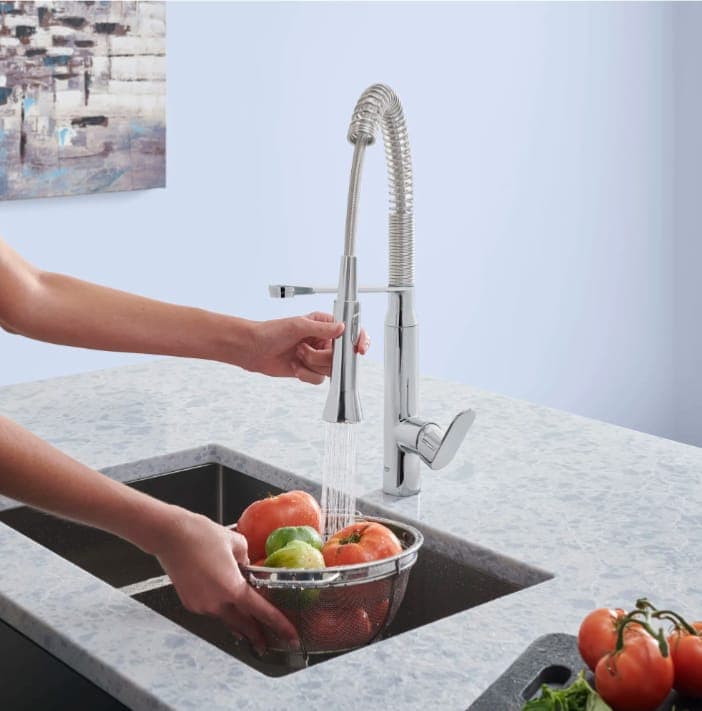
"Instant hot water heater" can mean three different things. A hot water dispenser, like the one in this kitchen, keeps a small heated tank ready at its own faucet for tea and cooking, and it usually plugs into an outlet in the sink cabinet. A point-of-use heater sits under a sink and feeds that sink's regular hot tap. A whole-house tankless water heater heats water as it flows, for every shower and tap in the house. Hard water can affect all three, but the equipment, costs and service needs differ. This article is about the dispenser; if you're weighing a whole-house unit, our tankless water heater service covers that.
How hard water wears on small heating appliances
Hard water carries dissolved calcium and magnesium. Heat drives some of those minerals out of the water as scale, which can coat heating parts and narrow small passages. A dispenser holds its water hot around the clock, and scale forms faster in hotter water, so a hard-water kitchen gives it a steady supply of minerals to deposit.
Hardness varies by supply and by address, on private wells and town water alike. We've tested a home on town water at nine grains per gallon, which falls in the hard range. Only a test at your tap shows where your home stands.
Test before you buy another unit
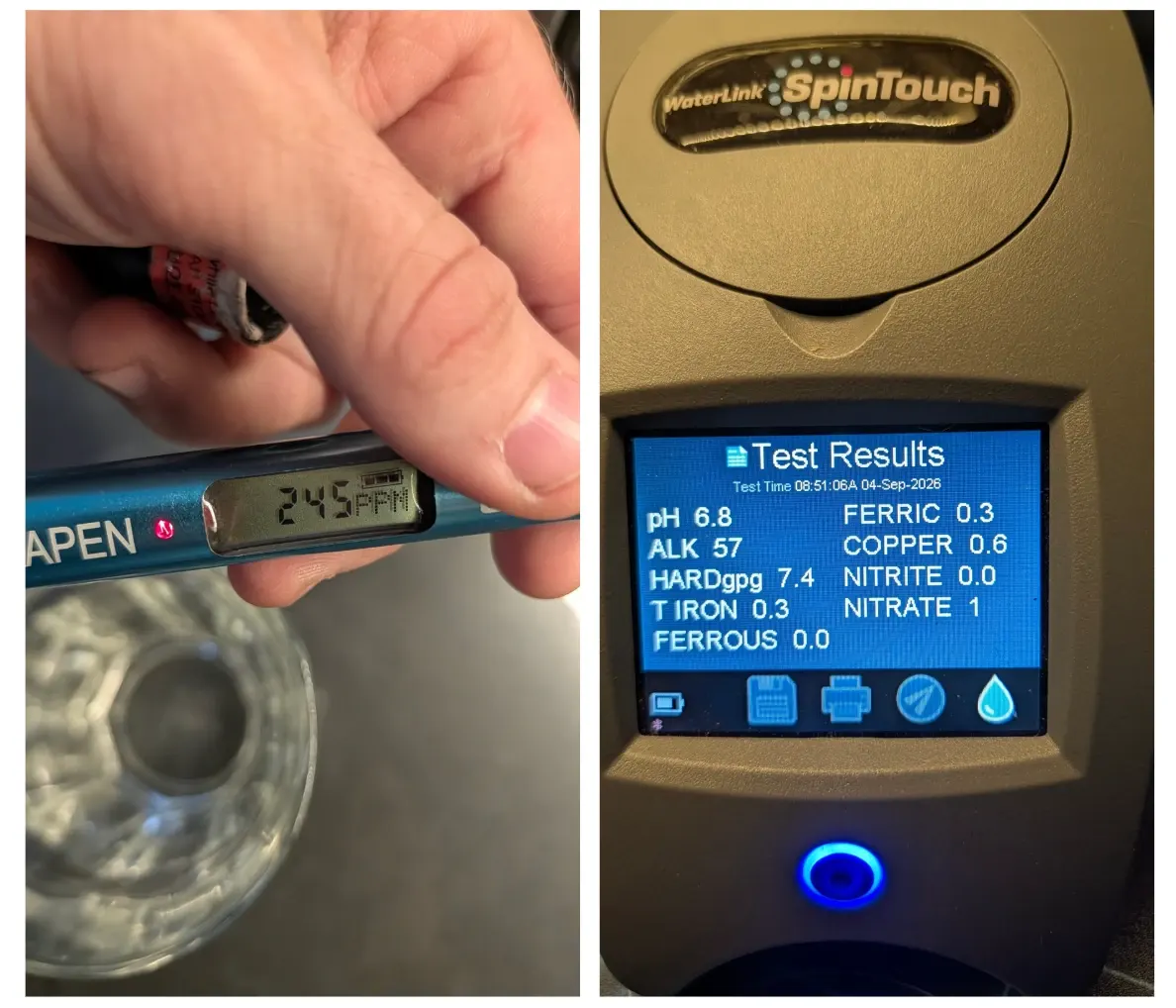
Before choosing a repair or another dispenser, test the water. A hardness reading tells you whether scale is a realistic suspect, and a broader test can show chlorine and other factors that affect which filter or treatment makes sense. If we're already at your home, testing the water is free; we don't make a separate trip for a free test. Our water testing service explains how testing works.
Instant water heater repair or replacement?
If your instant water heater is a small dispenser like this one, repair depends on whether the manufacturer sells the failed part and whether the unit is worth the labor. On this call, our technician checked for available repair parts before recommending another installation. When parts aren't available, or a unit has already failed more than once for the same reason, replacement is usually the practical choice. Replacing it without dealing with the water, though, can set up a repeat.
Two safety points apply either way. Don't keep resetting a breaker that trips each time the unit turns on, and don't open or rewire the dispenser yourself. It puts a water supply, a heating element and household current together in a cabinet under the sink.
Ways to protect the next dispenser
Three approaches came up with these homeowners, each aimed at the minerals reaching the dispenser:
- A dispenser model with a built-in filter. Check what the cartridge is certified to reduce. Many filters target taste, odor and chlorine, which isn't the same as controlling scale.
- A separate cartridge ahead of the dispenser. Only certain cartridges are designed to limit scale. Check the product's listed claims and the dispenser maker's instructions before adding one.
- Reverse osmosis. An RO system lowers dissolved minerals, and some dispensers can take RO water. Confirm your model allows it before connecting the two, and expect the setup may need its own faucet arrangement.
For hardness throughout the house, a water softener treats the water before it reaches any fixture. Whichever route you choose, base it on a test result rather than a guess. The NSF certification directory lets you check a specific product's claims, and our water treatment service covers softeners and filtration.
Getting help in Westford
We fix the cause, not just the symptoms. If a dispenser, faucet or water heater keeps failing sooner than it should, we look at the supply line, the water and the appliance together rather than swapping parts. Jeneral Plumbing is based in Westford, MA, and serves homes within 20 miles across Middlesex & Worcester County; we confirm your address and the work when you call. During regular hours, a visit carries an $80 dispatch fee — the cost of the visit, waived when you hire us for the work. Call (978) 392-7789 to set up a visit, or see our water heating options if a larger heater is part of the picture.
Written by Jeneral Plumbing.
This article was drafted with AI writing tools and edited before publication. AI tools did not inspect any job or validate technical conclusions.
Last updated .