

If you get your drinking water from a private well in Massachusetts, PFAS contamination is one of the most serious — and most expensive — water quality problems a homeowner can face. Unlike homes on municipal water, well owners are entirely responsible for testing, treating, and paying for their own water safety. Here's what one recent consultation revealed about just how costly that can get, and what options exist.
What PFAS Testing Can Show
PFAS (per- and polyfluoroalkyl substances) are a group of man-made chemicals that have turned up in groundwater and private wells in parts of Massachusetts. In the case discussed here, routine water testing on a private well came back with a lab report showing very high PFAS levels — well beyond what's considered safe. Regular testing is really the only way a well owner finds out there's a problem, since PFAS has no taste, smell, or color that would otherwise tip you off.
If you're on a private well and haven't tested recently, that's the first and most important step before any treatment decision. Treatment should always follow testing — you need lab results to know what you're dealing with and how to size a solution.
Why Treating PFAS Is So Expensive
Once PFAS is confirmed in a well, the treatment options that were discussed came with a real sticker shock. One approach involved a cartridge-style filtration system — the Lancaster Pioneer filter — which requires periodic cartridge swaps. As of 2026, replacement cartridges for that system were running in the hundreds of dollars.
Another system, offered through a different filtration company, required changing out the filtration media every two to three months, at a cost of roughly $900 to $1,000 each time it was swapped. For a homeowner facing contaminated well water, there often isn't a simple, affordable fix — ongoing media or cartridge replacement adds up quickly, and that's before accounting for the system itself.
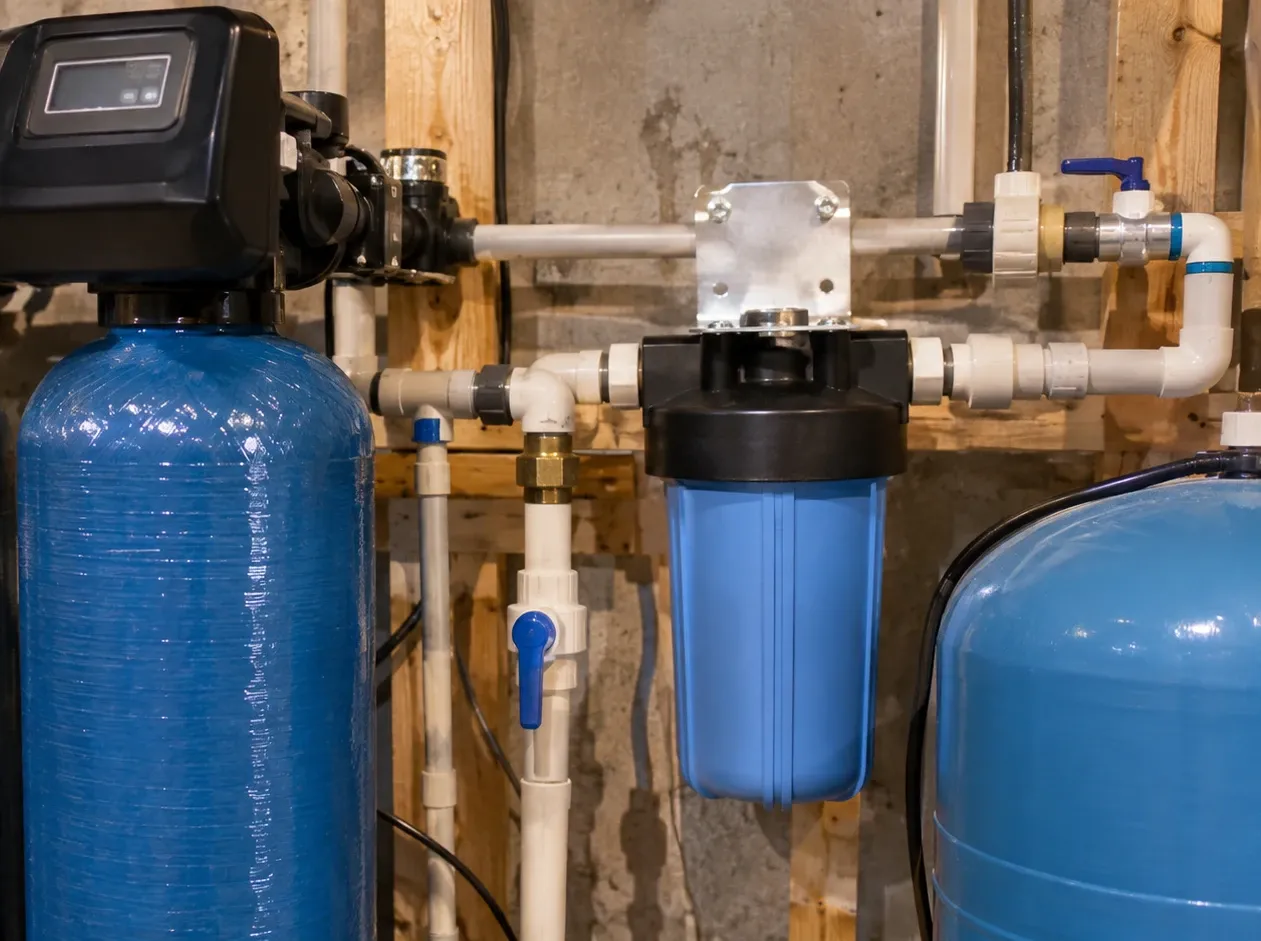
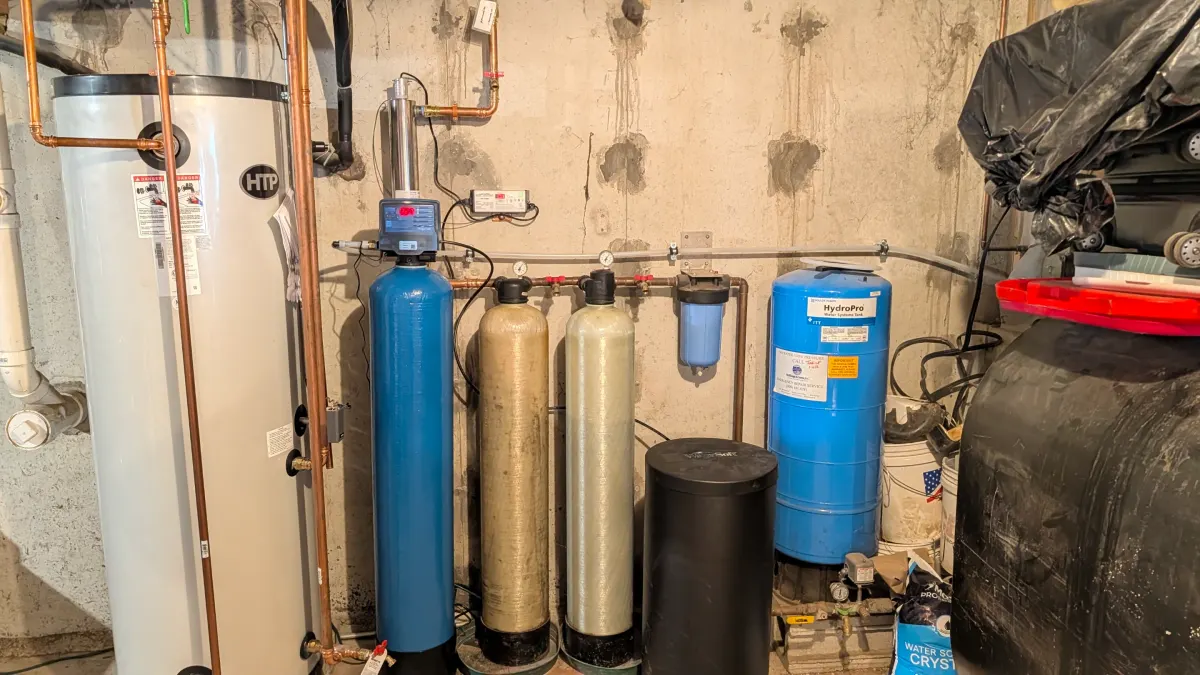
The water treatment system is designed to improve overall water quality and help protect household plumbing and equipment. The water softener helps reduce hardness minerals that contribute to scale buildup, while the carbon filter can reduce certain tastes, odors, and impurities depending on the filter's certified capabilities. The UV system provides additional microbial treatment when properly sized and maintained. Actual treatment performance depends on the equipment specifications and water test results.
Help for Well Owners: State Assistance
The encouraging part of this conversation was that the state of Massachusetts may step in to help in cases where PFAS levels are significantly elevated. Homeowners on private wells with high PFAS readings should look into state assistance programs rather than assuming they have to shoulder the entire cost themselves. If you're on municipal water, you are far less likely to encounter PFAS at these levels, since municipalities are investing heavily in treating it at the source — though even public water systems can't catch everything.
If you're on a private well and haven't had your water tested, or you've gotten a concerning lab result, talk to a water treatment professional about your specific results before buying any system. The right system — and the ongoing cost of running it — depends entirely on what's actually in your water.
Frequently Asked Questions
Is PFAS only a concern for well water?
Homes on municipal water are much less likely to have significant PFAS exposure because towns and cities are actively investing in treatment at the water supply level. Private well owners don't have that safety net and are responsible for their own testing and treatment.
This post is for informational purposes only and is not a substitute for a professional water test or an on-site evaluation. If you're concerned about PFAS or other contaminants in your well water, we will coordinate with laboratory professional about testing and system options sized to your actual results.
If you're on a private well in our service area and want help understanding your water treatment options, contact Jeneral Plumbing at (978) 392-7789.
Written by Sierra Sorongon.
This article was drafted with AI writing tools and edited before publication. AI tools did not inspect any job or validate technical conclusions.
Last updated .