

If you're searching for hvac companies near me because you spotted an unexplained puddle near your furnace or air handler, you're not alone — and it's worth taking seriously. During a routine yearly maintenance visit at a home in Westford, our technician found exactly that: a soaked floor and a faint smell of mold near the unit. What looked like a minor mystery turned out to be a preventable install shortcut that had been quietly leaking for who knows how long.
Not a DIY Fix: Why This Requires a Licensed Professional
Before we get into what we found, an important safety note. Diagnosing water damage around a furnace or air handling coil isn't a project for a homeowner to tackle solo. These systems involve electrical components, condensate lines, and in many homes, connections to gas-fired equipment. Standing water near any of that can create shock hazards, and disturbed mold growth can affect indoor air quality. Massachusetts also requires HVAC and plumbing work to be performed by a licensed professional. If you notice moisture, unusual smells, or your system isn't cooling or heating evenly, the safest move is to call a professional rather than start pulling covers off the unit yourself.
What Our Technician Found During Routine Maintenance
This visit started as standard yearly maintenance — the kind of hvac servicing that's supposed to catch small issues before they become big ones. Instead, the technician walked in to a visibly wet floor and the smell of mold, which is never a good sign.
The first suspect was the condensation pump. Our technician ran a quick test, pouring water into the pump to see if it would kick on. It did — the pump was working fine. That ruled out the most obvious cause and meant something else was going on.
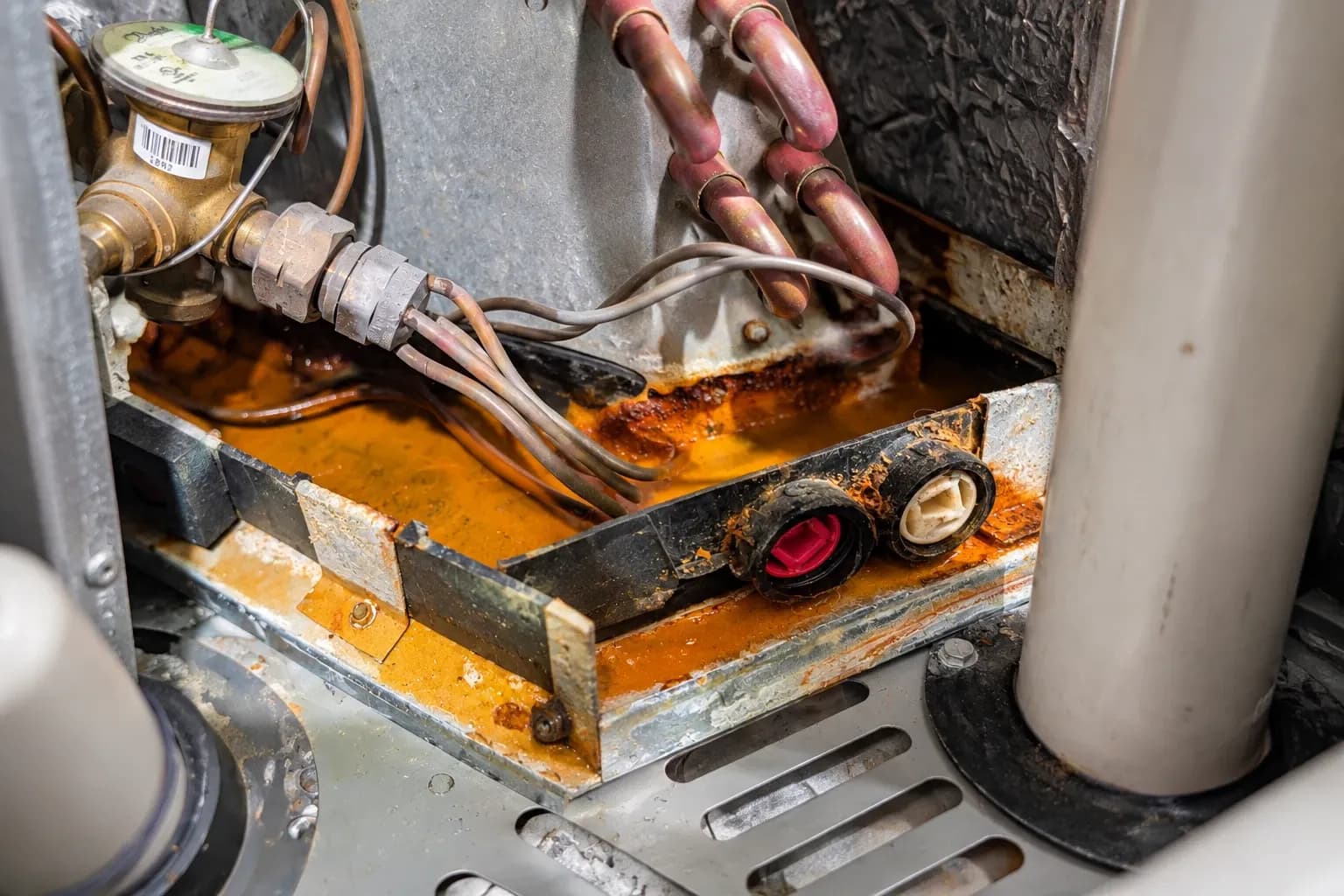
Next, the technician pulled the coil covering off the unit — which was taped shut with duct tape — to get a look at the actual coil. That's where things got clearer: the coil area was full of water, and the drain was blocked altogether. A blocked condensate drain will absolutely cause water to back up and overflow, so that was one real issue solved.
But there was a second problem hiding underneath. When the technician looked closer at the coil assembly, it became clear that the factory-installed plugs — three of them inside the condensing coil — had never been sealed when the unit was originally installed. No sealant, nothing. Just left to slowly drip. That's the kind of shortcut that doesn't show up as a dramatic leak on day one; it shows up months or years later as a soaked subfloor and a mold smell, which is exactly what this homeowner experienced.
The Repair: Sealing What Should Have Been Sealed From the Start
Once the cause was identified, the fix itself was straightforward for a trained technician. The plugs were pulled, wrapped with Teflon tape, and reinstalled. The coil cover was reassembled, along with the tape and seals around the ductwork, since a loose or poorly sealed cover can cause pressure loss and keep the system from heating and cooling properly.
The homeowner in this case had already noticed something was off — specifically that the air conditioning on the first floor wasn't performing the way it should, while the basement and second floor were fine. That's a helpful clue for any heating and cooling contractor diagnosing airflow or performance issues, since uneven comfort between floors often points to something local to one zone or one section of ductwork rather than the whole system.
A Second Issue Waiting for a Closer Look
While wrapping up, the technician noticed something else worth flagging: behind the fan, a foam gasket appeared to be breaking down and showing signs of moisture. It wasn't an emergency, and the homeowner didn't need to rush into repairs before winter arrives, but it was the kind of thing worth having a second set of eyes on. In cases like this, the plan was to bring in another technician to double-check the diagnosis before recommending any additional work — a good practice for any hvac servicing near me search, honestly. You want a company willing to say "let's confirm before we do work you may not need," not one that upsells on a hunch.
Why Factory Plugs and Seals Matter More Than You'd Think
It's easy to assume that if a system came from the factory, every seal and fitting was checked before it left the shop floor. In reality, install shortcuts happen — sometimes a five-minute step gets skipped, and nobody notices until a homeowner is standing on wet carpet wondering why their basement smells musty. This is exactly why annual maintenance matters. A trained eye catches slow leaks, blocked drains, and degrading gaskets before they turn into bigger repairs. If your system is overdue for a look, our heating system services cover exactly this kind of inspection and repair.
We see similar issues across the region — homeowners in Chelmsford and Littleton have called with the same "wet floor near the furnace" complaint, and the root cause is often the same story: a condensate line blockage, a failed seal, or both.
Getting Ready for the Season Ahead
With the air conditioning side of the system now sealed and running, the homeowner had some breathing room — there was no rush to address the gasket issue immediately, since it wasn't affecting anything urgent yet. But with heating season approaching, that's exactly the window to get remaining issues resolved before the cold sets in. If you're dealing with a furnace, boiler, or combi system that hasn't been serviced recently, now is the time, before demand — and outdoor temperatures — make scheduling tighter.
If your home relies on a water heater as well, it's worth having that checked in the same visit. Our team also handles water heating service for homes across the area, which is a smart pairing with fall HVAC maintenance since both systems tend to show wear at the same time of year.
Key Takeaways
A wet floor and musty smell near your furnace or air handler is a sign to call a licensed technician — not a DIY project.
Blocked condensate drains and unsealed factory coil plugs are both common, preventable causes of hidden water damage.
Uneven comfort between floors (like AC working upstairs but not down) can point to a localized issue rather than a full system failure.
Foam gaskets and seals degrade over time and should be inspected during routine maintenance, especially before winter.
Annual maintenance is the best way to catch small install shortcuts before they become bigger, messier repairs.
Frequently Asked Questions
What are the best HVAC companies near me for catching problems like this?
Look for a heating and cooling contractor that actually opens up the unit during maintenance visits rather than doing a quick visual check. In this case, pulling the coil cover and testing the condensation pump were what revealed the real problem.
How do I find top HVAC companies near me for annual maintenance?
Ask whether they check condensate drains, coil seals, and gaskets as part of a standard visit — not just filters and thermostats. A thorough technician should be willing to explain exactly what they're checking and why.
Is a water heating service near me relevant to this kind of HVAC issue?
Often, yes. Water heaters and HVAC systems share mechanical rooms and maintenance schedules in many homes, so it's efficient to have both checked in the same visit, especially heading into fall.
Can unsealed coil plugs really cause mold?
Yes. A slow, steady drip from an unsealed plug can soak flooring and subfloor materials over time, creating the damp conditions mold needs to grow, even without a dramatic, obvious leak.
Do I need to fix a gasket issue before winter?
Not necessarily right away. In this case, the technician noted it wasn't urgent, but recommended a second inspection to confirm before scheduling repairs.
Call Jeneral Plumbing Before the Cold Sets In
If you're in Westford, or nearby in Chelmsford or Littleton, and you've noticed water where it shouldn't be, uneven heating or cooling, or you're just due for seasonal maintenance, our team is ready to help. We answer emergency calls 24/7. Regular hours are $80; off-hours, Sunday, and holiday dispatch is $599. "$80 dispatch fee — the cost of the visit, waived when you hire us for the work." Call Jeneral Plumbing at (978) 392-7789 to get your system checked before winter arrives.
This post is for informational purposes only and does not substitute for an in-person inspection by a licensed professional. HVAC and plumbing repairs should always be performed by a qualified, licensed technician.
Written by Sierra Sorongon.
This article was drafted with AI writing tools from Jeneral Plumbing job notes and source materials, then edited before publication. AI tools did not inspect the job or validate technical conclusions.
Last updated .