

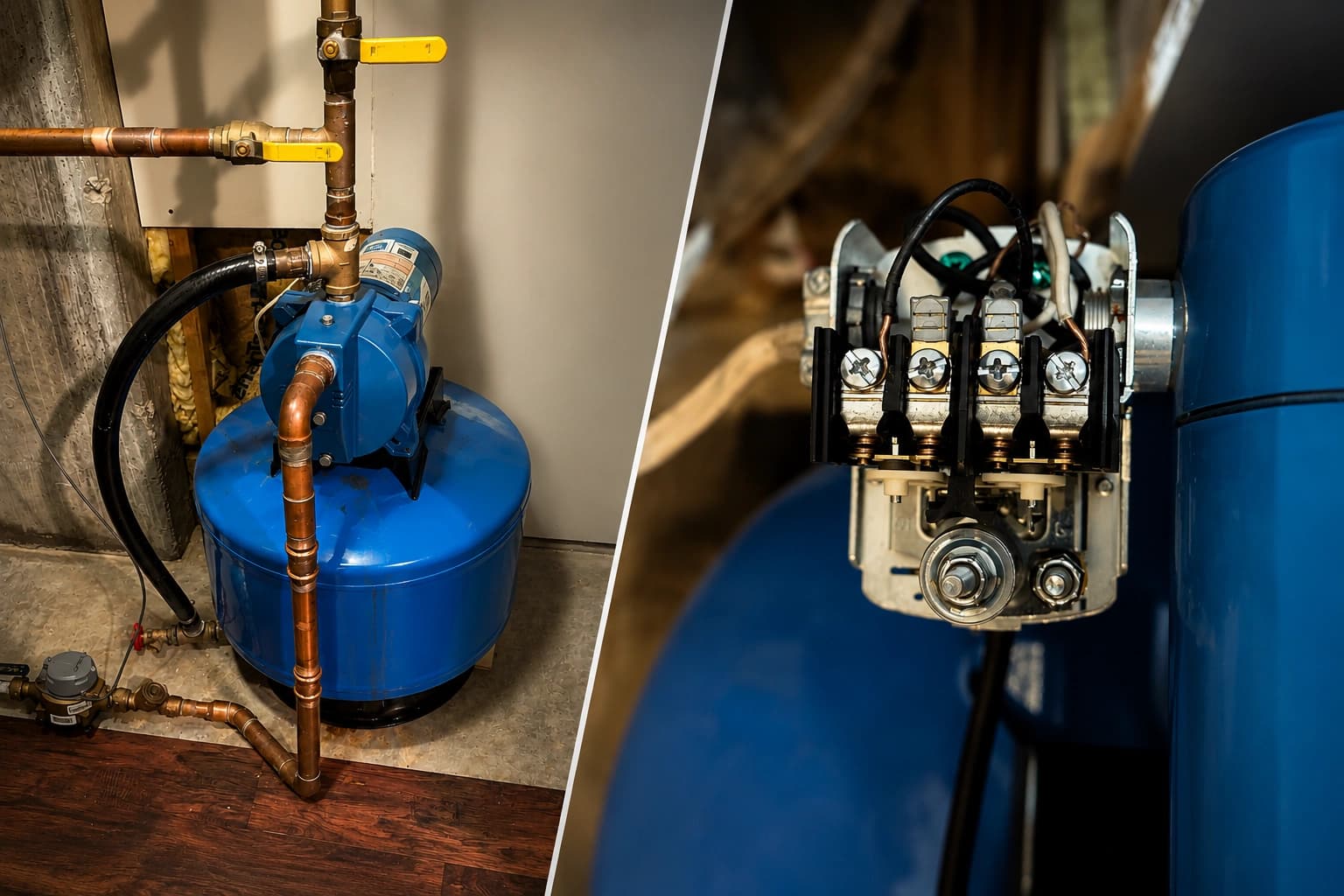
Review a Well Pump System Before Selling Without Guessing
Reviewing a well pump system before selling a Westford home starts with documentation, not simplification. A secondary pump, extra tank, unfamiliar valve, or leaking filter connection can raise questions, but appearance alone does not establish what is active, abandoned, defective, or required. Trace the equipment, separate pump work from interior plumbing, and base every recommendation on current evidence.
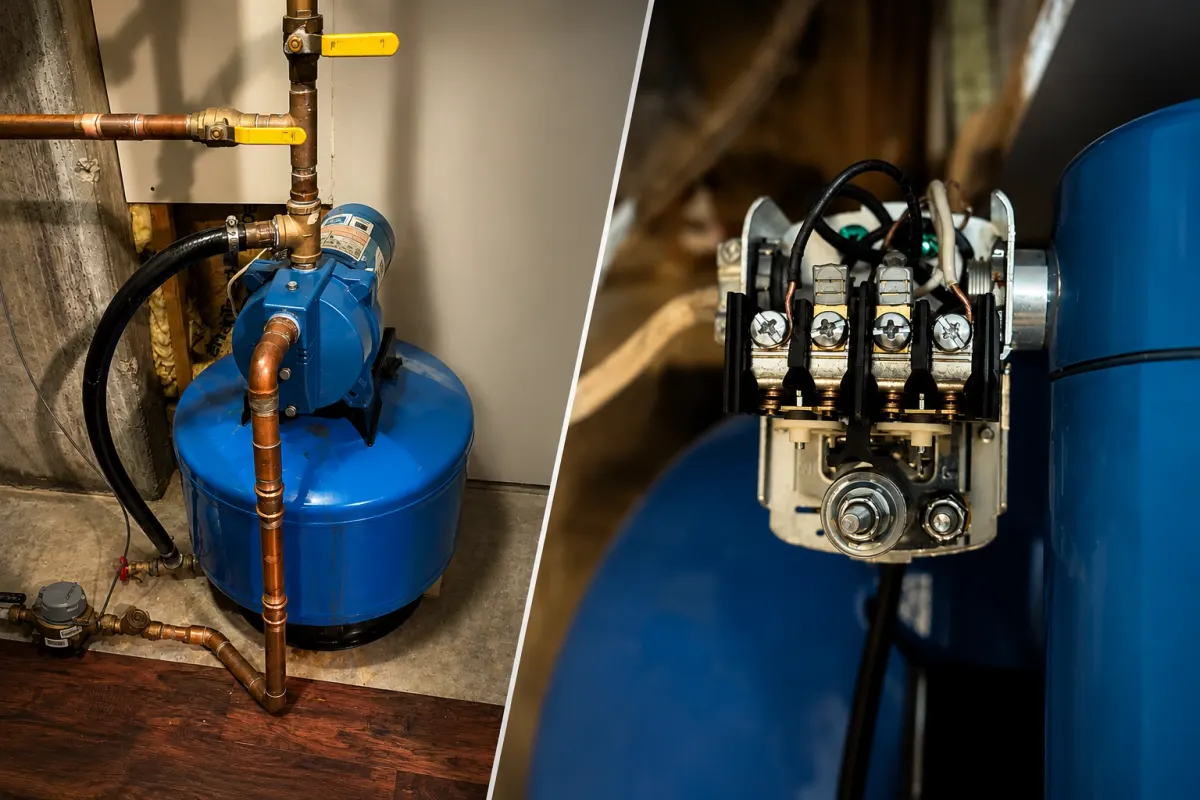
This guide reviews a well pump system before selling without offering pump repair, removal, or replacement. Those tasks, along with pressure-tank, pressure-switch, well-yield, casing, and source-side electrical work, belong with a qualified well contractor and any other appropriately licensed specialist. Jeneral Plumbing can evaluate accessible interior supply piping, shutoffs, treatment connections, and leaks, then handle in-scope plumbing or test-first water work.
Jeneral Plumbing is owner-operated by a Licensed Master Plumber (MA #9628831-PL-M) in Westford, MA. I wrote this as an educational resource, not a diagnosis, real-estate opinion, legal interpretation, or certification of a particular property. A seller’s agent, attorney, home inspector, lender, certified laboratory, local authority, and well contractor each answer a different part of the pre-sale question.
Identify a Well Pump System Before Selling
Start your review of a well pump system before selling by confirming the property’s water source. A water bill can identify a public supplier, while well records and visible source equipment may support a private-well history. Do not infer the source from the neighborhood, the town name, or equipment left in a mechanical room.
A common private-well path may include the well, a pump, source piping, controls, a pressure tank, the interior main, treatment equipment, and distribution piping. The pump moves water. The pressure tank provides drawdown and helps limit pump cycling, while controls start and stop the pump within the designed operating range. Configurations vary, so this diagram in words is an orientation tool rather than a design rule.
Labels and piping paths matter more than paint color or tank shape. Record each visible model and serial number, photograph where each pipe enters and leaves, and note the electrical disconnect without operating it. A well contractor can determine whether a submersible pump, jet pump, booster, pressure tank, controls, or abandoned component remains part of the active source system.
Finding a secondary pump does not prove redundancy when reviewing a well pump system before selling. The equipment may be active, abandoned, bypassed, installed for a purpose that no longer exists, or connected in a way that cannot be understood from one photograph. Do not unplug a pump, change a pressure switch, close an unfamiliar valve, or remove piping as a test.
Westford Water Context for a Well Pump System Before Selling
Westford includes addresses served by the public water system and properties with private-well equipment. Verify the source at the address before interpreting a water report or planning a test. A well pump system before selling belongs to the private-source side of that distinction; public-system data does not describe the condition of the private well, pump, tank, or water at that property.
As reviewed on August 21, 2026, Westford Water Department’s 2025 Annual Drinking Water Quality Report states that the public system met all applicable state and federal health standards in 2025. That compliance statement applies to water supplied by the public system. It is not a result for a private well, a particular faucet, or a home’s interior plumbing.
MassDEP’s private-well water-quality testing guide, reviewed August 21, 2026, explains that Massachusetts does not impose one statewide private-well testing mandate, while a lender or local board of health may require testing. For a well pump system before selling, the local rule and transaction documents govern the applicable water-quality steps. The statewide guidance does not establish that a mechanical pump-performance inspection is mandatory at sale.
As reviewed on August 21, 2026, Westford’s current private-well information points to Water Supply Regulations effective January 14, 2019. For a sale or transfer involving a potable-water well, those regulations call for a laboratory report based on a sample collected and analyzed within one year of the closing date, with the required sampler credentials and chain of custody. Confirm the current procedure with the Westford Health Department and closing professionals; Jeneral Plumbing does not issue that regulatory report or interpret the transaction.
For a private-well property, use current address-specific records and a properly collected sample for the question being asked. An older report may be useful history, but it does not establish present water quality or equipment condition. This guide uses no townwide concentration figure to make a recommendation about a well pump system before selling.
About this water information
Utility reports summarize testing across a public water system; they are not a test of the water at your specific faucet. EWG health guidelines may be lower than enforceable federal or state limits. Homes on private wells are not represented by municipal utility data. Treatment recommendations should be based on the current utility report, household plumbing conditions, and a properly collected water sample.
Reviewed by: Jeneral Plumbing — August 21, 2026. Official water information: Westford Water Department’s 2025 Annual Drinking Water Quality Report · MassDEP’s private-well water-quality testing guide · Westford private-well requirements.
Build the Record for a Well Pump System Before Selling
Reviewing a well pump system before selling starts with a clear record so several different questions are not collapsed into one. Gather the well completion information available for the property, pump and pressure-equipment labels, service invoices, electrical records, treatment manuals, laboratory reports, permits, and prior inspection documents. Keep the original reports with their dates and sample locations rather than copying selected values into a new summary.
Document what you observe without diagnosing it. Note loss of water, pressure changes, rapid or unusual cycling, noises, leaks, stains, corrosion, alarms, treatment bypass positions, and any equipment that appears disconnected. Record when a condition occurs and which fixtures are affected, but leave pump-side testing and adjustments to the qualified specialist.
A well pump system before selling also needs a clean scope boundary in the paperwork. Separate the well contractor’s findings from the certified laboratory report, the home inspector’s observations, the electrician’s work, and the plumber’s interior-piping scope. A receipt for a filter connection does not certify well yield, and a pump invoice does not establish water quality.
Ask the seller’s agent and attorney which disclosures, tests, reports, or contract steps apply to the transaction. Requirements can depend on the property, agreement, lender, local authority, and timing. Jeneral Plumbing can document observations and authorized plumbing work, but I do not interpret a purchase contract or promise how a buyer, inspector, lender, or insurer will respond.
Trace Redundant-Looking Equipment Without Guessing
Redundant-looking equipment is a reason to investigate, not a reason to disconnect it. A secondary jet pump may be abandoned, active, or connected for a purpose that is not obvious. An extra tank may be isolated, part of another water use, or connected to controls that need specialist review. When reviewing a well pump system before selling, trace the equipment as installed before anyone proposes removal.
A qualified well contractor can identify the active pump path, observe operating behavior, review controls, assess pressure-tank function, and determine whether source equipment fits the well and household demand. Well yield and recovery require their own methods and context. Opening a hose and noticing flow does not establish pump condition, sustained capacity, pressure control, or redundancy.
I do not use an unplug-and-listen test to approve removal. Interacting with unfamiliar electrical controls or pressurized piping can create a new problem and can erase useful evidence. For a well pump system before selling, preserve the current condition until the appropriate specialist has documented what is active.
If source-side equipment is confirmed as abandoned, the well contractor should define pump, tank, control, and electrical work. Any remaining interior plumbing alteration still needs its own licensed scope, isolation plan, compatible materials, and applicable permit or inspection decisions. One trade’s finding does not authorize another trade’s work.
Understand Pressure Behavior Before Calling It a Pump Failure
A well pump system before selling may show low or changing pressure without identifying a failed pump. A partly closed valve, restricted filter, clogged fixture aerator, treatment condition, pressure-tank problem, control setting, piping restriction, pump performance, or well yield may be involved. Note whether the change affects the whole home, selected fixtures, hot water, cold water, or a particular demand pattern.
A pressure tank stores a usable volume of water under pressure and helps reduce pump cycling. It does not create an unlimited supply, and normal pressure can move through an operating range rather than remain at one fixed reading. Tank size, air charge, controls, pump selection, household demand, and well conditions interact.
Rapid cycling, pressure swings, water at an air valve, visible tank damage, or control problems can support specialist evaluation, but none should be diagnosed remotely from a description. Do not add air, adjust a switch, strike a tank, or bypass controls as a pre-sale experiment. Pressure-tank and pump-side work remain referral scope.
The condition of a well pump system before selling cannot be reduced to equipment age. Installation, sizing, cycling, environment, service history, water conditions, and component design all matter. Keep model information and service records available so the well contractor can use evidence instead of an unsupported lifespan rule.
Separate Interior Leaks From Pump-Side Work
When reviewing a well pump system before selling, a nearby leak may come from accessible interior supply piping, a shutoff, a union, a treatment housing, a drain connection, or source-side equipment. The wet location does not identify the failed part. If water is actively escaping, use a known interior shutoff only when it can be reached and operated without interacting with electrical equipment or unfamiliar pump controls.
A filter connection deserves inspection before a gasket is ordered. Depending on the exact assembly, the leak may involve an O-ring, union seal, housing, head, thread, valve, cracked component, pressure condition, or misaligned connection. Isolate and depressurize the equipment according to its documentation before it is opened; a pressurized housing is not a place for a trial repair.
Jeneral Plumbing can evaluate accessible interior water piping, shutoffs, treatment connections, and leakage within the agreed plumbing scope. The water-line and accessible pipe-leak guide explains how I follow meter, moisture, pressure, and piping evidence before defining a repair. Pump, pressure-tank, control, well, and source-side electrical findings are referred to the appropriate specialist.
When an interior repair is supported, I provide flat-rate pricing with the total price disclosed for approval before work begins. Reviewing a well pump system before selling does not turn that interior scope into a Jeneral Plumbing pump service. Keep the scopes separate in both the proposal and the seller’s records.
Test Water Before Selecting Treatment
Water appearance, taste, odor, staining, or an equipment deposit cannot identify every analyte or choose treatment. Define the concern, choose the correct sample point, and follow the certified laboratory’s collection instructions when the question requires laboratory work. Jeneral Plumbing’s professional water-testing process explains the boundary between field observations and analyte-specific laboratory testing.
For a well pump system before selling, label whether the sample was collected before or after existing treatment. Record the date, sample location, treatment status, and laboratory method with the result. A treated kitchen sample and raw-water sample answer different questions, and neither establishes pump or well-yield condition.
Treatment follows the result. Possible technology classes include activated carbon, reverse osmosis, ion exchange, oxidation/filtration, UV, or no treatment at all. The home water-quality decision guide separates source information, plumbing observations, field measurements, and certified-laboratory questions before equipment is selected.
For any named contaminant, a performance claim applies only when the exact model carries a current third-party certification for that exact contaminant and the installation and operating conditions match the certification. Do not treat a certification held by another model as proof. Existing equipment may need maintenance, verification, plumbing work, a different test, or no treatment rather than replacement.
If results support treatment, compare the test-first water-treatment process and filtration and softener planning guide. Those services begin after the source, sample, and objective are defined. Neither page claims well-pump work.
Decide Whether to Repair, Refer, Document, or Disclose
A pre-sale decision should match the confirmed condition and the responsible trade. An active leak on accessible interior piping may fit licensed plumbing repair. Pump performance, pressure-tank function, controls, electrical supply, well construction, and yield belong with the appropriate well or electrical specialist.
Cosmetic cleanup is not a substitute for diagnosis. Do not remove labels, conceal active leakage, cut unidentified piping, or represent an unverified component as abandoned. A well pump system before selling is easier to explain when the record shows what was observed, who evaluated it, what work was authorized, and what remains outside that scope.
A seller may choose repair, specialist evaluation, monitoring, documentation, or another transaction path after discussing the facts with the seller’s professionals. Inspection findings and negotiations vary. This guide does not promise that work will raise a sale price, prevent a buyer request, or change a lender’s decision.
For connected interior-plumbing decisions, Jeneral Plumbing’s plumbing installation and upgrade planning guide explains how site conditions, access, permits, and written scope shape the work. The well pump system before selling remains outside Jeneral Plumbing’s pump-service scope even when related interior piping fits a separate plumbing project.
Pre-Sale Checklist for a Well Pump System Before Selling
Confirm the source. Use the water bill, property records, and visible equipment to distinguish public supply from a private well.
Collect original records. Keep well documents, pump and tank labels, service invoices, permits, laboratory reports, treatment manuals, and inspection papers together.
Photograph before changing anything. Capture piping paths, valves, controls, labels, treatment stages, leaks, corrosion, and disconnected-looking equipment.
Record symptoms by location. Note pressure changes, cycling, noises, loss of water, and which hot or cold fixtures are affected.
Refer source equipment. Use a qualified well contractor for pumps, pressure tanks, switches, well yield, casing, source piping, and removal decisions.
Separate interior plumbing. Have accessible piping, shutoffs, treatment connections, and active leaks evaluated within a defined licensed-plumbing scope.
Test for the stated question. Follow laboratory collection instructions and identify raw versus treated sample points before considering treatment.
Ask about transaction requirements. The seller’s agent, attorney, inspector, lender, and local authority can identify the documents or steps applicable to the sale.
Use this checklist to organize a well pump system before selling, not to approve source equipment remotely. A clean folder of dated evidence is more useful than a verbal explanation built from assumptions. Keep each specialist’s conclusion attached to the scope that specialist evaluated.
Local Planning for a Well Pump System Before Selling
Jeneral Plumbing is based in Westford and serves Chelmsford, Acton, Littleton, Groton, Carlisle, and other communities across Middlesex & Essex County. Water sources and equipment remain address-specific across those towns. Confirm the property source before using a public report, ordering a laboratory panel, or calling unfamiliar equipment a private-well component.
I can review whether accessible interior piping, a filter connection, a shutoff, water testing, or test-driven treatment fits Jeneral Plumbing’s scope. I will state when the next call belongs with a well contractor, electrician, laboratory, inspector, attorney, agent, lender, or local authority. Call (978) 392-7789 to discuss the plumbing side of a well pump system before selling.
Well Pump System Before Selling FAQs
Why does my Westford house have more than one pump?
The visible equipment does not prove the history or current purpose. A secondary pump may be active, abandoned, bypassed, or connected for a use that is not obvious from the mechanical room. A qualified well contractor should trace the pump, pressure tank, controls, electrical supply, and source piping before anything is disconnected. Keep the well pump system before selling unchanged until that evaluation is documented.
What does the pressure tank do?
A pressure tank stores a usable volume of water under pressure and helps reduce pump cycling. Its operation depends on the pump, controls, air charge, sizing, demand, and well conditions. Pressure normally moves through a designed range rather than staying fixed at one reading. For a well pump system before selling, tank evaluation and service remain referral scope for the appropriate well contractor.
Does low pressure mean the well pump is failing?
No. Low pressure can involve a valve, filter, fixture, piping restriction, treatment stage, pressure tank, controls, pump performance, household demand, or well yield. Record where and when it occurs without changing switch settings or bypassing unfamiliar equipment. A well contractor handles source-side diagnosis, while I can evaluate accessible interior plumbing or treatment restrictions within Jeneral Plumbing’s scope.
Should I remove redundant-looking equipment before listing?
Not until a qualified specialist identifies what is active and how it is connected. Unplugging a pump, closing an unfamiliar valve, or cutting piping can interrupt water service, create a leak, or erase useful evidence. The well contractor should define pump, tank, control, well, and source-side electrical work before removal. Any related interior plumbing then needs its own licensed scope.
Should I test private-well water before selling?
Ask the seller’s agent, attorney, lender, inspector, and local authority which testing or documentation applies to the transaction. When testing is appropriate, use the correct laboratory, sample point, containers, method, and handling for the stated question. Record whether the sample is raw or treated and keep the complete dated report. A well pump system before selling needs water-quality evidence kept separate from pump and yield findings.
Can Jeneral Plumbing repair or replace my well pump?
No. Well pumps, pressure tanks, controls, well yield, casing, source piping, removal, and replacement remain referral-scope work. I can evaluate accessible interior plumbing, shutoffs, filter connections, leaks, water testing, and test-driven treatment when those items fit a separate Jeneral Plumbing scope. That boundary keeps the well pump system before selling with the appropriate specialist.
Written by Jeneral Plumbing.
This article was drafted with AI writing tools from Jeneral Plumbing job notes and source materials, then edited before publication. AI tools did not inspect the job or validate technical conclusions.
Last updated .