

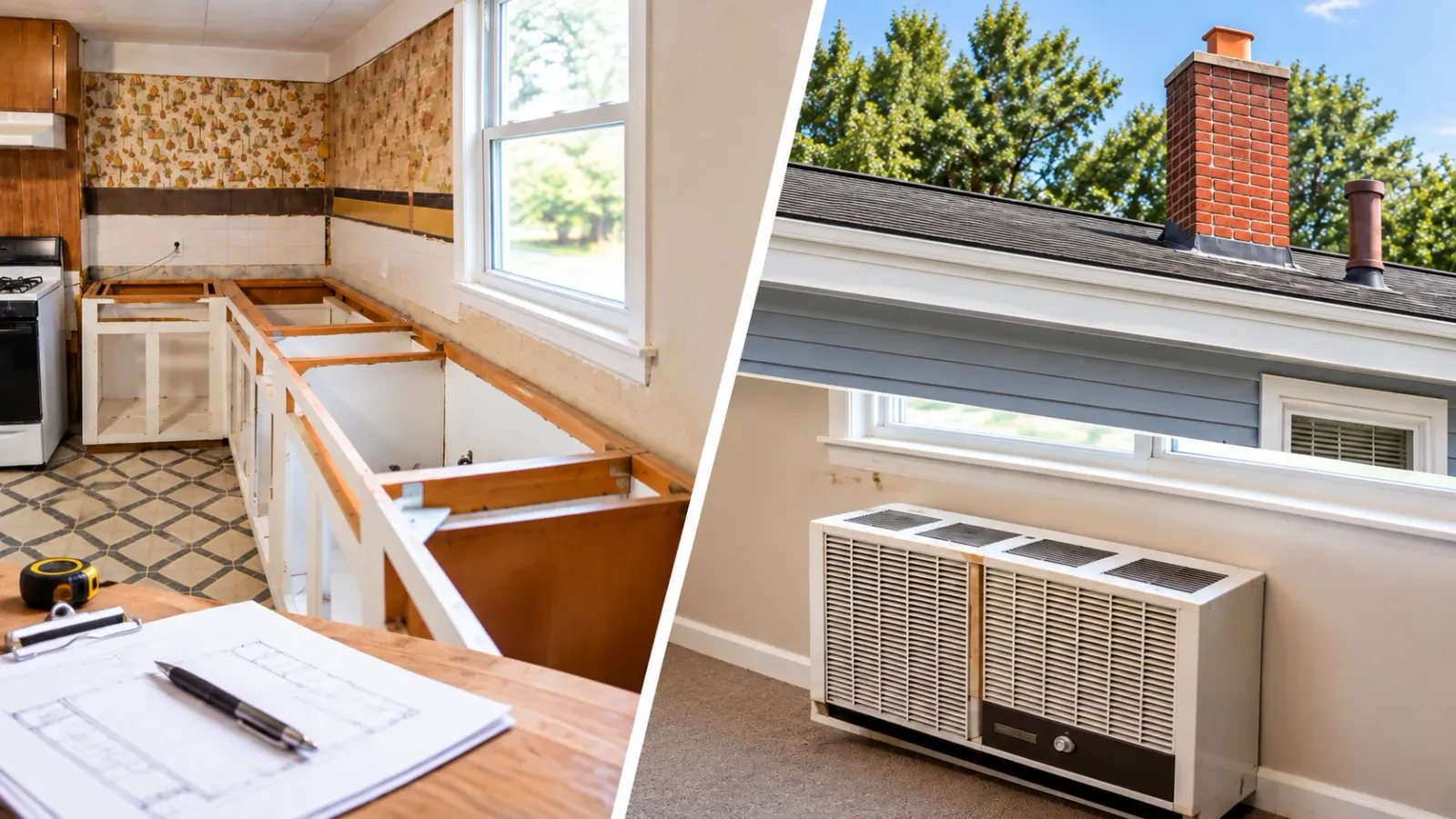
Updating a rental in Westford with new kitchen cabinets, a dishwasher, a relocated washer and dryer, and replacement wall heaters can look like cosmetic work. Behind the walls, it's a plumbing and heating project. A new or moved fixture may change the drains and vents it connects to, and a replacement heater has to fit its vent, its air and fuel supply, and the rooms it serves. Plan both parts with a licensed plumbing contractor before the cabinets go in and before anyone buys a heater, and expect the permit and inspection to shape the final design.
If anyone smells gas, follow Massachusetts gas-odor guidance: leave the building and call 911 from outside. Don't turn lights or appliances on or off, open or close windows, or try to shut off the gas yourself. If a carbon monoxide alarm sounds, leave and call 911 from outside as well. Do not re-enter until emergency responders say it's safe. After that, a licensed professional can assess the heater, venting and gas piping as needed. Make sure your tenants know these steps.
Drains and vents behind the new kitchen
Drain vents let air into the drain system so water flows freely and each fixture's trap keeps the water seal that blocks sewer gas. When venting falls short, the signs can include slow drains, gurgling, sewer odors or a trap that loses its water.
Adding a dishwasher or moving laundry changes what drains into each line and can change how those drains need to be vented. The existing connections may not suit the new layout, and the best time to find out is while the cabinets are out and the wall is open. A plumber traces how the sink and laundry drain and vent now, checks whether the stack can take the new connections, and plans any new vent route the building allows. Wall framing, crawl spaces, attic access and the roof all affect that route. Water lines for the dishwasher and laundry get planned at the same time. Our guide to plumbing installations and upgrades covers how we plan the connections and permits for a new layout.
Replacing gas wall heaters isn't a simple swap
A new heater has to fit the vent, gas supply and rooms it's meant for, or those have to change to fit it. Settle these questions before choosing a model:
- Size. Capacity should come from a heating load calculation for the rooms the heater serves, not a rule of thumb, as Department of Energy sizing guidance explains. A load calculation accounts for things like insulation, windows and air leakage.
- Vent location. The model's installation instructions say where its vent may end outside, including its position relative to windows, doors and other openings. The installation must satisfy those instructions and applicable code; the local inspector reviews it for compliance. If the old vent location doesn't work for the new model, the heater may need to move, which can change the gas piping and leave an old wall opening to close.
- Combustion air. Direct-vent heaters bring in outdoor air through their own vent system; other designs draw air from the room around them. The model's instructions spell out what it needs.
- Gas supply. The existing gas piping needs to be checked for its condition and for whether it can carry the new heater's input. Our gas line installation page explains how we check load, route and permits for planned gas piping.
- Condensate. If a condensing model is under consideration, its condensate needs a drain path, and its vent materials come from the manufacturer's instructions.
This is licensed work, not a do-it-yourself swap. In Massachusetts, a licensed plumber or gas fitter is responsible for gas-appliance flue venting and its permit. The state board's policy on venting flue gases allows qualified workers to install it under the licensee's supervision. Our gas work, including gas appliance venting, is Massachusetts-only; we don't offer fuel-gas work in New Hampshire. Whether we install a particular heater depends on the equipment and the written scope.
Heat for habitable rooms and bathrooms
During the heating season, Massachusetts housing code temperature guidance sets temperature requirements for habitable rooms and bathrooms in a rental. It's a temperature standard, not a rule that each room needs its own heater. Still, if a room only warms up when a door is left open, or a heater swap changes which rooms get heat, the heating design should show how each habitable room and bathroom will meet those requirements.
Permits, inspection and who decides
In Massachusetts, 248 CMR 3.00 governs plumbing and gas fitting permits and inspections, and for a privately owned home the permit application goes to the local inspector. Ask your contractor which permits the work needs, and plan the schedule so plumbing and gas work can be inspected before cabinets and finished walls cover it. For a landlord, the permit and inspection also leave a record that the work was reviewed.
The final design comes together this way:
- The licensed contractor proposes the drain and vent layout, the gas piping, and each heater's size and location, based on the building and a load calculation.
- The manufacturer's installation instructions set the chosen model's requirements for venting, vent termination clearances, combustion air, gas supply and condensate.
- The permit process puts the work in front of the local inspector, who reviews it under the code.
What we handle
We handle the plumbing and gas piping in a project like this, meaning the drains, vents, water lines and gas lines, within a written scope. We're not a general contractor, so the cabinets, carpentry, drywall, electrical work and patching an old vent opening belong to other trades.
Jeneral Plumbing is owner-operated by a Licensed Master Plumber (MA #9628831-PL-M) with 20+ years in the trade, including seven with a gas utility. We're based in Westford, MA, and serve homes within 20 miles across Middlesex & Worcester County; we confirm your address, the work and our availability before booking. Repair and installation work is priced at a flat rate, with the total and any fees shown for approval before work begins. During regular hours, a visit carries an $80 dispatch fee — the cost of the visit, waived when you hire us for the work. Call (978) 392-7789 to plan the plumbing and gas work before your renovation starts.
Written by Jeneral Plumbing.
This article was drafted with AI writing tools and edited before publication. AI tools did not inspect any job or validate technical conclusions.
Last updated .