

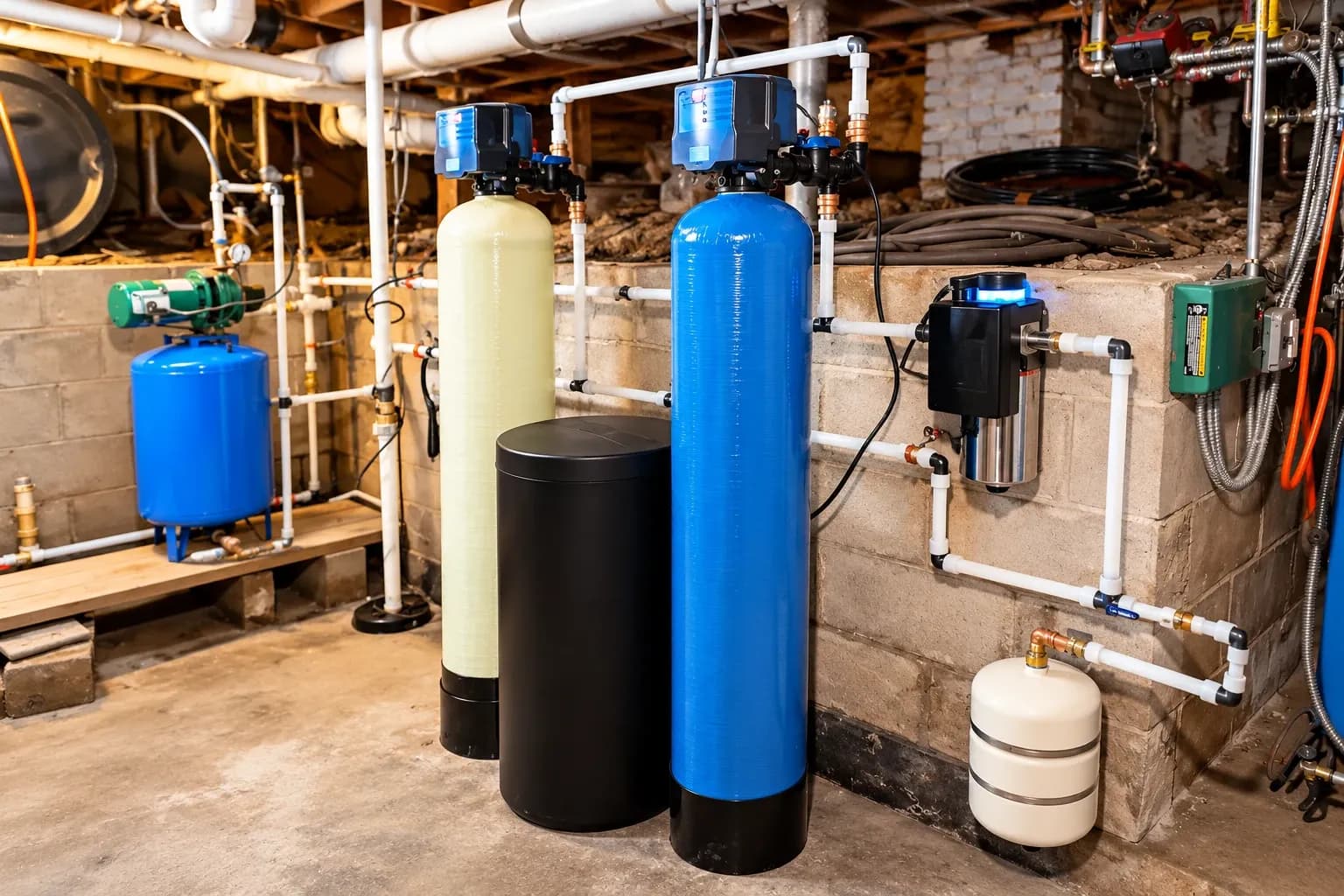
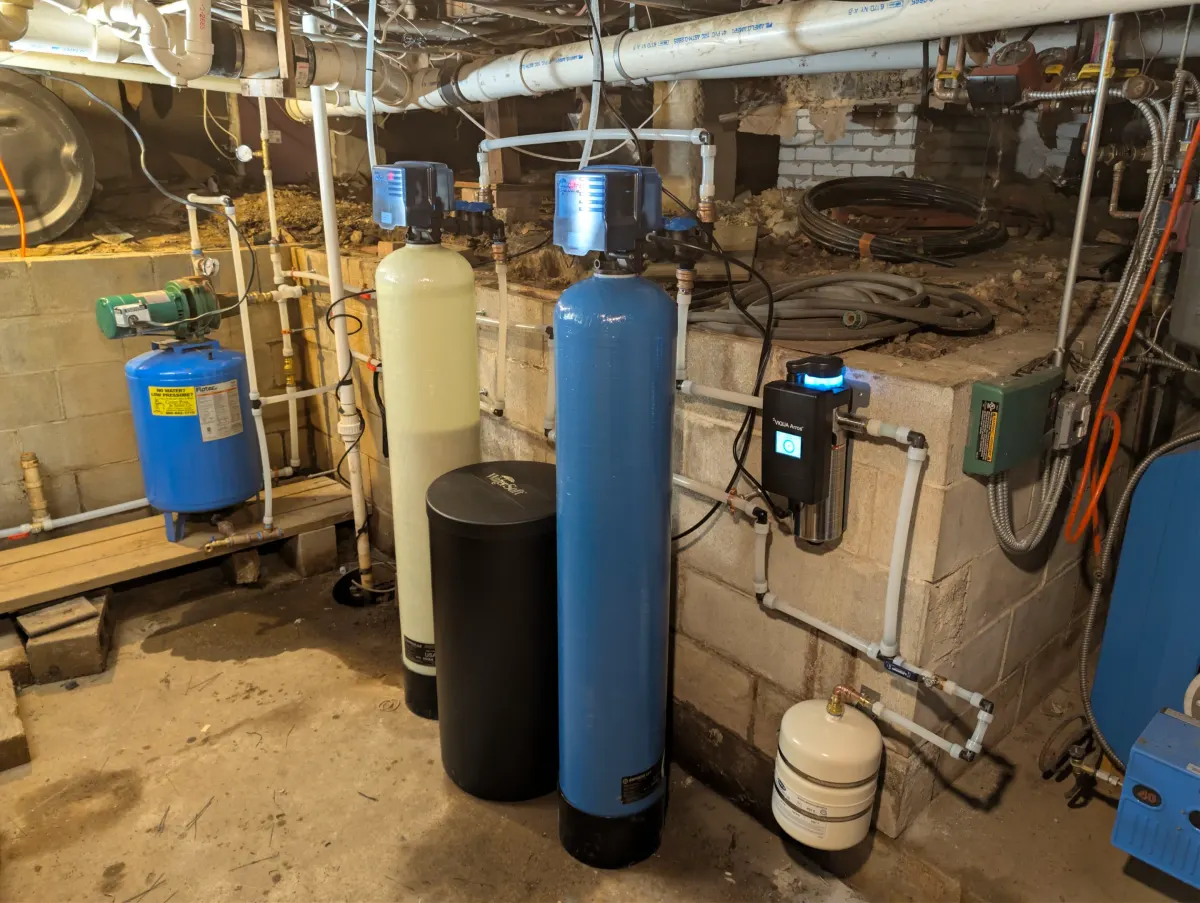
One of the most common questions we hear after a water softener install isn't about leaks or mechanical issues — it's "why does my water feel so strange now?" During a recent membership check-in on a water treatment system in Lancaster, our technician walked a homeowner through exactly this concern, and it's worth explaining for anyone new to soft water.
The "Slimy" Feeling Is Normal — Here's Why
When a homeowner on a softener membership plan mentioned they couldn't seem to get the soap off their skin, our technician explained that this sensation is actually a sign the softener is working correctly. Soft water doesn't rinse soap away faster — it uses far less soap to begin with. As our technician put it during the visit, water at a higher grain hardness requires roughly twice the soap of water at a very low grain count. If a household is used to hard water, they're likely using three times more soap than necessary once the softener is dialed in, and that excess lather is what creates the unfamiliar "slimy" or "wetter" feeling on skin and hair.
It's an adjustment period, not a malfunction. Homeowners new to softened water often need a few weeks to get used to the texture before it starts to feel normal.
Dialing In the Right Hardness Setting
Every household's ideal softener setting is based on the original water test used to program the system. In this case, the softener had been set to 8 grains per gallon, and after discussing the homeowner's comfort with the feel of the water, our technician lowered the setting to 5 grains per gallon — using less salt per cycle while still protecting pipes and fixtures from scale buildup.
This is generally the better move compared to shutting the softener off entirely, which defeats the purpose of having the system and lets hardness and scale issues return. Adjusting the grain setting lets a homeowner find a middle ground between comfort and protection.
What a Regen Cycle and Salt Taste Mean
Homeowners sometimes notice a salty taste in their water for a couple of days after the softener goes into a regeneration ("regen") cycle — this is a byproduct of the salt used to recharge the resin bed, not a sign of a problem. Checking salt levels regularly and keeping the brine tank filled helps the system regenerate properly. For reference, this system typically uses around one to two bags of salt per year depending on household water usage.
When Taste Becomes the Bigger Issue
Softened water can also affect taste more noticeably in drinking water, ice makers, and refrigerator dispensers than it does in showers or laundry. For households with very hard water and a strong sensitivity to the salty taste, a reverse osmosis system paired with a remineralizer can address drinking water specifically, without turning off softening for the rest of the house. A remineralizer adds a controlled amount of hardness back into the water after it passes through the softener — useful for taste, but it does reduce the softening benefit for whatever water passes through it afterward.
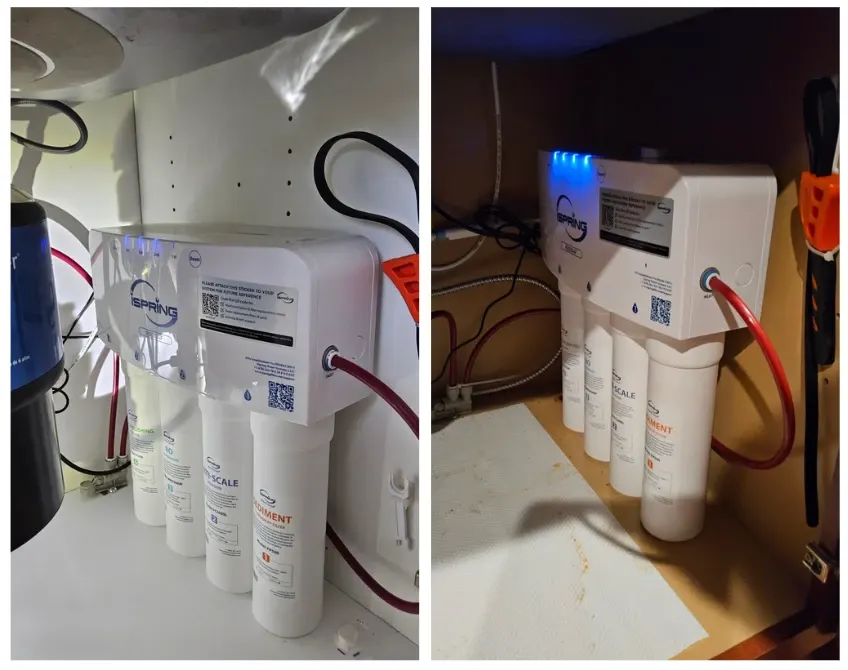
Homeowners interested in testing their own water hardness or exploring options like reverse osmosis can learn more through Jeneral Plumbing's water treatment services.
Routine Maintenance Matters
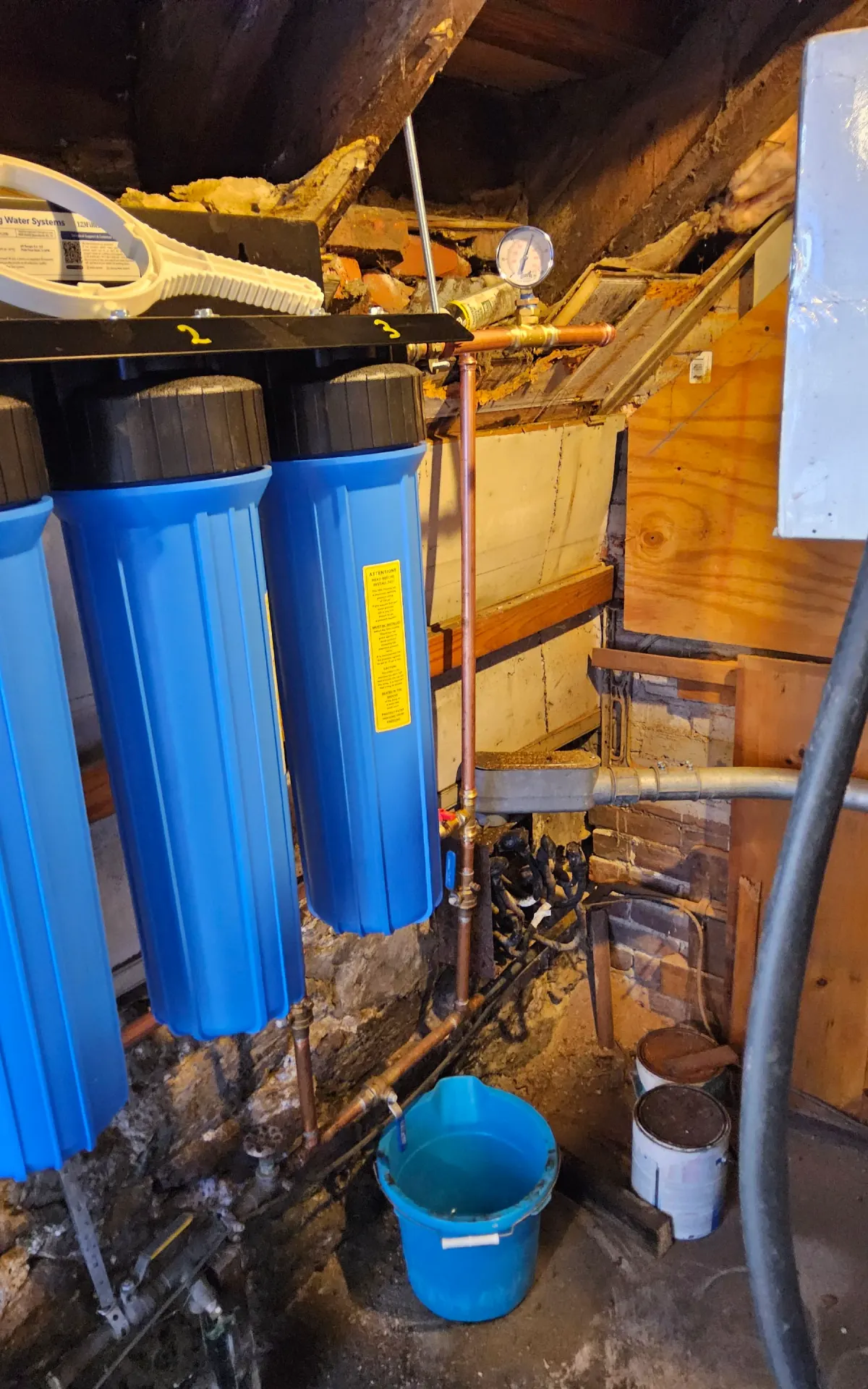
This visit was part of a quarterly membership check on the home's water treatment equipment — swapping the sediment filter, checking salt levels, and inspecting for leaks around the system. Sediment filters in this type of setup are generally swapped on a six-month cycle, depending on usage and water conditions. Regular checks like these help catch small issues, such as a well pump cycling on and off due to a pressure drop, before they become bigger problems. Homeowners enrolled in a service plan get this kind of proactive attention built in.
.
A Related Fix: Slow-Flushing Toilet
During the same visit, the homeowner also mentioned an older toilet that required holding the handle down to get a full flush. On inspection, our technician found a refill tube inside the tank that had become dislodged and was sitting below the waterline — a setup that can cause a toilet to siphon water and run longer than it should. In many cases, a slow-flushing or constantly-running toilet traces back to a venting issue rather than the toilet itself, so it's worth having a licensed plumber inspect both the tank components and the vent before replacing the fixture. For stubborn flushing issues that don't resolve with a simple internal repair, a pressure-assisted toilet is an option, though these units flush more forcefully and run louder than standard models. Fixture issues like this are best evaluated in person; learn more about fixture repair options.
FAQ: Will a Water Filter Fix the Slimy Feeling?
A shower filter can reduce certain minerals or chlorine depending on its design, but it won't remove the softened feeling — that comes from the reduced mineral content itself, not something a filter adds or takes away.
This post is for informational purposes only and does not replace an in-person evaluation of your plumbing or water treatment system.
If your household is adjusting to a new water softener, or you want your hardness levels professionally tested and dialed in, call Jeneral Plumbing at (978) 392-7789. We also offer an $80 dispatch fee — the cost of the visit, waived when you hire us for the work.
Written by Sierra Sorongon.
This article was drafted with AI writing tools and edited before publication. AI tools did not inspect any job or validate technical conclusions.
Last updated .