

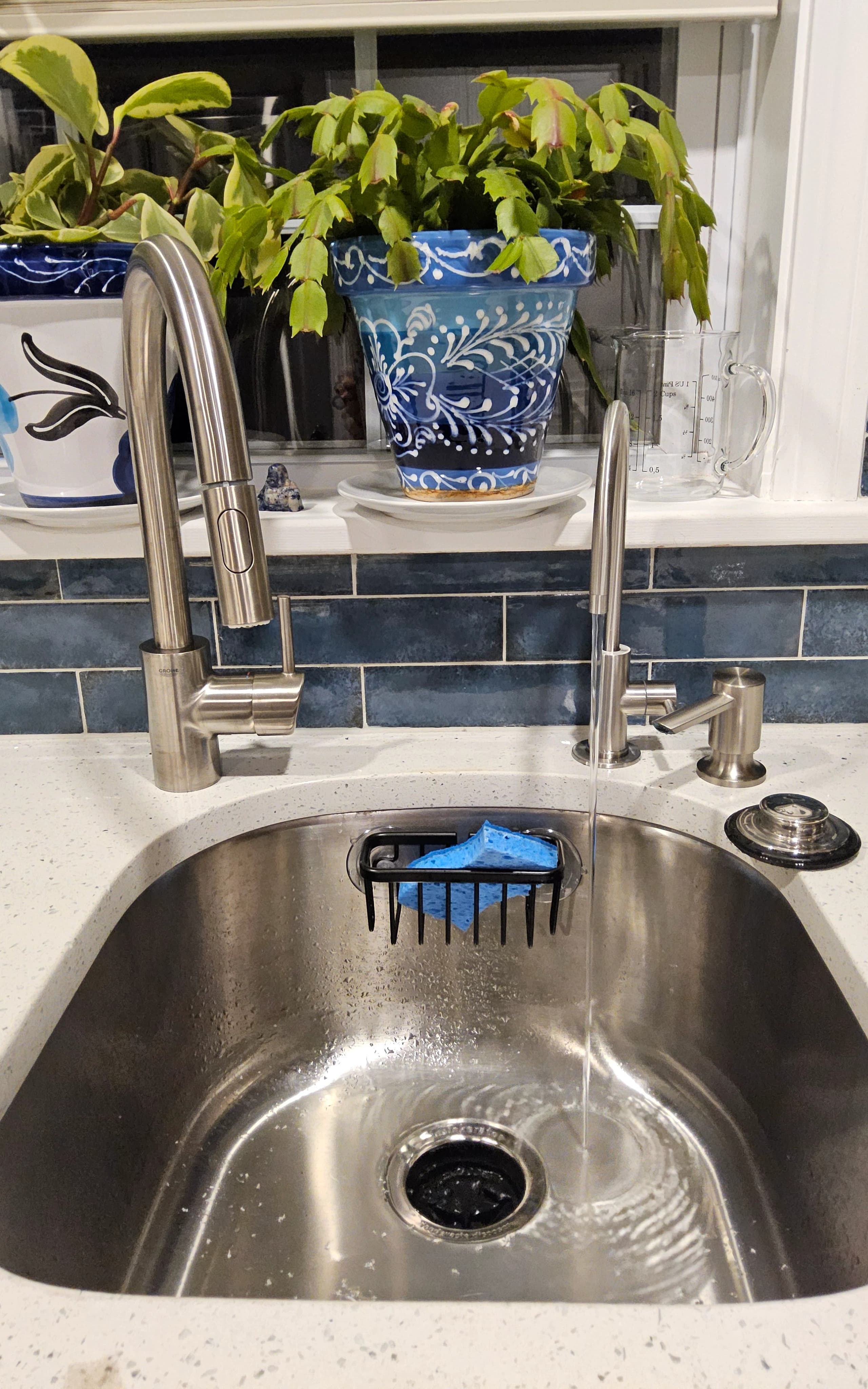
Quick answer: Slow hot water in a Bedford, MA condo usually traces to one of four causes: a low-flow showerhead holding a tankless water heater below its minimum activation flow, clogged faucet aerators, a mixing valve that has drifted out of calibration, or unsecured hot-water pipes knocking inside the walls.
Low-flow showerhead — can keep an on-demand water heater from sensing enough flow to fire; test with the head removed
Clogged aerators — debris in the mesh screens restricts flow at every sink; clean or replace them
Mixing valve drift — the valve blending hot and cold loses calibration; an adjustment often restores steady temperature
Unsupported pipes — hot-water lines without enough hangers expand and knock against the framing
If you’ve ever moved into a new condo and thought, “Something’s off with the hot water” — you’re not alone. At Jeneral Plumbing we take this kind of call constantly from our Westford, MA base, whether the address is in Bedford, Chelmsford, Billerica, or Burlington. Not long ago, a resident of a newer Bedford condo building called two weeks after moving in, already frustrated: hot water was slow to arrive, faucet pressure was low, and a knocking sound came from the walls whenever hot water ran. Rather than assume the worst, I walked through a step-by-step diagnostic — and the findings were eye-opening. If you’re dealing with similar symptoms in your condo or apartment, this post breaks down exactly what was found and what you can do about it.
Can a Low-Flow Showerhead Cause Slow Hot Water?
It can — and in this condo, it did. The main complaint was that it took a long time for the shower to get hot. My first instinct wasn’t to condemn the water heater. It was to check the flow rate at the fixtures.
Here’s what turned up: the showerhead was a low-flow model, and that restricted flow was keeping the on-demand water heater from registering that water was being drawn. These units need to detect a certain flow threshold before they fire and heat the water. When the flow coming through is too weak, the unit either delays turning on or doesn’t heat efficiently.
I demonstrated it on the spot — removing the low-flow showerhead produced dramatically stronger flow and a much faster hot-water response. The fixture was the problem, not the water heater. This is a surprisingly common finding in newer condo builds, where low-flow fixtures are installed to meet building codes without anyone considering the downstream effect on water-heating performance.
What you can do: if your hot water is slow to arrive, don’t assume the heater has failed. Check whether your showerhead or faucet aerators are low-flow models restricting your water demand signal, and test the shower with the head removed before scheduling a repair.
Tankless Minimum Flow Rate, Explained
Every tankless water heater has a minimum activation flow — a gallons-per-minute threshold, published in the unit’s manual, below which the burner will not fire. The unit senses moving water the moment a hot-water fixture opens; if the flow stays under that threshold, the controls treat the draw as noise and keep the burner off.
A low-flow showerhead can hold total draw close to that line. So can a partially closed fixture stop, a clogged aerator screen, or a single faucet run at a trickle. The symptoms mimic a failing heater: long waits, lukewarm delivery, or hot water that cuts in and out as flow hovers around the threshold.
Stable delivery from a tankless unit depends on activation flow, temperature setpoint, plumbing layout, and fixture mixing — which is why we check the fixture side before opening up the equipment. Our tankless water heater guide goes deeper on sizing, winter flow rates, and the maintenance schedule these units need.
Why Is Water Pressure Low at Every Faucet in the Unit?
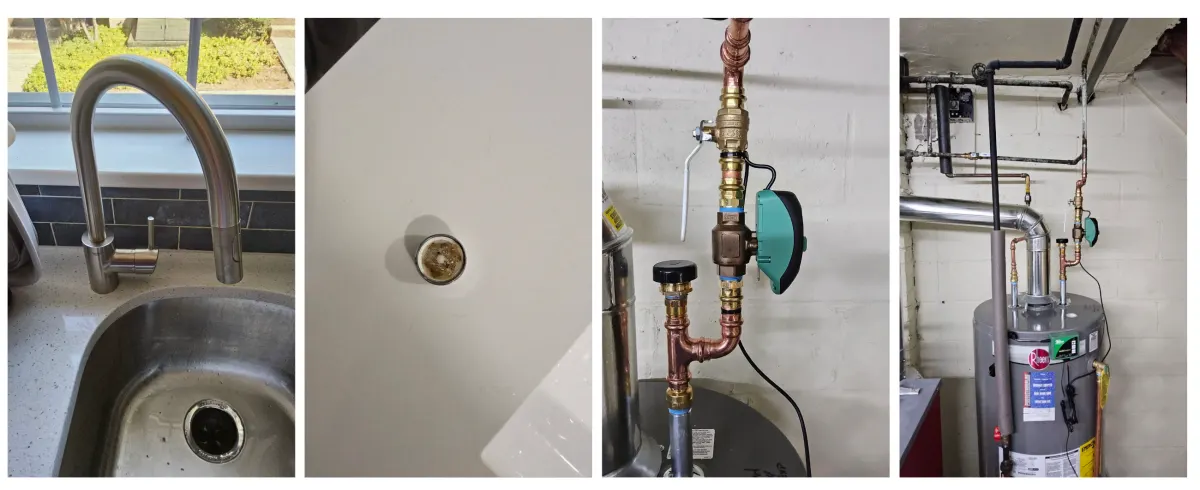
After the shower, I moved to the bathroom faucets — the resident had mentioned that water pressure at the sinks also felt weak. When the aerators — those small mesh screens at the tip of the faucet — came off, the difference was immediate and dramatic.
The aerators were heavily clogged with sediment and debris. With them removed, the water pressure was strong. With them back on, it was noticeably restricted — even after a quick rinse. In some cases the aerators are so corroded or blocked that cleaning alone won’t restore proper flow, and replacement with a higher-flow-rate aerator is the better solution.
Worth knowing for Bedford specifically: the Town of Bedford reports that its public water comes entirely from the MWRA supply, which is generally soft and treated for corrosion control. So a clogged aerator here usually isn’t a hard-water story. In newer buildings, the debris is more often construction-side — solder beads, thread-sealant shavings, and pipe scale flushed into the screens when new piping first goes into service. In neighboring towns on different supplies, such as Chelmsford and Billerica, mineral content varies by source, season, and property. Either way, the aerator screen tells you what the water has been carrying.
In this unit, the aerators were also loose and well past their useful life. Replacement aerators with a higher flow rate are inexpensive and widely available — match the thread size and swapping them is a reasonable do-it-yourself task, though we’re glad to handle it as part of a broader diagnostic visit.
What Does a Mixing Valve Do — and Why Is Shower Temperature Inconsistent?
One detail that came up in conversation with building management was the mixing valve — a device installed in many multi-unit residential buildings that blends hot and cold water to deliver a consistent, safe temperature to each unit. In this building, every unit was piped through its own mixing valve.
Mixing valves can stick or drift out of calibration over time. When that happens, the outgoing water temperature becomes inconsistent — sometimes too cool, sometimes scalding — and residents notice the swings. An adjustment to the mixing valve setting can often resolve temperature inconsistency without any parts replacement.
This is work for building management or a licensed plumber, because mixing-valve adjustments change the water temperature delivered to residents and carry scald-safety implications. If you’re a condo owner or property manager and several units are reporting inconsistent hot water, the mixing valves are among the first things worth inspecting.
What Causes a Knocking Sound in the Walls When Hot Water Runs?
The resident had also noticed a knocking, banging rhythm that seemed to come from inside the walls whenever hot water moved through the pipes. The diagnosis was clear: the hot-water pipes running through the walls lacked sufficient pipe hangers.
When hot water flows through copper or PEX piping, the pipe expands slightly from the heat. If it isn’t secured with hangers at regular intervals, it shifts and rattles against whatever it passes — wood framing, metal brackets, drywall edges. That’s the knocking you hear. The same physics explains a knocking sound in the walls when the heat turns on: heating pipes expand as they warm up, and unsupported sections tick and bang against the framing until they reach temperature.
The honest answer? There is no quick fix. Addressing it properly means opening the wall, securing the pipe with a hanger, and patching the drywall. It isn’t a structural concern — it won’t cause a leak or damage the pipe — but it is genuinely irritating to live with. This is what happens when buildings go up quickly and details like pipe hangers get skipped in the rush.
If you’re buying or renting in a newer condo building in Bedford, Westford, Chelmsford, or anywhere in Middlesex County, this is worth knowing: pipe noise doesn’t always mean a leak. Sometimes it means the builder saved a few hangers.
When It IS the Water Heater: A Short Decision List
Everything above was fixture-side or building-side. Sometimes the heater is the problem. These signs point at the equipment itself:
No hot water at all — on a gas unit this often points to the pilot, igniter, thermocouple, or gas control; on electric, a heating element or thermostat. Frequently repairable.
Hot water runs out fast — a failed element, a broken dip tube, a thermostat fault, or a tank undersized for how the household has changed since it was installed.
Rumbling or popping — sediment has built up on the tank bottom and water is boiling through the layer. On an older unit, this is often an early warning.
Rusty or discolored hot water — sometimes a depleted anode rod, sometimes the tank lining itself. The difference decides between a service call and a replacement.
Water around the base — water at a drain valve, fitting, or nearby pipe is often repairable; water escaping through the tank body means replacement.
Age — storage tanks typically last 8 to 12 years, while a maintained tankless unit commonly reaches 20 or more. Past those marks, repairs deserve a harder look.
Repeated tankless error codes — scale, restricted filters, flow sensors, gas supply, or venting can all trigger them; an error code is a starting point, not a diagnosis. Our Navien error code 110 case study shows why the surrounding conditions matter.
If any of these fit, our water heater repair and replacement guide compares gas storage, electric, hybrid heat pump, and tankless side by side — including repair-or-replace guidance and what each type costs to run.
COI Compliance in Condo Buildings: What You Need to Know
One aspect of this service call worth highlighting for other condo residents and property managers is the Certificate of Insurance (COI) requirement. In many condo buildings, the management company requires any contractor performing work on the property to have a COI on file before work begins. It protects the building, the homeowner, and the contractor.
Jeneral Plumbing carries full insurance and provides COIs to building management companies as needed. If you’re scheduling a plumber for work in a managed condo or HOA community, confirm with your management company what documentation they require before the appointment. It avoids delays on the day of service.
It’s a small detail, but it’s one of the details that separates a professional plumbing company from a handyman operation. We handle this paperwork routinely for managed properties across Middlesex County.
Key Takeaways
Slow hot water in a condo often isn’t the water heater’s fault — a low-flow showerhead can keep an on-demand unit from sensing enough flow demand to fire.
Every tankless heater has a minimum activation flow — when total draw hovers near that threshold, hot water arrives late, lukewarm, or in cycles.
Clogged faucet aerators are among the most common and most overlooked causes of low water pressure at sinks. Removal and replacement is often a fast fix.
Mixing valves in multi-unit buildings can drift out of calibration and cause inconsistent hot water temperatures — an adjustment may be all that’s needed.
Pipe knocking in walls usually comes from unsupported pipes expanding with heat. It’s annoying but typically not dangerous.
COI compliance matters in managed condo buildings — verify your plumber is properly insured and can provide documentation to building management.
When the signs point at the equipment itself, get a proper diagnostic before committing to a major repair or replacement.
Frequently Asked Questions
Why does hot water take so long in my condo?
In condos, the wait is often created on the fixture side rather than at the water heater. A low-flow showerhead can keep an on-demand unit below its activation flow, clogged aerators restrict draw at the taps, and a drifted mixing valve can blend away the heat you’re waiting for. Distance matters too — the farther your shower sits from the heater or the building’s recirculation loop, the more cooled-off water has to clear the line first. A diagnostic that starts at the fixtures and works back toward the equipment finds the cause without guesswork.
Do low-flow showerheads affect tankless water heaters?
They can. Every tankless unit has a minimum activation flow, and the burner stays off until moving water crosses that threshold. A restrictive showerhead — especially combined with a partially closed fixture stop or a clogged aerator screen — can hold flow near that line, producing delayed hot water, lukewarm delivery, or temperature that cycles up and down. Testing with the showerhead removed is a fast way to tell whether the fixture or the heater is at fault.
Who is responsible for plumbing repairs in a Bedford condo?
Your condo documents govern where unit-owner responsibility ends and the association’s begins, so start there. As a general pattern, fixtures and piping serving only your unit — faucets, aerators, showerheads, in-unit shutoffs — fall to the owner, while shared risers, common piping, and building-level equipment such as central mixing valves fall to the association or its management company. Before scheduling work, check your documents and notify management; many buildings also require the contractor’s certificate of insurance on file first. We provide COI documentation routinely for managed buildings across Middlesex County.
How do I know if the water heater itself is the problem?
Start by checking your fixtures before you call a plumber about the heater. Remove your showerhead and test the flow — if hot water arrives faster with the head off, a low-flow fixture is likely your culprit. Also check your faucet aerators for sediment buildup. If both of those check out and you’re still getting slow or inconsistent hot water, then it’s worth having the water heater and any mixing valves in the system inspected.
Can I fix a clogged faucet aerator myself?
Yes, in many cases. Aerators unscrew from the tip of the faucet and can be soaked in white vinegar to dissolve mineral buildup. If cleaning doesn’t restore good pressure, replacement aerators with a higher flow rate are widely available online. Match the thread size before ordering.
What causes a toilet to leak from the base?
A toilet leaking from the base is usually caused by a failed wax ring — the seal between the bottom of the toilet and the drain flange in the floor. Over time, this seal can dry out, crack, or shift if the toilet is loose. This is a repair that should be handled promptly, as water leaking at the base can cause subfloor damage. A plumber can replace the wax ring and reseat the toilet, typically in a single visit.
How do I turn the toilet water off in an emergency?
Look for the shutoff valve on the wall behind or beside the base of the toilet — it’s usually a small oval or football-shaped handle connected to a braided metal supply line. Turn it clockwise (righty-tighty) to shut off the water supply to the tank. If that valve is stuck or broken, you’ll need to shut off water at the main shutoff for your unit or home. If you’re ever unsure, don’t hesitate to call a plumber — stopping a water emergency quickly is always the right move.
What should I do if my toilet is running or making noise constantly?
A running toilet is almost always a flapper, fill valve, or float adjustment issue — all relatively inexpensive repairs. Left unaddressed, a running toilet can waste hundreds of gallons of water per month. Flushing a toilet should result in a clean fill and a quiet tank within about 60 seconds. If yours is taking longer, running continuously, or making noise between flushes, it’s worth having a plumber take a look.
Slow Hot Water in Your Bedford, MA Condo? Start With a Diagnostic Visit
Whether you’re in Bedford, Burlington, Lexington, Concord, or anywhere among the 23 towns we serve across Middlesex & Essex County, Jeneral Plumbing — family-owned and based in Westford, MA — will help you figure out what’s going on, without unnecessary upsells or guesswork. We fix the cause, not just the symptoms — and sometimes the cause is an aerator, not a water heater. If your hot water is slow, your pressure is weak, or something in your walls is making noise, give us a call before assuming the worst.
Call Jeneral Plumbing at (978) 392-7789 to schedule a diagnostic visit. A regular-hours visit carries an $80 dispatch fee — the cost of the visit, waived when you hire us for the work. We handle everything from condo plumbing repairs to full residential water heating systems, we carry full insurance, and we can provide a COI to your building management company. And if hot water fails outright or a tank starts leaking, our emergency plumber in Bedford page covers the first steps — emergency availability is 24/7, confirmed by phone.
Written by Jeneral Plumbing.
This article was drafted with AI writing tools from Jeneral Plumbing job notes and source materials, then edited before publication. AI tools did not inspect the job or validate technical conclusions.
Last updated .