

A lab report with a list of numbers can feel reassuring — but homeowners on a private well often find that the report alone doesn't explain what's actually happening at the tap. A recent whole-house water consultation showed why a trained technician needs to walk the house, check existing equipment, and ask what's really going on, rather than relying only on a printed test result.
The Starting Point: An Existing Water Test
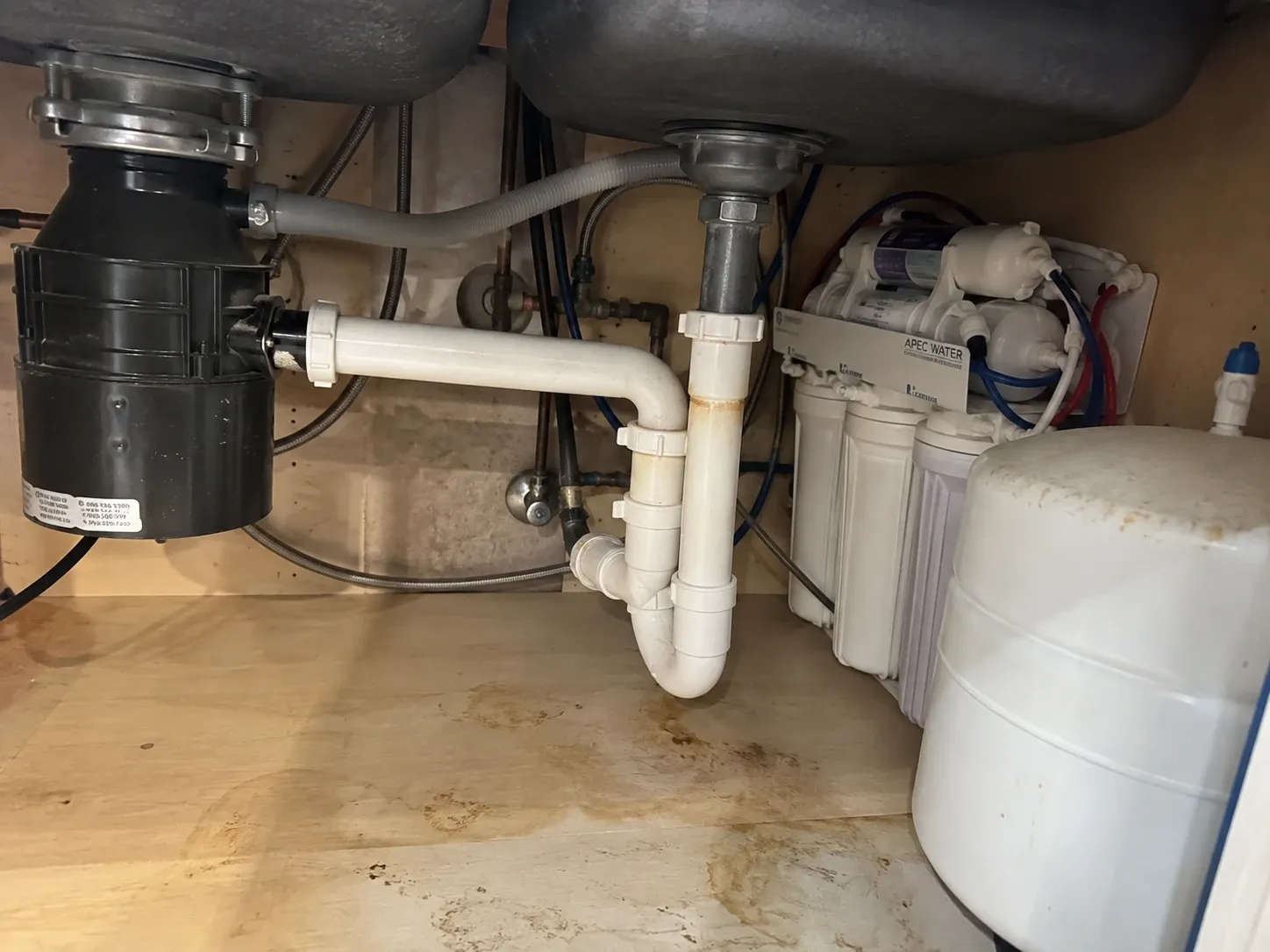
In this case, the homeowners had already had their well water tested before moving in, and a reverse osmosis (RO) system had been installed at one point of use — in this case, feeding the refrigerator and a nearby faucet. That's a reasonable first step, but an RO unit at one tap doesn't address what's coming out of every other fixture in the house, including the ones used for brushing teeth or washing dishes.
When reviewing the report on-site, the technician noted it showed low levels of PFOS, PFAS, and PFOA — below the relevant limit, but still present. Readers should know that water treatment doesn't eliminate PFAS entirely; properly sized whole-house filtration can reduce PFAS and similar contaminants based on what the testing actually shows, which is why interpreting a report in the context of the home's plumbing layout matters.
Spotting Iron Before the Homeowner Even Mentioned It
The report flagged elevated iron, and the homeowner confirmed they were already seeing pink staining — a classic visual sign of iron in well water. That's a good example of how a lab number and a visible symptom confirm each other: the stain told the technician the iron shown on paper was actually affecting fixtures, not just sitting in a column of data.
The Rotten-Egg Smell: Sulfur and Oxygen
The homeowner also described an "eggy smell," which is a textbook sign of sulfur in well water. Interestingly, the smell is strongest at a sink that hasn't been run recently, not one that's actively in use. That's because sulfur odor is tied to oxygen levels in the water: when a well pump pulls water up, the water contains some dissolved air. As that water sits in the pipes, the air separates out and the sulfur smell becomes noticeable. Running the tap reintroduces oxygen and temporarily clears the smell — which is why a quick sniff test at an actively used faucet can be misleading.
In this case, the sulfur didn't actually appear as a flagged result on the written report, underscoring the point: the printed numbers and the lived experience in the house don't always match line for line, and both need to be considered together.
One Tank Instead of Two
Because iron and sulfur can often be addressed with the same category of filtration media, the technician discussed combining treatment into a single tank rather than installing separate equipment for each issue. Keeping the number of tanks to a minimum isn't just about saving space — fewer components generally means lower complexity and cost. This is the kind of judgment call that comes from on-site evaluation, not from a lab report by itself.
What Stays and What Changes
A natural homeowner question was whether a new whole-house system would replace the existing point-of-use RO unit. The answer here was no — the RO system should stay in place. Whole-house filtration typically removes a large majority of contaminants, but not all of it, so a dedicated RO unit at a specific tap still serves as an additional layer of protection for the water people actually drink.
The technician also pointed out that components like RO membranes and sediment filters have different replacement schedules — some closer to six months to a year, others closer to two years — and recommended setting up an automatic reminder or reorder schedule so replacements don't get forgotten. Exact intervals vary by manufacturer, so homeowners should follow the specific guidance that comes with their installed equipment.
Why a Site Visit Matters
This consultation also included a walk-through of the well equipment itself, since visual inspection can reveal issues — like fouled or contaminated components — that a chemical test doesn't capture on its own. A report tells you what's dissolved in the water; a physical inspection tells you what's happening to the equipment handling that water.
Next Steps for Well Owners
If your home is on a private well and you're relying on a water test from months or years ago — or one performed before you moved in — it's worth having a licensed plumber walk through the results with you in person, point by point, while also inspecting your fixtures and well equipment. Staining, odor, and the test numbers themselves all tell part of the story, and treatment should be sized to match what testing actually shows, not a one-size-fits-all package.
Jeneral Plumbing offers water treatment evaluation and installation services for homes on well water, including iron, sulfur, and PFAS-reduction filtration sized from your actual test results. If you're also noticing fixture issues tied to water quality, our fixture repair team can take a look during the same visit.
Call Jeneral Plumbing
For regular-hours visits, Jeneral Plumbing charges an $80 dispatch fee — the cost of the visit, waived when you hire us for the work. To schedule a whole-house water evaluation or ask about treatment options for iron, sulfur, or PFAS on your well, call Jeneral Plumbing at (978) 392-7789.
This post is for informational purposes only and does not substitute for an on-site evaluation by a licensed plumbing or water treatment professional. Water treatment decisions should always be based on current, site-specific lab testing.
Written by Sierra Sorongon.
This article was drafted with AI writing tools and edited before publication. AI tools did not inspect any job or validate technical conclusions.
Last updated .