
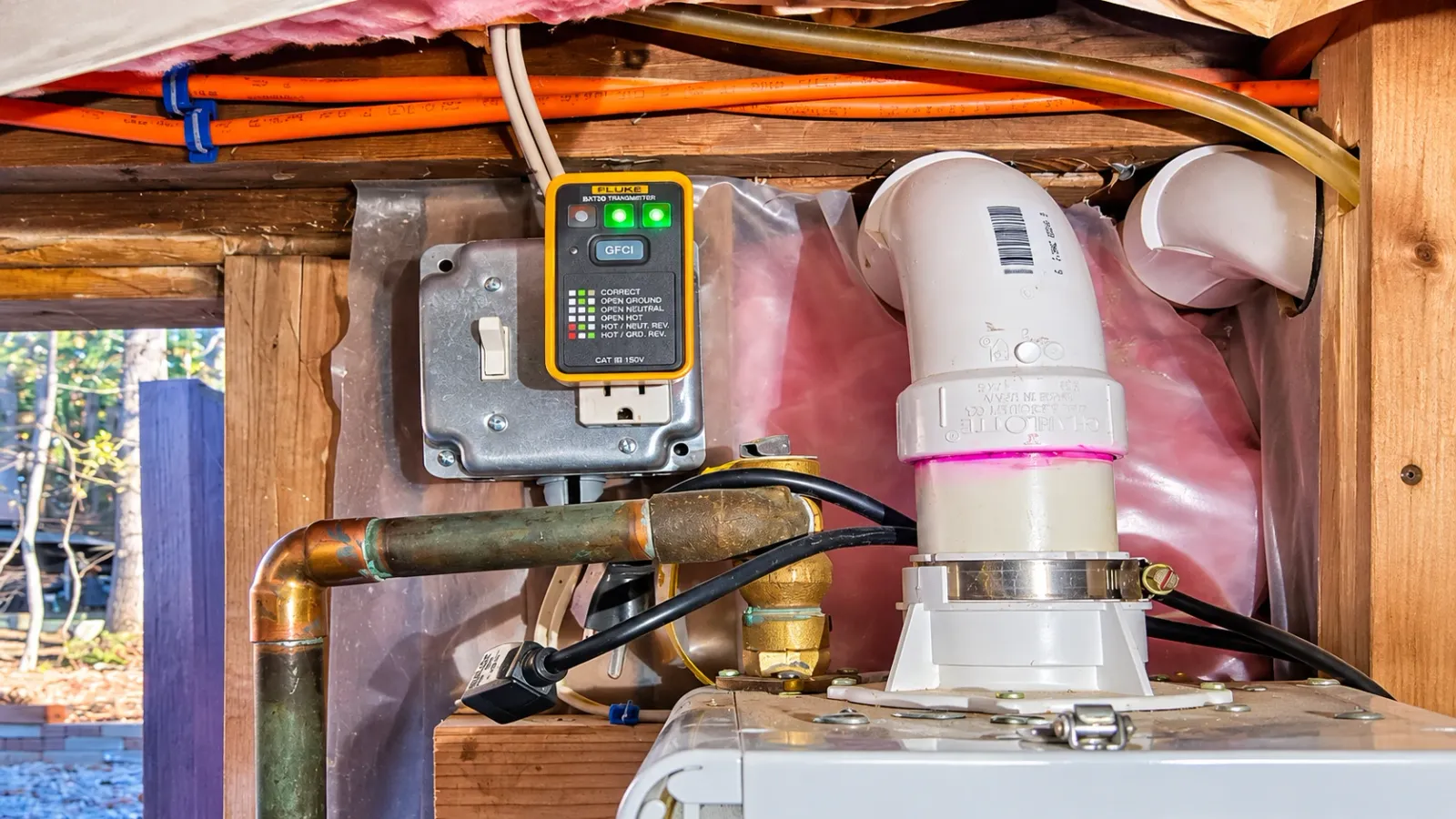
When a technician is called out to fix a heating system that's lost heat entirely, the first job is simple: get the unit firing safely again. But a "no heat" call on a Navien combi boiler often uncovers a second problem hiding in plain sight — a missing part that's been quietly costing the homeowner efficiency since the day the unit was installed.
Safety note: Combi boilers involve gas, electrical power, and pressurized water and exhaust venting. Troubleshooting tripped breakers, failed condensation pumps, or venting issues on this type of equipment should always be left to a licensed plumbing and heating professional. Do not attempt to reset, rewire, or disassemble boiler components yourself.
Diagnosing a Navien No-Heat Call
On one recent service visit, a Navien combi boiler had shut down completely. A GFCI reset brought power back momentarily, but the unit immediately tripped again as soon as the condensation pump tried to fire. Troubleshooting confirmed the condensation pump had failed, and the overflowing condensation was the direct cause of the repeated shutdowns.
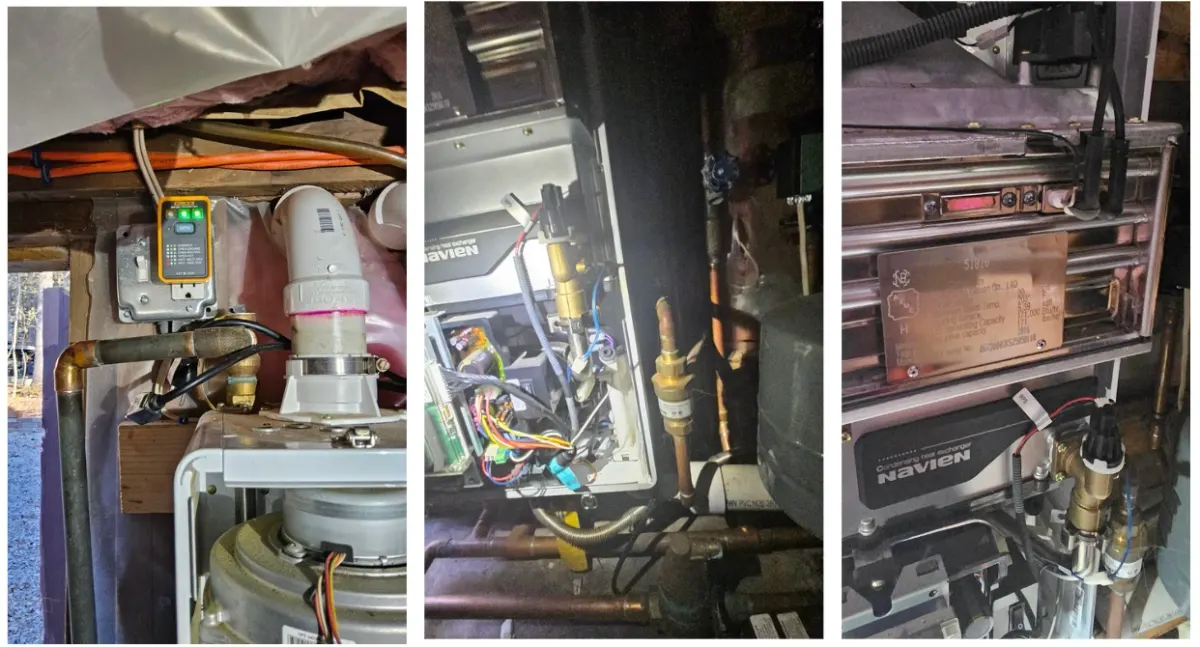
While inspecting the unit, the technician also found several related issues:
A street fitting had been used on the venting where the manufacturer requires pipe extending further into the fitting — the shorter connection was allowing exhaust to leak, which matched visible corrosion at the top of the unit.
The unit was missing its high-vent (RAL adapter), a small canister vent required to release air from the system.
The glass sight gauge was cloudy, and the system had reportedly been descaled every two years instead of annually, as the unit requires.
The technician noted no immediate signs of overheating, and confirmed the condensation pump — not the burner or heat exchanger — was the source of the no-heat condition.
What Got Fixed First, and What Can Wait
With a failed component causing a safety shutdown, the priority was restoring heat. Replacing the condensation pump (with a neutralizing-style pump, since the home did not have a separate neutralizer) resolved the immediate trip and restored function. The vent correction, high-vent installation, and proper annual descaling were identified as necessary follow-up work, but non-emergent — the kind of repair that can reasonably be scheduled rather than done same-day.
This is a good example of how a heating system diagnosis should work: stabilize the urgent fault first, then scope out the secondary issues so the homeowner can make an informed decision about timing. If your own system is tripping repeatedly or short-cycling, our heating system service can walk through the same kind of staged troubleshooting.
The Missing Outdoor Sensor — and Why It Matters
The most consequential finding on this job wasn't a failure at all — it was a missing accessory. Navien combi boilers ship with an outdoor temperature sensor in the box. This small plastic sensor mounts on the exterior of the house and connects back to the boiler with a thermostat wire.
Without it, the boiler runs in a simple on/off mode — full flame or nothing — similar to an older cast-iron boiler. With the outdoor sensor installed, the unit can modulate its flame output (for example, to 75% or 50%) and adjust the water temperature based on outdoor conditions. On a mild day, that might mean heating water to around 130 degrees instead of 180, rather than running at full output regardless of outside temperature.
In this case, the sensor had apparently been discarded during the original installation — something the technician noted isn't unusual on jobs like this. Without it, the system has no modulation and effectively no efficiency gain over a basic on/off boiler, even though the hardware to do better came in the box.
The home in question used forced-air heat with a coil fed by the boiler's hot water, which is why the system was set to 140 degrees rather than the 180 degrees typical of baseboard systems — a useful reminder that proper setpoints depend on how your home actually distributes heat.
Annual Service Matters for Combi Boilers
Combi boilers like this one require descaling and maintenance — including cleaning filters — every year, not every two years. Skipping that interval contributes to scale buildup and can shorten component life. If you're not sure when your unit was last serviced, or who's been maintaining it, that's worth tracking down before winter demand peaks. Our water heating services cover combi and tankless systems that need this kind of annual attention.
If Your Heating Is Out
A no-heat call during cold weather is one of the more urgent situations a homeowner can face. If your boiler trips, shorts out, or stops producing heat, shut off access to the unit if you suspect an electrical or water hazard and call a licensed professional rather than resetting breakers repeatedly. Jeneral Plumbing answers emergency calls 24/7 through our emergency plumbing service.
Call Jeneral Plumbing
Whether your system needs a repair, a missed efficiency component installed, or is simply overdue for annual service, Jeneral Plumbing can evaluate what's actually happening at the equipment and lay out next steps before any work begins. Call (978) 392-7789 to schedule a visit.
This post is for informational purposes only and does not replace an in-person evaluation by a licensed plumbing and heating professional.
Written by Sierra Sorongon.
This article was drafted with AI writing tools and edited before publication. AI tools did not inspect any job or validate technical conclusions.
Last updated .