

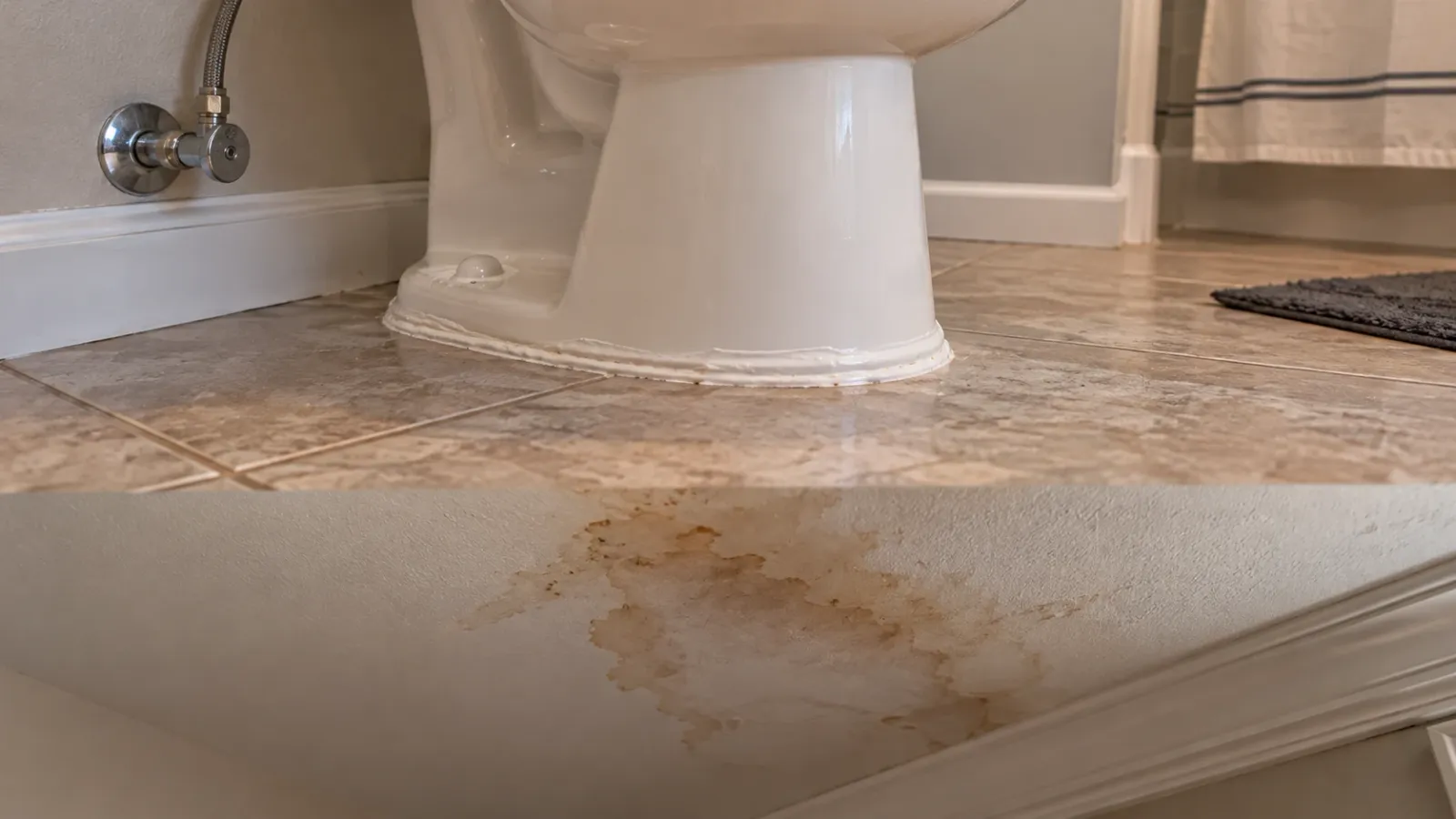
A homeowner in Westford, MA called Jeneral Plumbing about a small, recurring stain on a first-floor ceiling, directly below an upstairs bathroom. The spot had been there for years, but a new stain appeared last winter, faded over the summer, and started coming back as temperatures dropped again. That seasonal pattern — along with what our technician found once the toilet was inspected — pointed to a problem that's more common than most homeowners realize: silicone caulk sealing the base of a toilet to the floor.
Why the Ceiling Stain the Jeneral Plumbing technicians
During the visit, the Jeneral Plumbing technician used a camera to trace the ceiling stain back to the upstairs bathroom floor, right below the toilet. The toilet base was fully caulked around the perimeter with silicone. When our technician tried rocking the toilet to check for a loose seal — a standard diagnostic step, since a leaking toilet normally shifts noticeably at the base — it barely moved at all. That rigidity was itself a clue: the silicone bead was holding the toilet firmly in place and, more importantly, sealing in any water that might be leaking underneath.
The technician also noted a similar situation had occurred in the home's downstairs bathroom in the past, during a basement reconstruction, when a contractor discovered that a toilet was also caulked at the base, and the seal had hidden an underlying problem until the toilet was removed.
The Problem With Sealing a Toilet Base
Toilets are intentionally left unsealed at the base, or sealed only in a way that still allows a leak to show itself. If the wax ring or flange seal fails and the base is fully caulked, water from the toilet doesn't drip out onto the bathroom floor where it would be noticed immediately. Instead, it gets trapped underneath and can migrate into the subfloor and down into the ceiling below, with no visible sign in the bathroom itself. That is likely why this stain seemed to appear only in colder months: a problem that had already been developing for an unknown period became more noticeable once the house's forced-air heating cycled on and temperature changes affected the materials around it.
Because the leak had no visible outlet, there was no reliable way to know how long water had been getting into the floor structure. As our technician explained on site, the only way to know for certain is to pull the toilet and inspect what's underneath.
What Pulling the Toilet Could Reveal
Before removing the toilet, our technician outlined the possible findings and what each would mean for the job:
A damaged flange: the component that bolts the toilet to the floor and connects it to the drain line. If the flange is broken, it needs to be replaced before the toilet can be reset.
A rotted subfloor: if water has been trapped under the toilet for an extended period, the plywood or wood subfloor beneath the tile can rot. A flange has to bolt to solid wood — if the floor underneath is compromised, the toilet cannot be safely reinstalled until the floor itself is repaired.
Ceiling damage below: if the leak has been active for a long time, the ceiling material in the downstairs space can also be affected and may need to be cut open, repaired, and repainted.
Our technician also pointed out a second concern during the visit: the softness felt when pressing near the affected ceiling spot, and the stain's gradual widening from what had been a thin line, both suggested the problem was progressing rather than staying static.
Why the Repair Plan Was Sequenced Carefully
Rather than removing the toilet immediately, our technician recommended first having a carpenter inspect the ceiling from below to assess whether the subfloor was rotted. The reasoning: if the toilet comes up and the subfloor turns out to be compromised, the toilet cannot go back in until that structural repair is finished — leaving an open drain pipe in an active bathroom in the meantime. By coordinating a carpenter's inspection first, the plumbing repair and any necessary floor work can potentially be scheduled for the same day, minimizing the time the bathroom is out of service.
This is also why the technician left the tape holding the toilet in place rather than disturbing it further. Moving the toilet without a repair plan in place could increase the amount of water escaping and make the existing damage worse. In the homeowner's words, the leak right now is "controlled" — and keeping it that way until the full scope is known was the priority.
A Reminder on Seasonal Timing
The homeowner and technician agreed this wasn't an emergency, but there was shared interest in resolving it before winter weather set in, since cold and snow load can complicate both the diagnosis and the repair logistics. If you notice a ceiling stain that seems to track with the heating season, or a toilet that feels unusually rigid or soft at its base, it's worth having it looked at before temperatures drop further.
When to Call a Professional
Diagnosing and repairing a leak hidden by a sealed toilet base involves plumbing work (replacing a flange, resetting a toilet) as well as potential structural carpentry (subfloor and ceiling repair). These are not DIY projects — removing a toilet without a plan for what's underneath can leave an open drain pipe exposed in your bathroom. If you suspect a hidden leak at a toilet base, contact a licensed plumber before attempting to repair the toilet yourself.
If you're dealing with a similar ceiling stain, a toilet that won't rock the way it should, or you're ready to repair the toilet at its source rather than just the symptom, Jeneral Plumbing can inspect the flange, subfloor, and plumbing line involved and help coordinate the work. You can also review our fixture repair services or, if you're facing an active or worsening leak, our emergency plumbing service for guidance on next steps.
This post is for informational purposes only and does not replace an in-person evaluation by a licensed plumber or carpenter.
Call Jeneral Plumbing
If you've noticed a ceiling stain under a bathroom, or a toilet that feels unusually stiff or loose at the base, call Jeneral Plumbing at (978) 392-7789. Regular-hours visits carry an $80 dispatch fee — the cost of the visit, waived when you hire us for the work.
Written by Sierra Sorongon.
This article was drafted with AI writing tools and edited before publication. AI tools did not inspect any job or validate technical conclusions.
Last updated .