

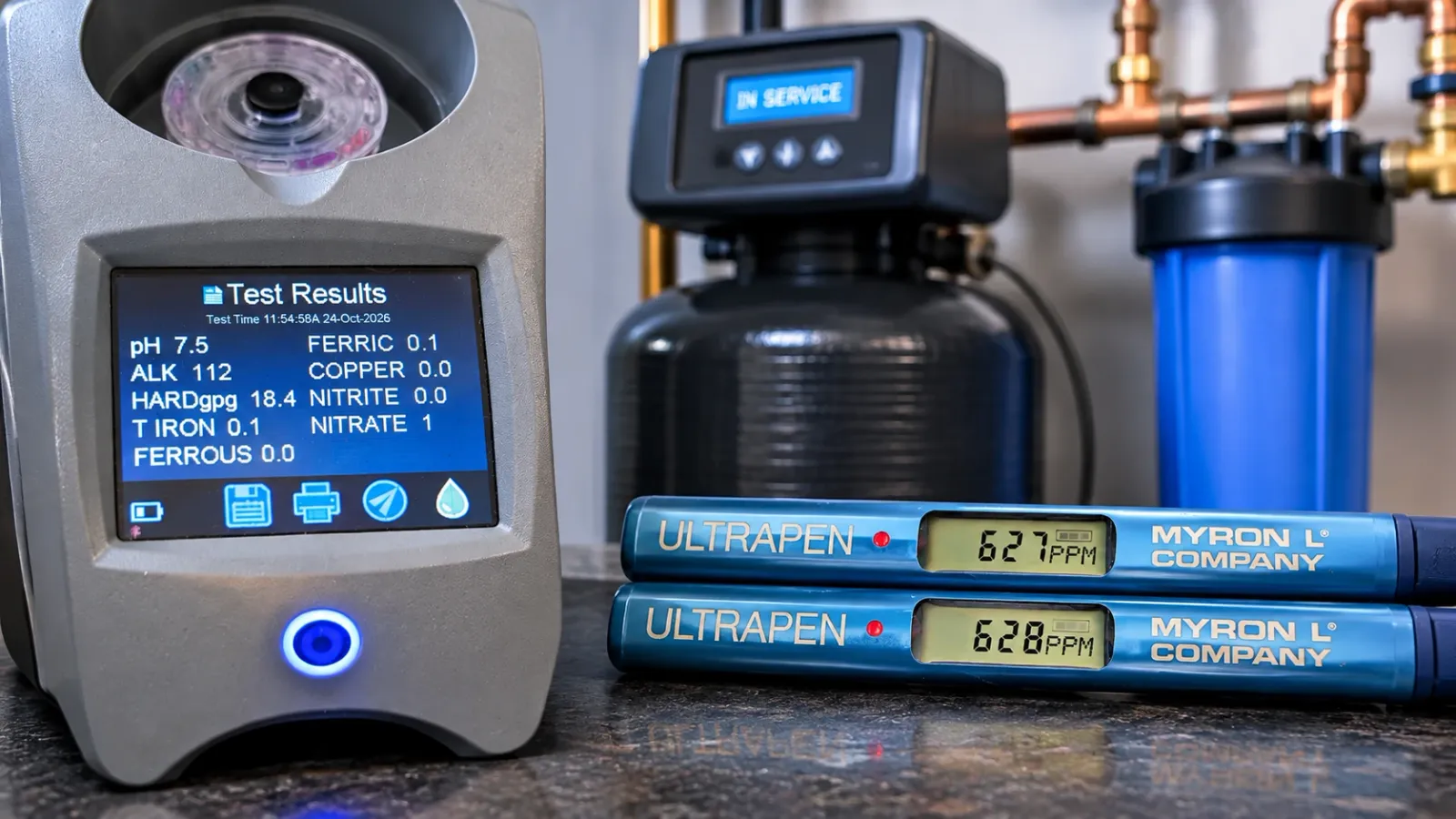
A water softener that's running — tanks humming, display reading "in service" — isn't the same thing as a water softener that's actually softening. During a recent water quality visit at a home on Ashley Place in Westford, MA, a Jeneral Plumbing technician walked through exactly how to tell the difference, using a field water test rather than guesswork.
The Homeowner's Concern: "It Seems Okay, But I Want It Better"
The homeowner had an existing water softener system, installed about four years earlier, along with a Navien tankless water heater. The system appeared to be functioning — no obvious issues day to day — but the homeowner suspected hard water was contributing to noticeable hair loss and wanted an unbiased check rather than an assumption. The home is on well water, which makes periodic testing especially useful since well water quality isn't monitored by a municipal utility.
Why a Field Water Test Comes Before Any Recommendation
Before making any recommendation, the technician was clear: no changes should be suggested without data. That's the standard approach — test first, treat second. The technician ran a full panel on two samples: untreated water collected from downstream before treatment, and treated water from the softener's output, so the two could be compared side by side.
The untreated sample results:
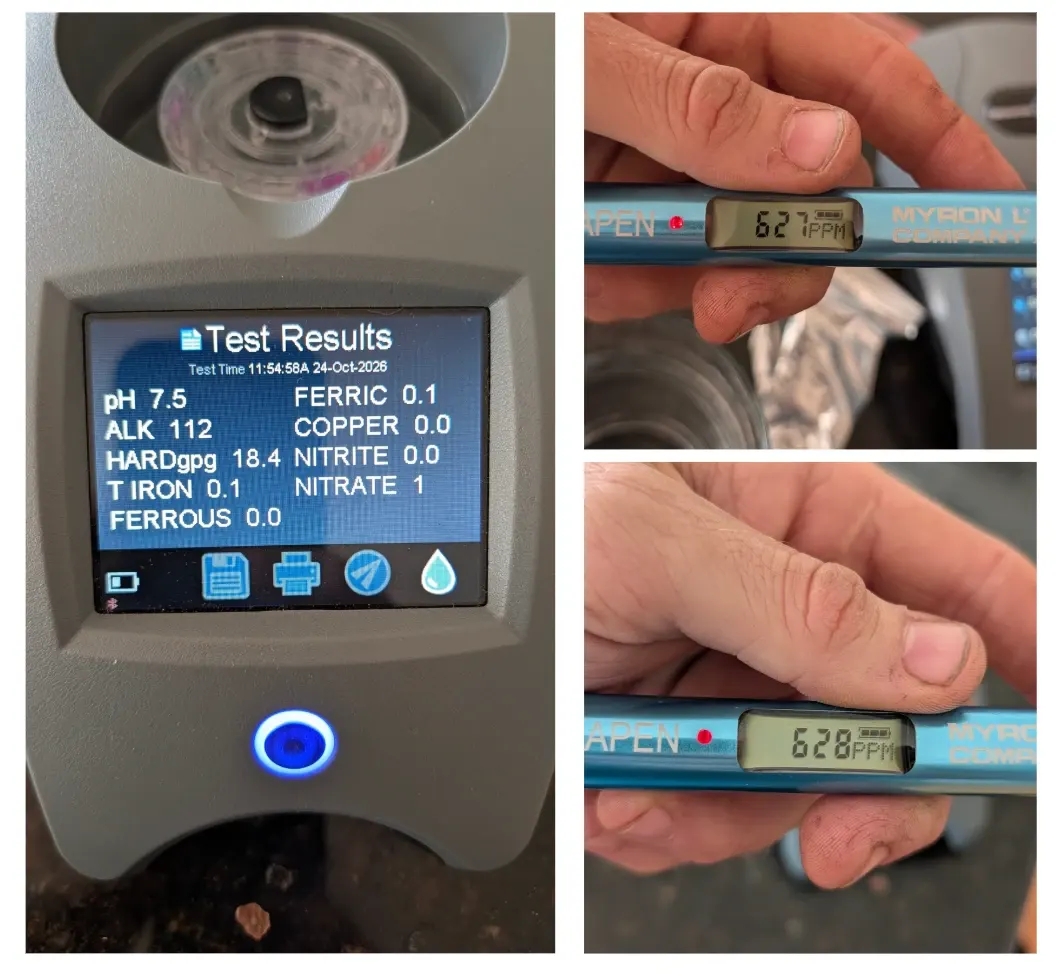
Total dissolved solids (TDS): approximately 627–628 parts per million. The EPA's secondary limit for aesthetic purposes is 500 ppm — this reading was above that threshold.
pH: 7.5, described as "perfect." A pH in this range means the calcite/pH balance is not contributing to any corrosion or scale issues on its own.
Ferric iron: 0.1, noted as a treatable level.
Hardness: 18.4 grains — the main issue identified in the water.
Alkalinity: over 100.
Nitrates: effectively none detected.
The takeaway from the untreated sample was straightforward: the incoming well water itself tested fine aside from hardness. Hardness was the one parameter that stood out as something treatment should be addressing.
The Problem: Treated Water Tested Identical to Untreated Water
This is where the test mattered. When the technician ran the same TDS test on water drawn after the softener, the results came back identical to the untreated sample. A functioning softener should show a measurable drop in hardness-related minerals after treatment — seeing no change at all meant the system was not actually treating the water, despite the control panel reading "in service."
A second test disc was pulled to rule out a bad reading, and the cold line was run for several minutes before retesting, but the result held. Something was keeping the water from passing through active treatment media.
What the Technician Found During Inspection
A visual inspection of the setup turned up a plumbing configuration issue: the two tanks were connected, but a secondary filter — which the homeowner confirmed hadn't been changed in a year — appeared to be positioned incorrectly in the line. The technician noted it looked like a sediment filter that is normally meant to sit before the softener, catching solids as they come out of the well so they don't clog the softening media. Our technician installed, that filter line appeared to be acting more like a bypass, which would explain why treated water showed no improvement over untreated water even though the display read normally.
Separately, while examining the home's tankless water heater, the technician flagged two unrelated maintenance items for awareness: the unit was sealed with regular silicone rather than high-temperature silicone, and there was visible corrosion consistent with moisture intrusion near that seal — something worth monitoring since it can affect the unit's fan over time. The water heater itself had no active issues and was not under evaluation for replacement.
Why "In Service" Isn't a Reliable Status Check
A softener's display or valve position tells you the system is cycling — not that the media inside is actually exchanging hardness minerals, and not that the plumbing is routed to send water through that media at all. The only way to confirm softening is working is to compare treated and untreated water side by side, which is why a technician trained in water testing will pull samples rather than rely on the equipment's own status indicator. Homeowners on well water, in particular, benefit from periodic verification like this since there's no municipal report to fall back on.
Next Steps for a System Like This
With hardness confirmed as the main treatable parameter and a possible filter-routing issue identified, the appropriate next step is a licensed plumber correcting the plumbing configuration so untreated well water passes through sediment filtration before reaching the softener resin, then re-testing treated water to confirm the softener is performing as expected. Any further recommendation — resin replacement, a new system, or adjustment — should follow from that retest data, not from assumption.
If your water softener's hardness numbers haven't improved, or you're not sure your system is cycling through its backwash, brine, and rinse stages correctly, a water treatment evaluation can confirm what's actually happening in your plumbing rather than just what the panel display says.
A Note on Iron and Filtration
This home's ferric iron reading was low (0.1) and described as only mildly treatable — not high enough to require a dedicated iron filter installation. Homes with higher iron levels on well water may need that additional stage, but the decision should always follow a water test result, not a visual symptom like staining alone.
Call to Action
If your softener seems to be running but your water still feels hard, or you're on well water and haven't had it tested recently, Jeneral Plumbing can run a full field water panel to see what's actually coming through your taps. Call (978) 392-7789 to schedule a water quality test or ask about water heater and treatment equipment you already have in place.
This post is for informational purposes only and is not a substitute for an in-person evaluation by a licensed plumbing or water treatment professional.
Written by Sierra Sorongon.
This article was drafted with AI writing tools and edited before publication. AI tools did not inspect any job or validate technical conclusions.
Last updated .