

High-efficiency boilers are more sensitive to water quality than the cast iron systems they replaced, and that sensitivity is becoming a bigger deal every heating season. If your boiler has never had its water tested, here's what plumbing professionals look for and why it matters.
Why Older Boilers Could Take a Beating — and New Ones Can't
Older cast iron boilers could tolerate a lot of poor water quality and still keep running. Today's high-efficiency systems don't have that same margin. Their valves, circulators, seals, and gaskets are far more susceptible to damage from contaminants in the system water, and manufacturers are starting to enforce this in their warranty language. Corrosion and water quality issues are commonly excluded from coverage, and that scrutiny is expected to increase as manufacturers look to limit warranty claims tied to water quality problems.
How Corrosion Actually Forms Inside a Boiler
The underlying mechanism is straightforward: oxygen gets into the system water, often from leaks at high points in the system or from improper purging during installation. When that air mixes with the metal components in the system, it produces iron oxide — commonly referred to as magnetite. If a technician drains water from a boiler and it comes out pitch black instead of clear, that's a sign magnetite has built up in the system.
Once magnetite is circulating, it behaves like tiny metal shards suspended in the water. Moving water is already mildly abrasive to the inside of system components; adding metal particles into that flow accelerates wear on pumps, valves, and piping, and the sludge that results can build up and clog radiators, coils, and other components, reducing heating efficiency over time.
Chlorides entering a system from the water supply create a separate problem — they contribute to corrosion of coils and other components. There is currently no effective point-of-use filter that removes chlorides before they enter a heating system; once they're in the water, they can be neutralized to some degree, but not reliably prevented. The only effective option in those cases is addressing the water quality at the house level — testing it, treating it, and then flushing and refilling the heating system with properly treated water.
Why Testing Both Sides of the System Matters
Testing the incoming water supply (city or well) alongside the water already circulating in the boiler system gives a much clearer picture than testing either one alone. The incoming water shows what the system is being exposed to; the water already in the system shows how it has responded over time — similar to how a doctor pairs a patient's diet with bloodwork to see the actual effect. A simple magnetic test tool, swirled through a water sample, will show visible metal particles sticking to it if magnetite is present — a quick, tangible way to confirm there's a problem, including for a homeowner wanting to see it for themselves.
For scale: a single particle of magnetite averages about 8 microns in size. That's small enough that mesh strainers and basic dirt separators often don't capture it — some simply rely on particles settling out of suspension rather than actively filtering them out.
Magnetic Filtration and Chemical Treatment
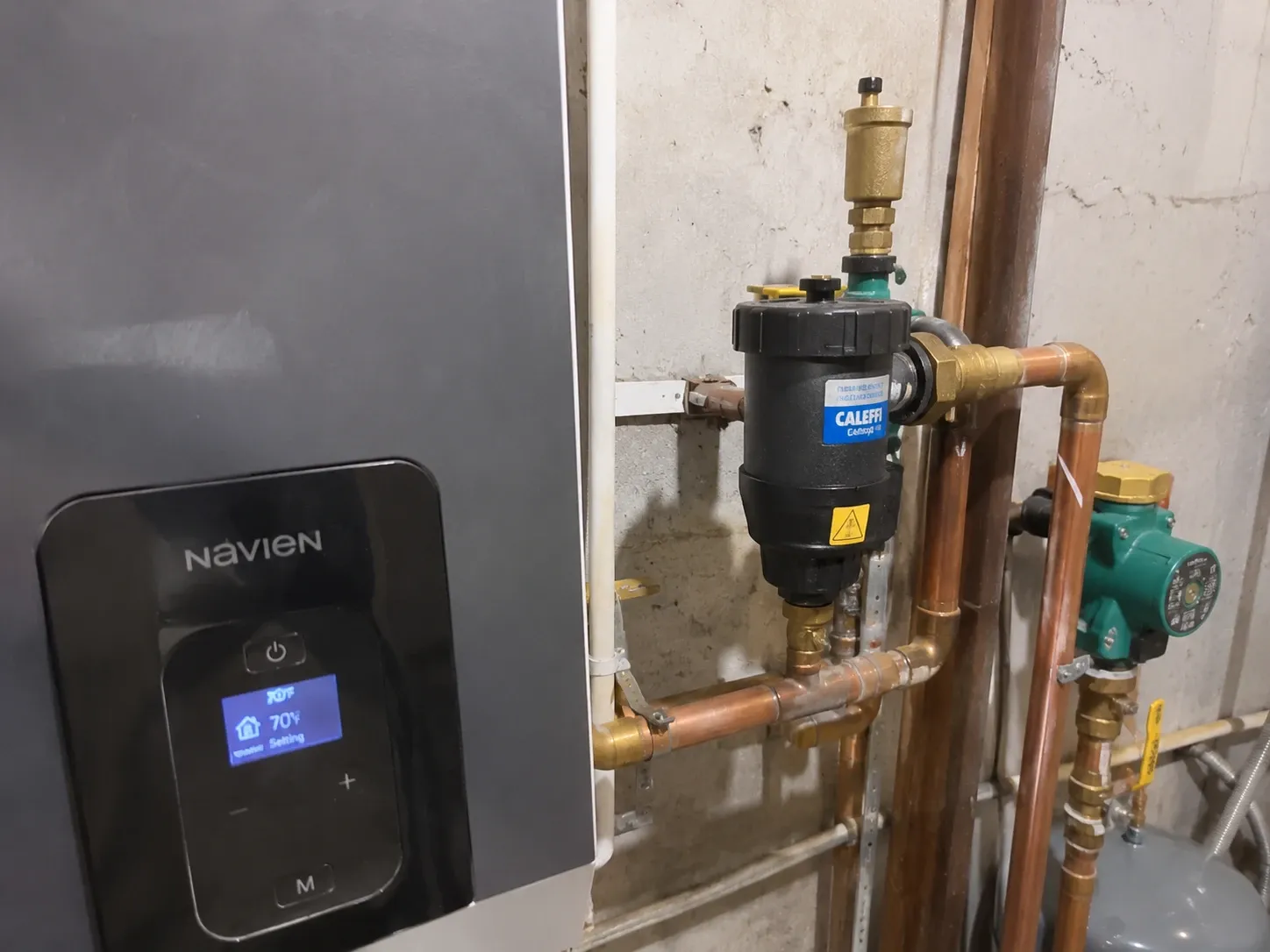
A magnetic filter on the boiler is a standard component for capturing suspended metal particles before they circulate and cause damage — all boiler installations should include one. These are sometimes combined with an air/dirt separator unit so filtration and air elimination happen in a single component rather than two. An auto air vent can also be added to that assembly if extra air elimination is wanted, though it isn't a required part of the base unit.
On new boiler installations, commissioning typically includes flushing the system and introducing a cleaner and inhibitor — a step that helps control corrosion from the start rather than trying to correct it after the fact. For water treatment at the house level, approved product lines such as Halo, WaterSoft, and Lancaster are used depending on what the water test results call for.
What This Means If You Haven't Had Your System Tested
If your boiler has never had its water quality checked, or you're not sure when it was last flushed, it's worth having a licensed plumber test both the incoming water and the system water, and visually inspect what comes out when the system is drained. Treatment recommendations should always be based on actual test results, not guesswork — and any proposed fix should be explained clearly enough that you understand exactly what it's addressing and why.
Boiler and hydronic heating work should only be performed by a licensed professional. Improperly handled heating systems carry real risks, including burns, pressurized component failure, and gas-related hazards if a gas-fired system is involved. Learn more about heating system service and water treatment options for hydronic systems.
Call Jeneral Plumbing
Jeneral Plumbing is owner-operated by a Licensed Master Plumber and serves Westford and surrounding communities. If it's been a while since your boiler's water quality was checked, or you've noticed reduced heating performance, call (978) 392-7789 to schedule an evaluation. Regular-hours visits include an $80 dispatch fee — the cost of the visit, waived when you hire us for the work. We also answer emergency calls 24/7.
This post is for informational purposes only and is not a substitute for an in-person evaluation by a licensed plumbing or heating professional.
Written by Sierra Sorongon.
This article was drafted with AI writing tools and edited before publication. AI tools did not inspect any job or validate technical conclusions.
Last updated .